
Quick answer: A hand-rolled hem is formed and stitched by hand, creating a soft, rounded edge with subtle variations that communicate craftsmanship. A machine-rolled hem is folded and sewn by machine, producing a flatter, more uniform edge with faster output and lower labor cost. Neither method is automatically right for every scarf: the best choice depends on brand position, order volume, target price, fabric, design, and delivery schedule.
What Is a Hand-Rolled Hem?
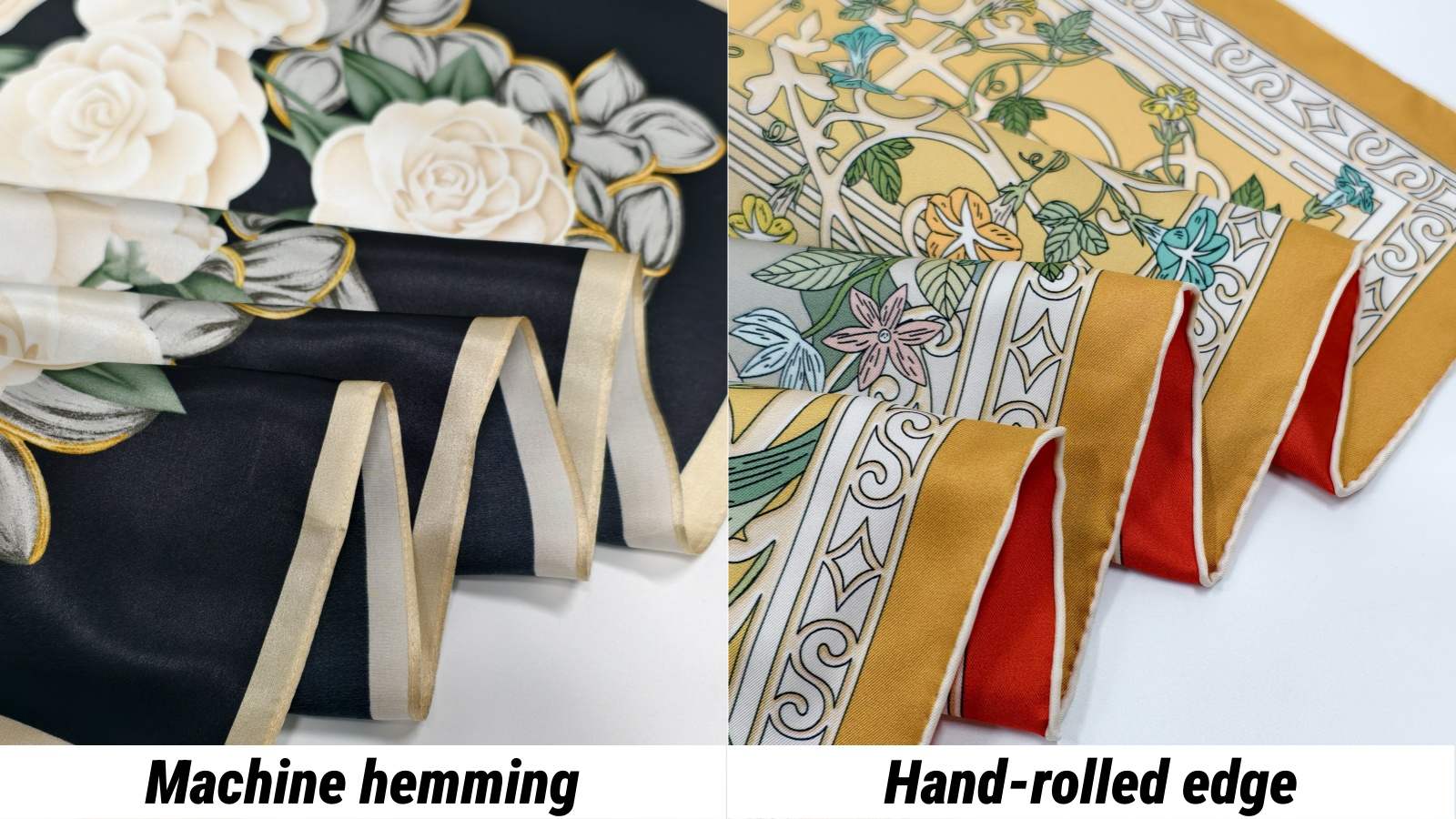
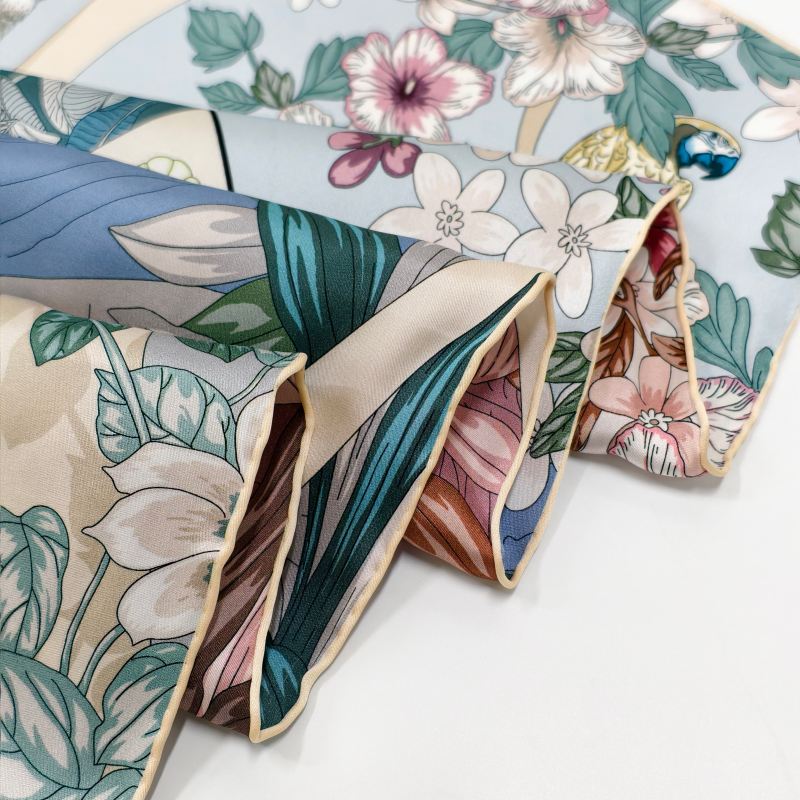
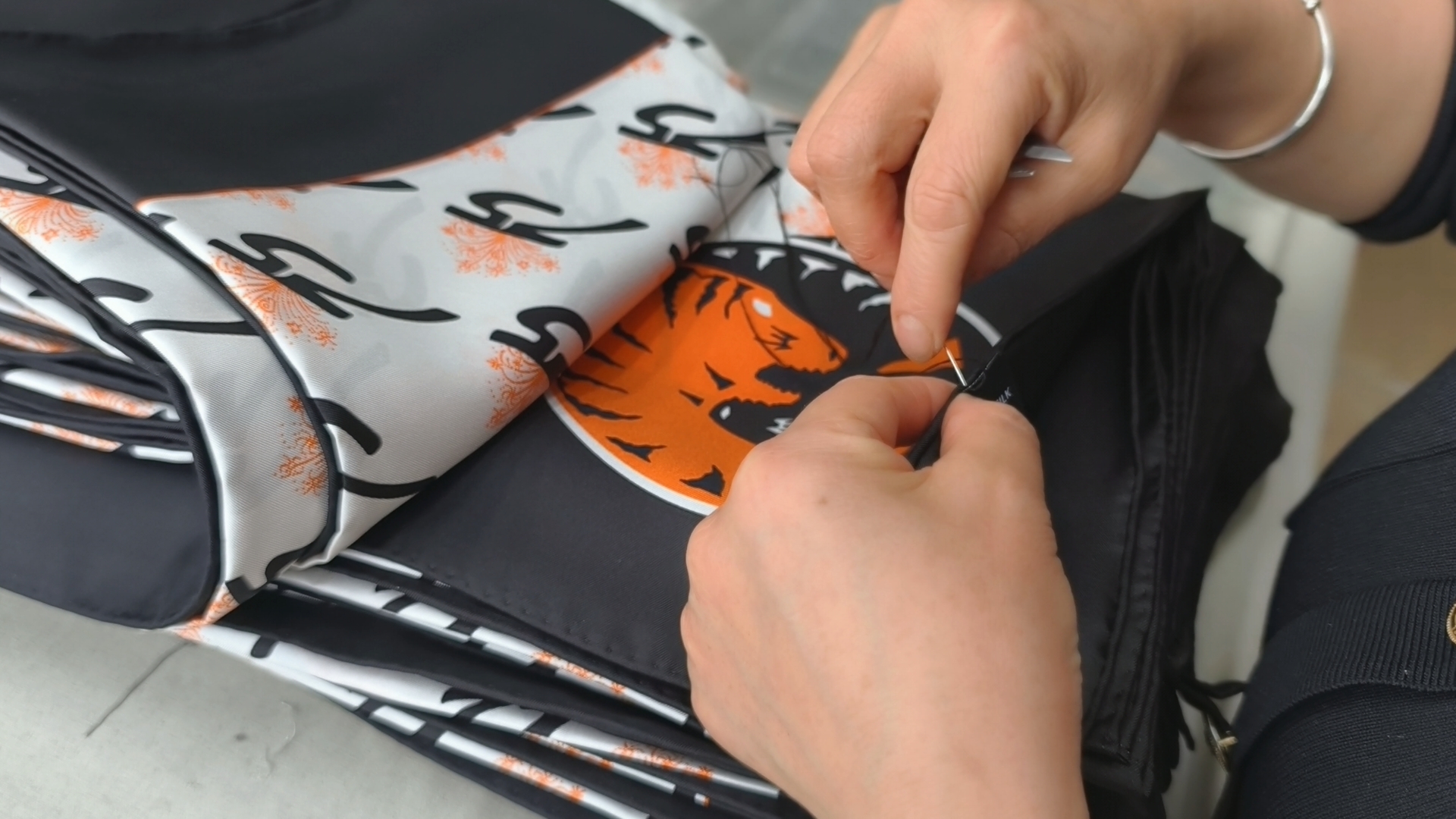
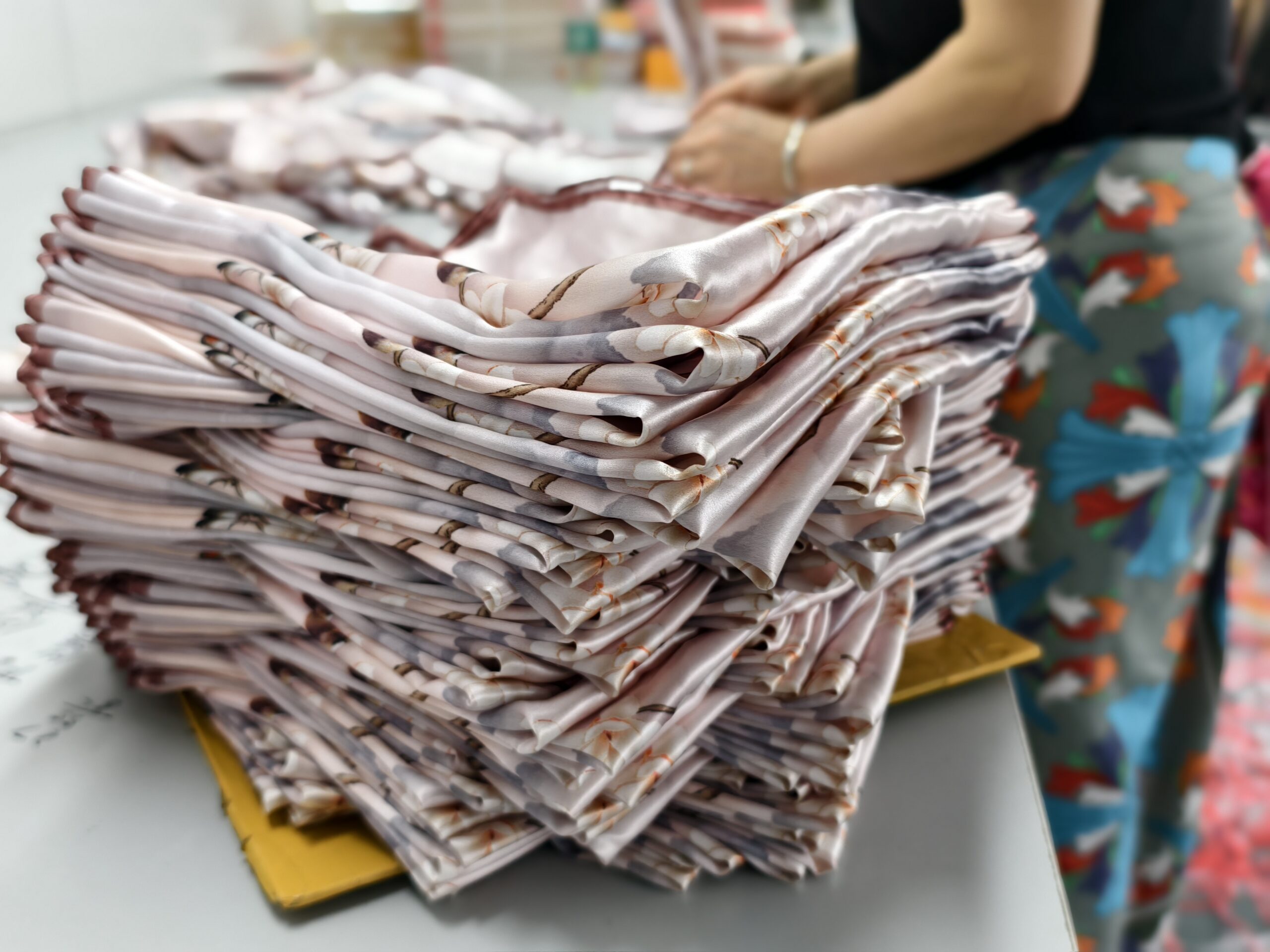
A hand-rolled hem, sometimes called a hand-stitched rolled hem or roulotte, is made by rolling a narrow section of the silk edge and securing it with small hand stitches. The finished edge has a rounded, slightly raised profile rather than a flat fold.
Because a person shapes and stitches the edge, slight differences in roll diameter and stitch spacing are normal. These variations should still remain within an approved quality range. They are evidence of handwork, not permission for loose stitches, distorted corners, puckering, or inconsistent scarf dimensions.
Typical Characteristics of a Hand-Rolled Edge
- Rounded profile: The edge feels soft and dimensional rather than sharply pressed.
- Hand-sewn character: Stitch spacing can vary slightly when inspected at close range.
- Longer production time: Each scarf requires skilled manual work, which affects capacity and lead time.
- Higher labor cost: Pricing reflects the time and craftsmanship required for every piece.
- Luxury positioning: The finish is often selected for premium collections, limited editions, gifting, and heritage-inspired products.
What Is a Machine-Rolled Hem?
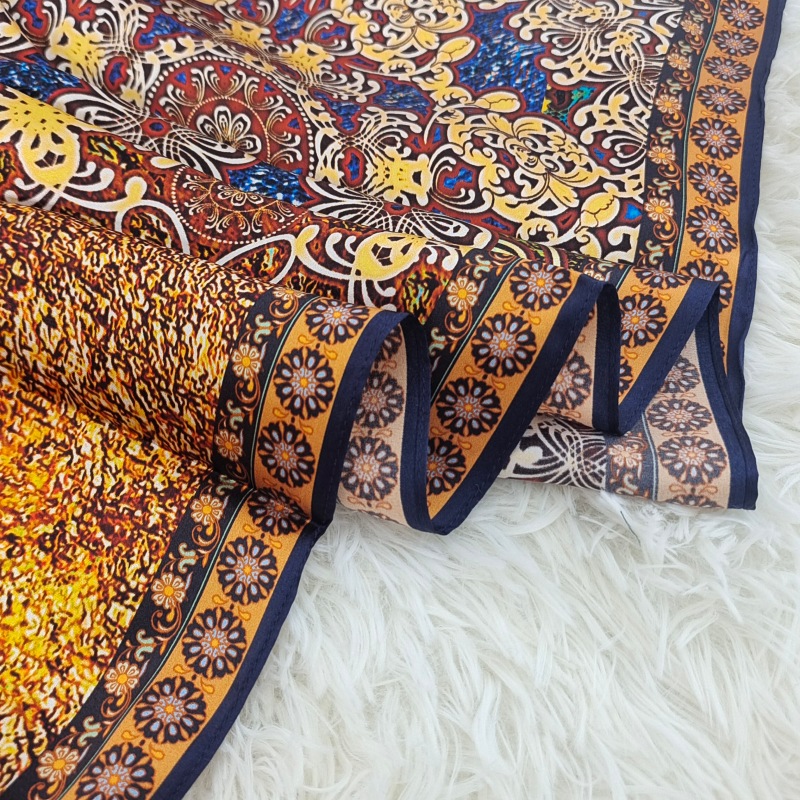
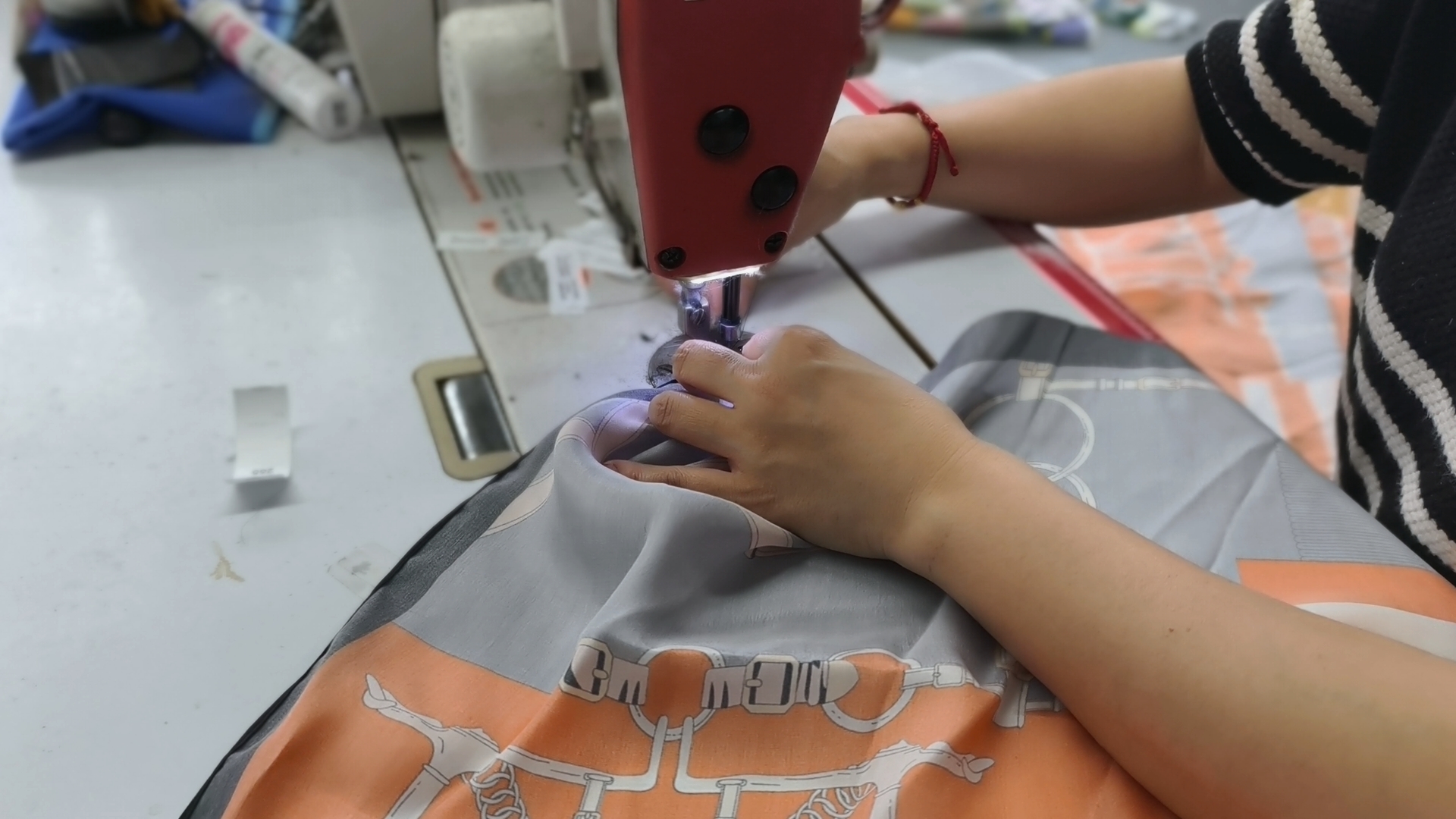
A machine-rolled hem is produced with sewing equipment that folds or controls the fabric edge while stitching it. It generally creates a flatter, tighter, and more repeatable finish than hand rolling. This makes it practical for commercial collections that require speed, consistent dimensions, and predictable cost.
The term machine-rolled hem should not be treated as identical to overlock hem. Depending on the fabric and required appearance, machine finishing may use a narrow rolled hem, baby hem, lockstitch construction, or overlock-style stitch. Buyers should approve the actual sample instead of relying on the finishing name alone.
Typical Characteristics of a Machine-Finished Edge
- Uniform construction: Stitch density, edge width, and appearance can be repeated across larger quantities.
- Faster production: Machine sewing supports shorter schedules and higher daily capacity.
- Controlled cost: Lower manual labor makes this method suitable for price-sensitive collections.
- Different stitch options: The correct machine, needle, thread, and tension depend on fabric weight and transparency.
- Commercial versatility: It works well for retail, promotional, seasonal, uniform, and accessible luxury programs.
Hand-Rolled vs Machine-Rolled Silk Scarves: Key Differences
The following comparison is a practical starting point for product development. Final results will also depend on silk type, weight, print coverage, scarf size, thread selection, and the approved workmanship standard.
| Decision Factor | Hand-Rolled Hem | Machine-Rolled Hem |
|---|---|---|
| Edge profile | Soft, rounded, and slightly raised | Flatter, tighter, and more uniform |
| Stitch appearance | Small hand stitches with subtle variation | Regular machine stitches with repeatable density |
| Consistency | Controlled handmade variation | High consistency across bulk quantities |
| Production speed | Slower because each edge is finished by hand | Faster and easier to scale |
| Cost | Higher labor cost | Lower finishing cost in most programs |
| Best suited for | Luxury lines, limited editions, premium gifts, collectible scarves | Retail collections, promotions, uniforms, seasonal ranges, larger orders |
| Quality control focus | Roll shape, stitch security, corners, edge direction, dimensions | Stitch tension, edge width, puckering, thread match, dimensions |
How to Choose the Right Edge Finish
Choose the finish by working backward from the product's market position and commercial requirements. A premium finish only creates value when it supports the customer's expectations, selling price, design language, and delivery plan.
Choose a Hand-Rolled Hem When
- The scarf is positioned as a luxury, artisanal, or collectible product.
- The edge itself is an important visible part of the design story.
- The collection is limited, premium priced, or intended for high-end gifting.
- The budget and lead time can support skilled manual finishing.
- Small natural variations are acceptable within an approved workmanship standard.
Choose a Machine-Rolled Hem When
- The order requires consistent appearance across a larger quantity.
- Cost control and shorter lead time are important.
- The scarf is intended for retail, promotional use, uniforms, or seasonal programs.
- The artwork, color, or branding is the primary visual focus.
- Repeatability matters for replenishment and future production runs.
What Buyers Should Include in a Scarf Specification
A clear technical specification prevents disagreements based on vague terms such as "luxury edge" or "machine roll." Before sampling, define the requirements that can be seen, measured, and approved.
Edge Construction
State whether the scarf requires hand rolling, a narrow machine-rolled hem, baby hem, lockstitch finish, or overlock-style construction. Include the required roll direction and the side on which the finish should be most visible.
Thread and Stitch Standard
Confirm thread color, sheen, stitch density, acceptable stitch visibility, corner appearance, and tolerance for handmade variation.
Finished Size and Tolerance
The hem consumes fabric and can affect final dimensions. Approve the finished scarf size and tolerance after edge finishing, not only the cut size.
Fabric and Print Compatibility
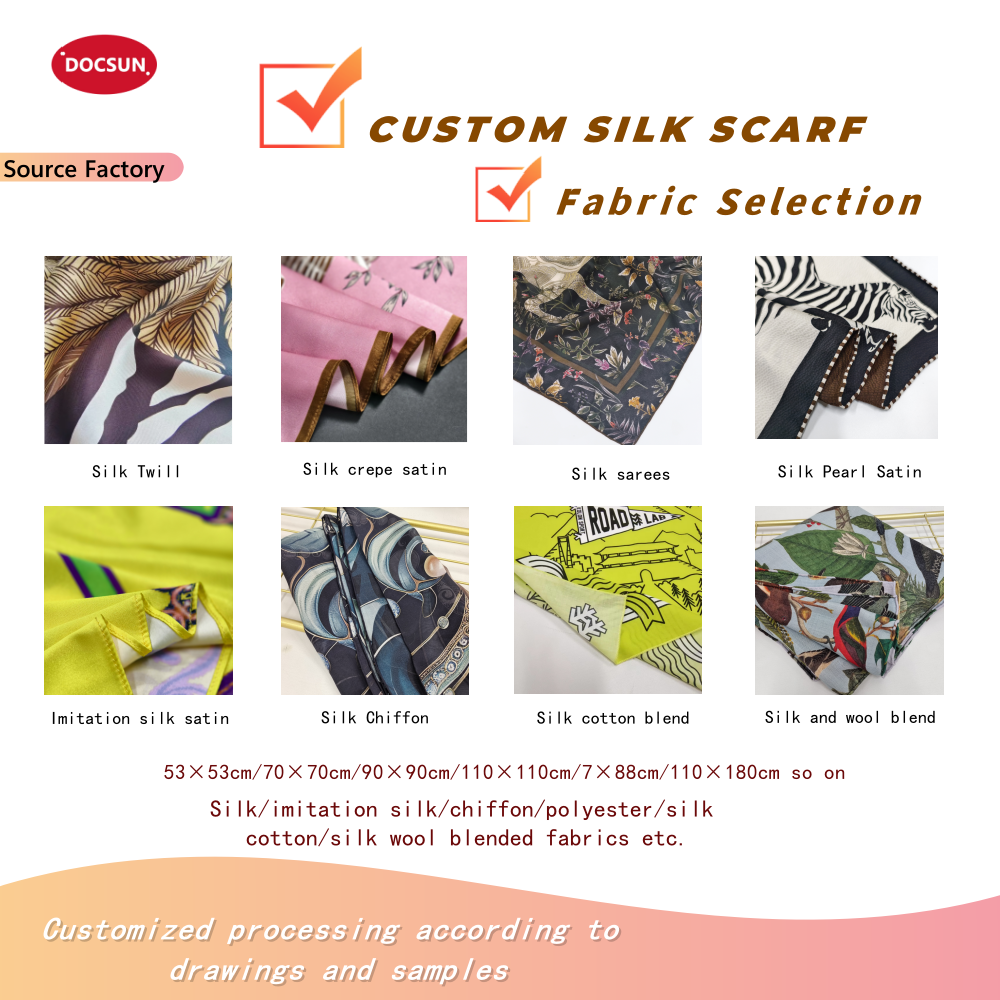
Light chiffon, satin, twill, crepe, and other silk constructions behave differently during sewing. Review the edge together with the chosen fabric and print method through the fabric, color, and craftsmanship selection process.
Approval Sample
Approve a physical sample or sealed production reference before bulk manufacturing. The approved sample should represent fabric, print, color, edge finish, dimensions, label placement, and packaging.
DOCSUN Custom Silk Scarf Options
DOCSUN supports custom silk scarf development for fashion brands, designers, retailers, gift companies, and private-label programs. Projects can combine fabric sourcing, artwork preparation, custom printing, edge finishing, labels, and custom packaging.
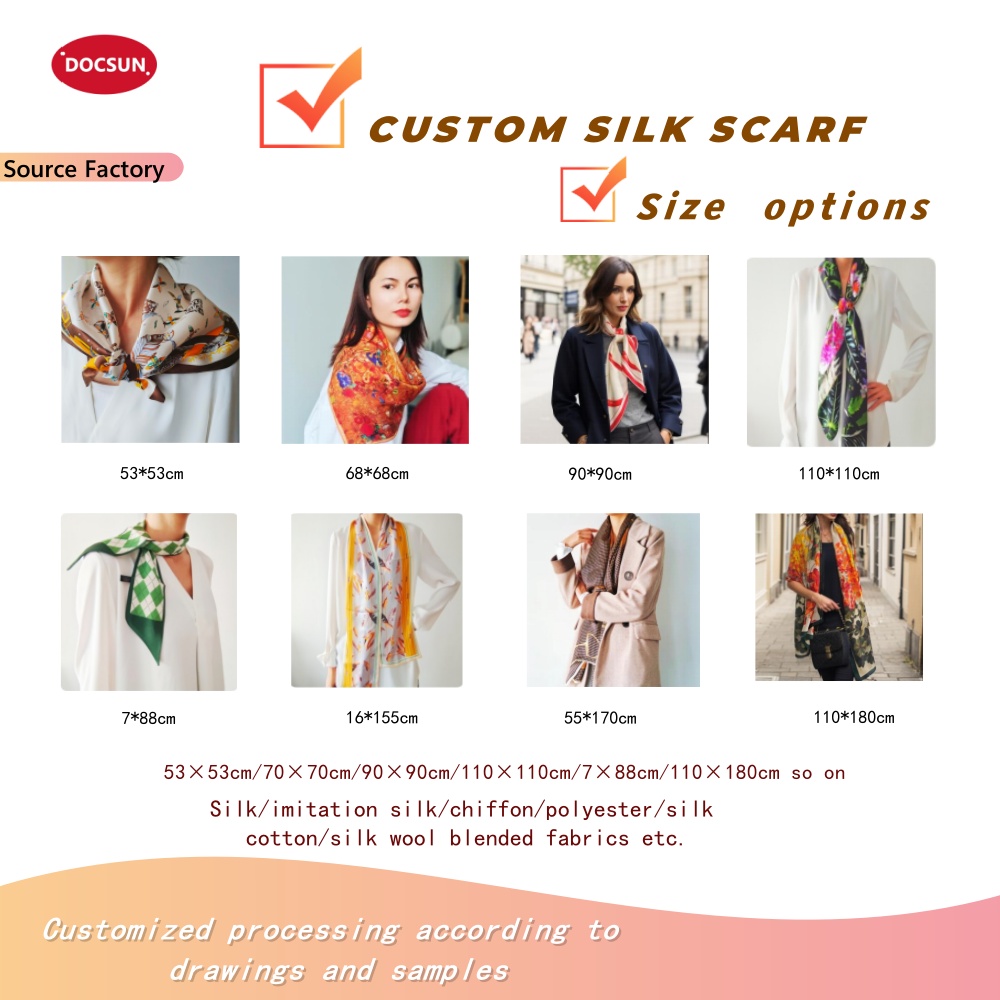
Available development options include mulberry silk fabrics such as twill, satin, chiffon, crepe, and georgette; square and rectangular sizes; single-sided or double-sided printing; hand-rolled or machine-finished edges; logo labels; hangtags; wash-care labels; branded boxes; sampling; and scalable production.
Buyers who want to evaluate previous work can review selected custom scarf cases. Color cards, fabric cards, and craftsmanship cards are also held at DOCSUN offices in Australia, the United States, and the United Kingdom. Contact the DOCSUN team to discuss availability and the best sample route for your market.
Frequently Asked Questions
What is the main difference between a hand-rolled hem and a machine-rolled hem?
A hand-rolled hem is shaped and stitched by hand, producing a soft, rounded edge with small natural variations. A machine-rolled hem is folded and sewn by machine, producing a flatter, more uniform edge with faster and more scalable production.
Is a hand-rolled silk scarf always better?
No. Hand rolling is valuable for luxury positioning, limited editions, and products where visible craftsmanship supports the selling price. Machine finishing may be the better choice for larger quantities, tighter schedules, promotional programs, or controlled retail pricing.
Are machine-rolled hems the same as overlock hems?
Not always. Machine finishing may include a narrow rolled hem, baby hem, lockstitch construction, or overlock-style finish. The specification should define the fold, stitch type, thread color, edge direction, and acceptable width.
Which edge finish is better for bulk custom silk scarf orders?
Machine finishing normally offers greater consistency, faster output, and lower labor cost for bulk orders. Hand rolling can also be used at scale when the budget and lead time allow, but workmanship tolerances and approval samples should be agreed before production.
Can DOCSUN provide samples before bulk production?
Yes. DOCSUN supports sampling for custom silk scarves. Color cards, fabric cards, and craftsmanship cards are also available through offices in Australia, the United States, and the United Kingdom. Contact DOCSUN to discuss the required materials and finishing options.
Final Recommendation
Use a hand-rolled hem when craftsmanship is a visible part of the product's value and the project can support the extra time and labor. Use a machine-finished hem when consistency, speed, cost control, and repeatability are the stronger priorities. In either case, approve the edge on the actual fabric and include measurable requirements in the product specification.
Start Your Custom Silk Scarf Project
Share your artwork, fabric preference, scarf size, quantity, edge finish, labels, and packaging requirements. DOCSUN will help you compare suitable production options and prepare the next sampling step.
Request a Consultation