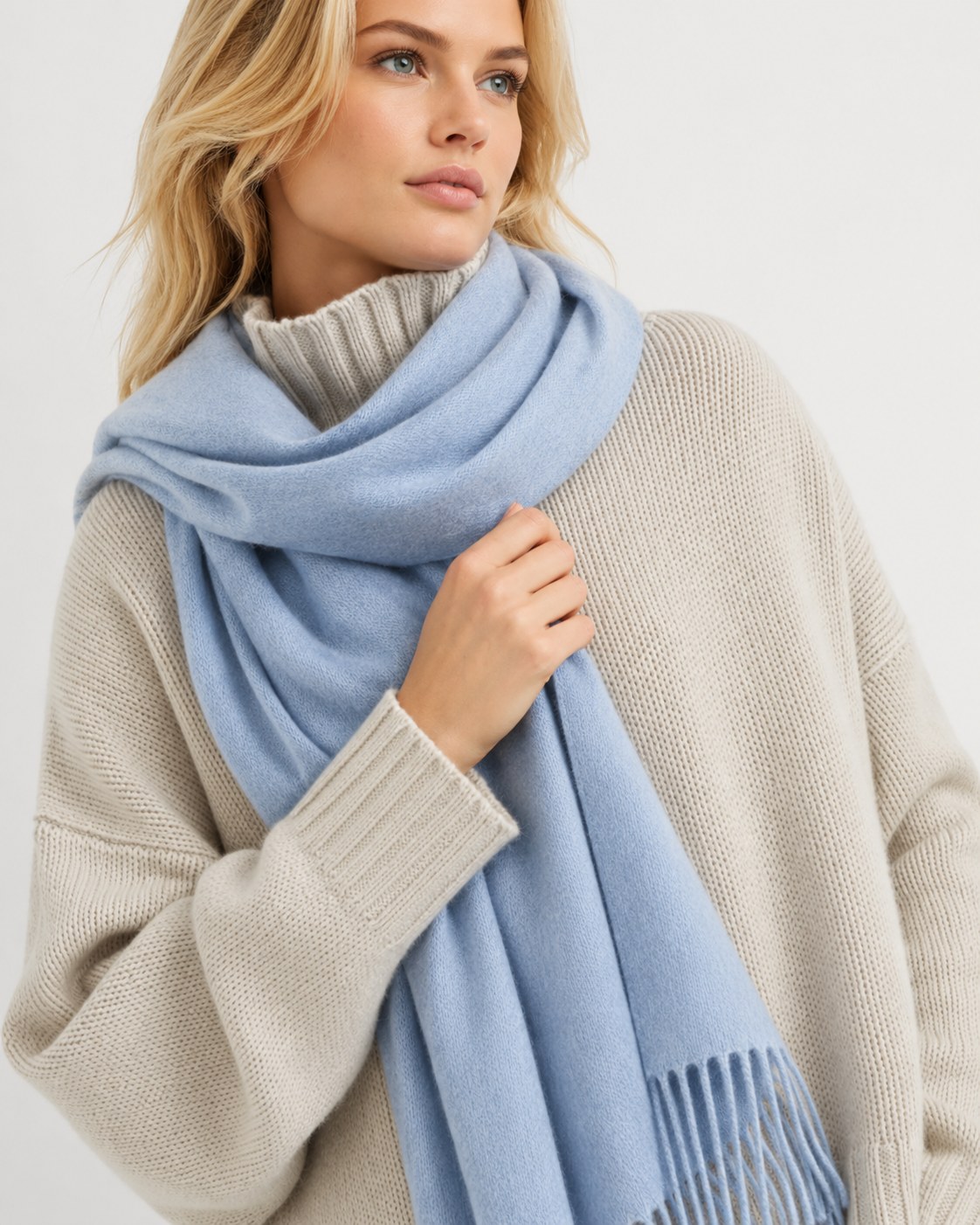
100% Pure Cashmere
Lightweight warmth and a fine halo for premium private label scarves. Yarn fineness and piece weight are approved together because softness alone does not verify cashmere value.
CUSTOM WINTER SCARF OEM / ODM
Build a bespoke winter collection from yarn to hem. DOCSUN develops custom cashmere scarves, custom wool scarves, silk blends, knitted winter accessories and oversized wraps through specialized woven and knitted production resources selected for each approved yarn, structure and order scale.
Explore Custom Winter Scarf Manufacturing
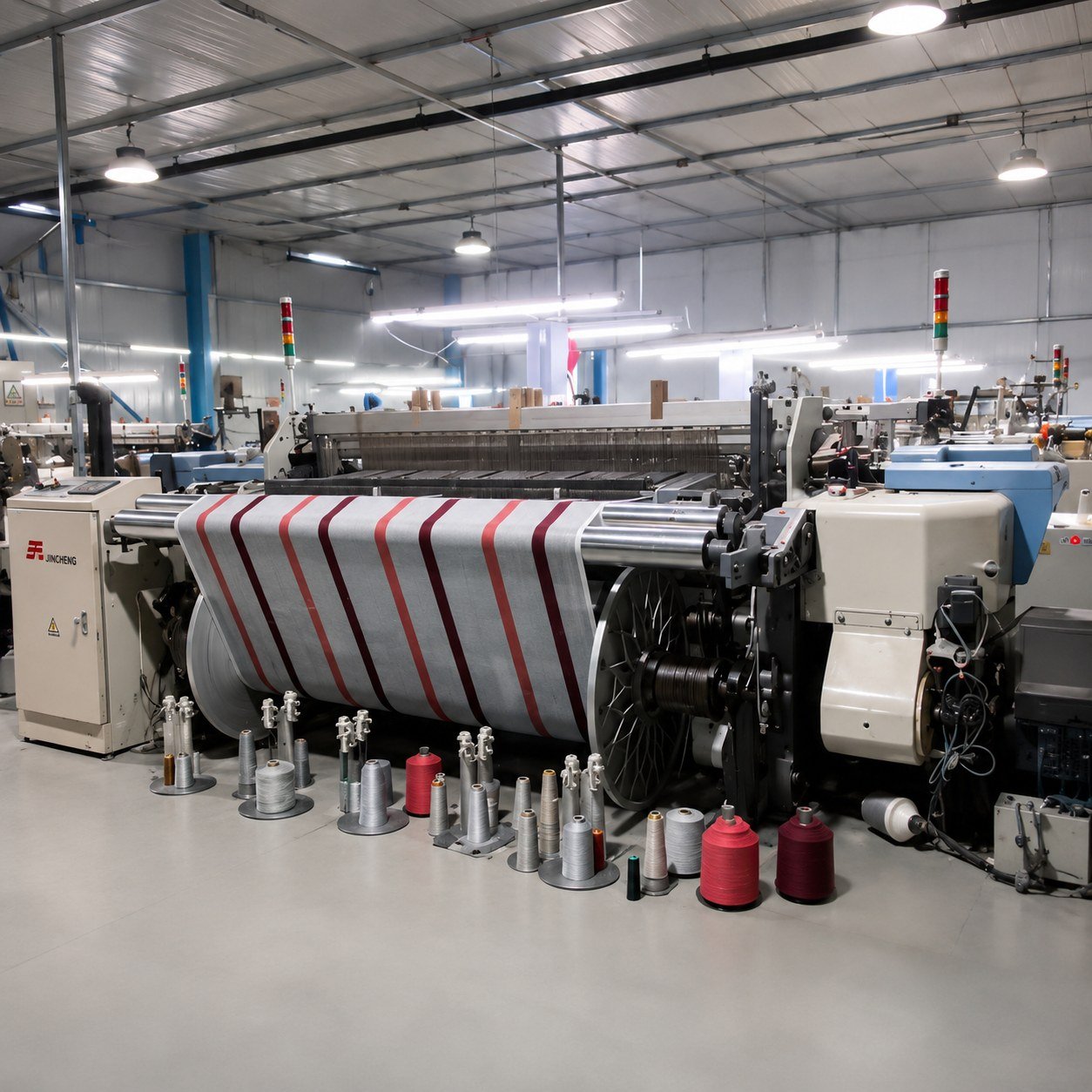
DOCSUN coordinates yarn sourcing, knitting or weaving, color approval, washing, brushing, pressing and final inspection through specialized production resources selected for the approved yarn, construction and order scale. Rapier looms support efficient woven programs, while jacquard equipment converts approved repeat files into reversible motifs, monograms and structured winter scarf designs.
Fiber origin, yarn supplier, composition and manufacturing location are recorded as separate sourcing fields. A production location is never used as a substitute for fiber traceability, and each bulk program follows the approved material specification and physical sample.
Manufacturing control starts before the loom or knitting machine runs. The specification records fiber composition, yarn count, ply, finished size, target grammage or piece weight, edge construction, shrinkage allowance, label position and packaging method. The approved physical sample remains the production reference.
In cashmere manufacturing, missing grams can mean missing fiber and a different hand feel. Our internal QC team checks weight directly after weaving or knitting and again after finishing. If a scarf approved at 75 g measures 64.7 g and falls outside the agreed tolerance, it is rejected internally before shipment. Buyers receive the specification they approved, not a lighter substitute.
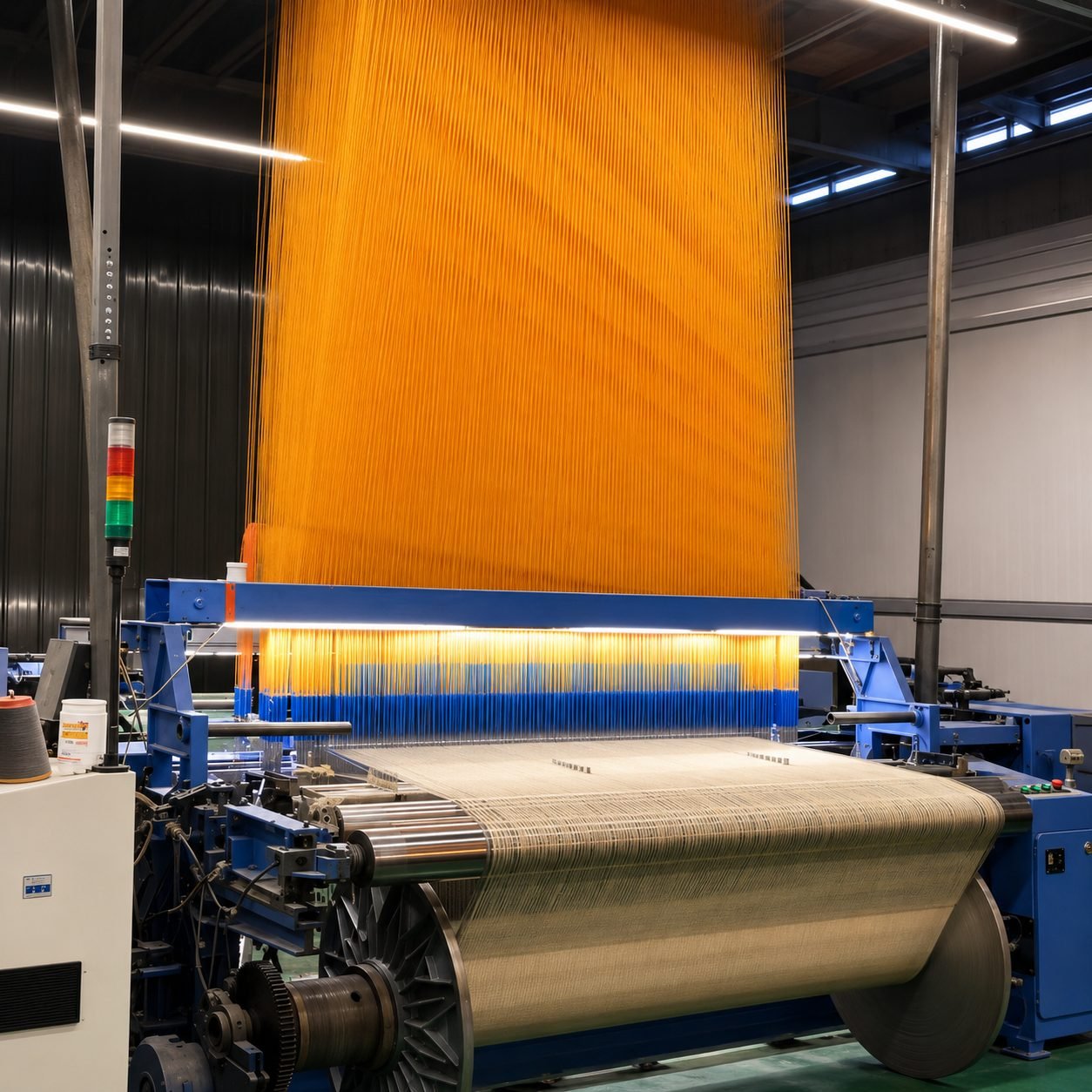
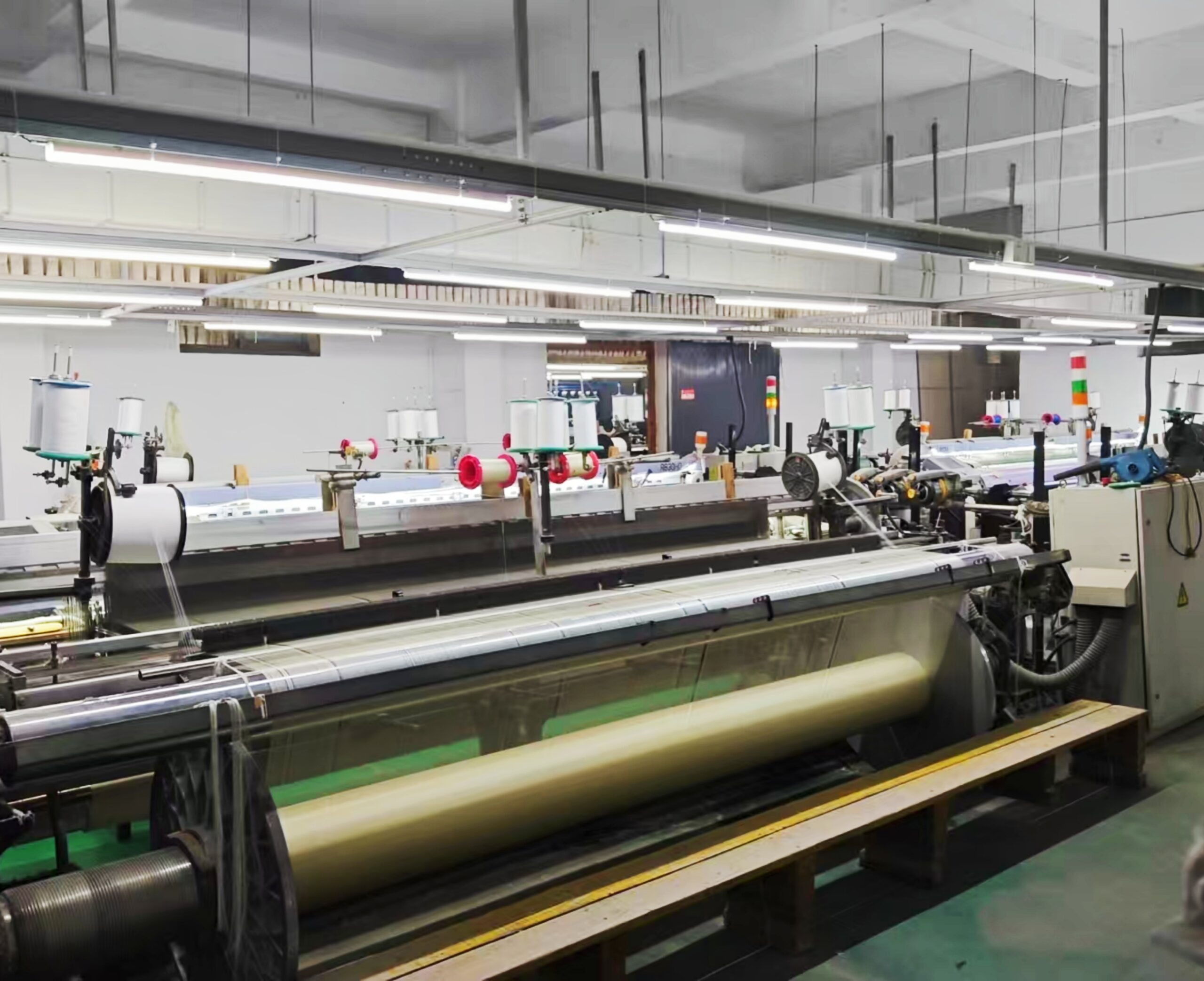
A reliable luxury scarf supplier should explain what each fiber contributes instead of treating every soft fabric as “cashmere.” We develop pure cashmere, extra-fine merino, premium lambswool, cashmere wool blend scarf programs, 100% brushed silk and commercial wool-nylon or faux cashmere alternatives. Brands seeking a lighter balance of silk drape and wool warmth can also review our custom silk wool scarf development. Composition, micron range, yarn count, finished weight and anti-pilling requirements are confirmed in the tech pack and sample.
| Fiber route | Typical positioning | What buyers should approve | Suitable products |
|---|---|---|---|
| 100% pure cashmere | Highest softness-to-weight and luxury value. | Fiber fineness, yarn count, ply, weight, finish and pilling target. | Premium scarves, wraps and travel sets. |
| Extra Fine Merino Wool / Premium Lambswool | Clean wool performance with scalable commercial pricing. | Approximate micron specification, woolen or worsted yarn, surface finish and shrinkage. | Classic woven scarves, knitted scarves and branded winter collections. |
| 30% cashmere / 70% wool | A balanced cashmere halo with durable wool structure. | Blend ratio, weight, brushing level and hand-feel sample. | High-margin wraps and accessible luxury ranges. |
| 100% brushed silk | A smooth, low-prickle cashmere alternative with a distinctive silk drape. | Silk composition, brushing level, density and wash-care requirements. | Skin-contact scarves and refined transitional-season wraps. |
| Wool-nylon blend / faux cashmere | Commercial durability, shape retention and controlled price. | Exact composition, pilling performance, recovery, color and care label. | Daily wear, corporate gifting and high-volume winter programs. |
Lightweight warmth and a fine halo for premium private label scarves. Yarn fineness and piece weight are approved together because softness alone does not verify cashmere value.
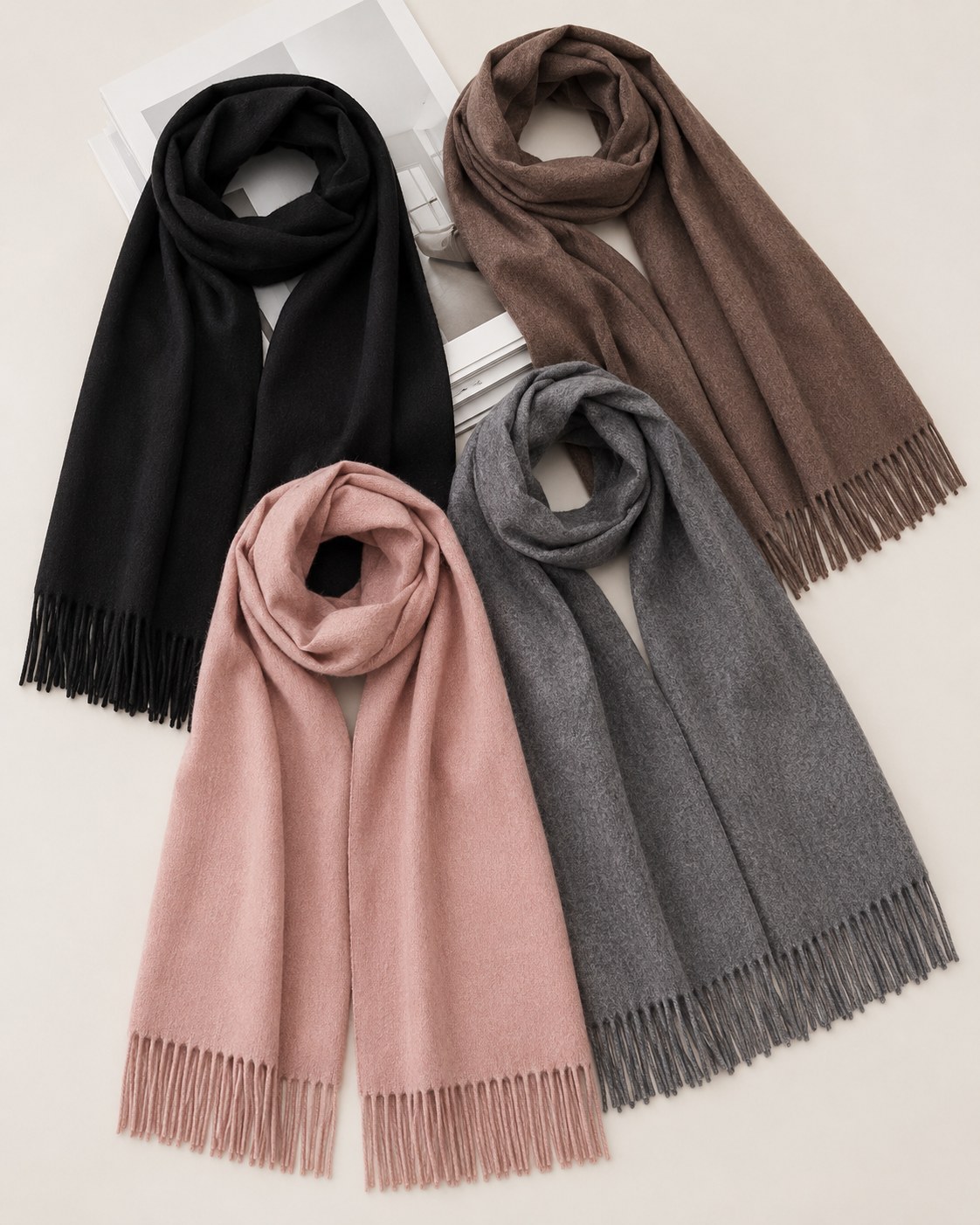
Develop coordinated seasonal palettes through available yarn cards or custom dyeing. Shade approval is completed before the full yarn lot enters production.
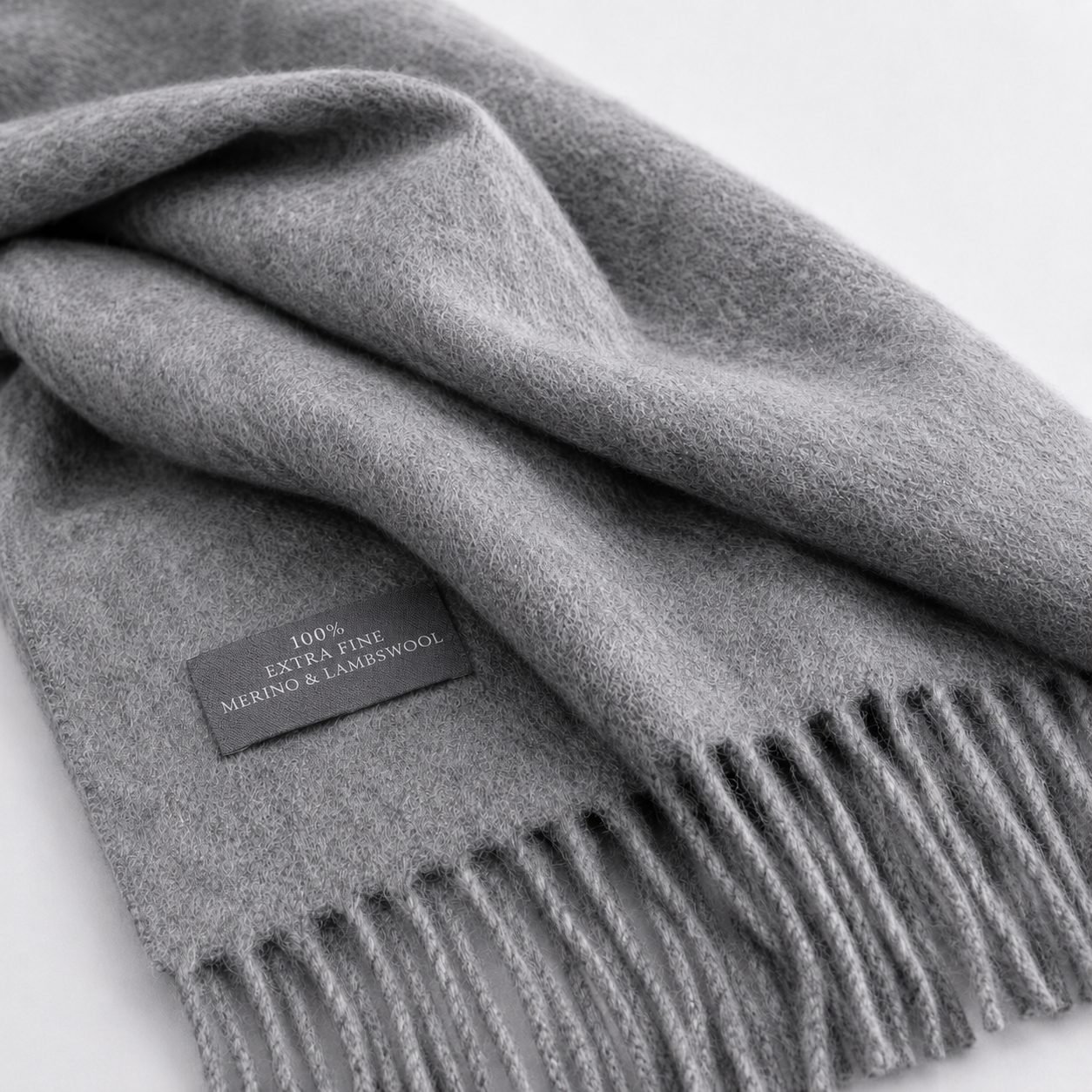
Fine merino specifications from approximately 15 to 19.5 microns can support soft, low-prickle positioning. Because sensitivity varies, the buyer approves the actual yarn and finished sample.
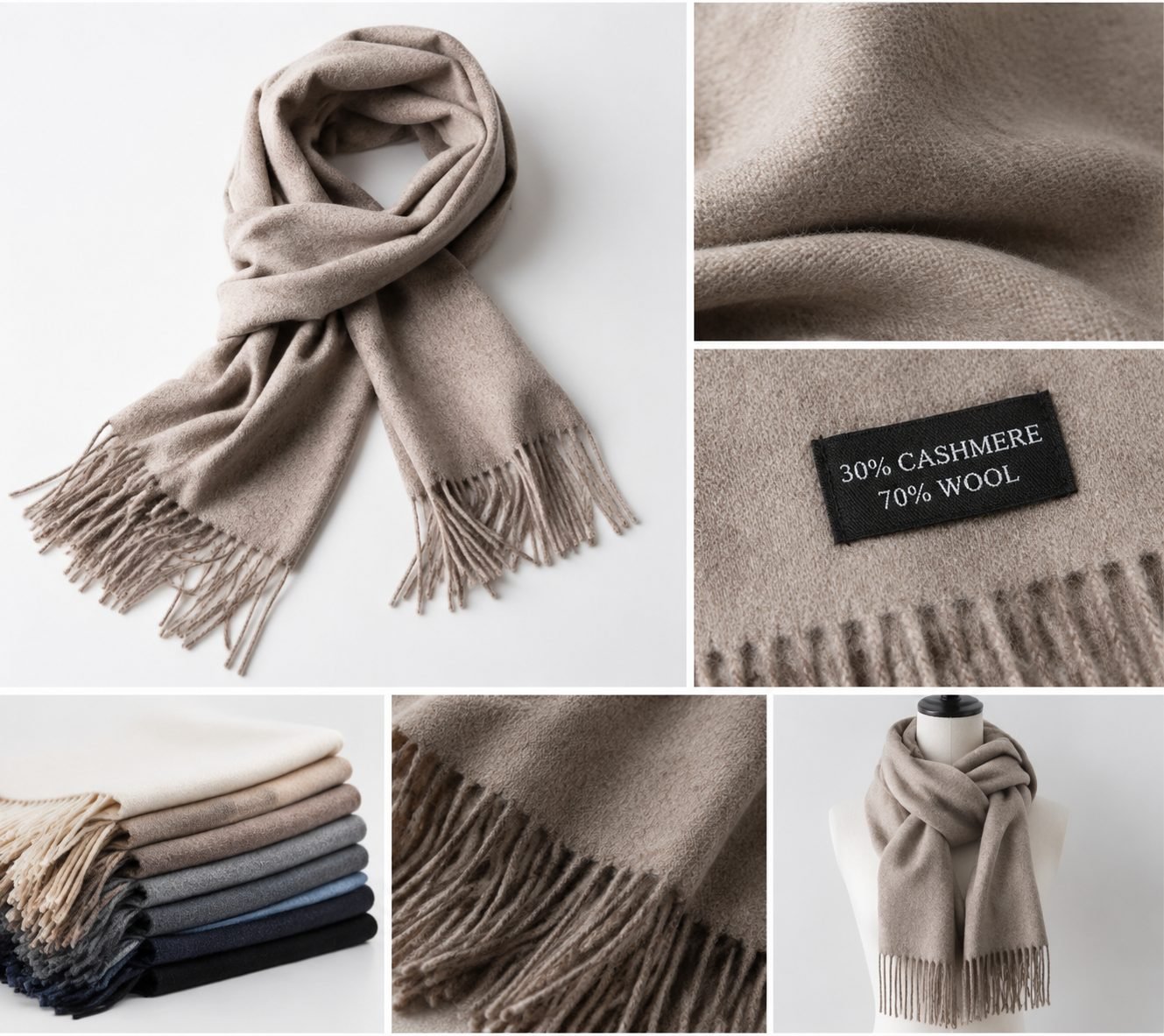
This “golden ratio” route provides visible loft and cashmere character while wool reinforces structure, recovery and commercial durability. It is a practical bridge between pure cashmere and standard wool.
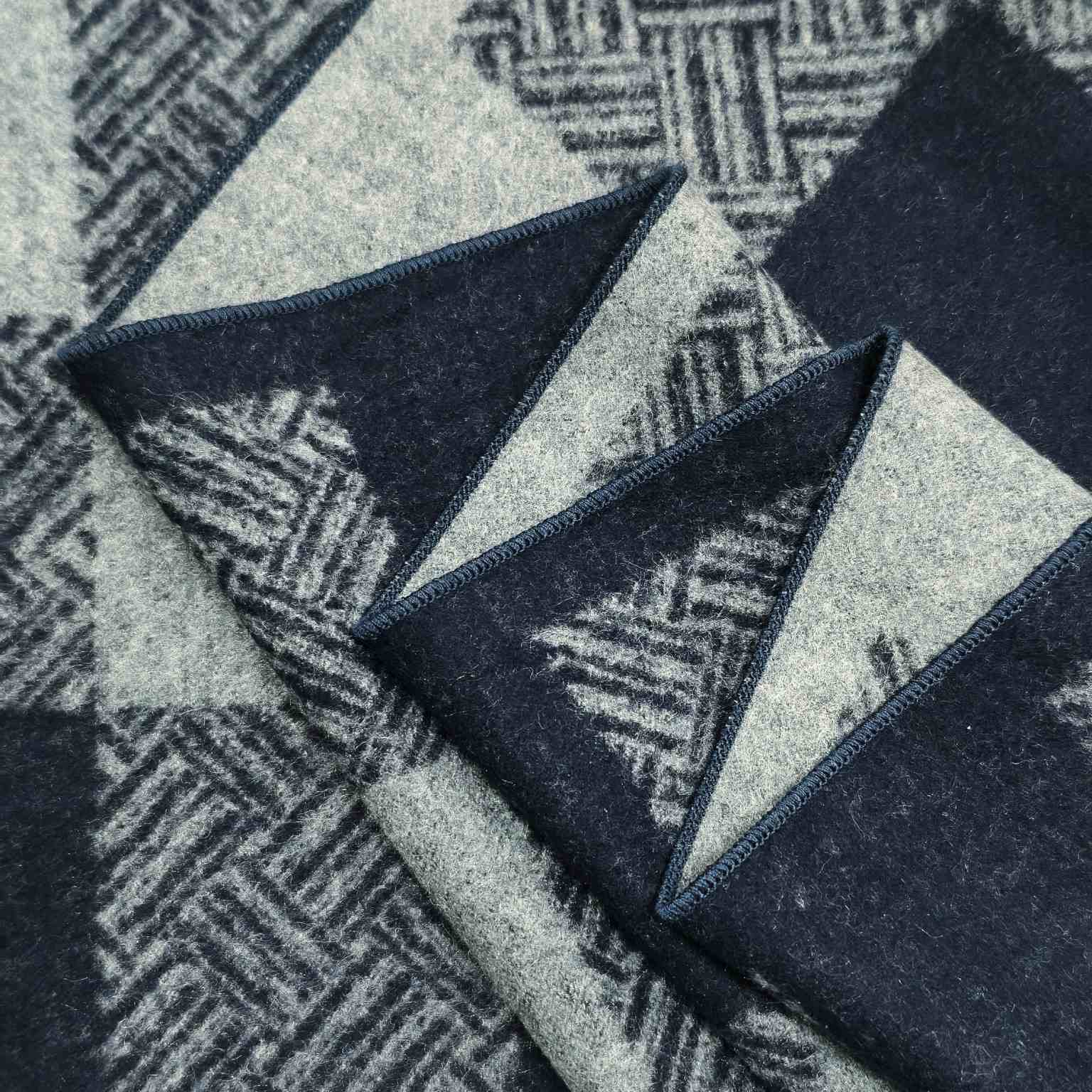
Brushing raises the silk surface to create warmth and a soft touch while retaining silk's fluid drape. Silk is animal-derived and is not a vegan fiber; we position it accurately as a distinctive silk-based alternative for sensitive-feel collections.
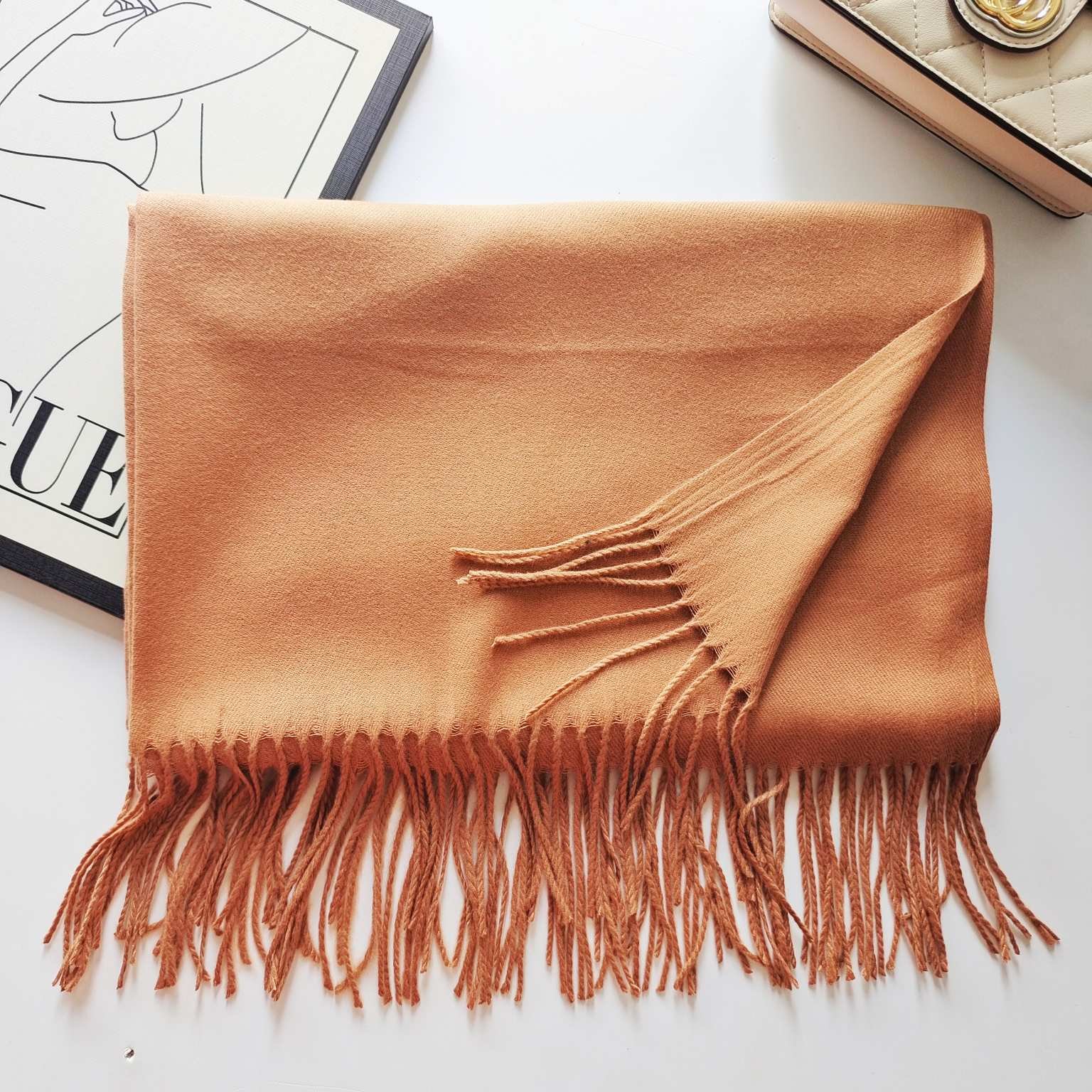
Engineered man-made fibers can provide a smooth brushed hand at a controlled price. Exact fiber content is disclosed on the specification and care label; the product is never represented as real cashmere.
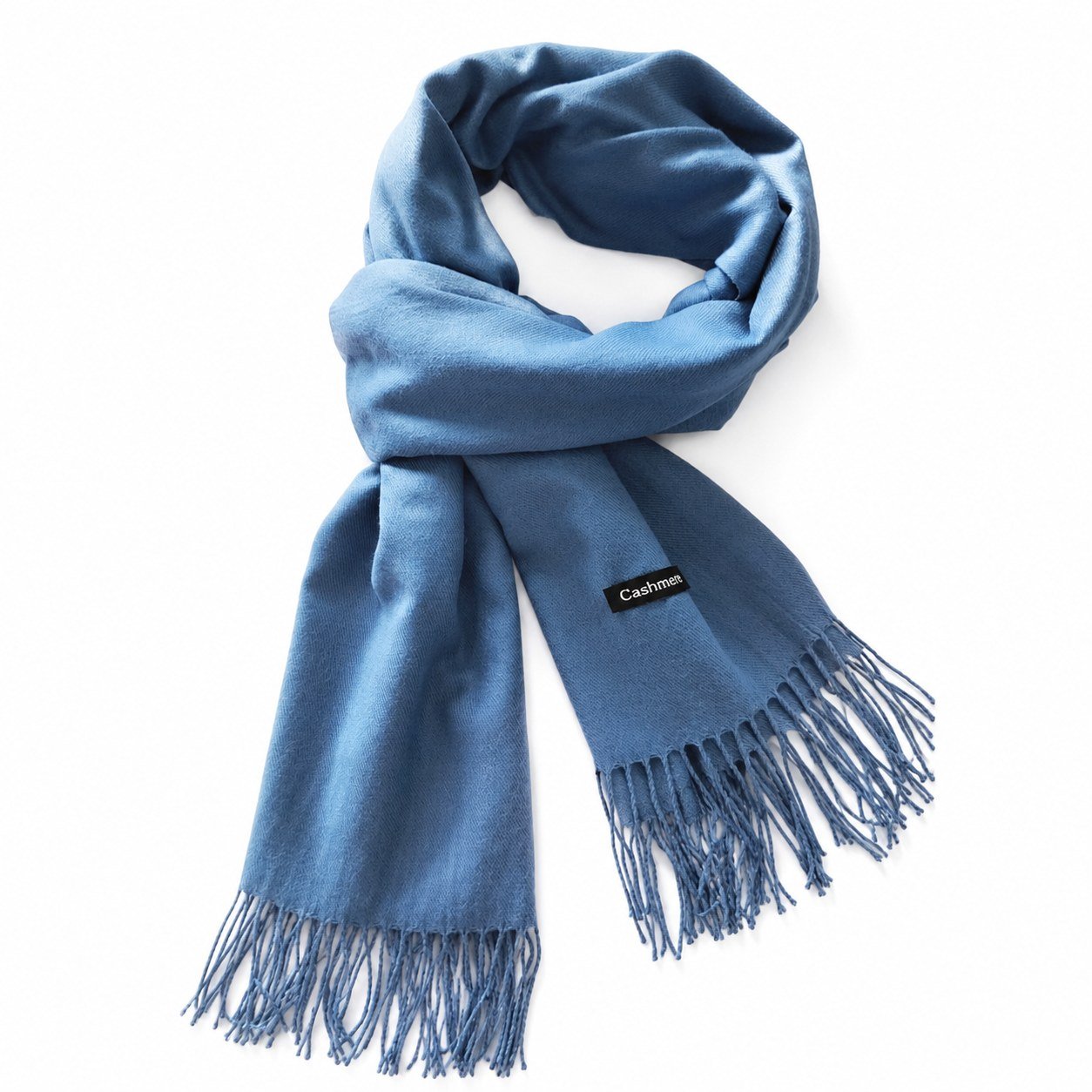
Nylon can act as a strengthening core in an approved wool-nylon blend, improving tear resistance and shape retention for frequent wear. Anti-pilling performance is developed through yarn choice, construction and finishing, not fiber claims alone.
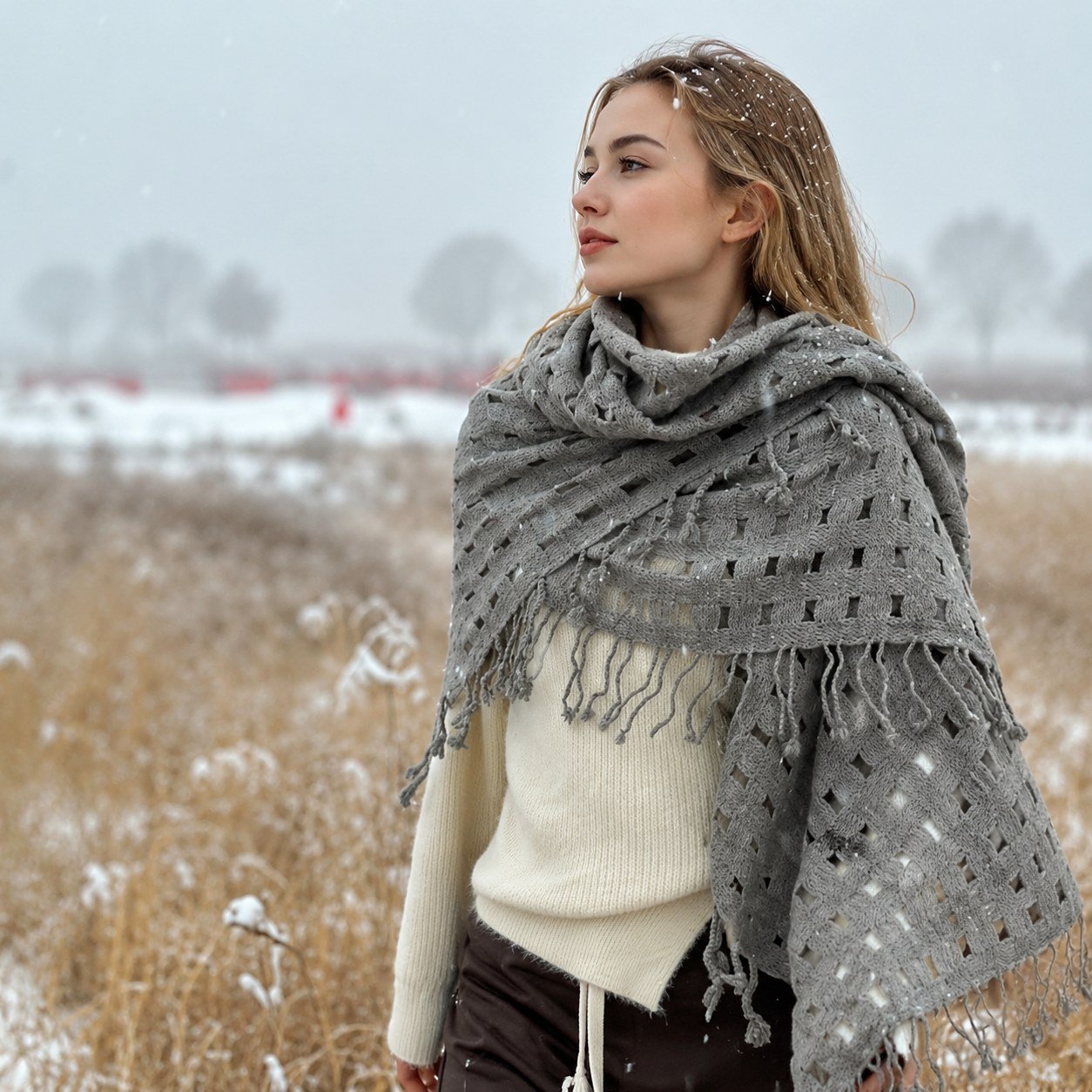
Custom wool scarves do not need to be uniformly thick. Yarn system, fiber alignment, gauge and structure can create transparent evening wraps, compact tailored scarves, deep woolen-spun insulation or high-volume chunky knits. We confirm the target warmth, weight and visual transparency before selecting the machine and yarn route.
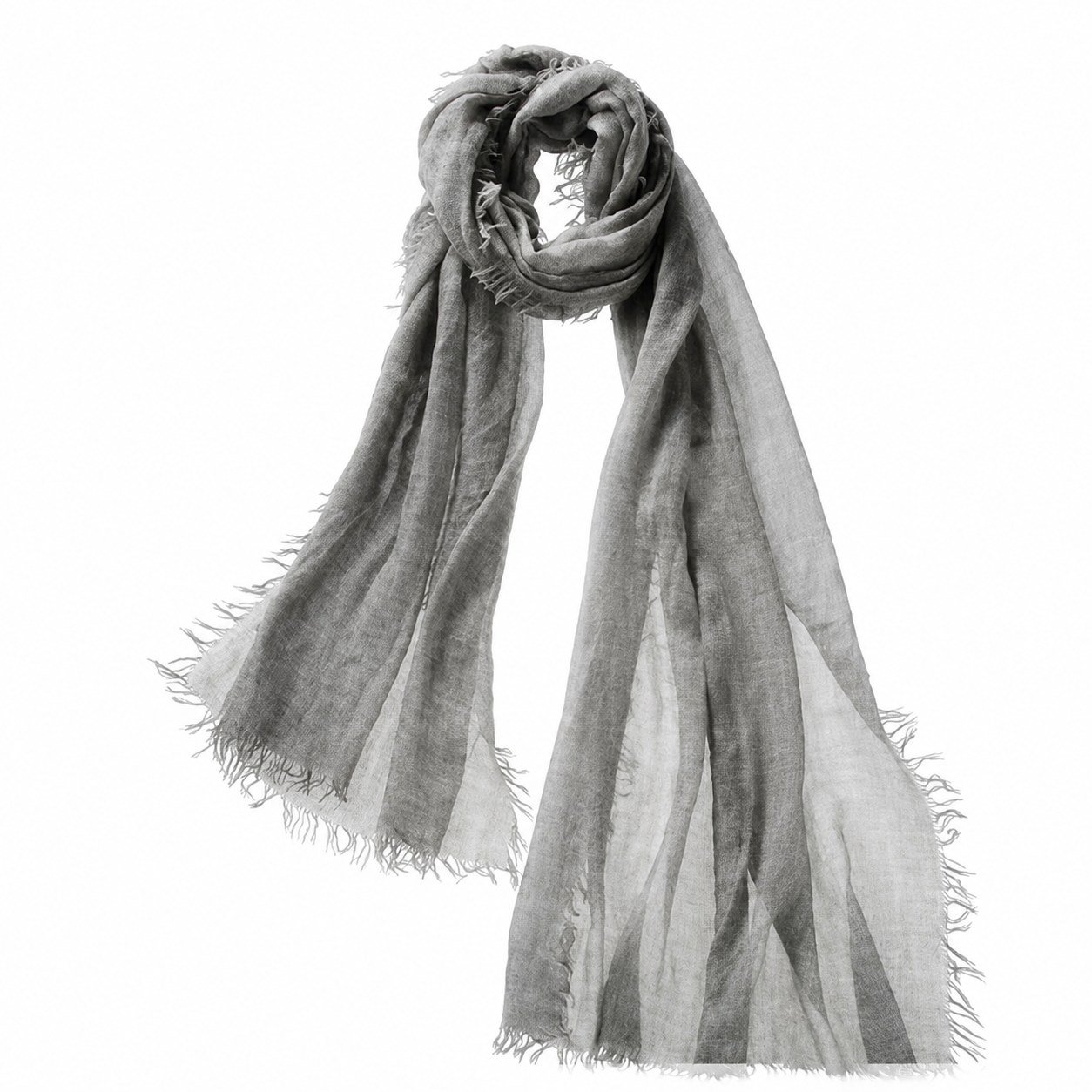
Fine worsted constructions and 200s-plus water-soluble support-yarn techniques can produce sheer “ring pashmina” effects. The temporary support yarn is removed during finishing, leaving a light, open structure for spring, summer or evening use.
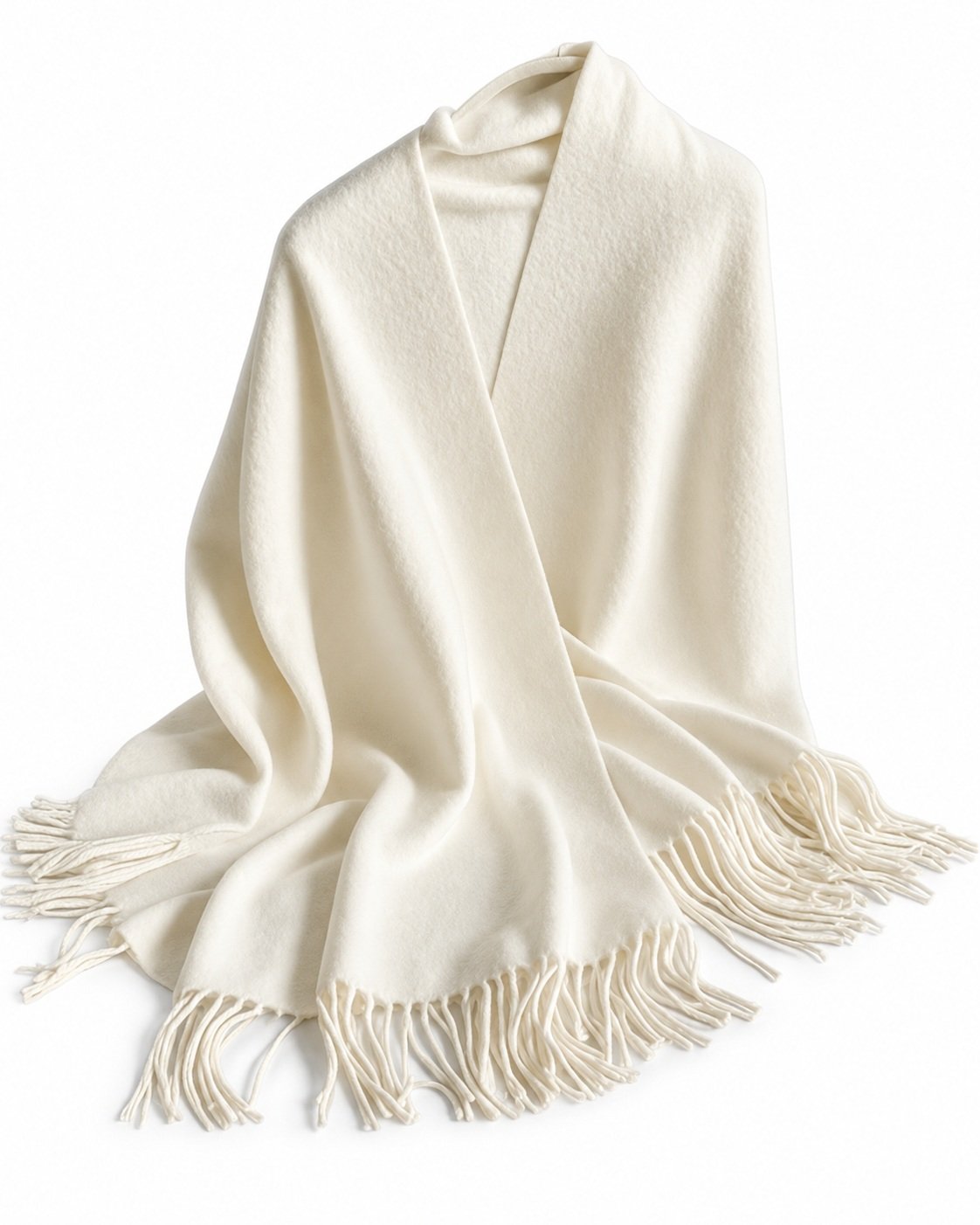
Woolen-spun yarn retains a fuller arrangement of fibers and more trapped air than a compact worsted route. The result is a deeper, softer surface suited to cold-weather scarves and substantial wraps.
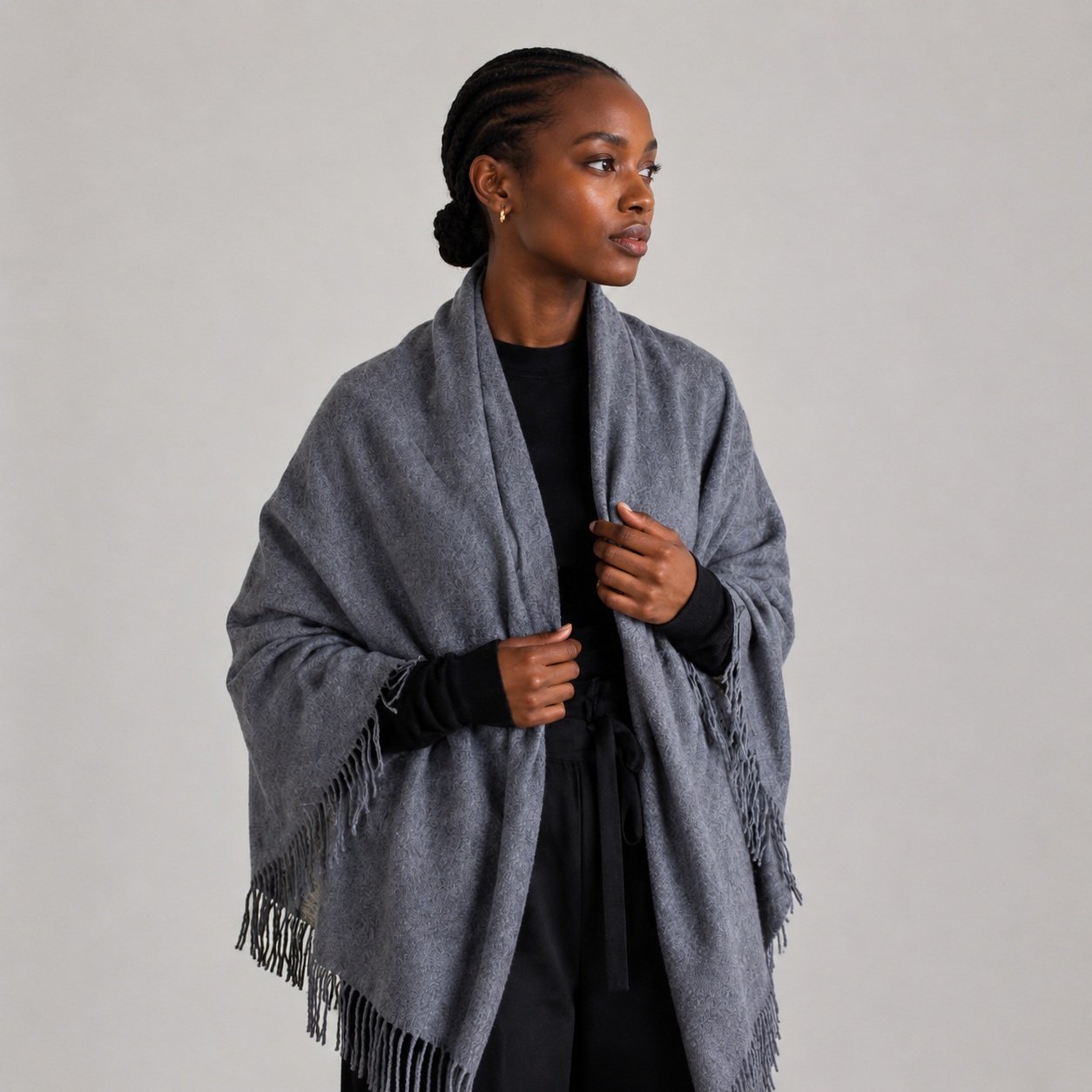
Multiple yarn ends, denser gauges and controlled fulling build body for winter warmth. Finished weight is monitored so visual volume does not conceal under-spec material usage.
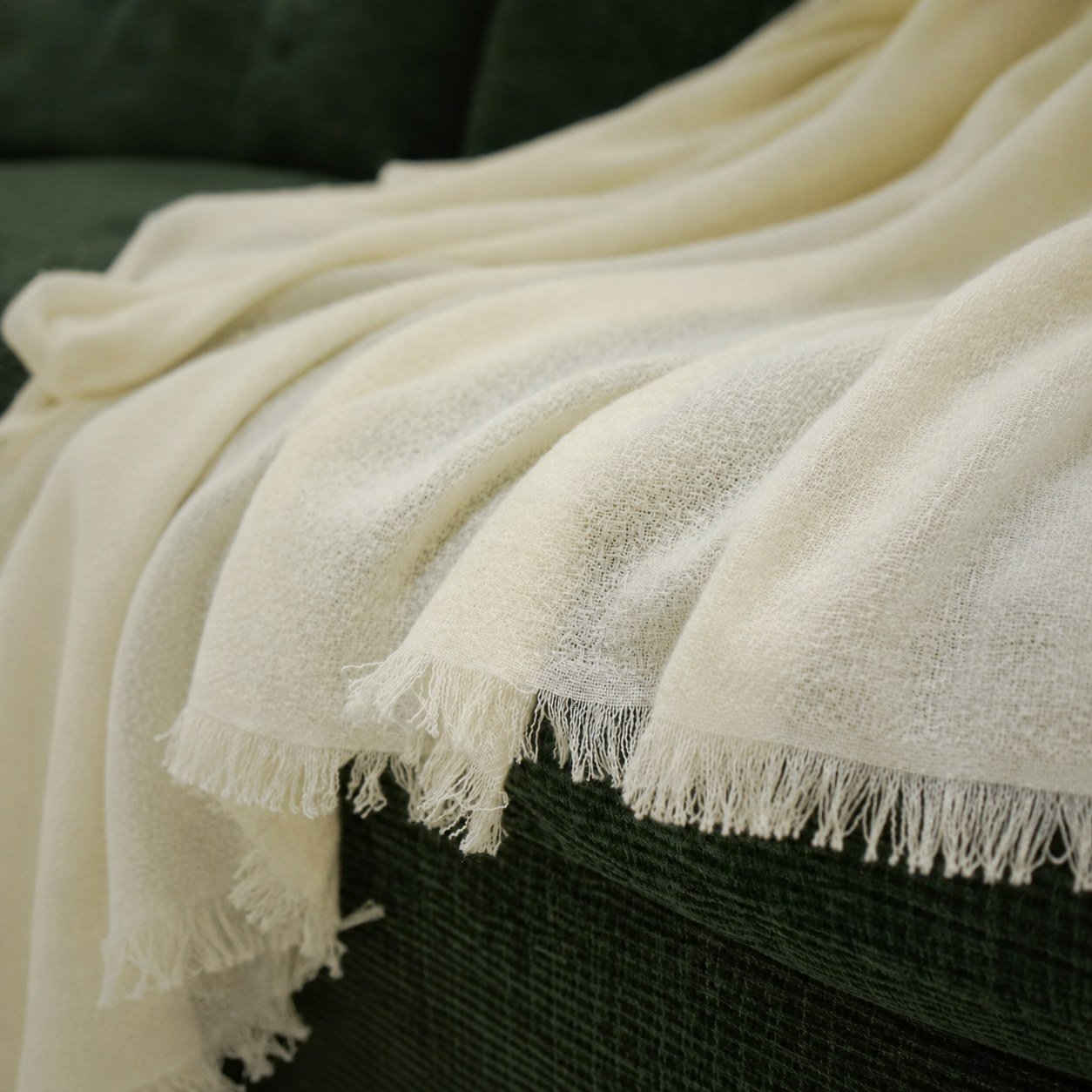
Textured knitted structures create dimensional surfaces for low MOQ capsule collections. Gauge, yarn ply and clean ribbed hem construction are balanced to reduce curling and preserve shape.
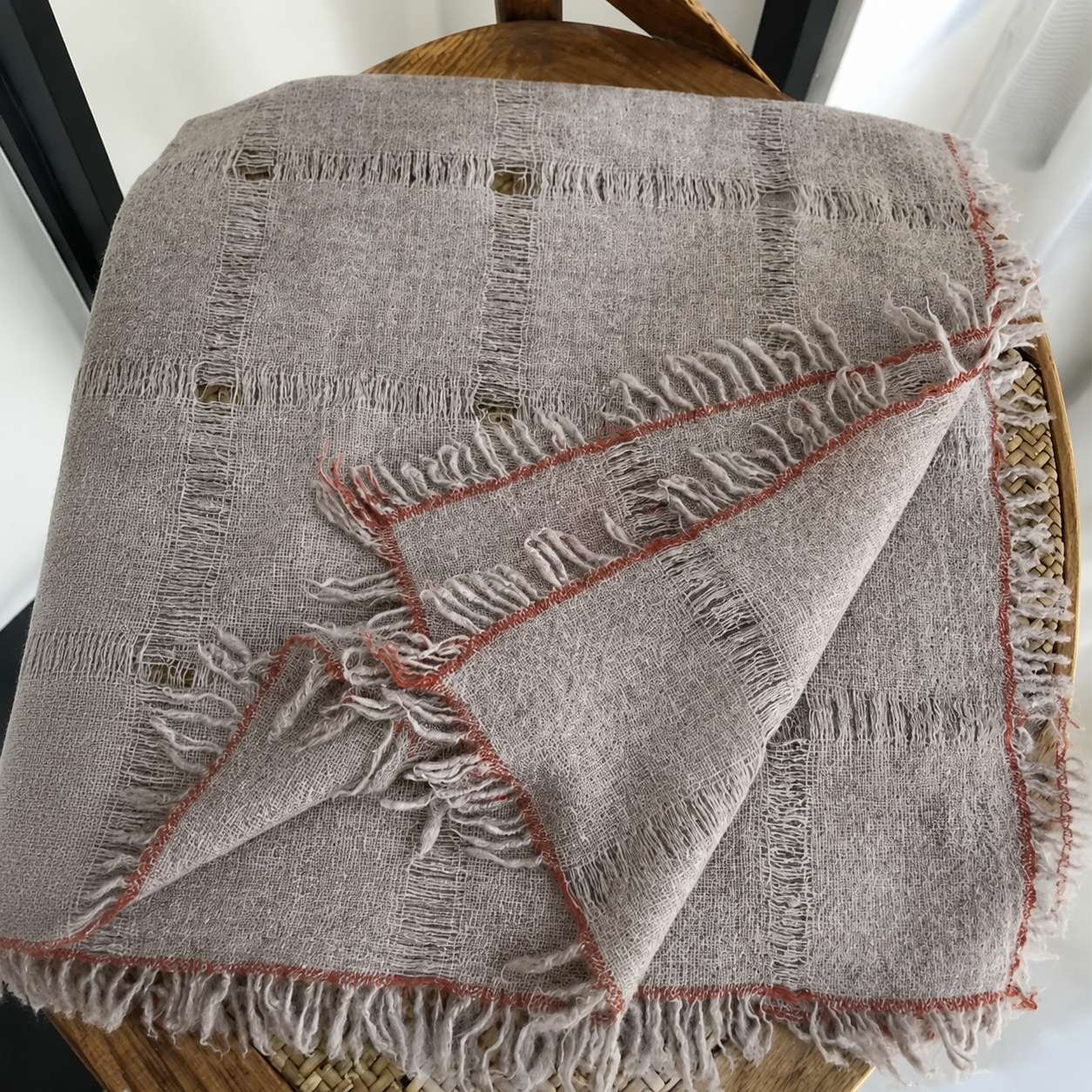
An open weave or loose knitted gauge introduces visible air space, giving a scarf large visual volume without matching heavyweight mass. The development sample checks snag risk, dimensional stability and practical recovery before bulk approval.
Pattern choice should follow the yarn and structure, not be applied as an afterthought. Our team reviews repeat scale, face and reverse appearance, color count, line clarity and finishing compatibility before recommending yarn-dyed jacquard, clipped jacquard, double-faced weaving, ombre dyeing or reactive digital printing. For artwork preparation and print planning, see our custom printing capabilities.
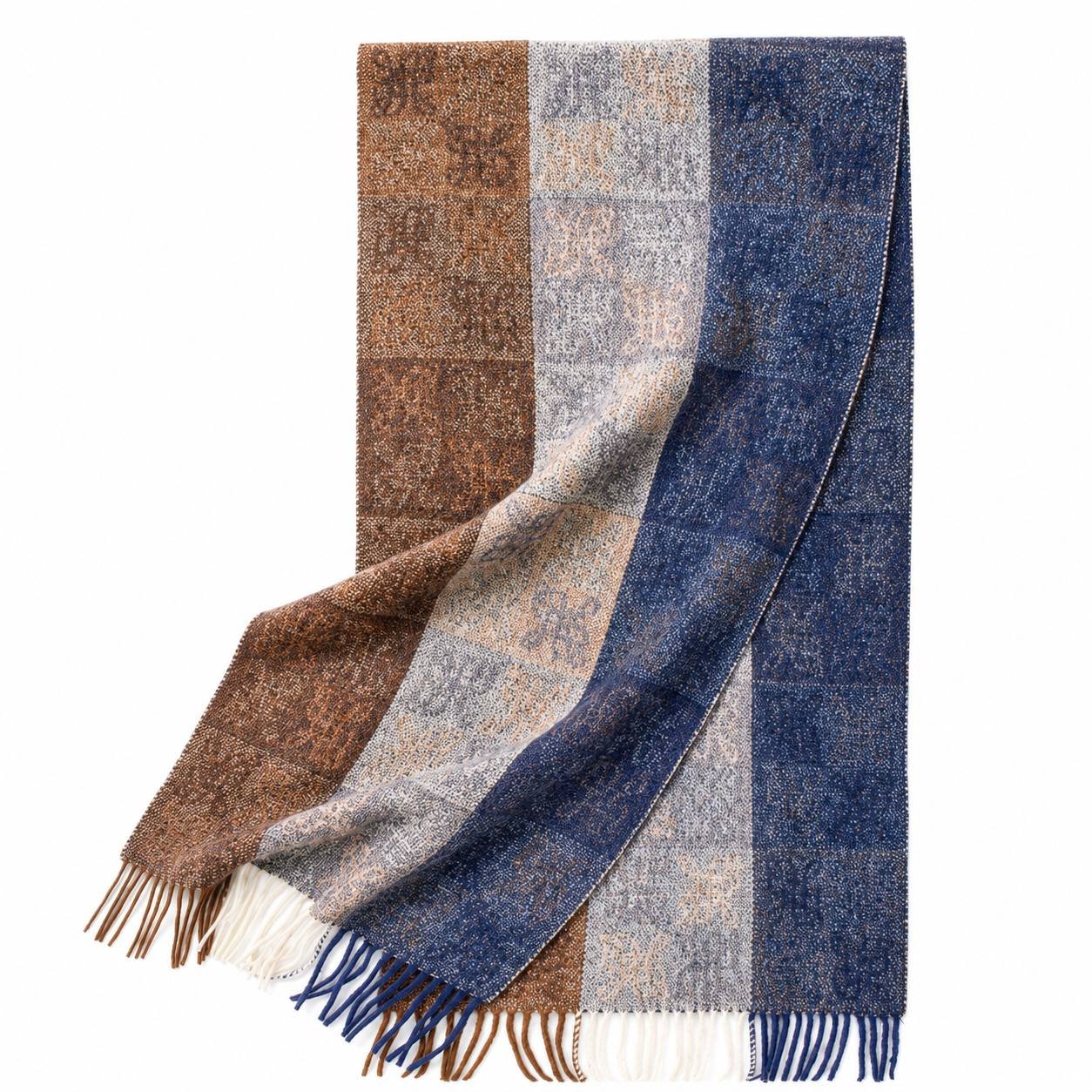
Logo motifs and repeats are woven into the fabric rather than printed on top. This creates a tactile, reversible appearance and strong brand recognition for luxury scarf collections.
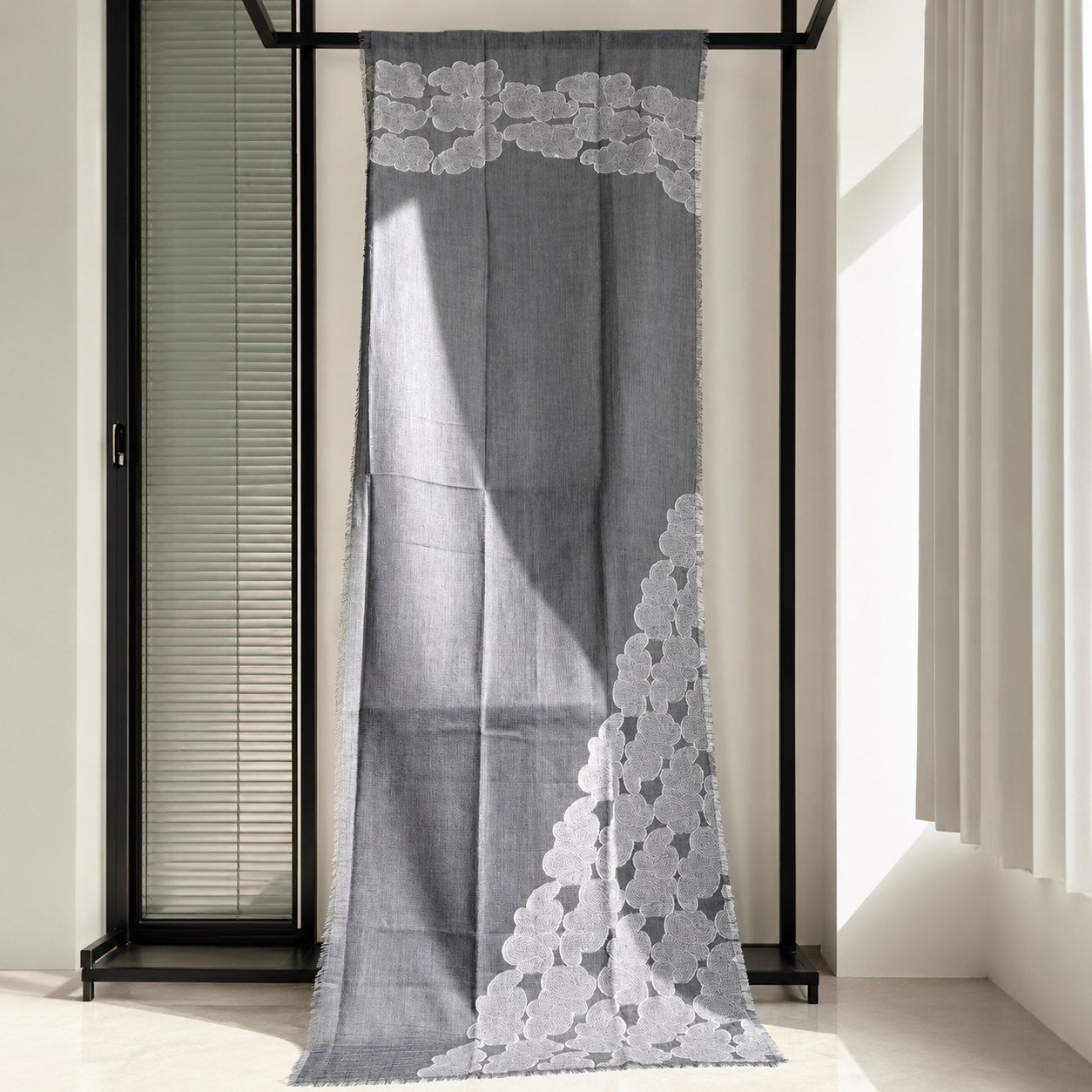
Fil coupé, also called clipped jacquard, weaves supplementary floating threads into a motif and then carefully clips them. The technique builds a raised three-dimensional effect without relying on conventional embroidery.
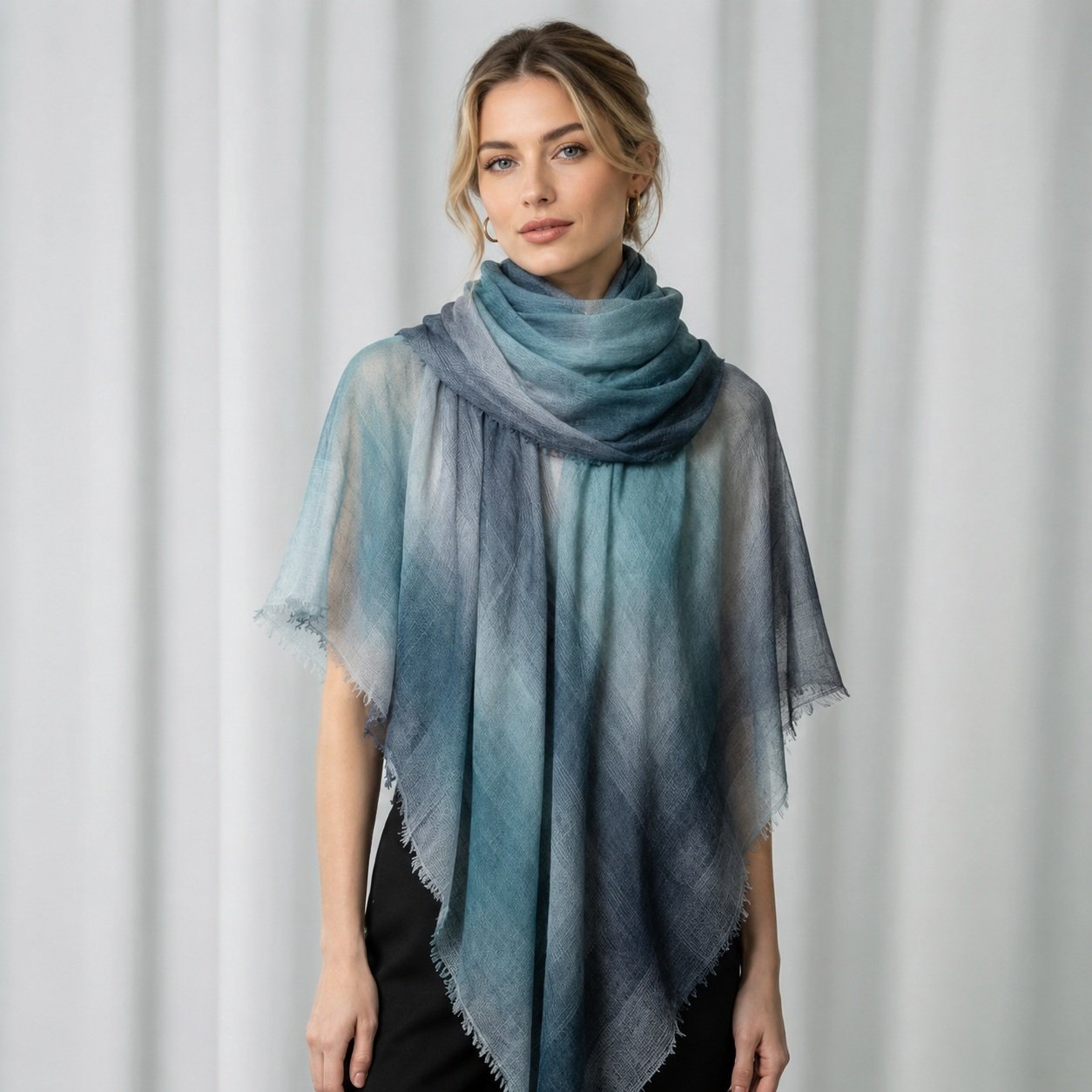
Double-cloth looms can produce two coordinated faces in one reversible wrap. Gradient dip-dyeing and ombre finishing add controlled tonal movement after the structure is approved.
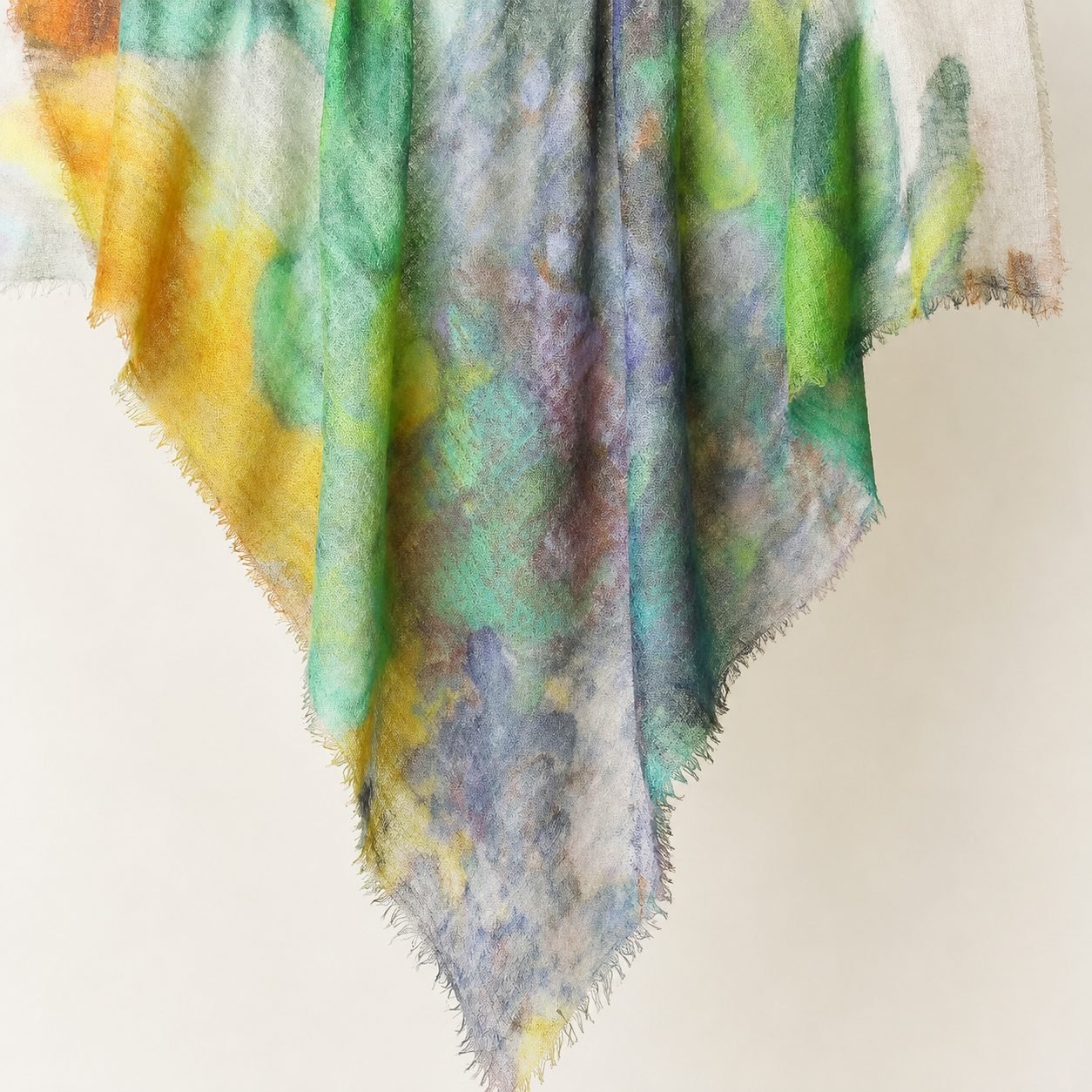
High-resolution artwork can be translated into delicate watercolor transitions on compatible cashmere, wool or silk-based fabrics. Color proofing remains essential because fiber, surface hair and finishing affect perceived saturation.
Choose from available yarn cards or request small-vat dyeing from approximately 25 kg. Custom shades are matched to an agreed physical reference or Pantone code, then evaluated under consistent light before the production lot is released.
Finished size changes drape, weight and unit cost. We calculate yarn consumption and finishing allowance from the approved dimensions, then specify tolerance after washing, brushing and pressing. Custom sizes remain available beyond the common references below.
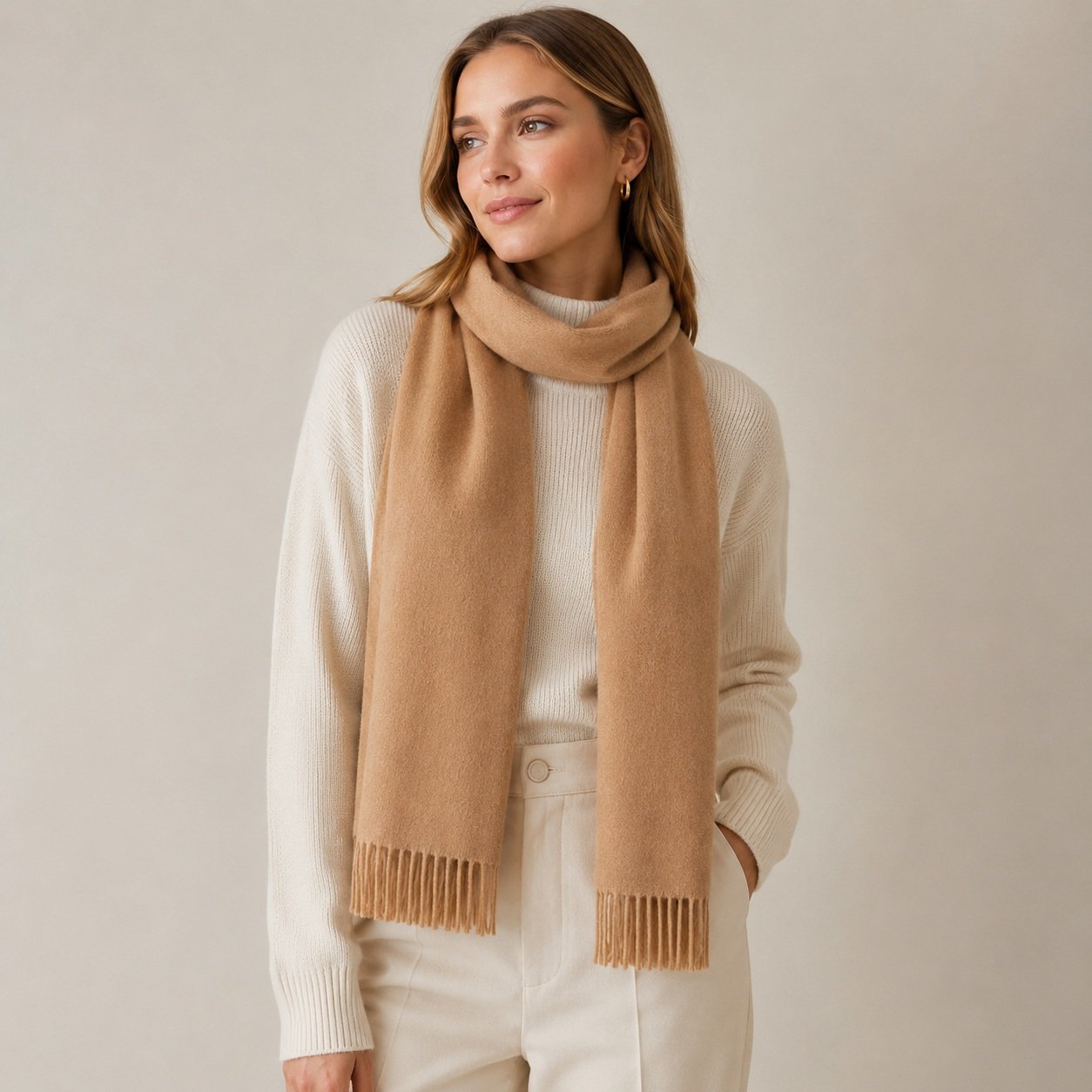
A practical neck scarf proportion for retail winter collections, uniforms and corporate gifting.
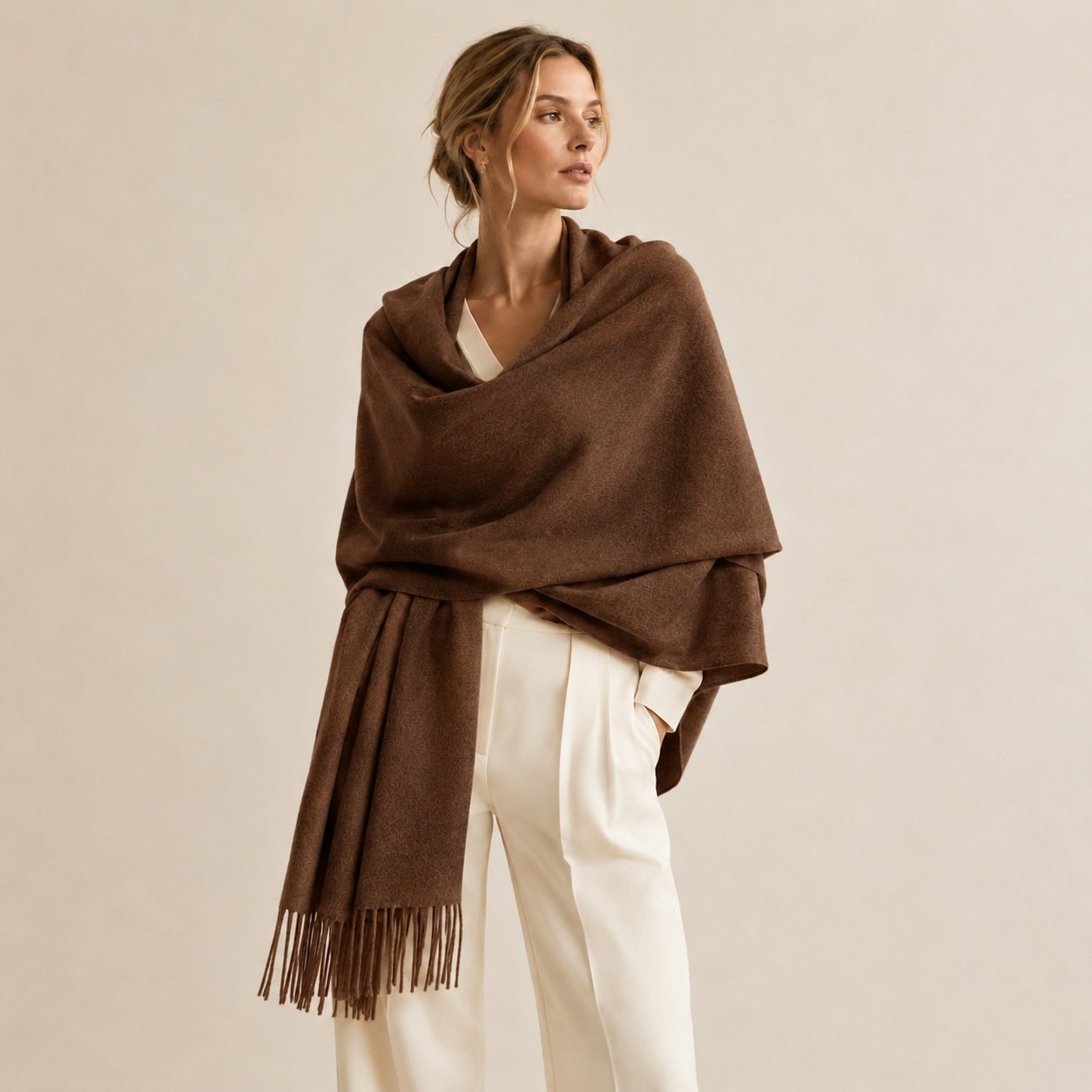
More surface area for jacquard repeats, gradient color, premium drape and multi-way styling.
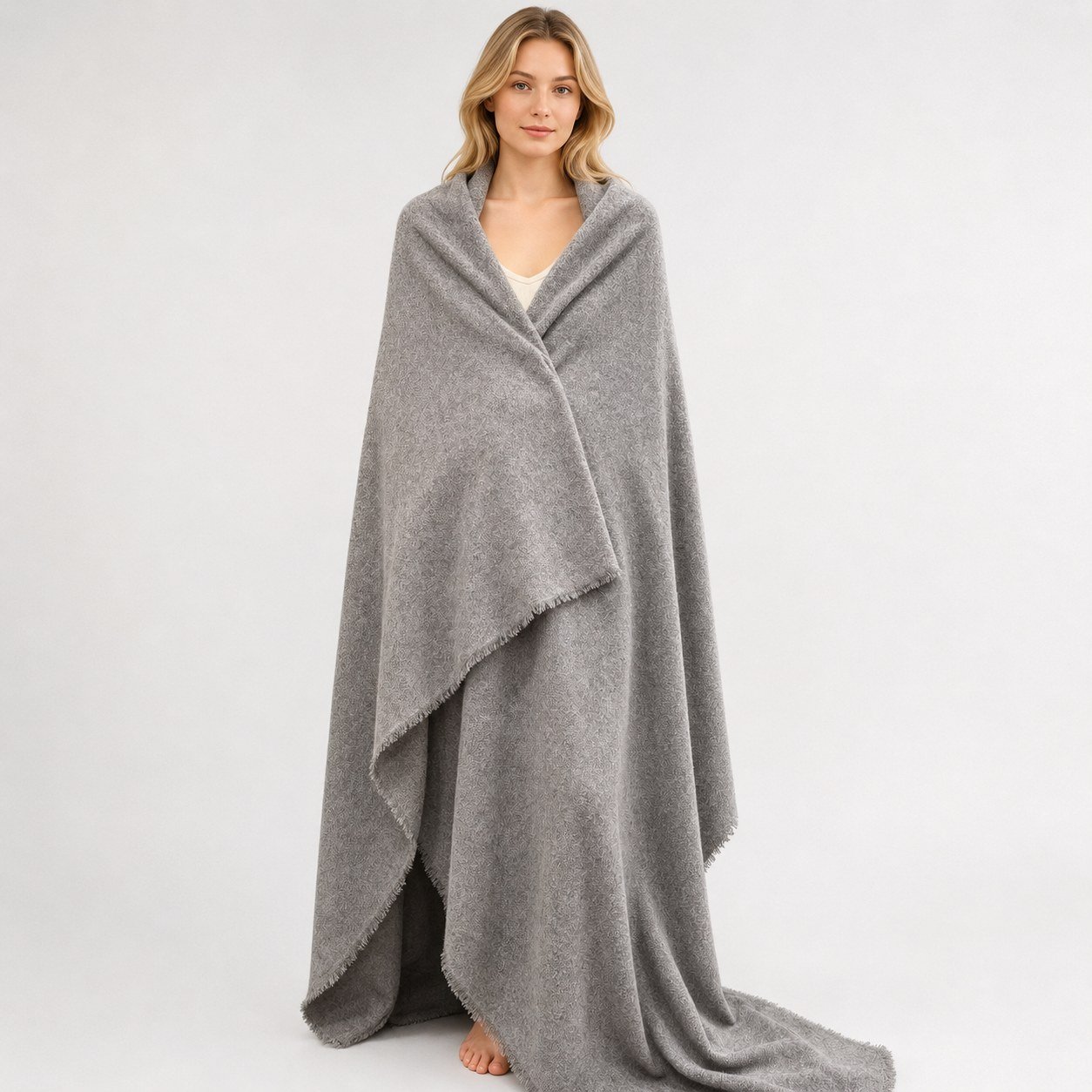
A large-format throw for travel, hospitality, premium gifting and branded home-accessory programs.
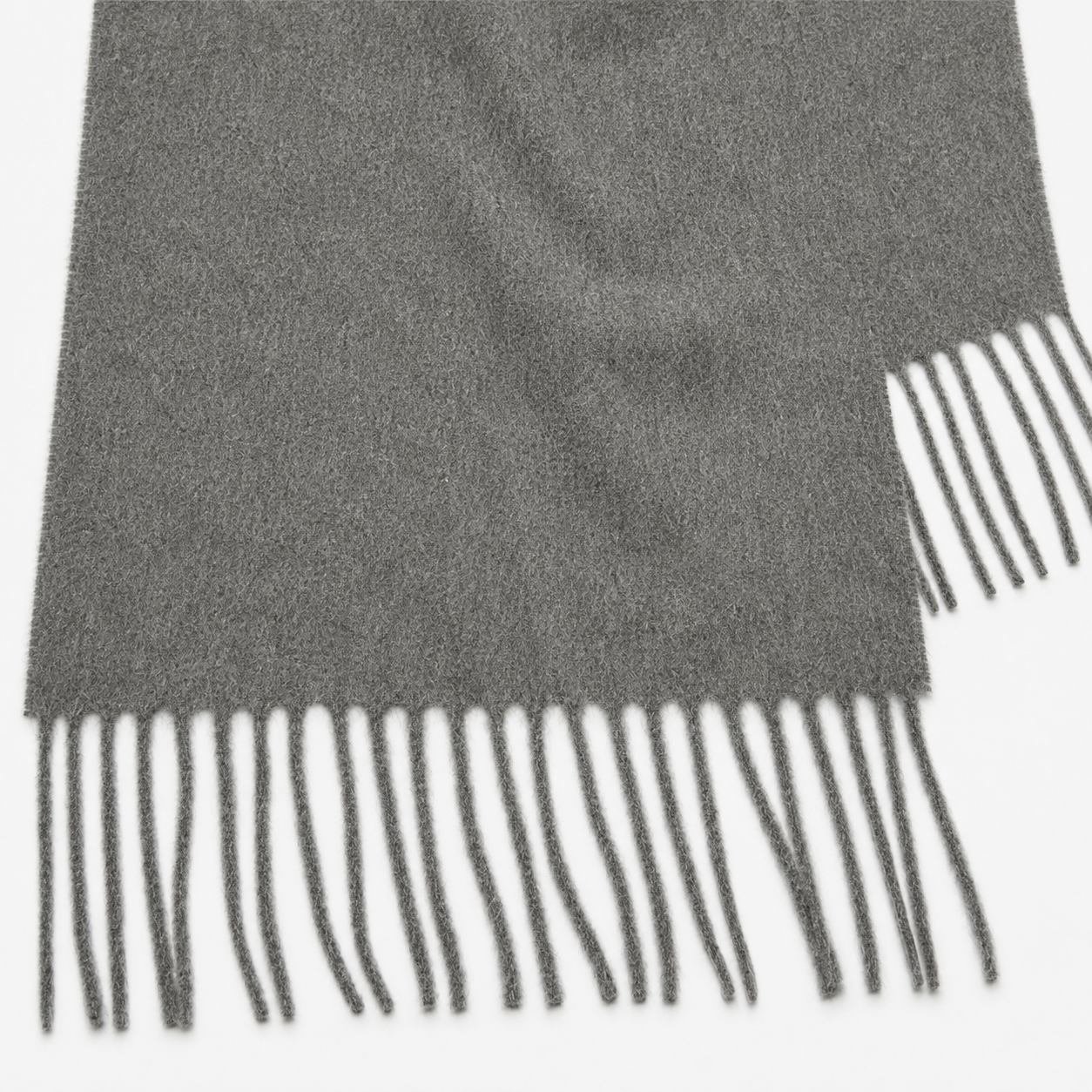
Traditional 8-10 cm twisted fringe with spacing and twist density confirmed in the approved sample.
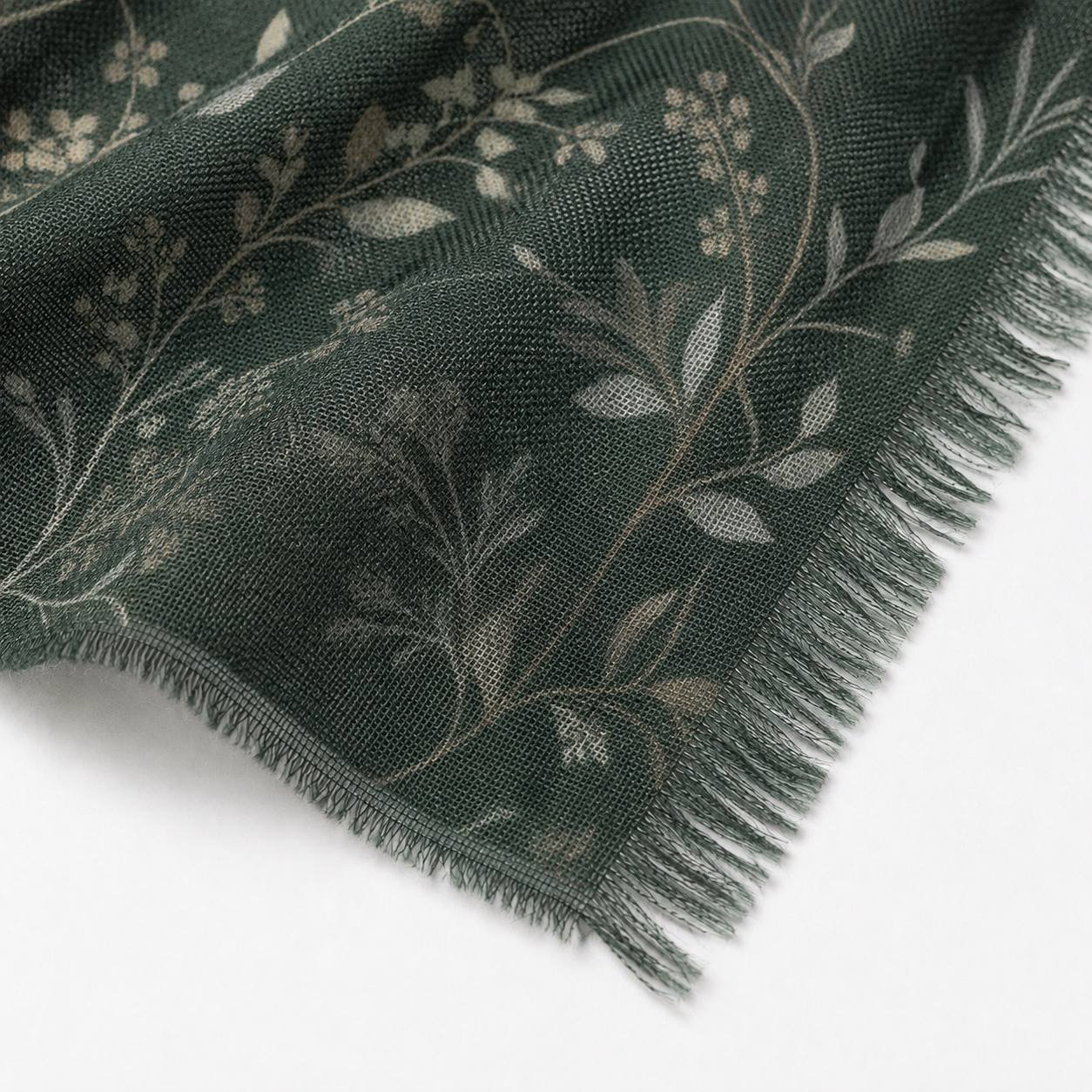
A light 1-2 cm finish suited to sheer worsted fabrics and understated contemporary scarves.
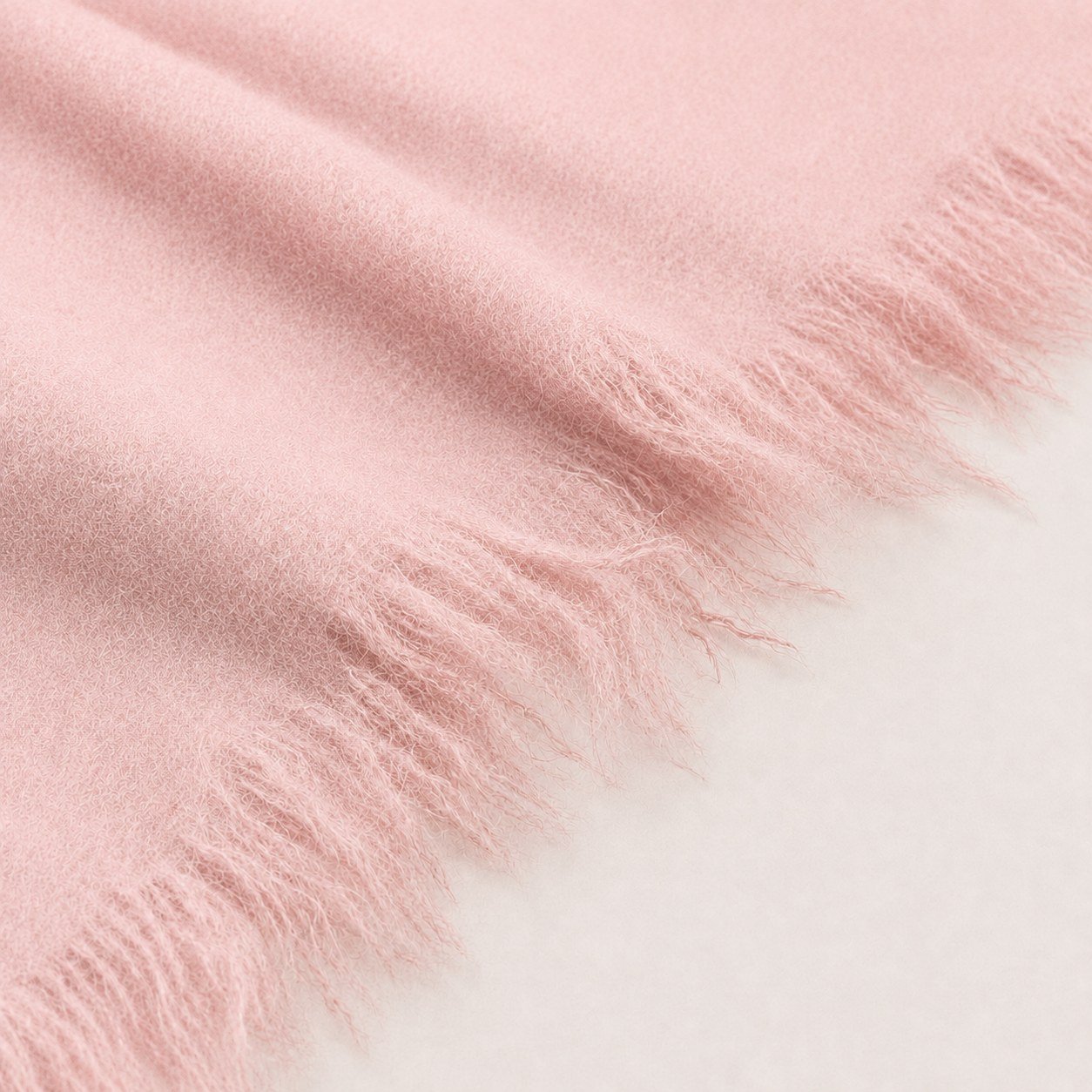
Drawn threads and brushing create a relaxed edge. The sample controls shedding, fringe depth and visual consistency.
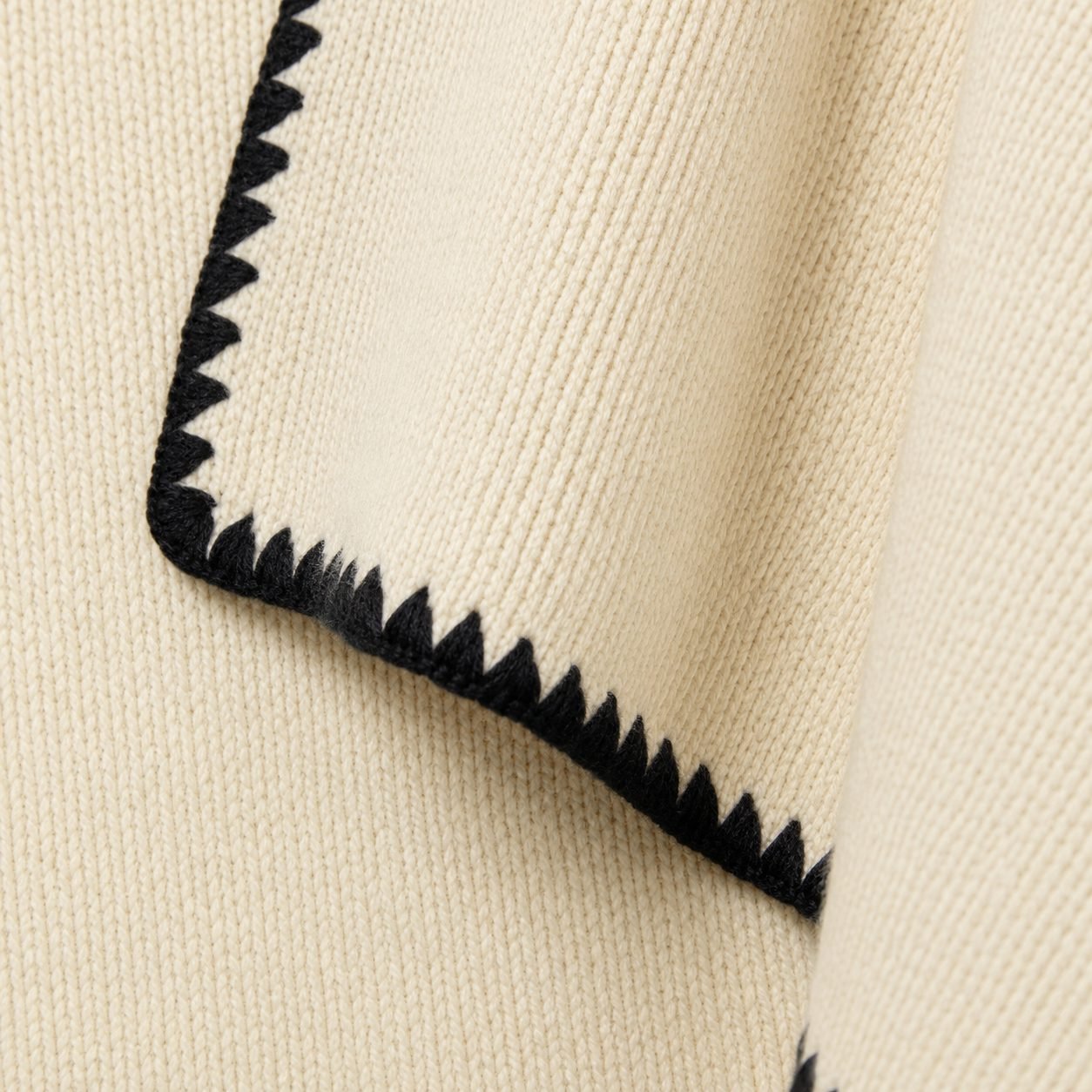
Contrasting thread adds a precise decorative outline to woven scarf edges and branded color stories.
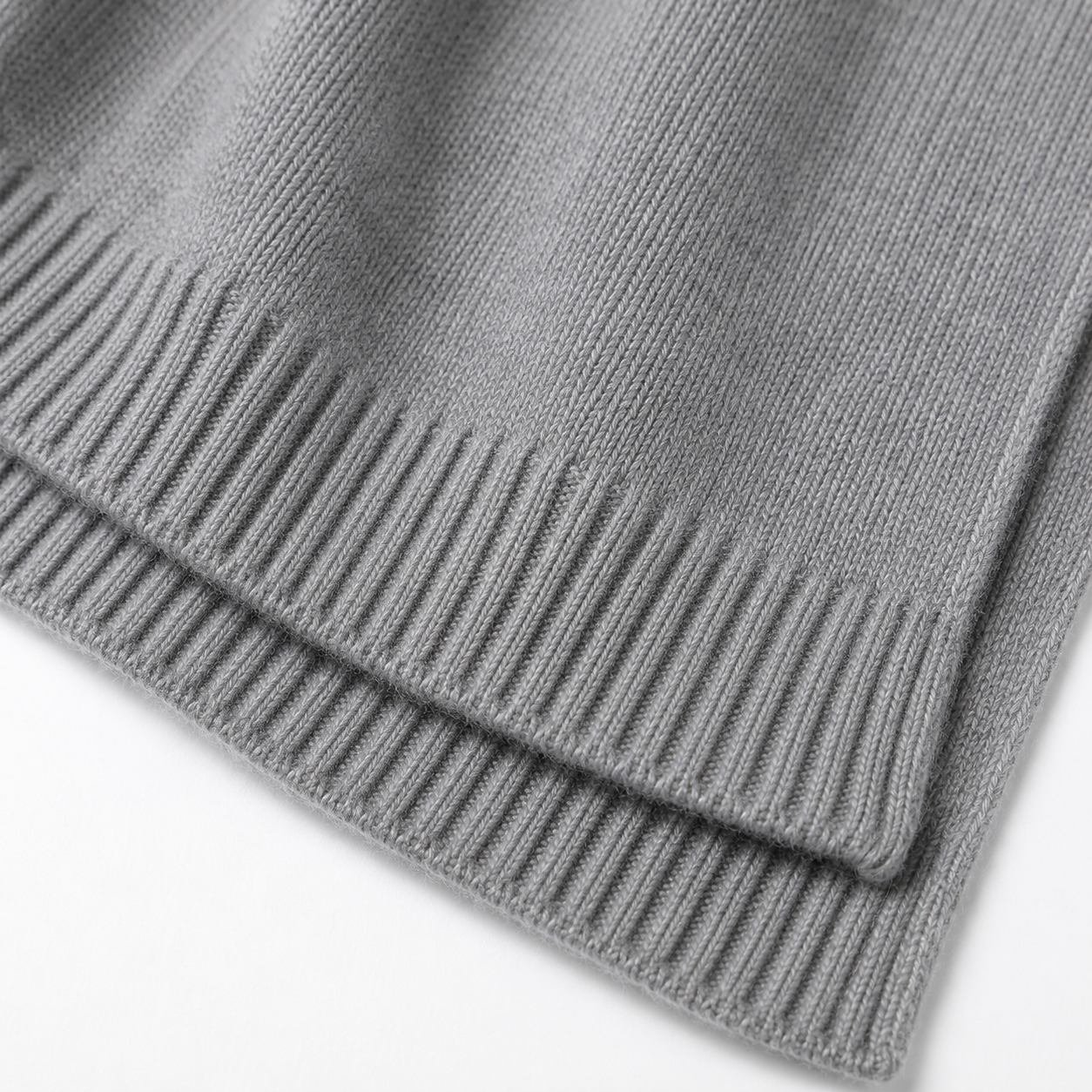
A structured knitted finish developed to hold shape, reduce rolling and coordinate with the body gauge.
MOQ is determined by machine setup, yarn preparation and color quantity rather than a single number across every scarf. We separate woven, knitted and custom-dyed routes so buyers can select a commercially realistic launch plan.
For early market testing, our merchandising team can recommend custom rope embroidery or conventional embroidery on suitable in-stock greige fabrics or pre-developed scarf bases. This route can reduce initial loom setup and yarn commitment while preserving a visible private label identity. Once demand is proven, the design can move into yarn-dyed jacquard or a fully customized structure.
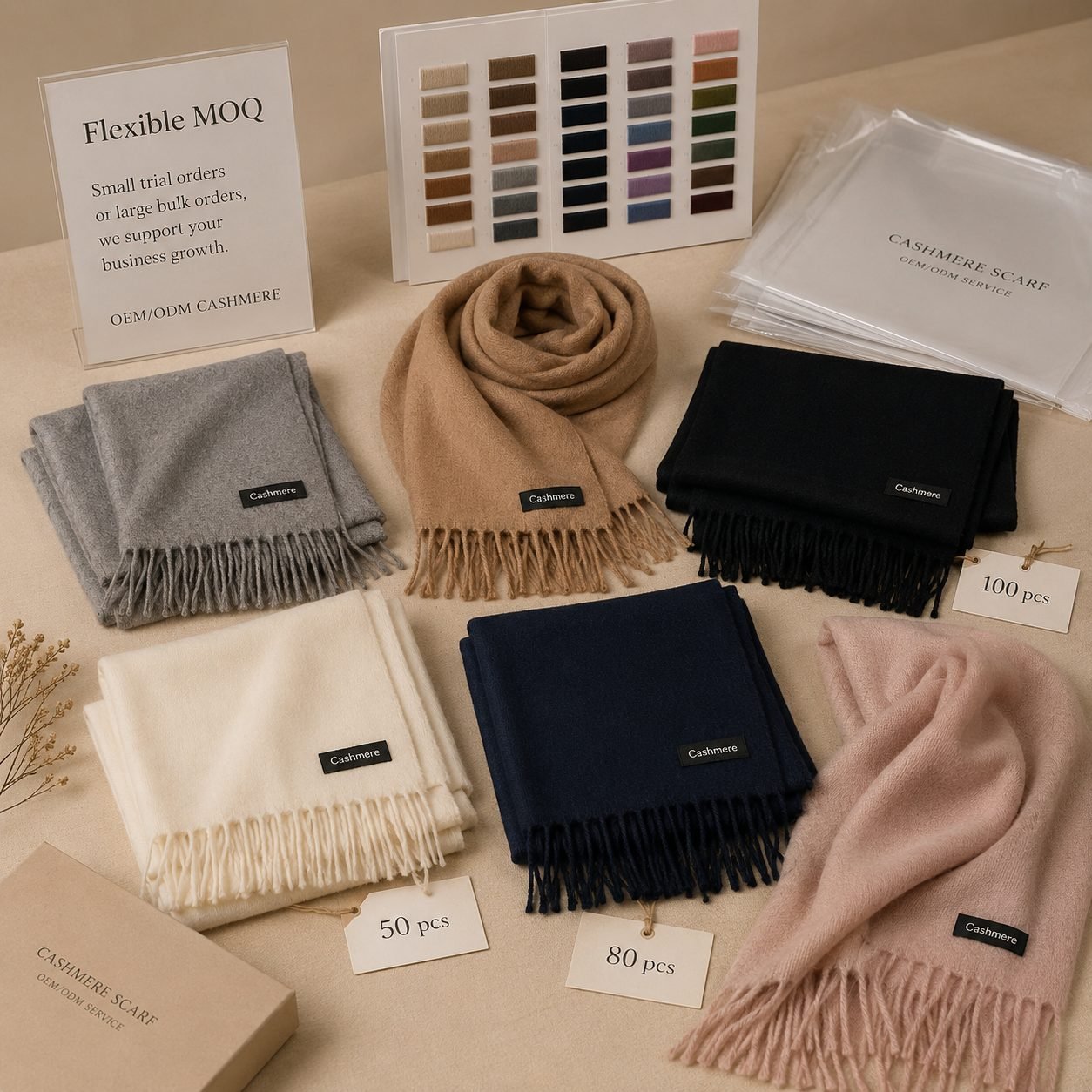
Choose a woven, knitted or decorated stock-base route according to budget, launch quantity and design complexity.
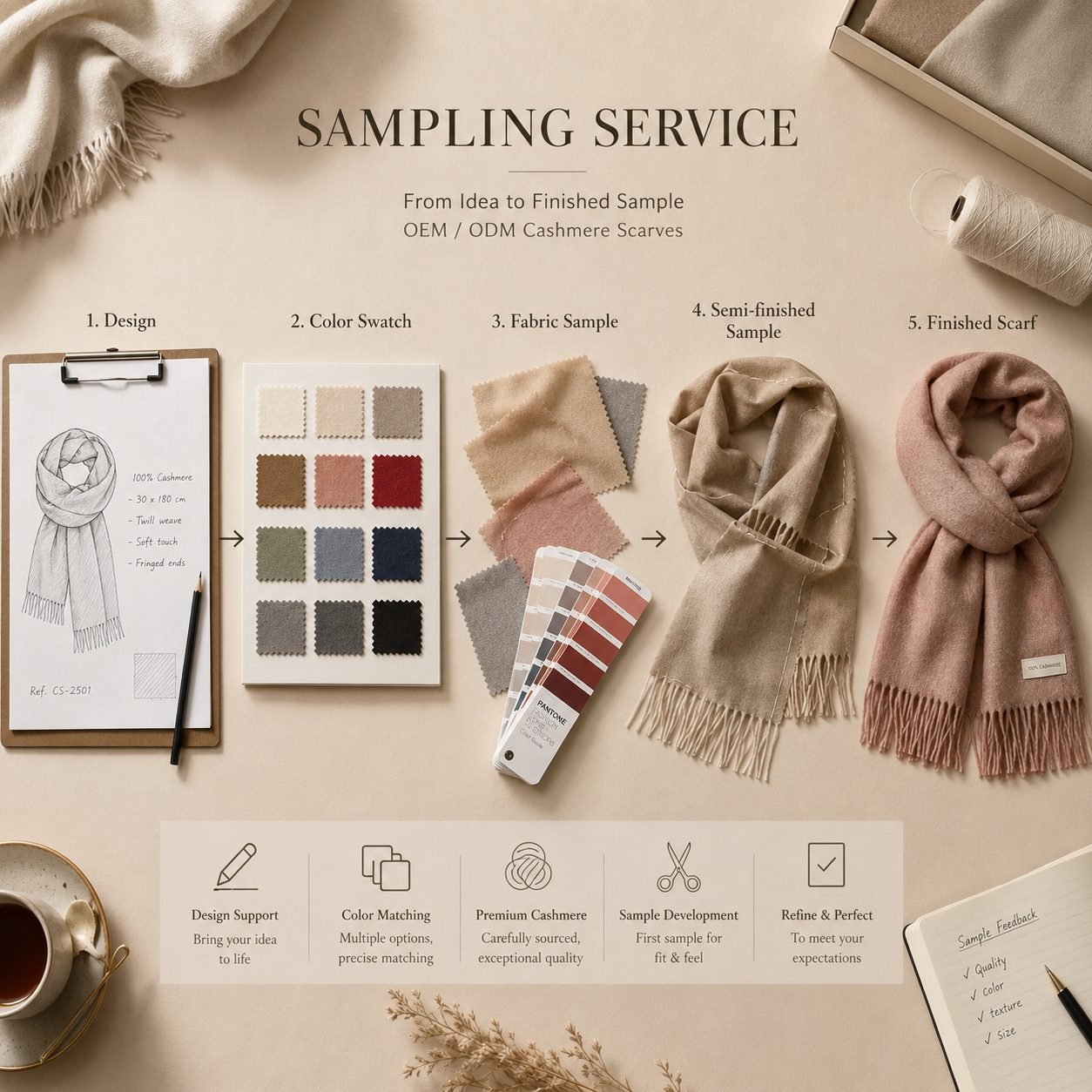
Approve yarn, hand feel, weight, construction, color, fringe and dimensions before bulk production.
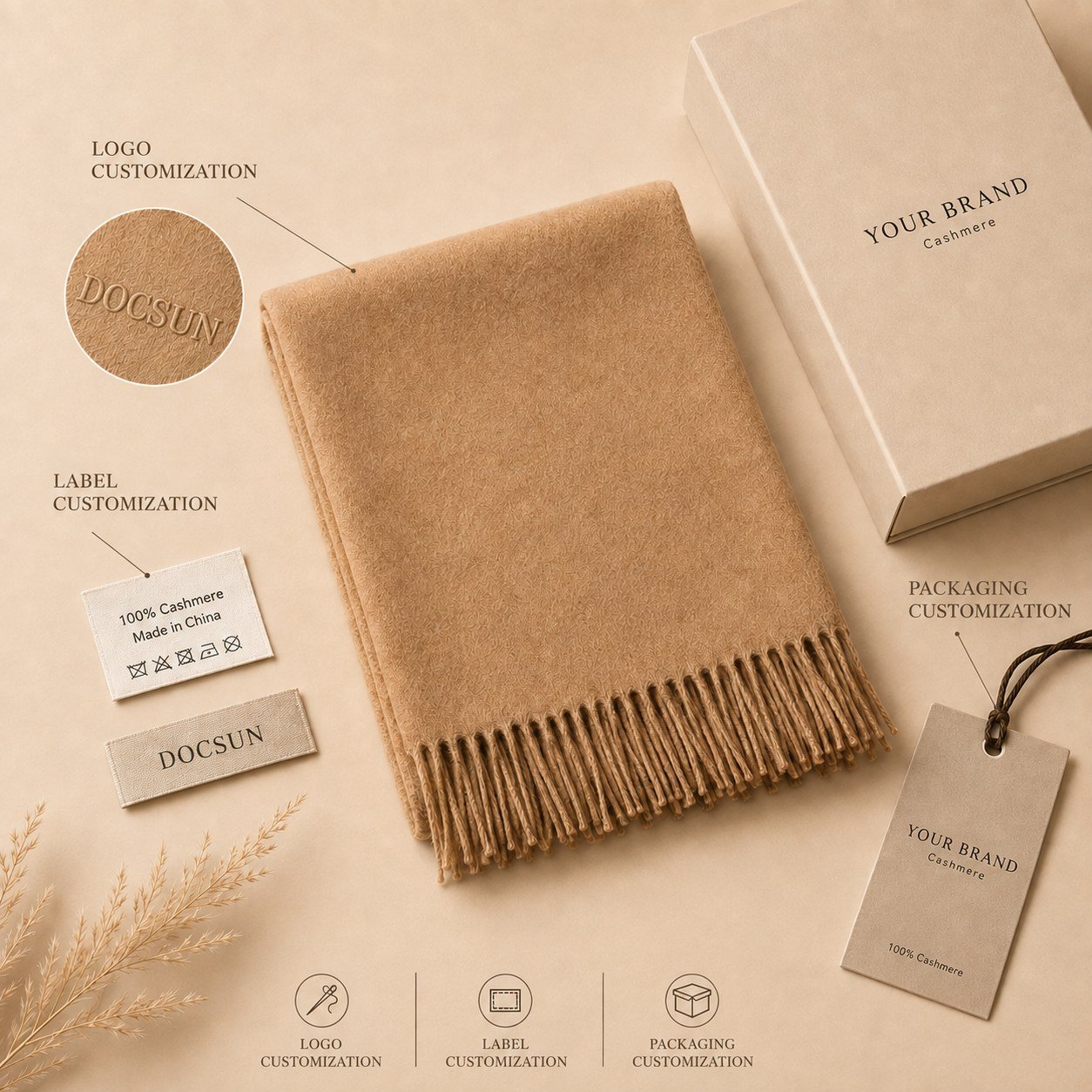
Add custom woven brand labels, care labels, hangtags, folding instructions and retail-ready packaging.
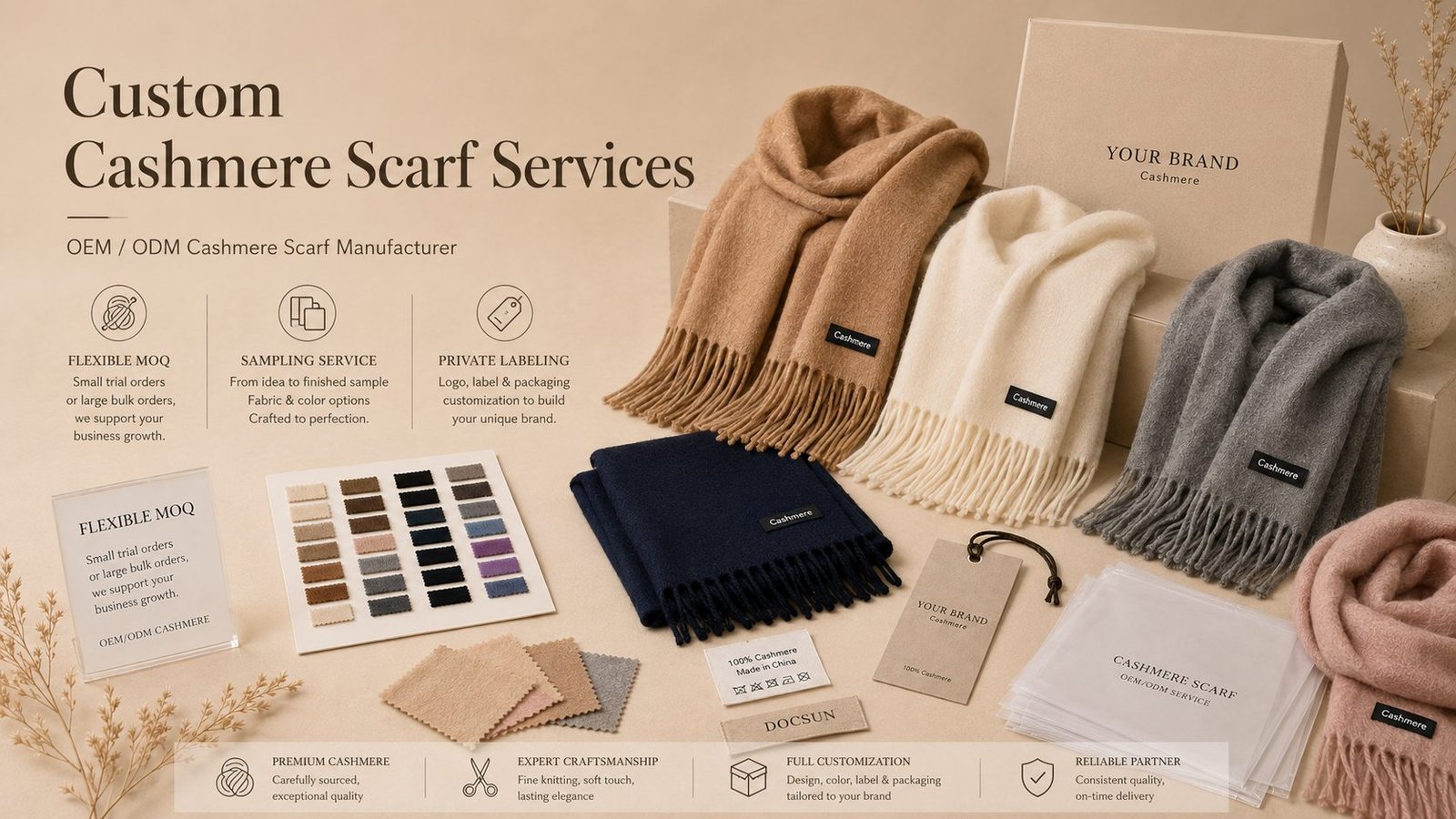
Coordinate composition, yarn, weave or knit, dyeing, finishing and presentation through one approved specification.
Prepare fiber, color and craftsmanship choices on our fabric and craftsmanship page, review the custom development process, or plan gift presentation through custom packaging.
Woven custom cashmere and wool scarves normally start from 300 pieces because industrial rapier and jacquard looms require yarn and setup preparation. Knitted scarf programs can start from about 30 to 50 pieces. Final MOQ is confirmed by yarn, color, structure, size, logo method and finishing.
Yes. Small-vat custom dyeing can start from approximately 25 kilograms, subject to fiber and yarn construction. Color is approved against an agreed physical standard or Pantone reference before bulk production.
The approved specification records finished dimensions, target weight or GSM and tolerance. Weight checks are completed during production and final inspection. A scarf that falls outside the agreed tolerance is held or rejected rather than shipped as compliant product.
Worsted yarns use longer, more aligned fibers for a cleaner, smoother and often lighter construction. Woolen-spun yarns retain more loft and trapped air, creating a fuller, warmer and more textured scarf. The correct route depends on drape, warmth, transparency and target price.
DOCSUN can source fine cashmere and extra-fine merino specifications, including approximately 15 to 19.5 micron options, and can supply samples for hand-feel approval. Individual skin sensitivity varies, so comfort is confirmed through the approved yarn, finish and physical sample rather than an absolute universal guarantee.
Yes. Yarn-dyed jacquard can integrate monograms and repeat motifs into the fabric. For lower setup costs or small test runs, rope embroidery or conventional embroidery can be applied to suitable in-stock greige or pre-developed scarf bases.
Yes. Fabric swatch kits can be arranged through DOCSUN support in the United States, United Kingdom and Australia when suitable references are in stock. Custom woven labels, care labels, folding methods, bags and gift boxes can be developed after the scarf specification is approved.
Send your tech pack, reference sample, target fiber composition, dimensions, color quantity, expected volume and price position. DOCSUN will recommend a realistic yarn, structure, MOQ and sampling route, then prepare the fabric swatch kit or quotation required for the next decision.