The Timeless Elegance of Silk Scarves
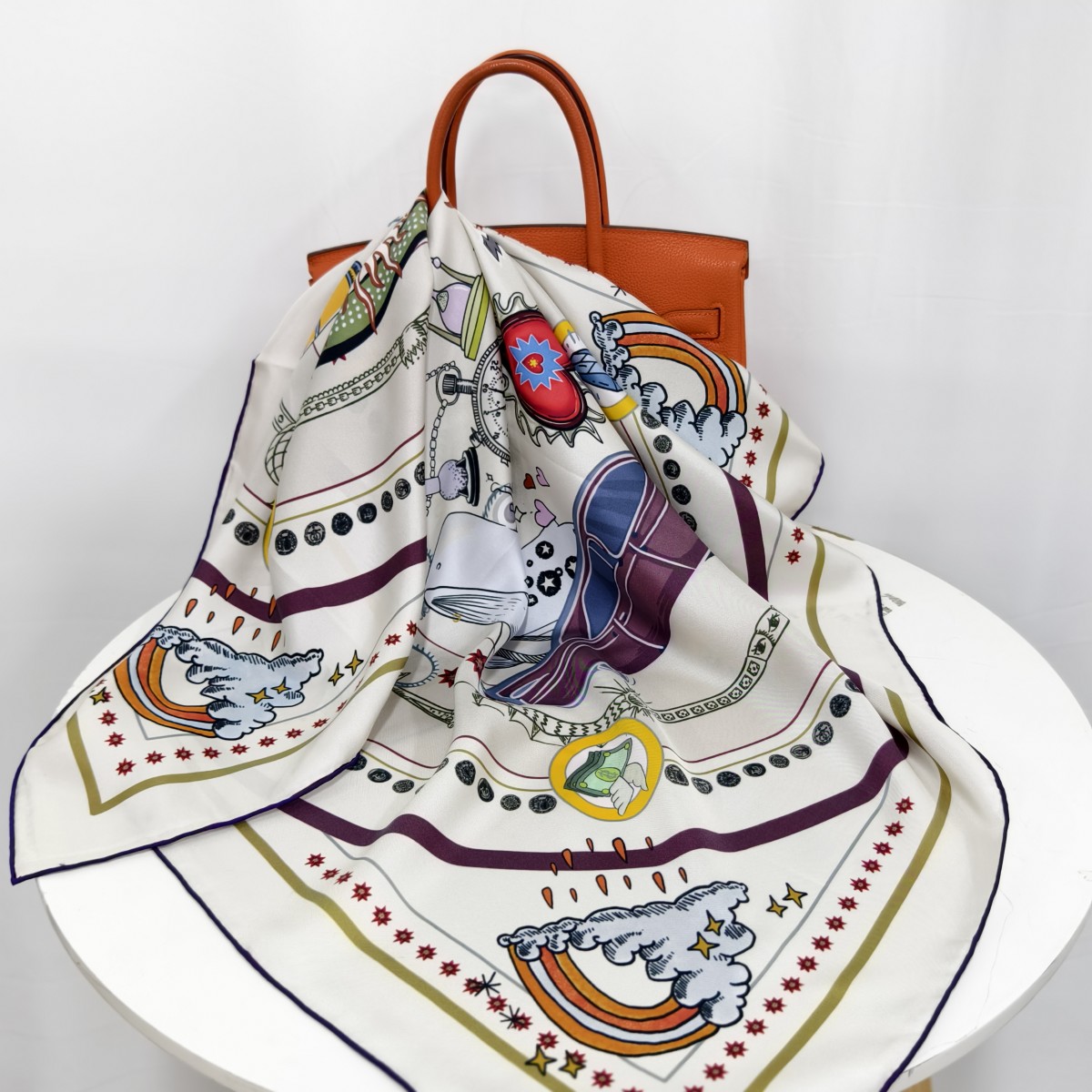
Silk scarves have long been associated with refinement. For centuries, silk was expensive, technically difficult to produce, and closely connected with trade, status, and artistry. A silk scarf could be a luxury accessory, a gift, a sign of taste, or a small canvas for personal expression.
Among scarf fabrics, mulberry silk remains especially valued because it feels smooth against the skin, reflects light with a natural luster, and drapes beautifully. These qualities are important for printed scarves because artwork must sit on a fabric that still feels fluid, soft, and wearable.
How Silk Scarf Printing Evolved
Printing silk scarves began with slow and highly personal decoration methods. Early luxury scarves often relied on hand painting, resist techniques, and small-scale artisan work. Each piece could carry cultural symbols, floral motifs, geometric borders, or decorative scenes.
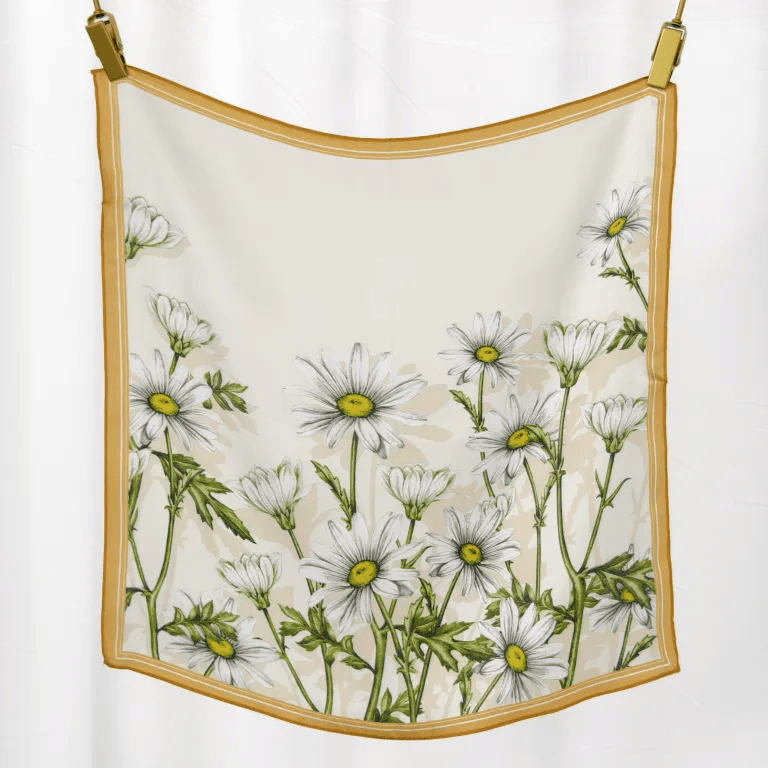
As textile production developed, scarf printing became more repeatable. Screen printing allowed workshops to reproduce complex patterns with stronger control over color blocks and motif placement. Later, digital printing made it possible to print fine detail, painterly gradients, and photographic artwork on silk with far greater flexibility.
Traditional and Modern Printing Methods
Printed silk scarves are more than accessories. They are textile artworks that require careful technical decisions. The printing method affects color depth, minimum order quantity, repeatability, cost, and the final hand feel of the scarf.
| Printing method | Best for | Brand consideration |
|---|---|---|
| Hand painting | One-of-a-kind artwork, artisan stories, limited editions | Beautiful but slow, costly, and difficult to repeat exactly |
| Screen printing | Strong color, clear shapes, repeat production, classic scarf artwork | Good for volume, but setup and color separation should be planned carefully |
| Digital printing | Detailed artwork, gradients, smaller runs, seasonal drops, custom collections | Flexible for sampling and artwork-heavy scarf designs |
For a brand developing a custom scarf, the right choice depends on design complexity, target price, order quantity, color expectations, and delivery schedule. A technical supplier should review artwork resolution, fabric choice, and print method before sampling. DOCSUN supports both custom printing planning and color review for scarf projects.
Printed Silk Scarves in Contemporary Fashion
In contemporary fashion, printed silk scarves are valued because they are small products with large styling range. A single scarf can be worn around the neck, tied over the hair, wrapped as a belt, used as a bag accent, or layered with outerwear. This flexibility makes scarves useful for retail collections, resort capsules, museum shops, corporate gifts, and limited-edition brand merchandise.
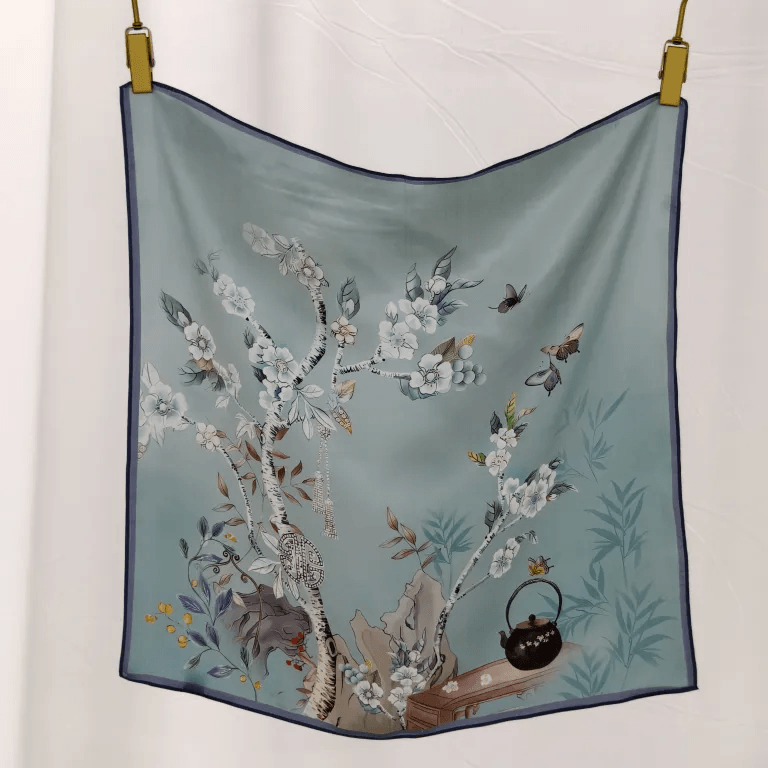
Artwork also gives scarves emotional value. Florals, paisley, abstract forms, architectural references, brand colors, or symbolic motifs can turn a scarf into a collectible item rather than a basic accessory.
Craftsmanship Behind Quality Scarves
A high-quality printed scarf is not judged by artwork alone. The full production chain matters: fabric selection, pre-treatment, artwork preparation, color matching, printing, steaming or fixation, washing, drying, hemming, inspection, label placement, and packaging.
Edge finishing is especially important because it shapes the scarf's final appearance. A machine-rolled hem gives clean consistency and efficient production. A hand-rolled hem can add artisanal value for premium designs. The decision should match the product positioning rather than follow a single fixed rule.
Custom Printed Silk Scarves for Brands
For fashion brands, gift companies, museums, hotels, beauty brands, and corporate clients, custom printed silk scarves offer a powerful balance of elegance and practicality. They are easy to ship, easy to display, and highly adaptable to brand artwork.
Before sampling, prepare a clear product brief: scarf size, silk fabric, artwork file, color target, print method, edge finishing, label requirement, packaging, order quantity, and launch schedule. You can also review fabric and craftsmanship options, custom packaging, and scarf custom cases for more planning references.
Frequently Asked Questions
Why is silk scarf printing considered both craft and art?
Silk scarf printing combines textile knowledge, color control, fabric handling, pattern placement, and visual storytelling. The scarf needs to look beautiful while keeping the softness, luster, drape, and comfort of silk.
What are the main printing methods used for silk scarves?
The main methods include hand painting, screen printing, and digital printing. Screen printing is often used for rich color and repeat production, while digital printing is useful for detailed artwork, gradients, and flexible custom runs.
Why is mulberry silk popular for printed scarves?
Mulberry silk is soft, smooth, breathable, naturally lustrous, and able to show printed color beautifully. These qualities make it suitable for luxury scarf collections and custom brand accessories.
Can a brand create custom printed silk scarves with its own artwork?
Yes. A brand can use its own artwork, color palette, scarf size, silk fabric, edge finishing, label, and packaging. The artwork should be reviewed before sampling to confirm print quality and production feasibility.
What details affect the quality of a printed silk scarf?
Quality depends on fabric grade, artwork preparation, color matching, print sharpness, color penetration, edge finishing, inspection, packaging, and consistency between the approved sample and bulk production.
Develop Custom Printed Silk Scarves with DOCSUN
Share your artwork, target size, silk fabric, color reference, edge finishing, label, packaging, and quantity. DOCSUN can help turn scarf artwork into a refined custom silk product.
Contact DOCSUNFast response within 24 hours.