How to Customize a Silk Scarf: A Step-by-Step Guide for Brands
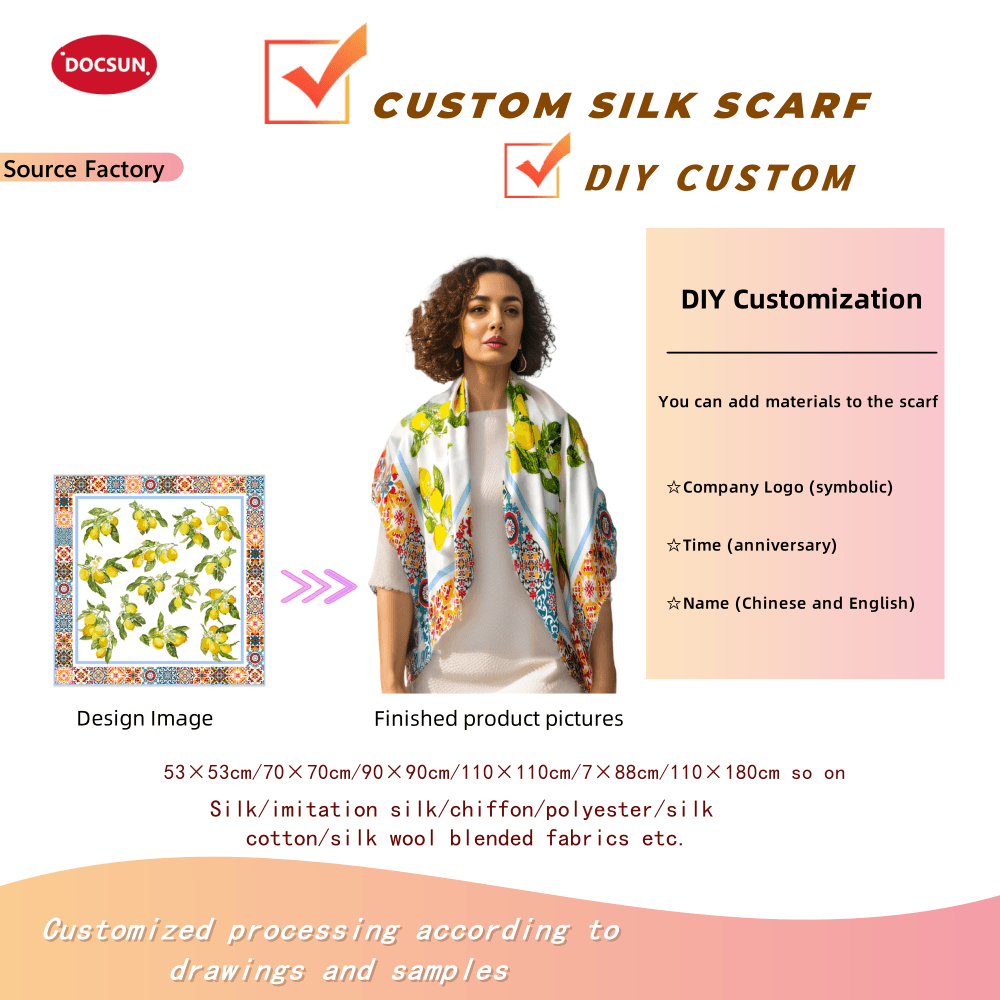
A custom silk scarf project works best when the brand brief, fabric, size, printing method, finishing, packaging, sampling, and bulk production plan are connected from the beginning. This guide explains how fashion brands, museum stores, corporate gift teams, designers, event planners, and boutique retailers can prepare a silk scarf order with DOCSUN.
Define the Purpose and Customer
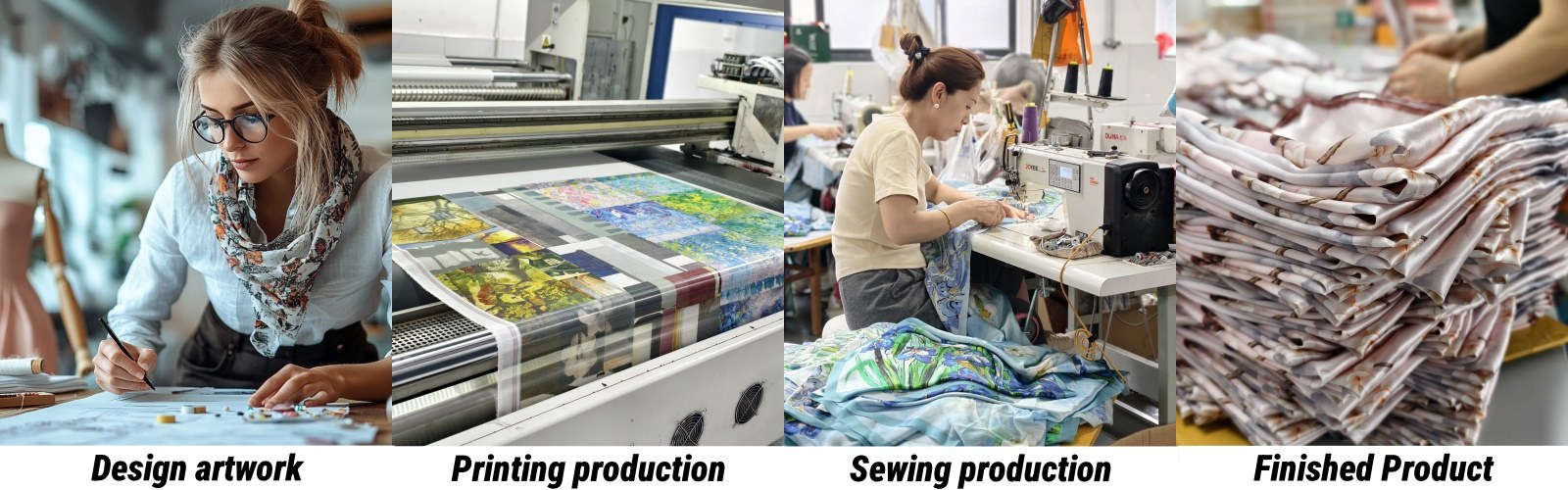
Before choosing silk fabric or uploading artwork, clarify what the scarf needs to do. A boutique fashion brand may need a seasonal retail accessory. A museum shop may need a souvenir that translates artwork into a wearable object. A corporate gift team may need elegant scarves for clients, conferences, anniversaries, or employee recognition. A designer, artist, wedding planner, hotel group, tourism brand, or event organizer may all approach the same product with different expectations.
This first decision affects almost every production choice. A premium retail scarf needs stronger attention to hand feel, color accuracy, stitching, packaging, and presentation. A campaign gift may need faster timing, controlled cost, and easy brand recognition. A limited-edition artist scarf may need careful artwork adaptation, border planning, and a sample review process before bulk production.
For brands developing a complete scarf program, it is useful to review the broader custom silk scarf service first, then decide whether the project should focus on fashion retail, private label gifting, uniform styling, museum merchandise, or promotional use.
Choose Silk Fabric and Weight
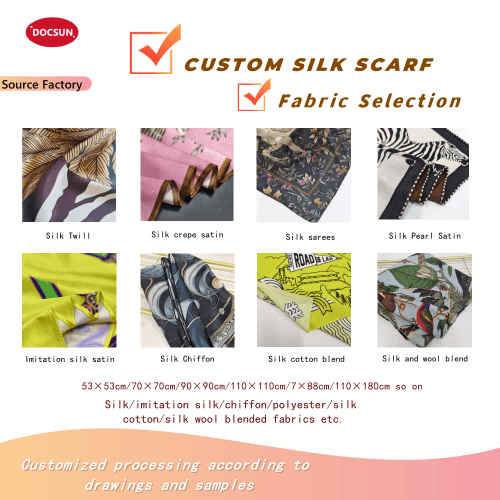
The fabric determines the scarf's drape, shine, print effect, price position, and final touch. Silk twill is a classic option for detailed square scarves because the diagonal weave gives structure and a refined surface. Silk satin has a smoother, glossier face and works well for feminine, polished, or gift-focused collections. Silk chiffon is light, sheer, and airy, suitable for soft styling and spring or summer programs. Crepe de chine and georgette can be used when the brand wants a subtler texture or a less glossy hand feel.
Common silk weights for scarf projects include 12mm, 14mm, 16mm, 18mm, and 19mm, depending on the weave and the desired positioning. A lighter silk may feel delicate and fluid, while 16mm or 18mm can feel more substantial for retail scarves, gift programs, and classic squares. DOCSUN can help compare silk twill, satin, chiffon, crepe de chine, georgette, and other options through the broader fabric, colors, and craftsmanship decision process.
| Fabric option | Typical character | Useful for |
|---|---|---|
| Silk twill | Structured, elegant, fine diagonal texture | Premium square scarves, detailed prints, retail collections |
| Silk satin | Smooth, glossy, fluid | Gift scarves, feminine designs, polished brand presentation |
| Silk chiffon | Light, sheer, airy | Soft styling, summer collections, layered looks |
| Crepe de chine or georgette | Refined texture, less shiny than satin | Understated fashion accessories and wearable brand pieces |
Confirm Size, Shape, and Wearing Use
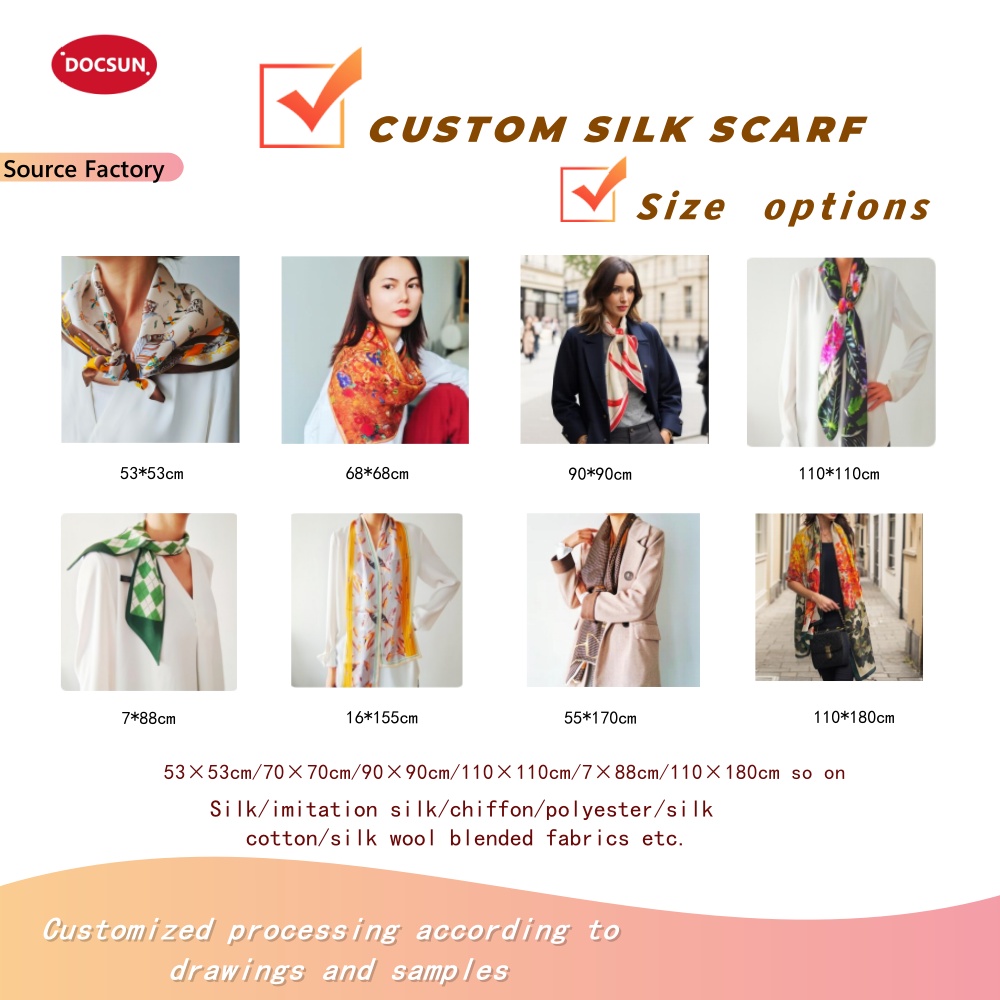
Scarf size affects both the styling use and the way artwork is read. A 53x53cm scarf can work as a neckerchief, wrist tie, hair accessory, or handbag accent. A 70x70cm square is versatile for boutique collections and everyday fashion styling. A 90x90cm square gives more room for borders, central artwork, and luxury presentation. A 110x110cm scarf can move toward a shawl-like or statement piece. Long rectangles, twillys, triangles, and wide wraps can also be developed for specific brand use.
The size should be confirmed before final artwork preparation. A design that looks balanced on a 90cm square may feel crowded on a 53cm scarf, while a small logo border may disappear on chiffon or a long rectangle. DOCSUN can help check how the motif, border, logo, and color blocks will appear when the scarf is folded, tied, or packed.
Small squares
Good for neckties, bag accents, hair styling, wrist wraps, gift sets, and compact brand merchandise.
Classic squares
Useful for fashion retail, museum shops, artist collaborations, premium gifting, and private label collections.
Large squares
Best when the artwork needs space, the scarf should feel more luxurious, or the brand wants a statement product.
Twillys and rectangles
Useful for handbag handles, hair ribbons, neck styling, uniforms, accessories sets, and narrow-format artwork.
Prepare Artwork With the Design Team
Artwork is where a scarf becomes more than a printed square. Brands can provide completed AI, PSD, TIFF, or other high-resolution files, ideally at 300dpi for raster artwork. If the artwork is not final, DOCSUN's in-house design team can help refine mood boards, repeat patterns, borders, corner elements, logo placement, color palettes, and print-ready layout.
This is especially important for brands that want the scarf to look strong both flat and tied. Border artwork may be visible when folded, while a central motif may be more important for flat display or gift packaging. Fine lines, small text, gradients, and exact brand colors need extra checking before sampling. When color accuracy is important, Pantone references or approved color standards should be discussed before print proofing.
For projects where artwork, color, and production method need to work together, review the custom printing route early. Digital printing, screen printing, and other production choices can affect color depth, line clarity, hand feel, cost, and lead time.
Confirm Printing, Edge Finishing, and Labels
After the artwork and fabric are selected, the project should confirm the production craft. Digital printing is commonly used for colorful artwork, gradients, complex illustrations, and lower or flexible minimums. Screen printing may be considered for certain solid-color or repeat designs when the quantity and artwork style make sense. The right method depends on the artwork, silk type, color expectations, order quantity, and budget.
Edge finishing also changes the final impression. A hand-rolled hem gives a traditional luxury feel and a soft rounded edge. A machine-rolled hem is clean, consistent, and practical for larger quantities. Buyers should also decide whether the scarf needs a woven logo label, printed corner logo, care label, hang tag, barcode sticker, or other private label element. These details should be approved before bulk production, because label size, placement, and stitching can affect both appearance and compliance.
Plan Packaging, MOQ, Sampling, and Delivery
Packaging should be planned at the same time as the scarf, not after the product is finished. A museum shop may need elegant folded presentation, an information card, and barcode labeling. A fashion brand may need a rigid gift box, tissue wrap, sticker, and care card. A corporate gift program may need efficient packing, consistent logo placement, and clean shipping cartons. DOCSUN can support gift boxes, pouches, tissue wrap, hang tags, care labels, and private label packaging through the custom packaging process.
For many custom silk scarf projects, MOQ can start from 30 to 50 pieces, depending on fabric, printing method, packaging, and project complexity. Sampling usually takes about 5 to 7 working days after artwork and specifications are confirmed. Bulk production commonly takes around 2 to 3 weeks for many orders, although timing can change with quantity, fabric availability, packaging complexity, and approval speed.
Before approving bulk production, review the sample for fabric hand feel, color, print clarity, edge finish, label placement, size tolerance, packaging fit, and overall brand presentation. For larger scarf programs, a simple approval checklist can prevent avoidable revisions and help the production team keep the final order consistent.
FAQ
What files should I prepare for a custom silk scarf?
AI, PSD, TIFF, or high-resolution image files are preferred. For raster artwork, 300dpi is a useful target. DOCSUN can help check scale, borders, logo placement, and print readiness before sampling.
What is the MOQ for custom silk scarves?
Many projects can start from 30 to 50 pieces, depending on fabric, printing method, size, packaging, and production details.
How long does sampling take?
Sampling usually takes about 5 to 7 working days after artwork, fabric, size, craft, and packaging details are confirmed.
Which silk fabric is best for a brand scarf?
Silk twill is a classic structured choice, satin gives a glossy luxury look, chiffon feels light and airy, while crepe de chine or georgette can offer a softer textured surface.
Plan a Custom Silk Scarf Project
Explore DOCSUN's custom silk scarf service or send your artwork, size target, fabric idea, quantity, and packaging needs so the team can help prepare the next production step.
Explore Custom Silk ScarvesContact DOCSUN for sampling, pricing, and production support.