
Where This Product Guide Fits
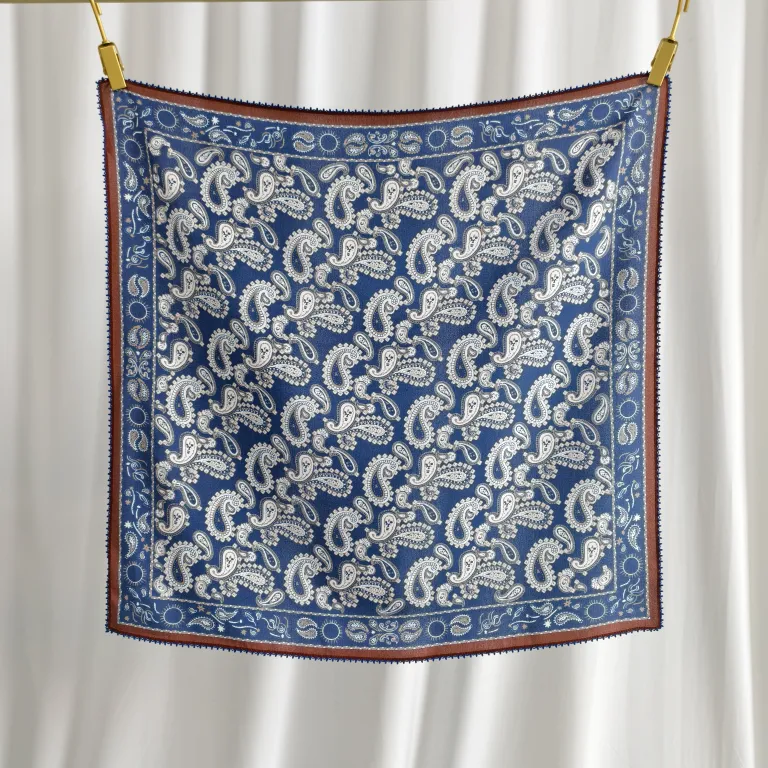
This page sits on a product URL, but it should not replace the main custom silk scarf service page. Its best role is a focused product guide for printed mulberry silk scarf orders: buyers who already know they want printed silk, but still need to decide fabric, artwork, edge finish, size, labels, packaging, MOQ, and sample approval steps.
Printed silk scarves can serve boutique collections, museum merchandise, corporate gifts, travel retail, private-label fashion accessories, event gifts, and seasonal brand launches. Paisley artwork is a useful example because it combines borders, repeated motifs, color layers, and detail scale, but the same development logic also applies to floral, geometric, logo, city map, abstract, seasonal, and brand artwork designs.
When buyers are planning a broader scarf line, this product guide can support the wider custom scarves category and connect back to the main silk scarf order path.
Choose Silk Fabric for Print and Drape
Mulberry silk can be developed in several fabric qualities, and each one changes the final scarf. Silk twill is a common choice for printed square scarves because it offers structure, print clarity, and a refined hand feel. Silk satin has a smoother, glossier surface and works well when the buyer wants a polished gift or fashion accessory. Crepe de chine gives a softer matte texture. Silk chiffon feels lighter and more translucent. Silk habotai can be considered for lightweight scarf programs or more cost-sensitive projects.
The fabric should be chosen according to artwork detail, drape, sheen, folding style, package size, and target price. If the scarf uses detailed paisley, borders, or small repeated motifs, the buyer should confirm whether the chosen silk shows enough line clarity. If the scarf is designed for elegant gifting, the buyer may prioritize hand feel, shine, and packaging presentation.
Fabric and color decisions can be reviewed through the fabric, colors, and craftsmanship process before sampling.
Plan Artwork, Paisley, and Print Method
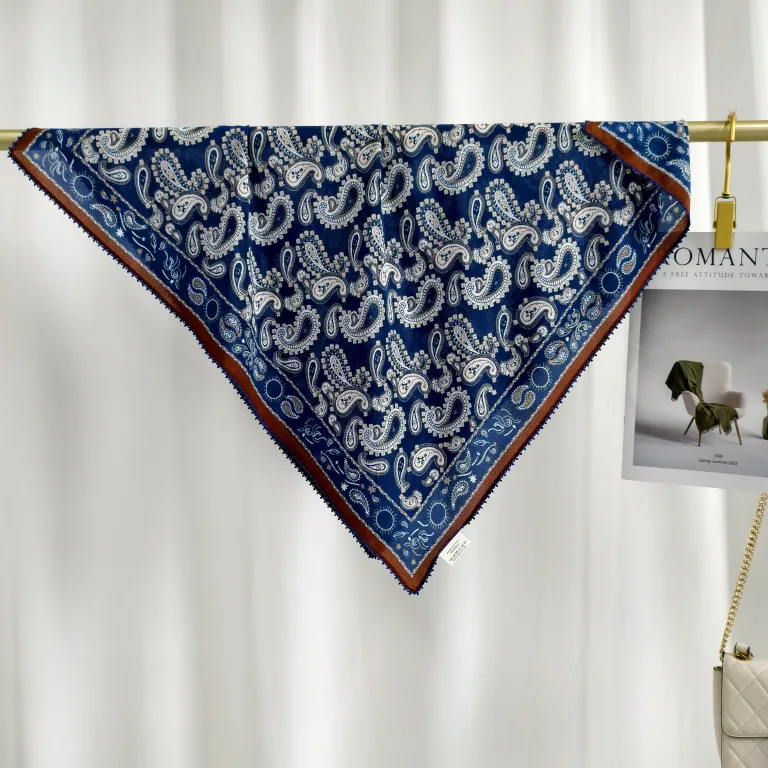
Artwork should be prepared for the scarf size and final edge finish. A square scarf may need a central field, border, corner detail, and repeat balance. A twilly or long scarf needs artwork planned for a narrow format. Paisley designs should be checked for motif scale, border distance, and color layering, while logo or brand artwork may need a more discreet placement to remain wearable.
Digital printing is often useful for detailed, colorful, or small-batch scarf designs because it can handle gradients, artwork complexity, and multiple colors. Screen printing can also be considered when the design, color count, and quantity make sense. Buyers should provide high-resolution AI, PSD, TIFF, or print-ready files, along with Pantone or other color references when brand colors matter.
Artwork and proofing can be organized through DOCSUN's custom printing workflow so scale, color, borders, and print method are checked before sample approval.
Use Lace Trim or Other Edge Finishes
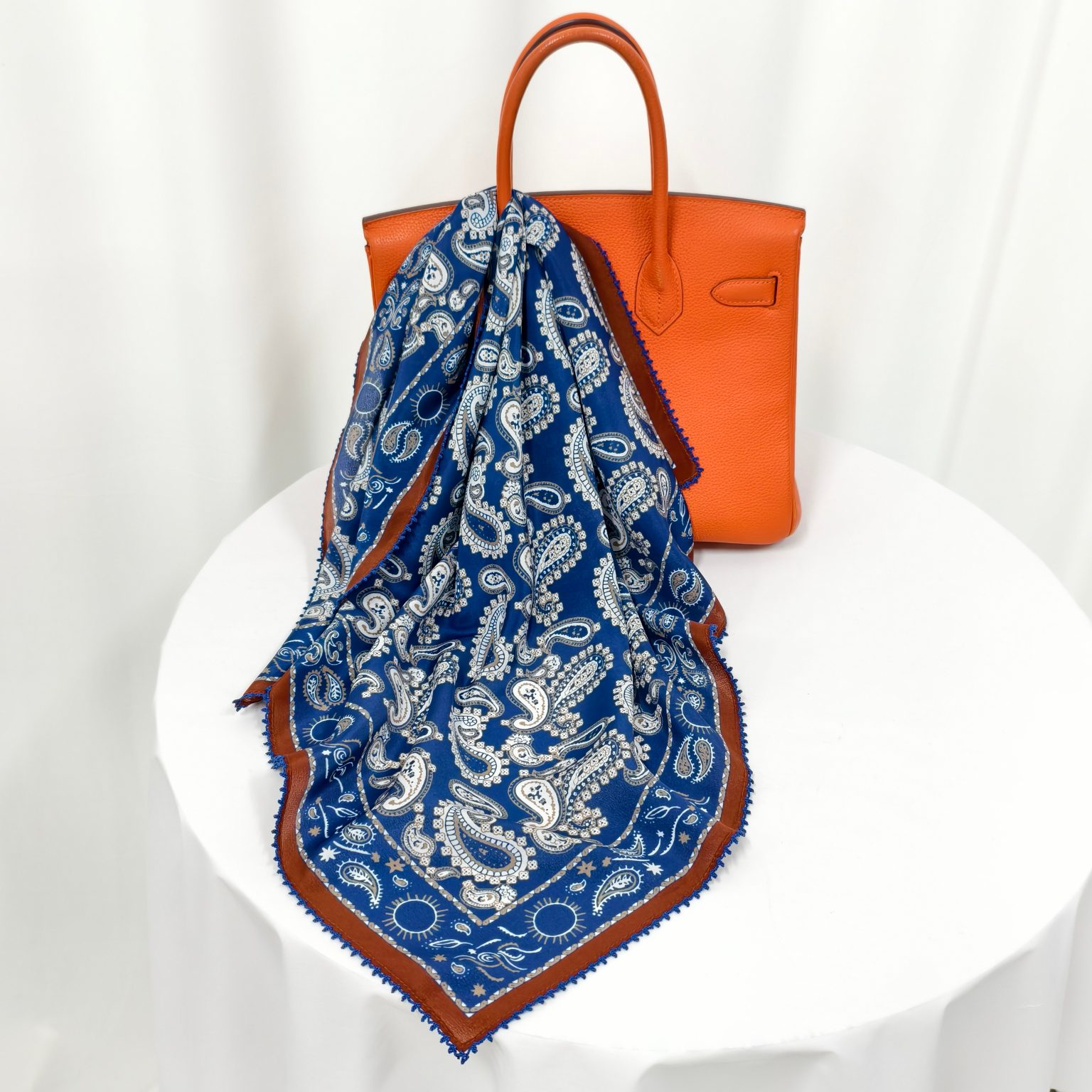
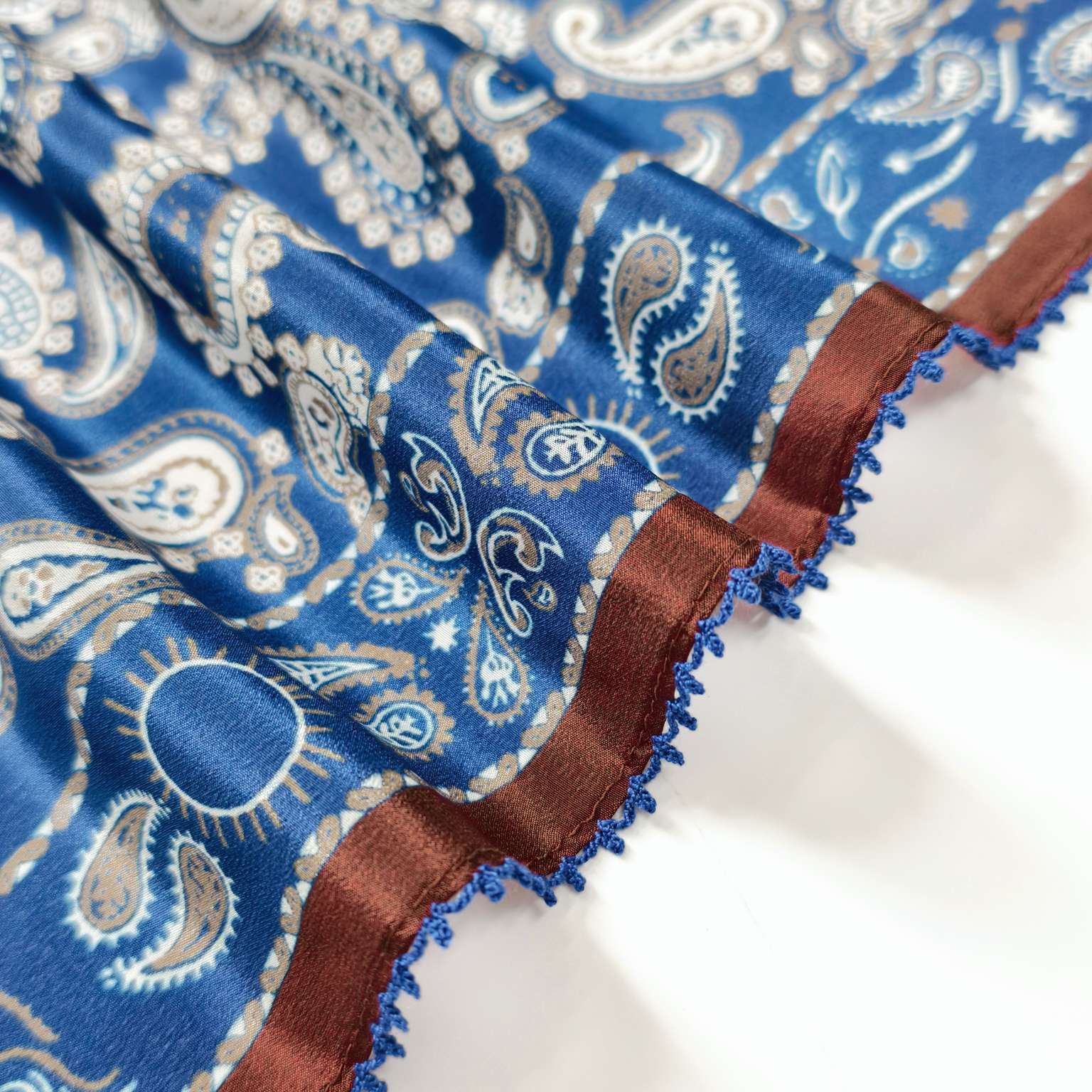
The strongest feature of this printed scarf direction is the lace trim edge. A lace trim can make a printed mulberry silk scarf feel more decorative, feminine, giftable, or boutique-oriented. It should be planned early because lace width, lace color, stitching method, and border artwork all need to work together. If the printed artwork has a paisley or decorative border, the lace trim should not compete with the design or cover important visual details.
Other edge options can also be developed. A hand rolled hem gives a refined luxury finish. A machine hem is clean and practical for many wholesale orders. A baby hem can be suitable for lighter scarf formats. Buyers should compare edge appearance, cost, production time, and how the scarf will look when folded or packed.
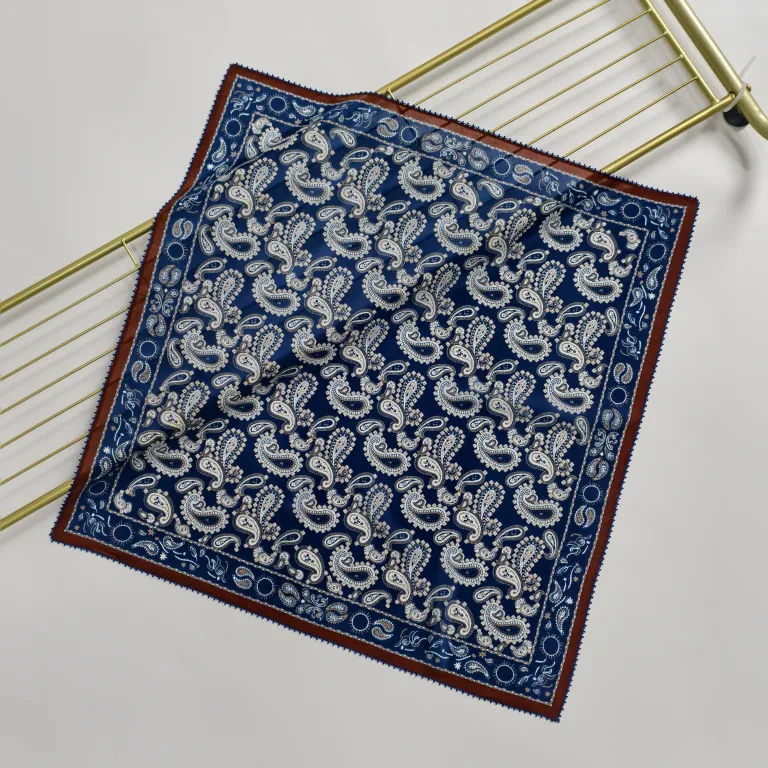
Lace trim edge
Best for decorative, boutique, gift, and feminine scarf concepts where the edge is part of the design identity.
Hand rolled hem
A refined edge option for premium square scarves and luxury gift programs.
Machine hem
A clean and consistent edge route for practical wholesale orders.
Baby hem
A delicate finish that can suit lighter silk scarf formats and softer styling.
Select Sizes, Labels, and Packaging
Custom printed silk scarves can be developed in many sizes. 53x53cm works for compact neckerchiefs and bag accessories. 70x70cm is versatile for gifts, boutiques, and retail collections. 90x90cm gives more room for artwork, borders, and premium presentation. 110x110cm can feel more dramatic and luxurious. Twilly and long scarf formats work well for hair, bag handles, uniforms, or narrow artwork layouts.
Label and packaging details should be confirmed with the scarf size. Brand labels, care labels, hang tags, barcode stickers, pouch packaging, gift boxes, tissue wrap, insert cards, and carton marks can all be included. For retail orders, SKU and barcode handling may matter. For corporate or boutique gifts, the gift box, pouch, and message card may carry much of the perceived value. DOCSUN's custom packaging support can connect the scarf, fold, label, and box into one finished product plan.
| Size direction | Typical use | Buyer checkpoint |
|---|---|---|
| 53x53cm | Small gift, neckerchief, bag accessory | Check motif readability and compact packaging |
| 70x70cm | Boutique retail, gift collections, everyday scarf | Balance artwork space, cost, and styling use |
| 90x90cm | Premium square scarf, museum or fashion artwork | Use stronger borders and story-driven artwork |
| Twilly / long scarf | Hair, bag handle, uniform accent, narrow artwork | Prepare artwork specifically for a long narrow format |
MOQ, Sampling, and Production Checks
Many custom printed silk scarf projects can start from 30 to 50 pieces, depending on silk fabric, print method, edge finish, label, packaging, and artwork requirements. Sampling usually takes about 5 to 7 working days after artwork, fabric, size, edge, label, and packaging details are confirmed.
Before bulk production, buyers should approve the fabric hand feel, print color, motif scale, border placement, lace trim or hem finish, size tolerance, label placement, packaging fit, folding method, and carton marks. For lace trim scarves, the buyer should also check whether the lace color and width match the printed border and whether stitching looks neat along the full edge.
FAQ
Is paisley the only pattern for custom printed mulberry silk scarves?
No. Paisley is only one strong pattern example. Brands can also develop floral, geometric, logo, city, artwork, border, seasonal, or private-label print designs.
Which silk fabrics can be used for printed scarves?
Mulberry silk scarf projects can use silk twill, silk satin, crepe de chine, silk chiffon, silk habotai, or other silk qualities depending on print detail, drape, sheen, budget, and use case.
Can a lace trim edge be added to printed silk scarves?
Yes. A lace trim edge can become the main design feature for selected printed silk scarf projects. Buyers can also compare hand rolled hems, machine hems, baby hems, and other edge options.
What is the usual MOQ and sample timeline?
Many custom printed silk scarf projects can start from 30 to 50 pieces. Sampling usually takes about 5 to 7 working days after artwork, fabric, size, edge finish, label, and packaging details are confirmed.
Develop Custom Printed Silk Scarves
DOCSUN can help brands develop custom printed mulberry silk scarves with fabric selection, artwork adjustment, digital or screen printing, lace trim edges, labels, packaging, sampling, and wholesale production support.
Contact DOCSUNStart from the main custom silk scarf service page or share your artwork directly for production planning.