Start From Real Buyer Concerns
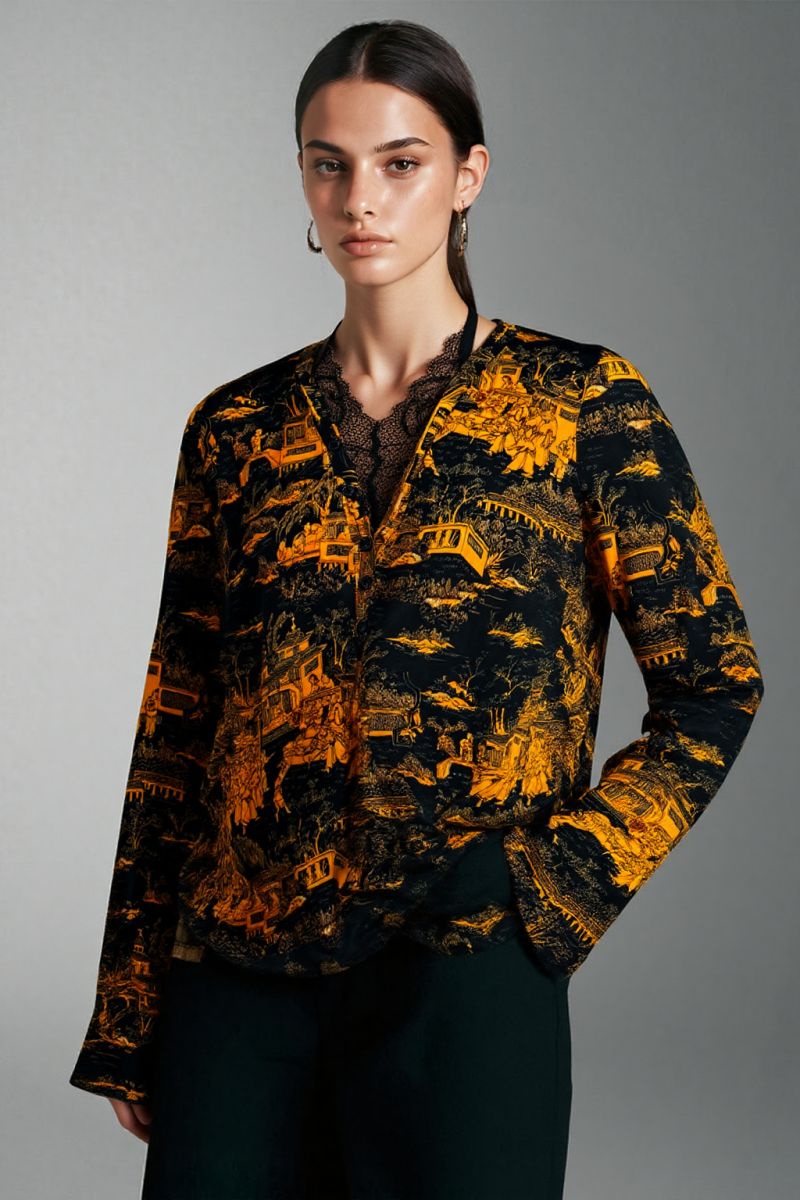
Many apparel buyers are not only looking for a low price. They worry that a factory will misunderstand the tech pack, change the fit after sampling, use the wrong silk weight, create puckered seams, or fail to repeat the approved sample during bulk production. Those concerns are reasonable, especially for silk blouses, because silk is more sensitive than cotton, polyester, or many blended woven fabrics.
DOCSUN approaches custom silk blouse development as an engineering workflow. The goal is to make the design attractive enough for retail, but also stable enough for size grading, stock replenishment, private label packaging, and repeat orders. This is why fabric choice, pattern review, sewing construction, sample approval, and bulk QC must be discussed together.
Fabric and Color Cards Available in the US, UK, and Australia
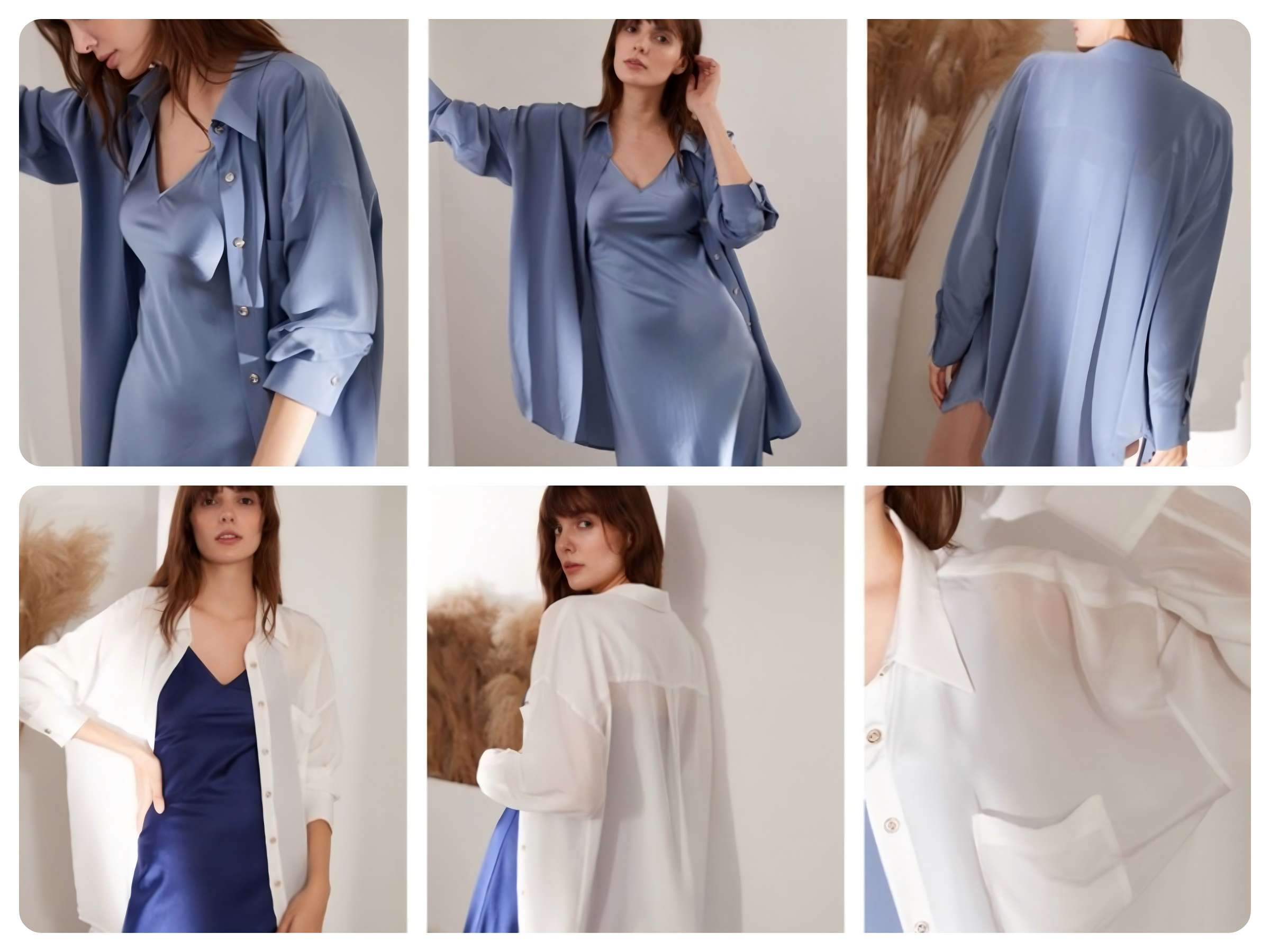
DOCSUN keeps selected fabric cards and color cards in the United States, the United Kingdom, and Australia. Brand buyers can request available references before committing to sampling. Availability depends on fabric and color, so please send your market, target blouse, preferred silk construction, and delivery details through the contact page.
Check Card AvailabilityChoose the Right Silk Fabric
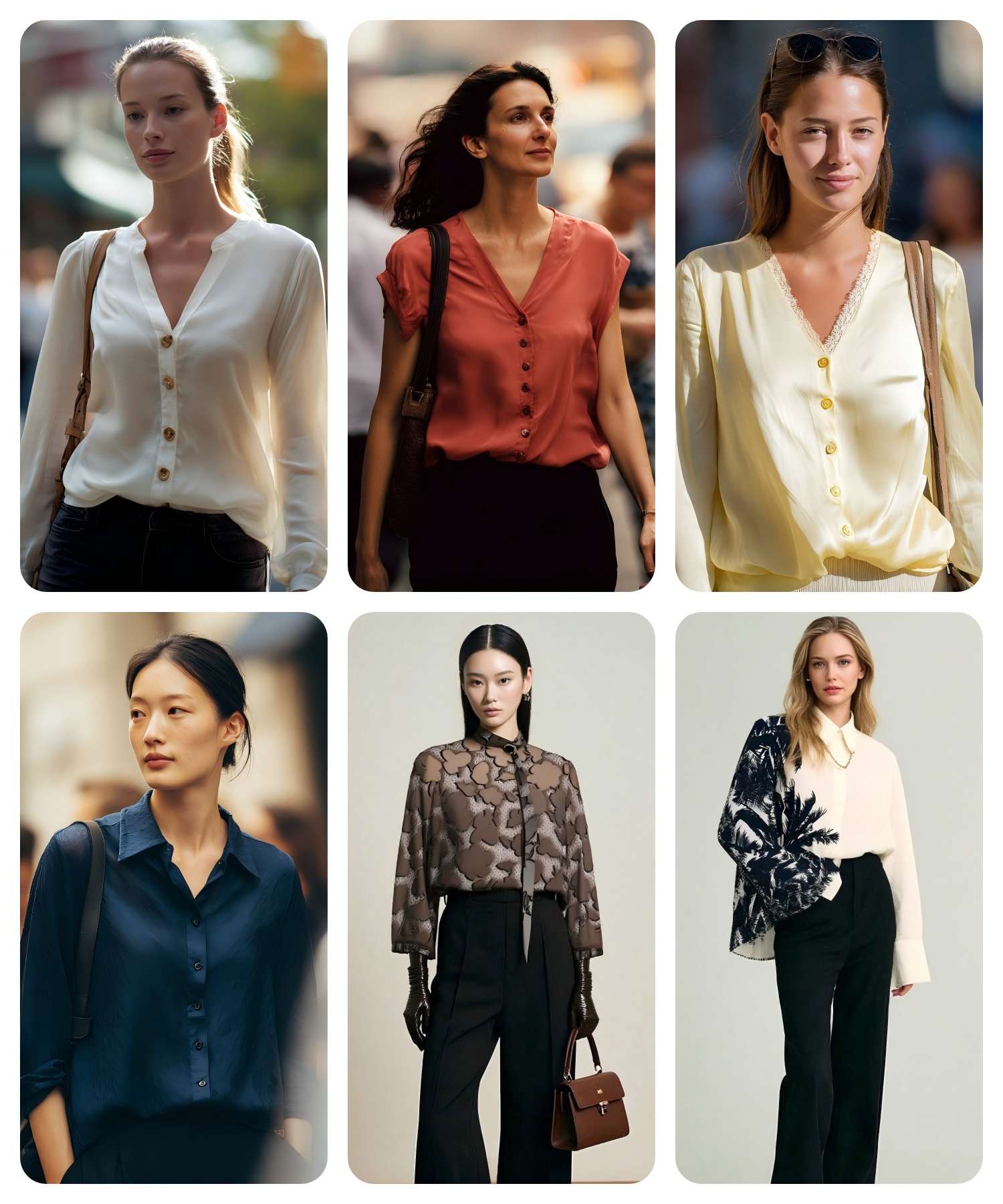
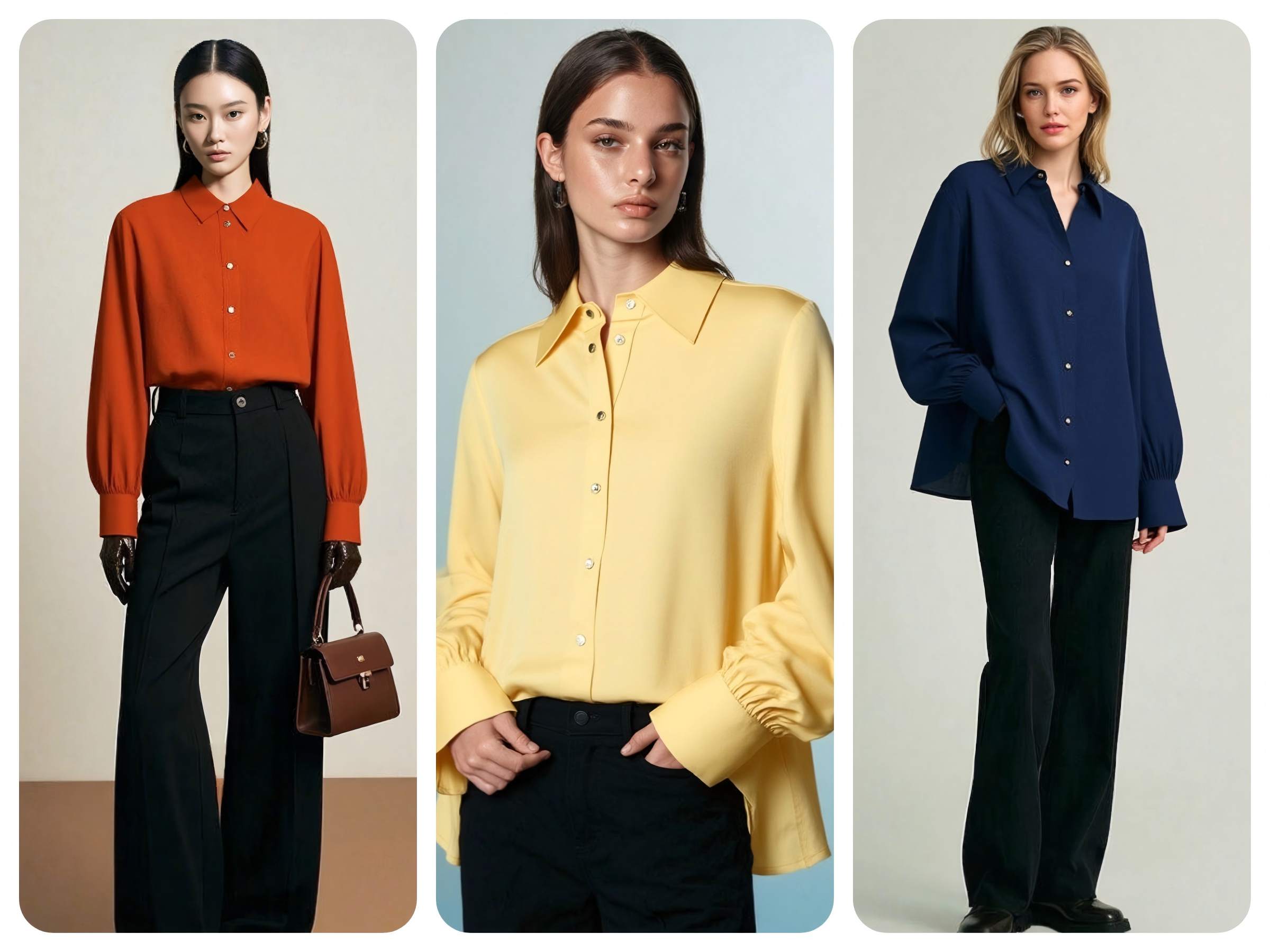
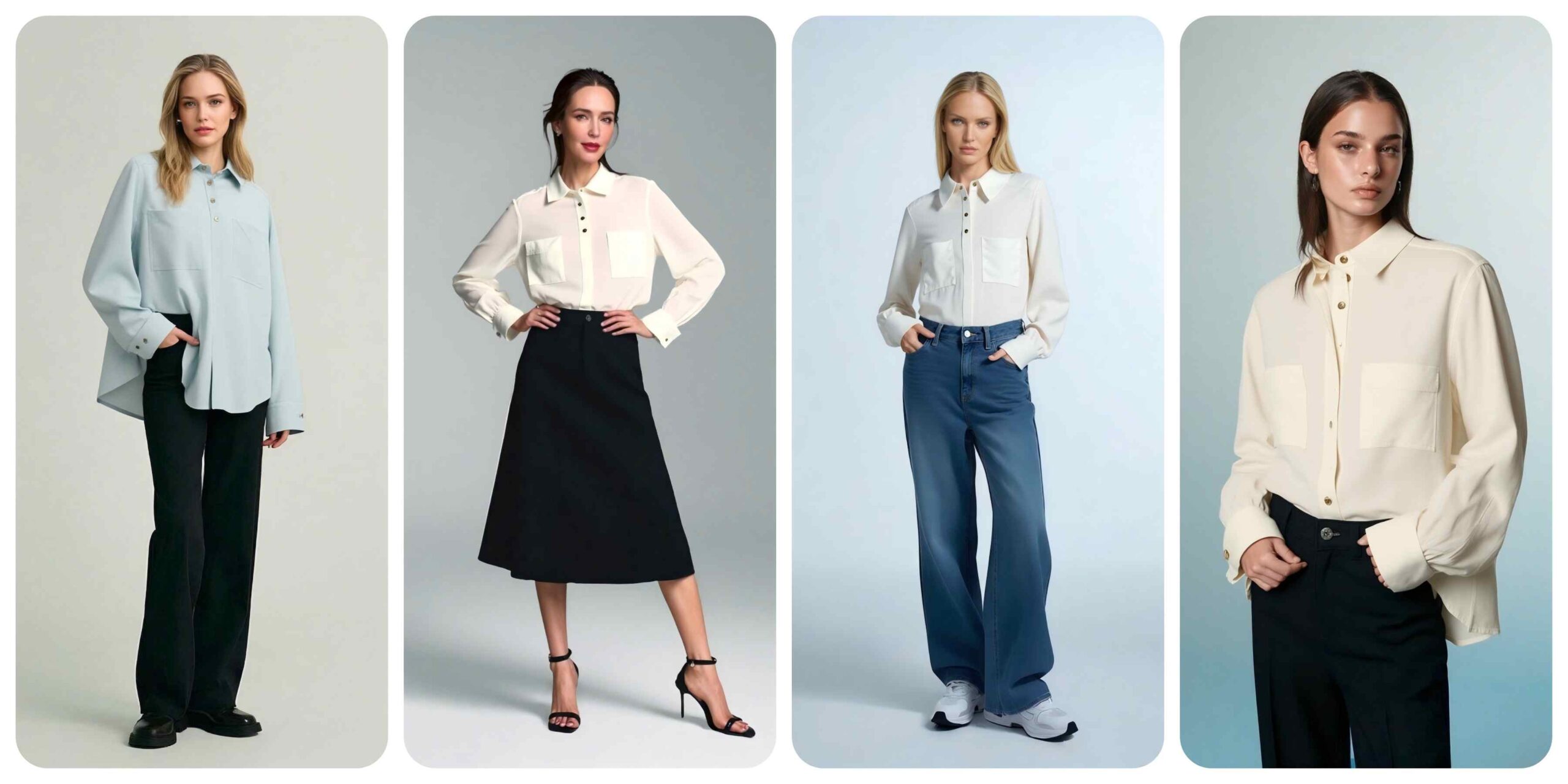
For most brand programs, 18 to 19 momme silk satin or silk crepe satin gives a strong balance of drape, opacity, touch, cost, and daily wearability. It is suitable for long sleeve blouses, business shirts, V-neck button blouses, and classic pocket shirts. Premium programs can move toward heavier silk weights or more structured fabric choices when the retail price allows it.
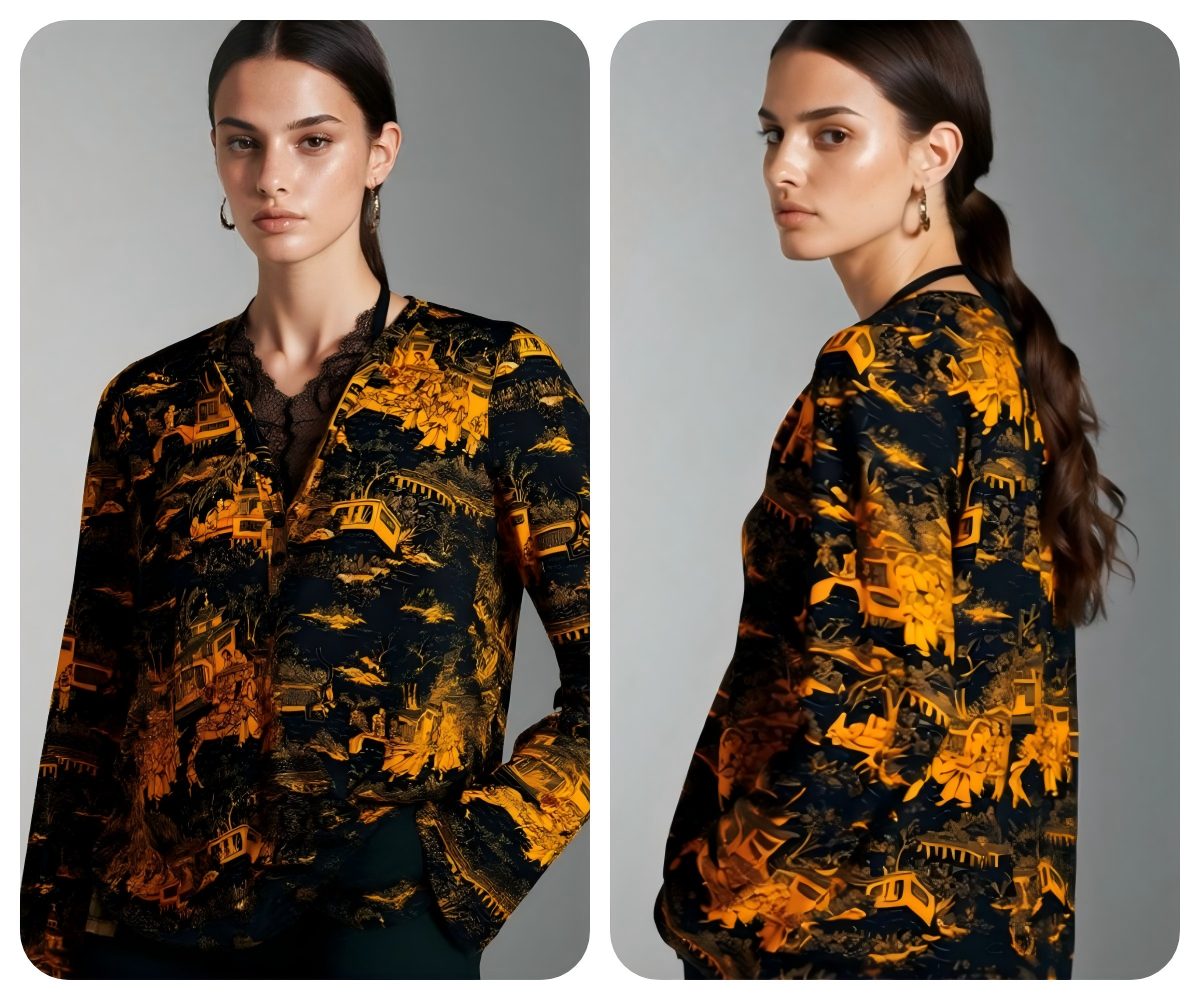
Beyond satin, DOCSUN can discuss silk twill, silk crepe satin, silk double crepe, stretch silk satin, silk georgette, and custom printed silk directions. The exact fabric should be chosen after confirming silhouette, opacity, season, target price, washing expectations, and whether the blouse will be solid dyed, digitally printed, or developed from brand artwork. For broader material planning, compare options through fabric, colors, and craftsmanship.
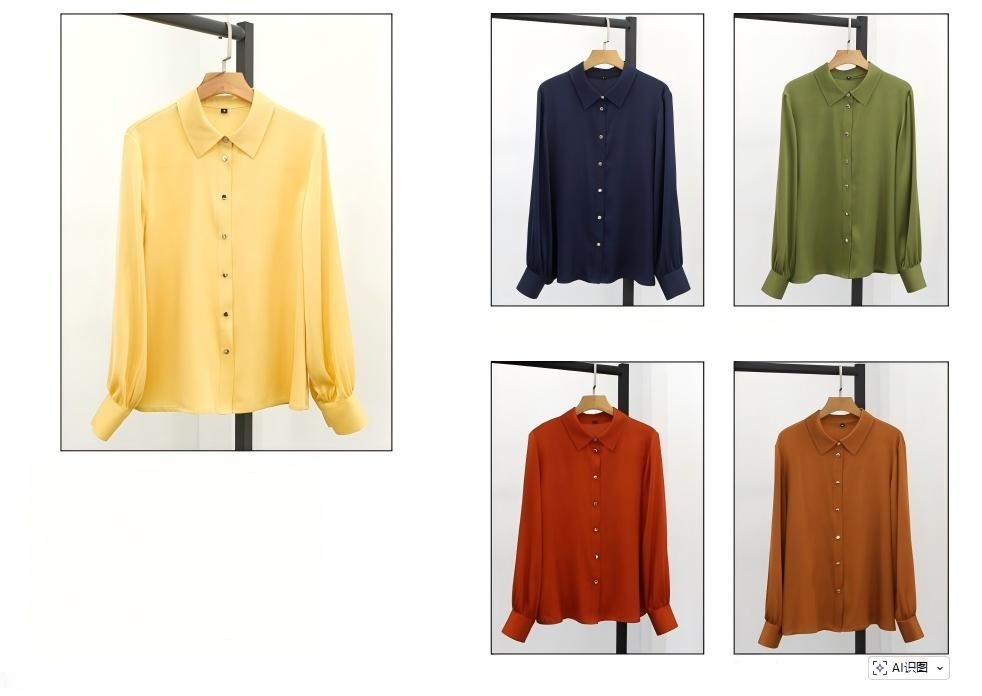
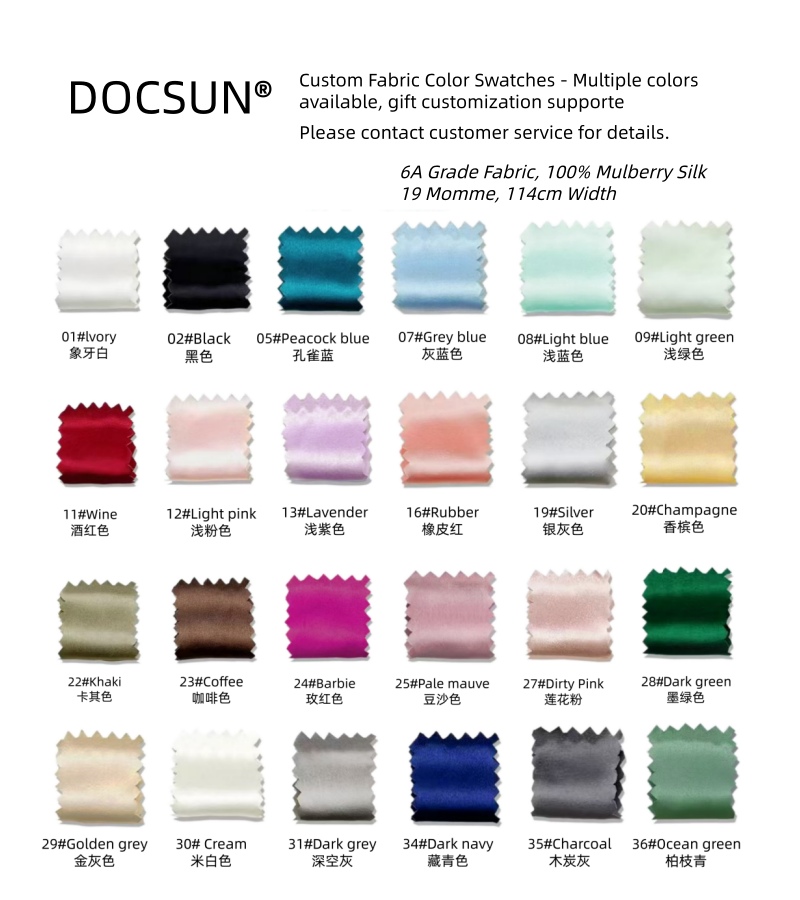
| Fabric direction | Best for | Buyer checks |
|---|---|---|
| 19 momme silk satin or crepe satin | Core blouse and business shirt programs | Drape, opacity, color, shrinkage, seam behavior, and care label |
| Stretch silk satin | Comfort-focused silhouettes and fitted styles | Recovery, fit, seam stability, pressing, and size grading |
| Silk twill or printed silk | Artwork-led collections and brand stories | Print scale, color matching, repeat direction, and placement |
| Silk georgette or lighter silk directions | Soft, flowing, sheer, or layered designs | Transparency, lining plan, seam choice, and garment strength |
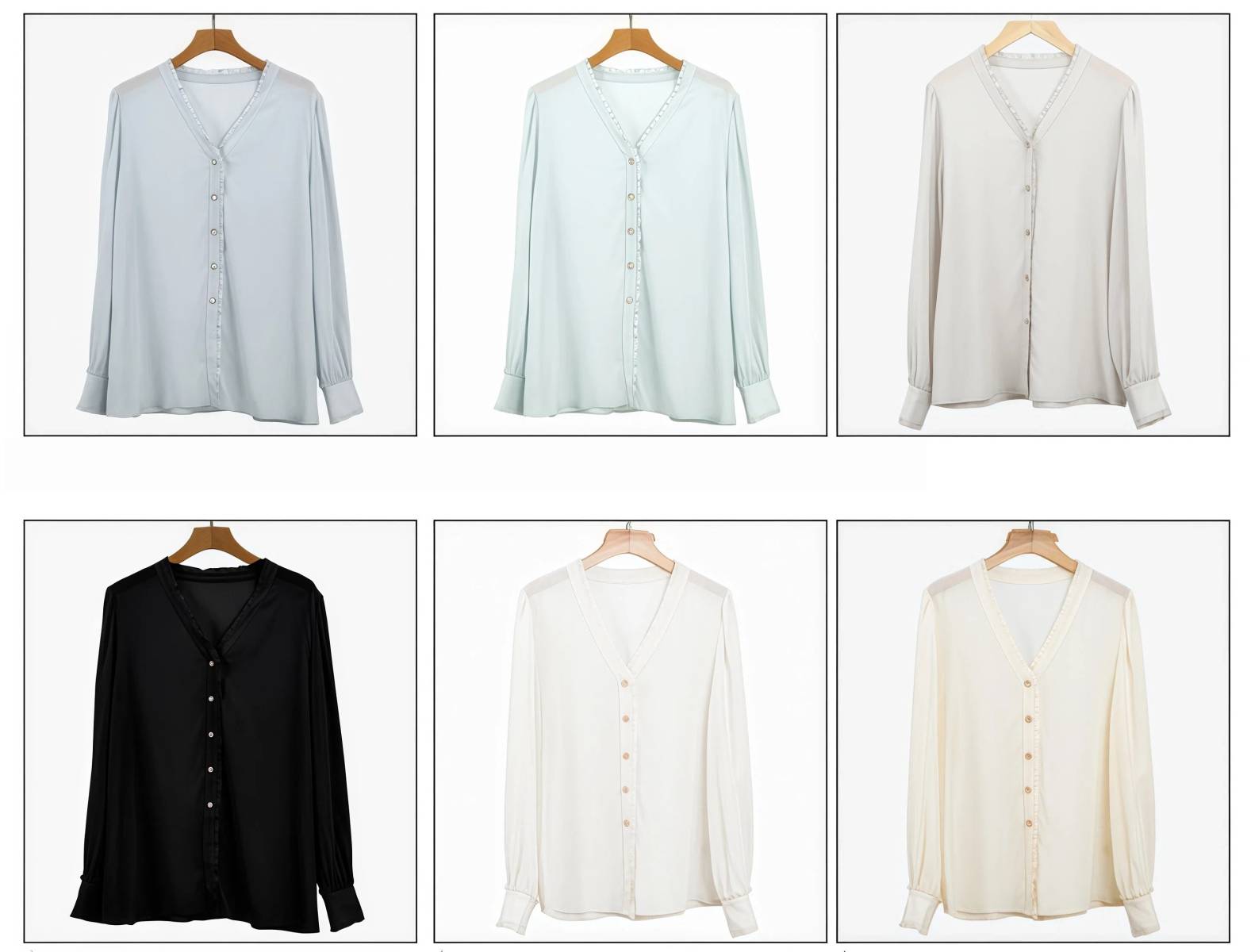
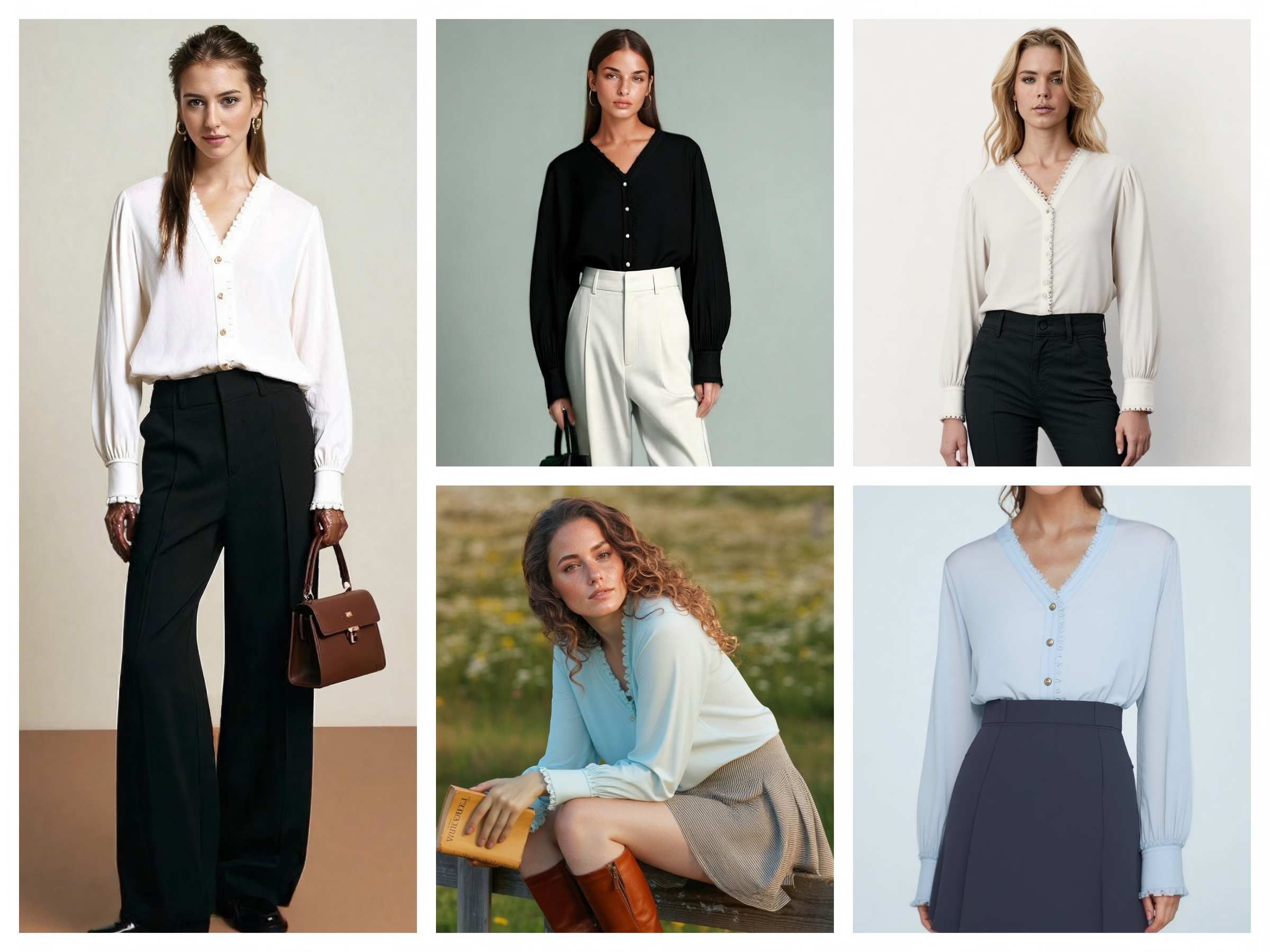
Verify Patterns Before Sampling
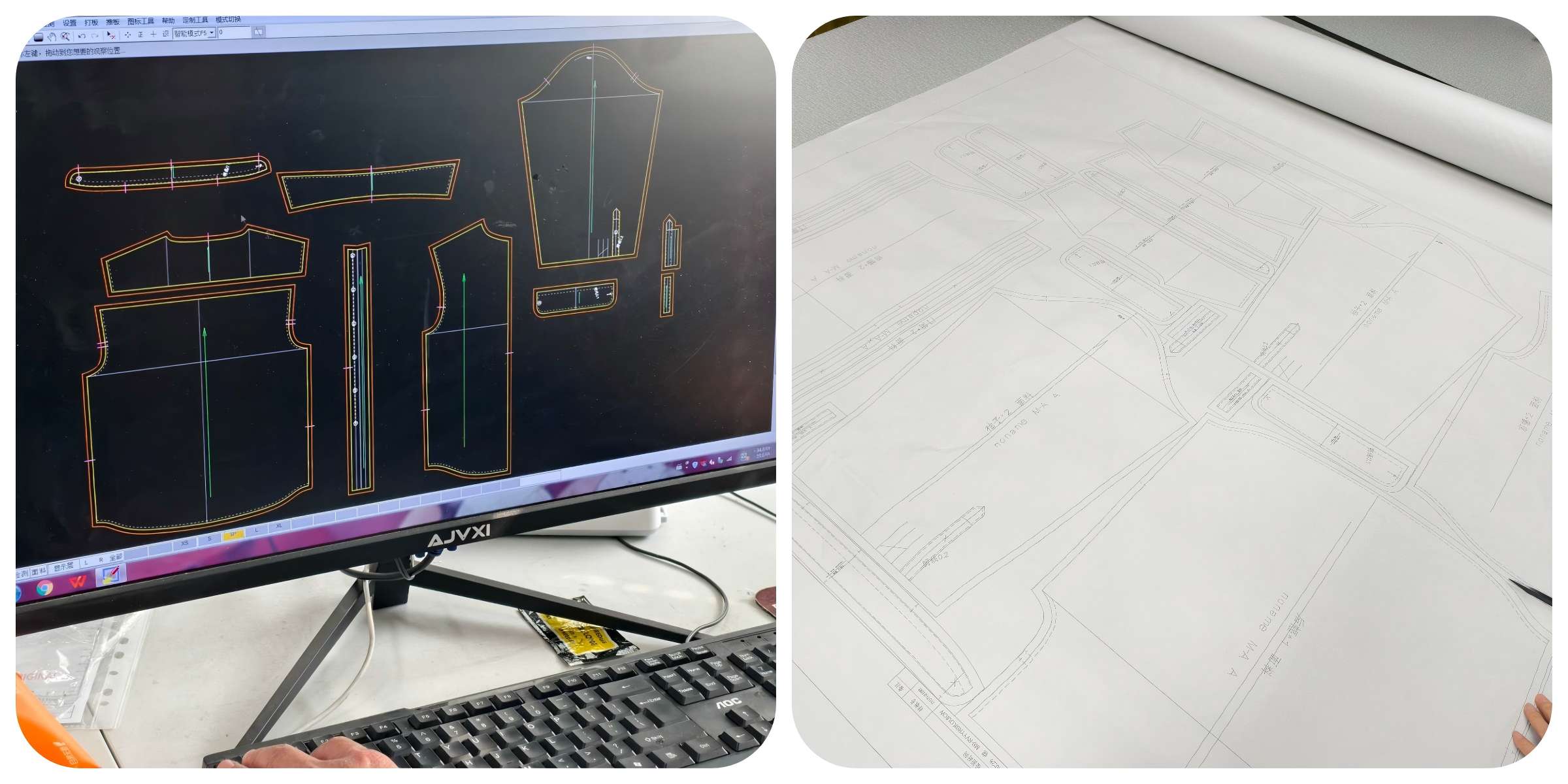
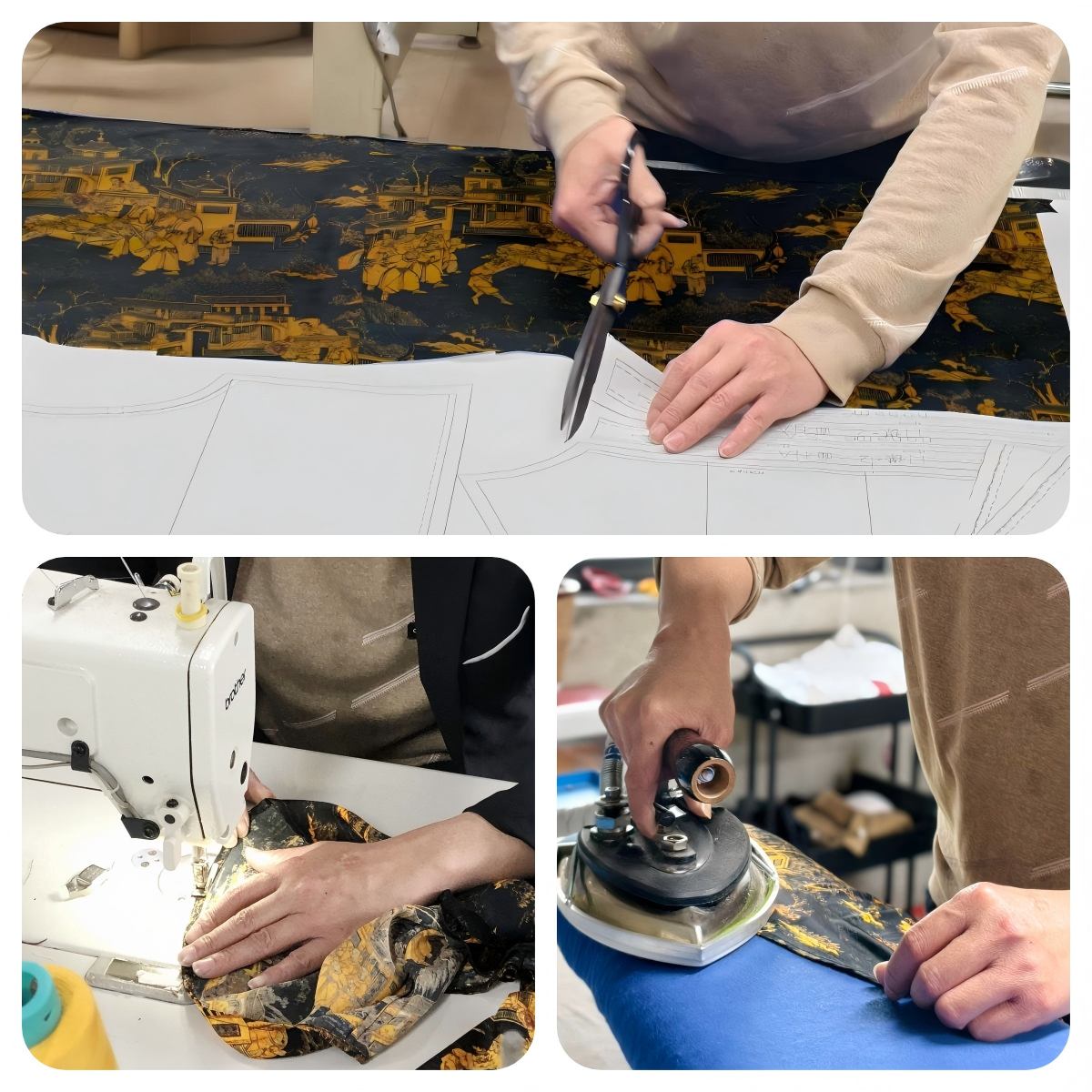
A tech pack is only useful when it can be translated into a manufacturable garment. Before cutting silk, DOCSUN reviews the provided pattern, reference sample, artwork, measurement table, seam allowance, fit expectation, and production risk points. This step reduces the chance of a sample that looks close in photos but cannot hold fit, drape, or proportion after real sewing.
For OEM and ODM programs, pattern verification may include paper pattern adjustment, original pattern development, size grading review, fabric relaxation planning, print placement review, and a practical production test. For bias-cut or drape-heavy designs, the pattern must respect how silk relaxes and hangs so the approved fit and proportion can be repeated in bulk.
Control Silk Blouse Sewing and Finishing Quality
Sewing mulberry silk requires precision because silk can show seam puckering, visible stitch marks, tension imbalance, fraying, twisting, and pressing marks more easily than many other apparel fabrics. DOCSUN therefore evaluates visible, checkable quality outcomes throughout sample development and bulk inspection.
For premium silk blouse programs, seam construction can be selected according to fabric weight and garment design. French seams, clean interior finishes, narrow hems, bound finishes, or other seam solutions may be used where suitable. The goal is to keep the inside as refined as the outside while protecting delicate silk edges from fraying.
During sample review, buyers should check seam flatness, armhole comfort, side seam stability, collar and placket alignment, button placement, hem balance, print placement, pressing quality, and whether the garment keeps its shape after handling. These are the practical signs that matter more to customers than hidden factory settings.
Plan Testing, Certificates, and Documentation
Material trust matters in silk. Buyers may need confirmation that the program uses genuine mulberry silk, that colors are suitable for the target market, and that the finished garment meets internal safety or compliance standards. DOCSUN can support testing discussions before bulk production so certificate scope, sample type, and testing timeline are clear.
Depending on the order, buyers can request fabric composition review, color fastness testing, shrinkage checks, or third-party lab support through SGS, Intertek, or comparable laboratories. OEKO-TEX documentation or certified material options can be discussed where the project requires them. These details should be confirmed before production because testing adds time and needs the correct sample type.
- Fabric composition and momme weight direction.
- Color standard, Pantone reference, or approved lab dip.
- Print artwork proof and physical sample approval.
- Seam, button, label, care label, and packaging checks.
- Optional third-party testing scope if the market requires it.
Confirm Labels, Packaging, MOQ, and Lead Time
Private label details should not wait until the end. Neck labels, care labels, size tags, hangtags, barcode stickers, biodegradable polybags, tissue paper, and gift boxes all affect cost, timing, and production workflow. For brand programs, DOCSUN can combine blouse development with custom packaging so the garment is ready for retail, gifting, or online fulfillment.
For fully custom OEM silk blouses, MOQ is commonly 150 pieces per color or design when custom fabric, dyeing, or special preparation is required. For smaller boutique tests, selected in-stock 19 momme silk satin colors may support a lower MOQ from 50 pieces per design. Final MOQ depends on fabric, color, pattern, labels, packaging, and production schedule.
Lead time usually depends on whether the buyer selects stock fabric or custom fabric. Stock color cards and swatches can be prepared quickly when available. A custom pre-production sample usually takes about 7 to 10 business days after details are confirmed, and bulk production commonly takes about 25 to 35 days after the sample and price are approved.
FAQ
Do you offer private label silk blouse services for brands?
Yes. DOCSUN supports private label silk blouse programs for brands, designers, boutiques, and apparel buyers. We can develop custom neck labels, care labels, size tags, hangtags, branded biodegradable polybags, and gift packaging, then place those elements into the production workflow after the pre-production sample is approved.
What is the MOQ for custom silk blouses?
For fully custom OEM silk blouse programs using custom-dyed or specially prepared fabric, the usual MOQ is 150 pieces per color or design. For boutique testing and smaller launches, selected 19 momme silk satin options from an in-stock color library may support a lower MOQ from 50 pieces per design, depending on fabric availability and production schedule.
Can DOCSUN develop custom printed silk blouses from my artwork?
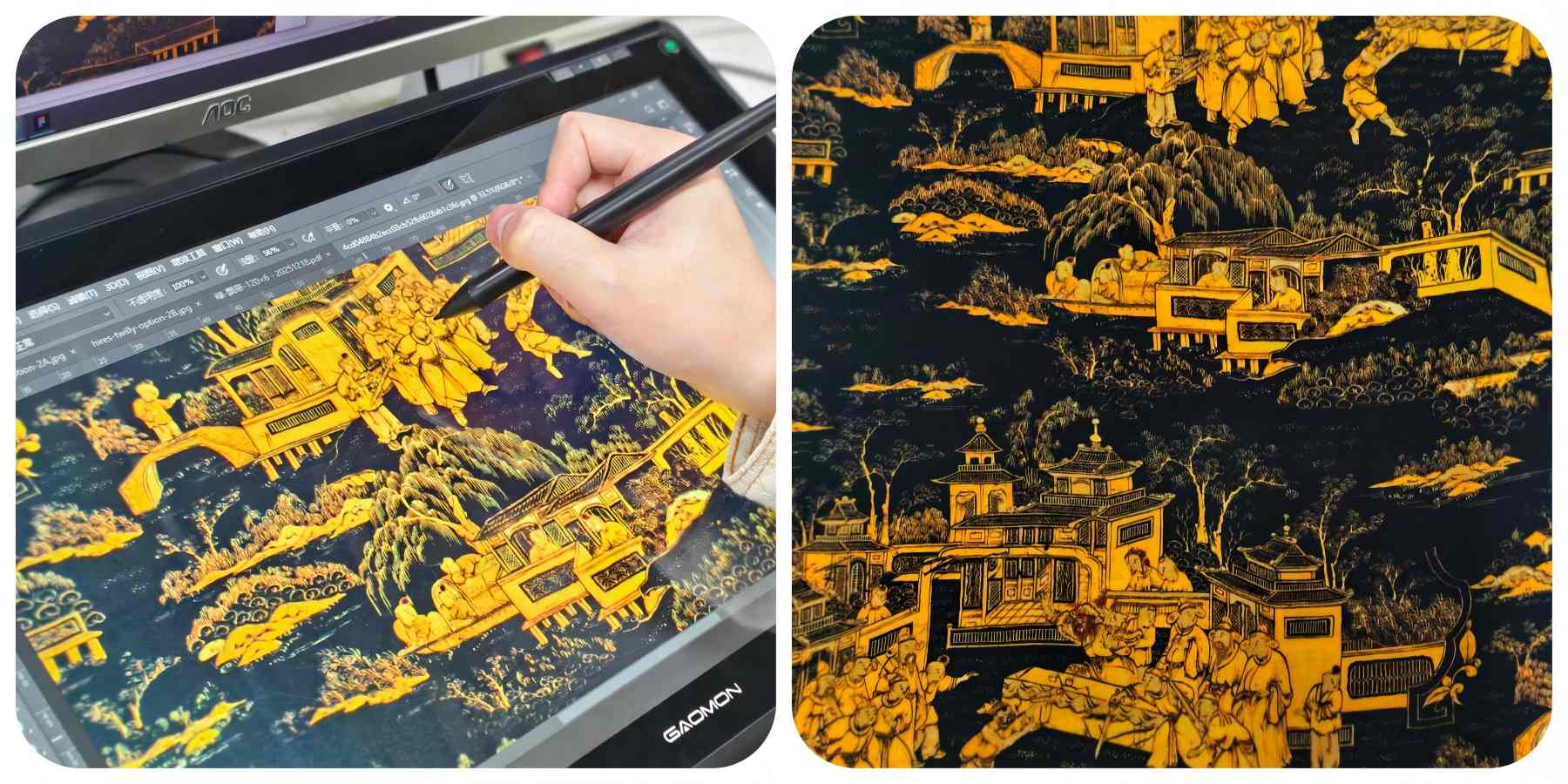
Yes. Send artwork in AI, PDF, or high-resolution PSD format, ideally at 300 DPI or higher. DOCSUN can review repeat direction, scale, placement, color separation, and Pantone references before proofing. For print-heavy silk blouses, we recommend approving both artwork proof and physical sample before bulk production.
How do you reduce seam puckering on silk blouses?
Silk requires controlled sewing tension, suitable seam construction, careful pressing, and sample approval before production. DOCSUN reviews seam flatness, stitch balance, armhole behavior, side seam stability, interior finishing, and measurement consistency before approving the bulk route.
Can you support OEKO-TEX, SGS, or Intertek testing?
Testing support can be arranged when the order requires it. Depending on the project, DOCSUN can help prepare fabric or finished-garment samples for composition review, color fastness testing, shrinkage checks, or other third-party tests through SGS, Intertek, or comparable laboratories. Certificate scope should be confirmed before bulk production.
What is the lead time for samples and bulk production?
Fabric swatches and available stock color cards can usually be prepared quickly, often within about 48 hours when in stock. A custom pre-production sample usually takes about 7 to 10 business days after details are confirmed. Bulk production commonly takes about 25 to 35 days after the sample, price, fabric, label, packaging, and production schedule are approved.
Develop a Private Label Silk Blouse Program
Send your tech pack, target fabric, artwork, size range, sample requirement, label plan, packaging brief, quantity, and delivery timeline. DOCSUN can review the development path before sampling and bulk production.
Start a Silk Blouse ProjectFor related product planning, review custom apparel and the custom process.