
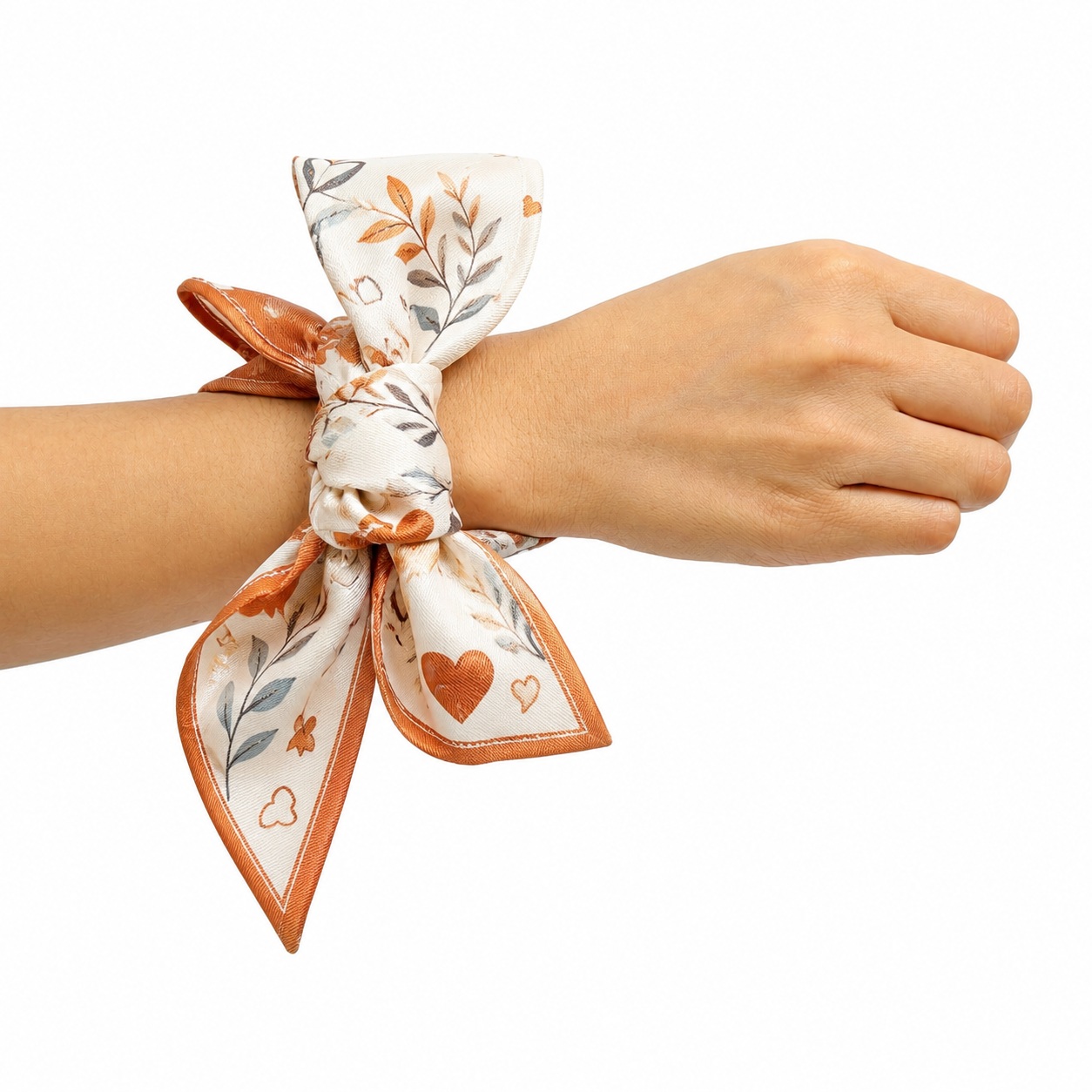
Twilly Scarf
A narrow, cost-efficient format for handbag handles, neckwear, wrist styling, promotional sets and coordinated brand accessories.
CUSTOM SILK SCARF OEM / ODM
DOCSUN develops custom silk scarves for fashion labels, museum shops, artists, corporate gifting programs, boutiques and uniform projects. We coordinate scarf size, fabric, print route, edge finish, labels and packaging from one approved specification, then move from a single sample to controlled bulk production.
On This Page
A reliable quotation starts with the intended customer, selling channel and use case. The same artwork may require a different fabric weight, size, edge finish or package when it is developed for a luxury fashion launch, museum store, airline uniform, corporate event or promotional program.
Start with a reference scarf, sketch, mood board or finished artwork. Our custom development process helps organize the specification before sampling.
Size changes more than the dimensions on a purchase order. It affects artwork scale, repeat layout, fabric consumption, drape, folding method, label position and packaging. The references below cover compact accessories, classic squares, long scarves and oversized formats.
A narrow, cost-efficient format for handbag handles, neckwear, wrist styling, promotional sets and coordinated brand accessories.
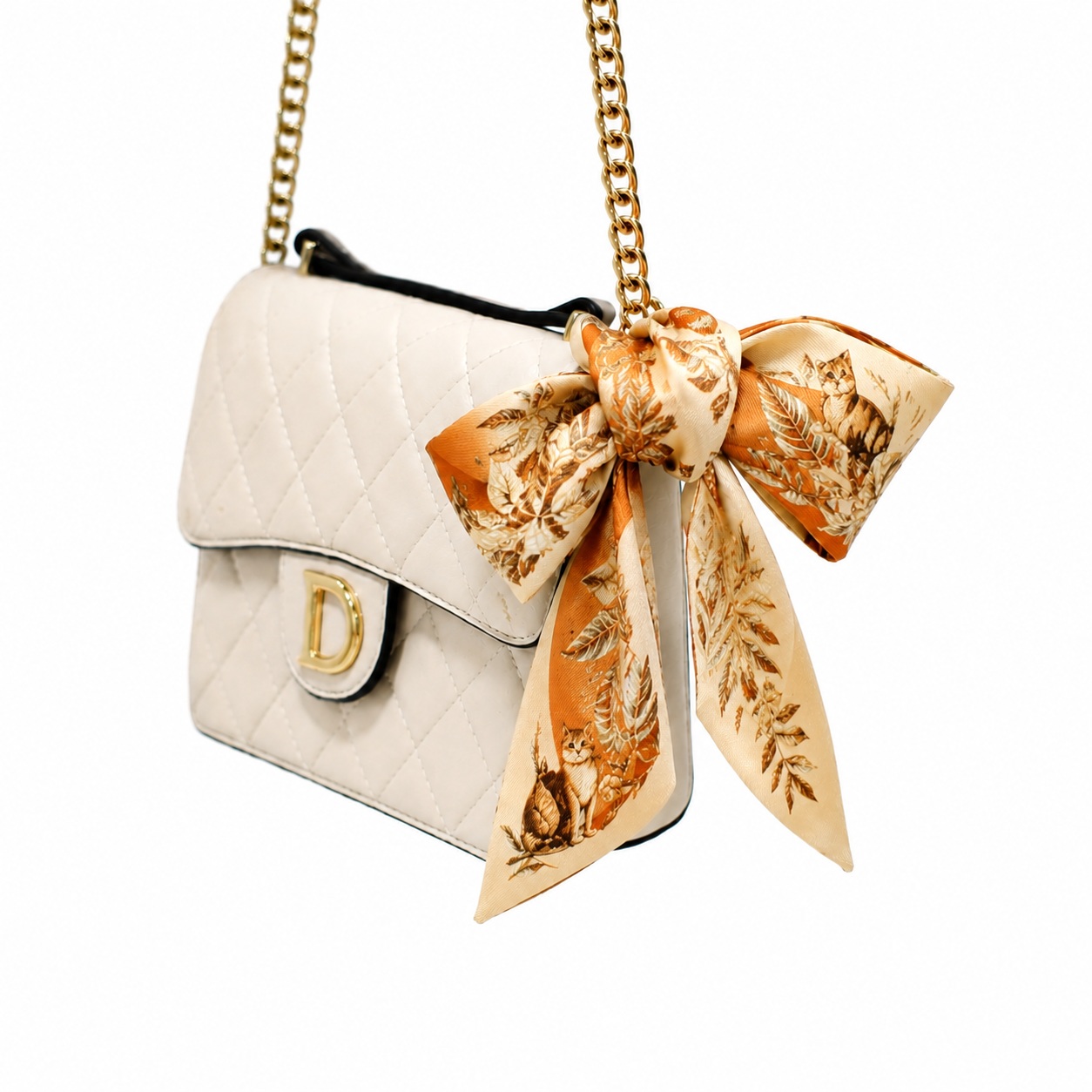
A longer narrow silhouette for neck bows, hair styling, waist accents and seasonal capsule collections.
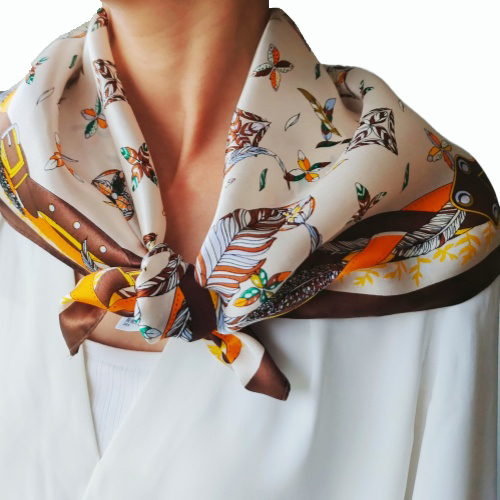
A compact square for neck, hair, handbag and uniform applications. It is a practical entry format for gift and retail programs.
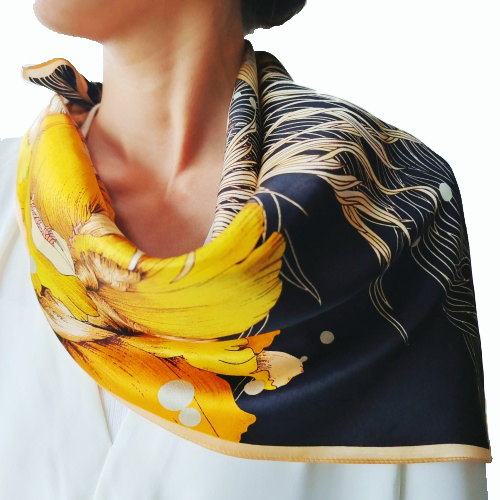
A versatile fashion square that provides more artwork area while remaining easy to fold, tie and merchandise.
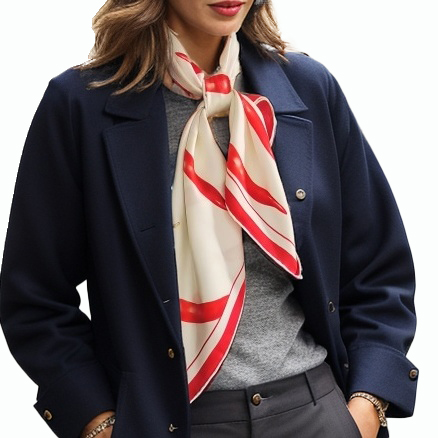
A flagship luxury scarf format suited to detailed borders, center motifs, narrative artwork and premium gift presentation.
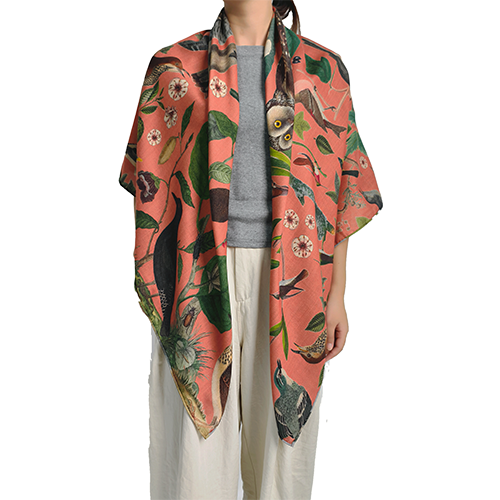
A statement format for shawl styling, resort collections and expansive artwork that needs visual impact.
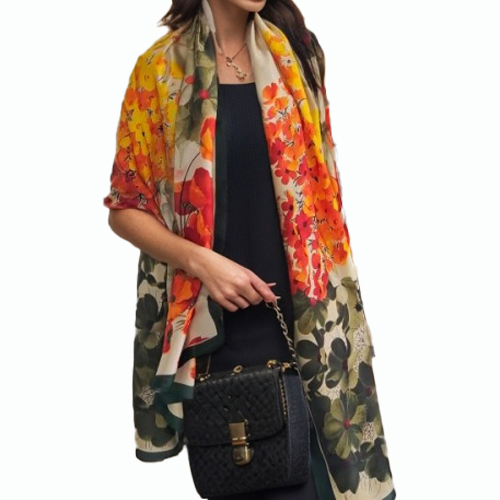
A generous rectangular format for shoulder coverage, travel, eveningwear and premium silk shawl programs.
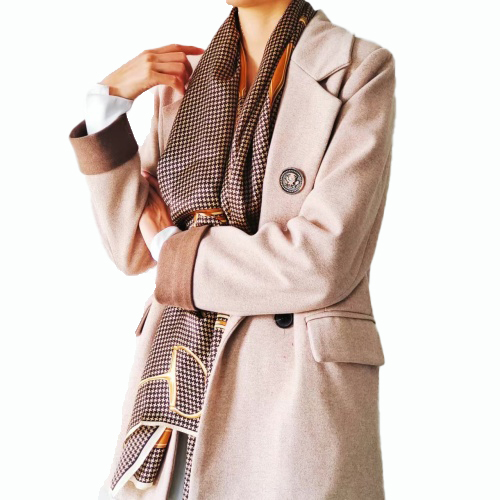
A balanced long scarf for neckwear, uniforms and fashion collections that need visible artwork without excessive volume.
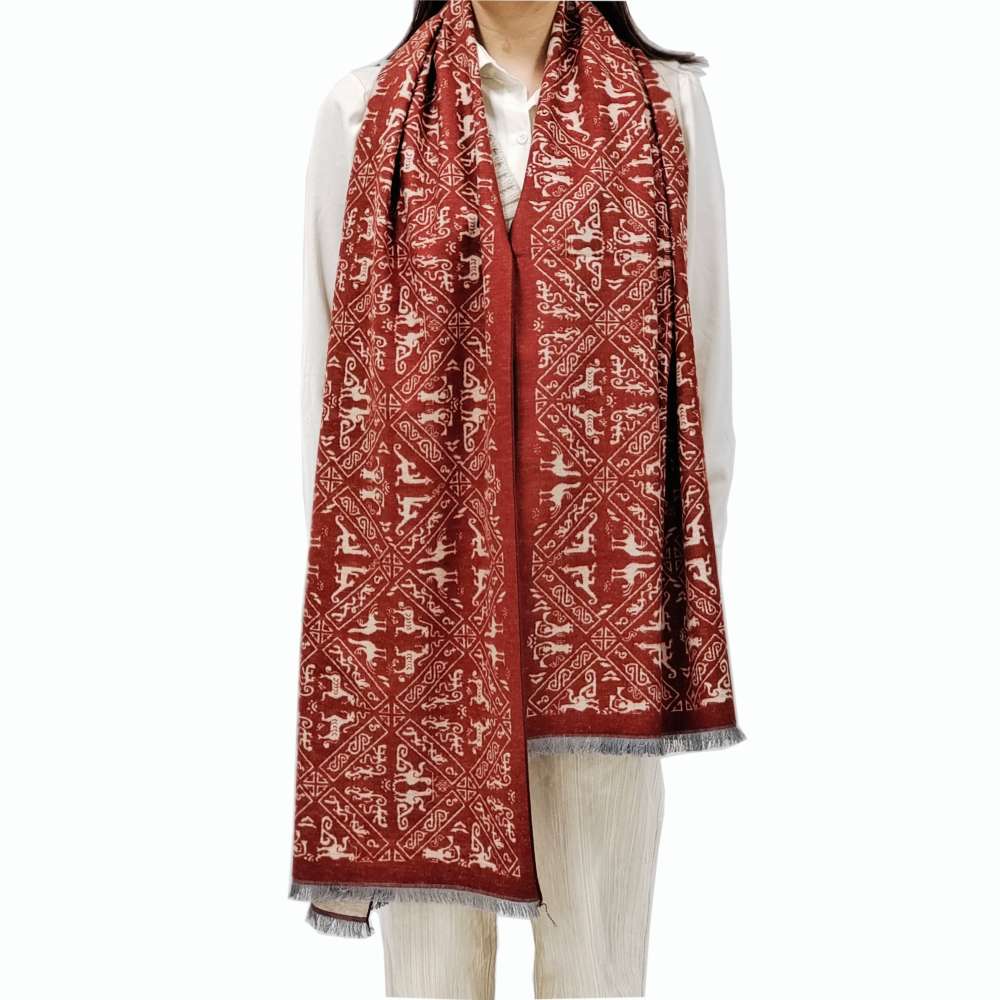
An elongated option for dramatic styling, seasonal layers and designs built around borders or directional repeats.
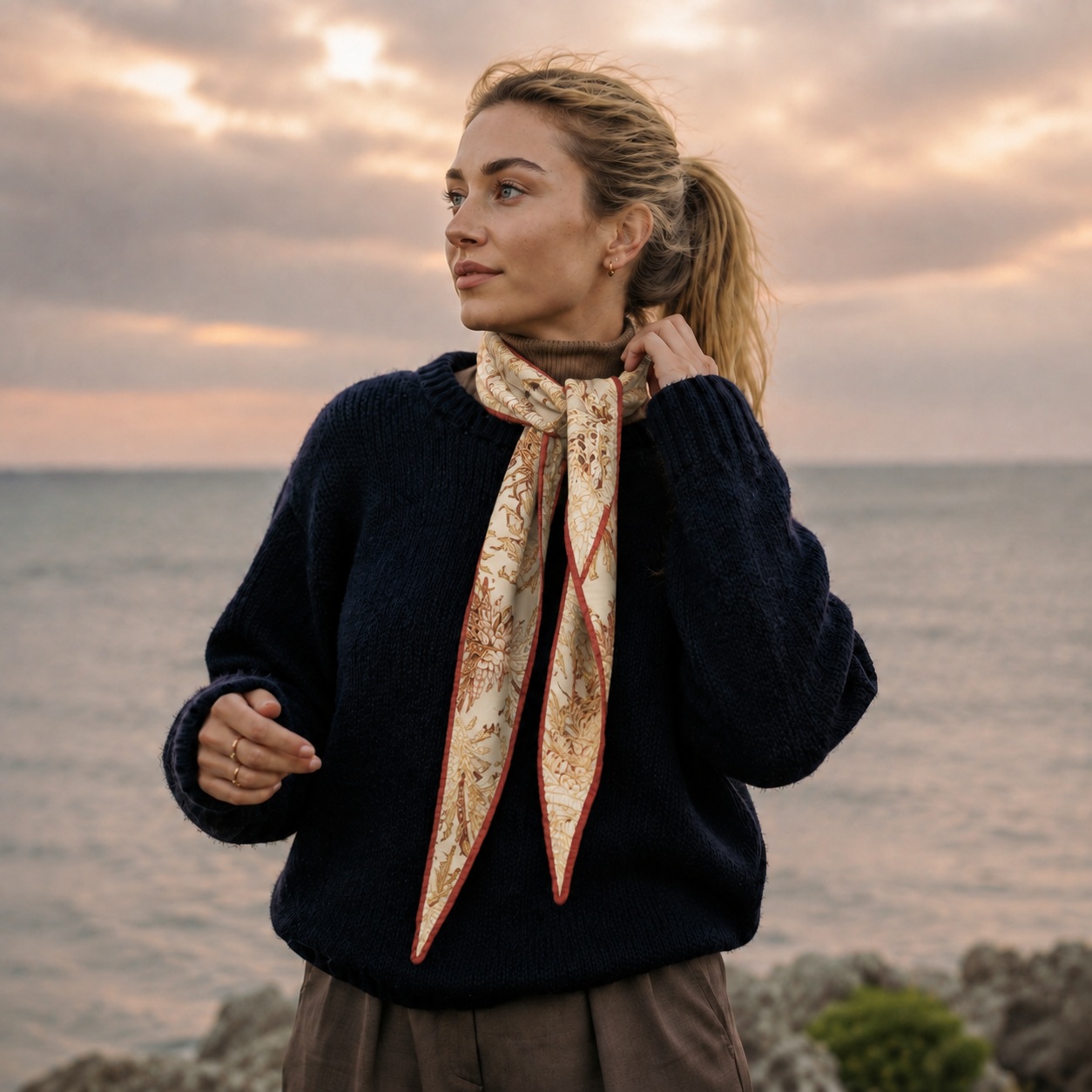
A directional silhouette with less bulk at the neck, useful for styling-led collections and distinctive brand capsules.
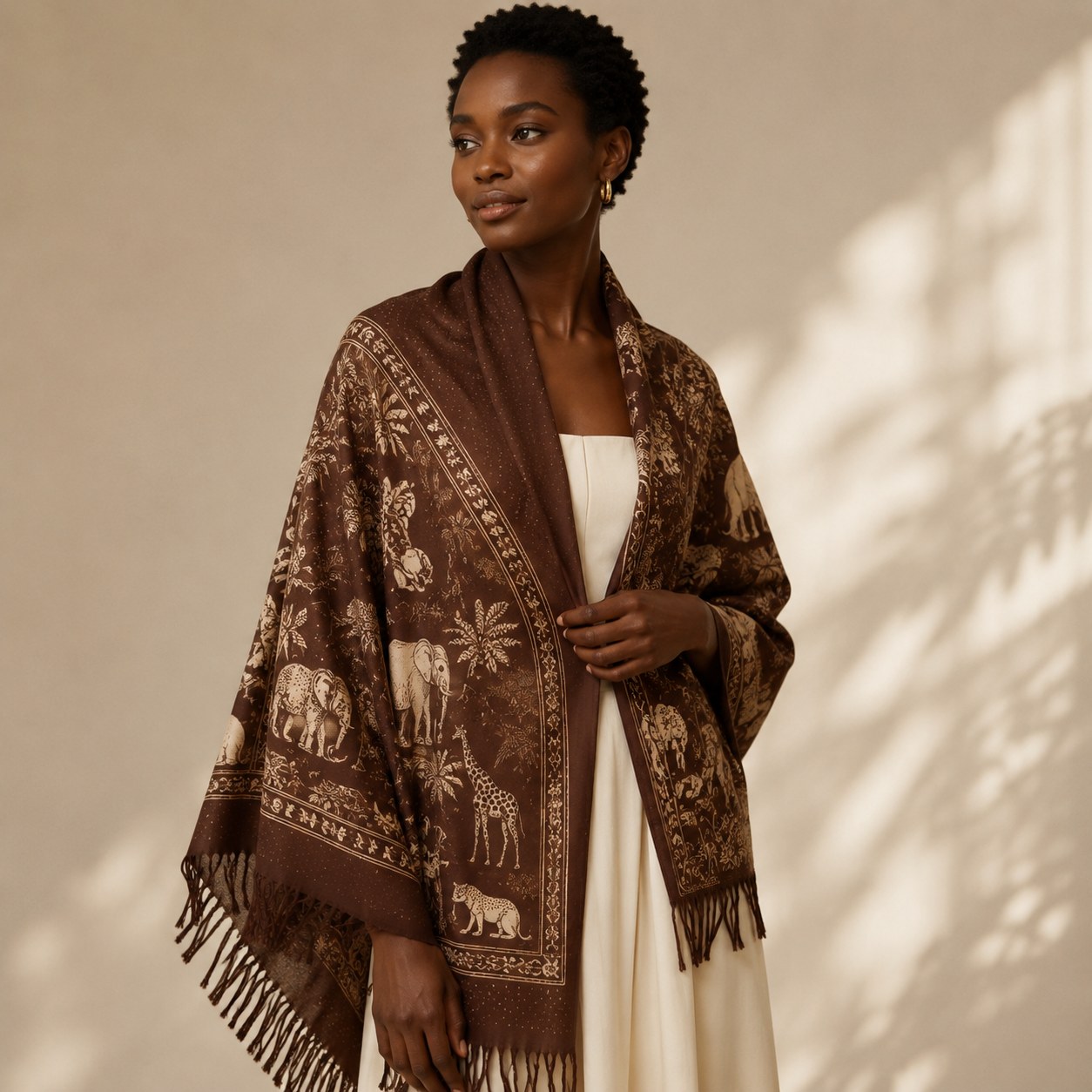
A larger format where fabric weight, drape and edge construction must be planned together for comfortable wear.
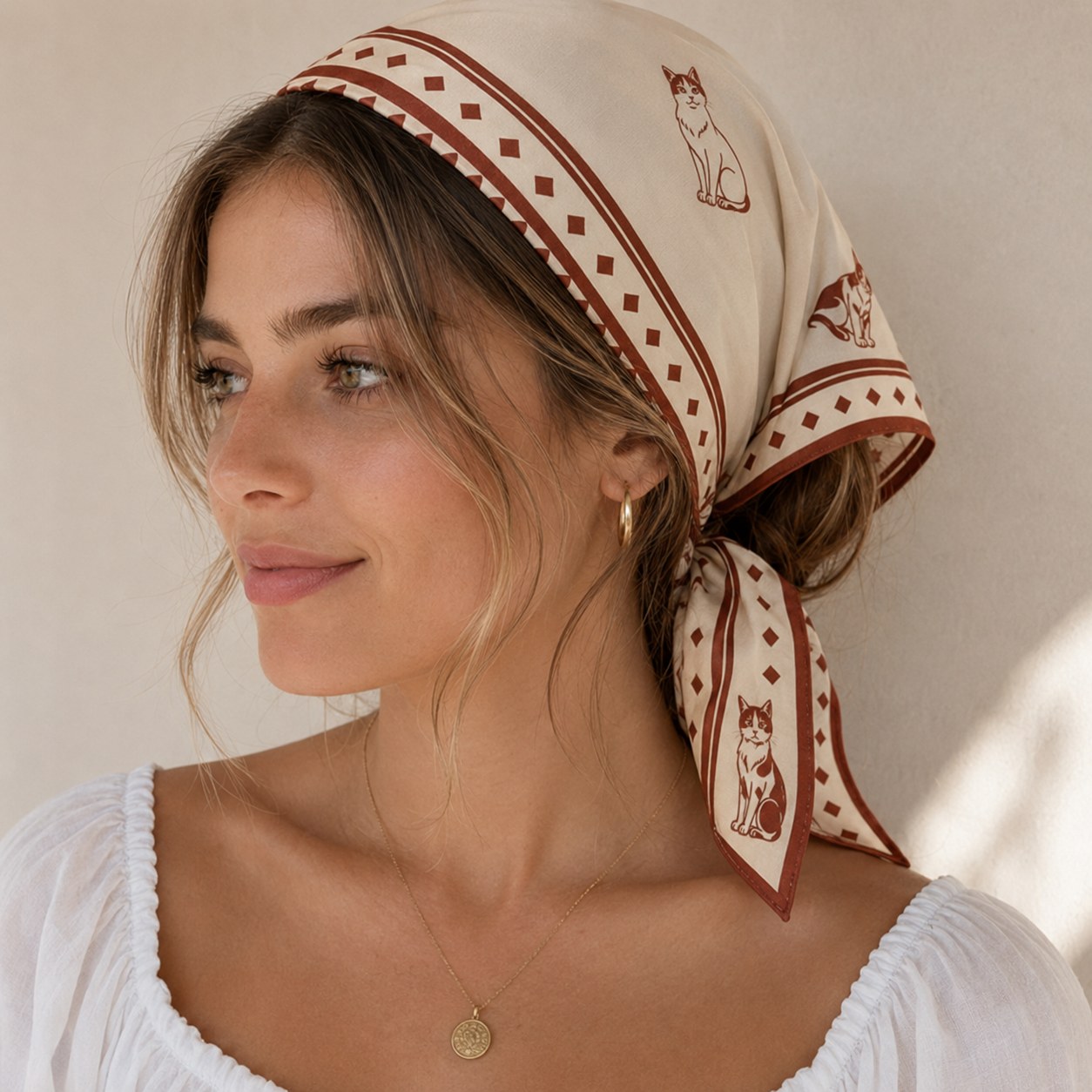
Bandanas can share artwork, color and packaging with a scarf collection. See the dedicated custom bandana manufacturing page for fabric and construction options.
The correct fabric is selected against scarf size, artwork detail, opacity, drape, edge finish and target price. A heavier fabric is not automatically better: a twilly, 90 cm square and oversized shawl each need a different balance of body and movement.
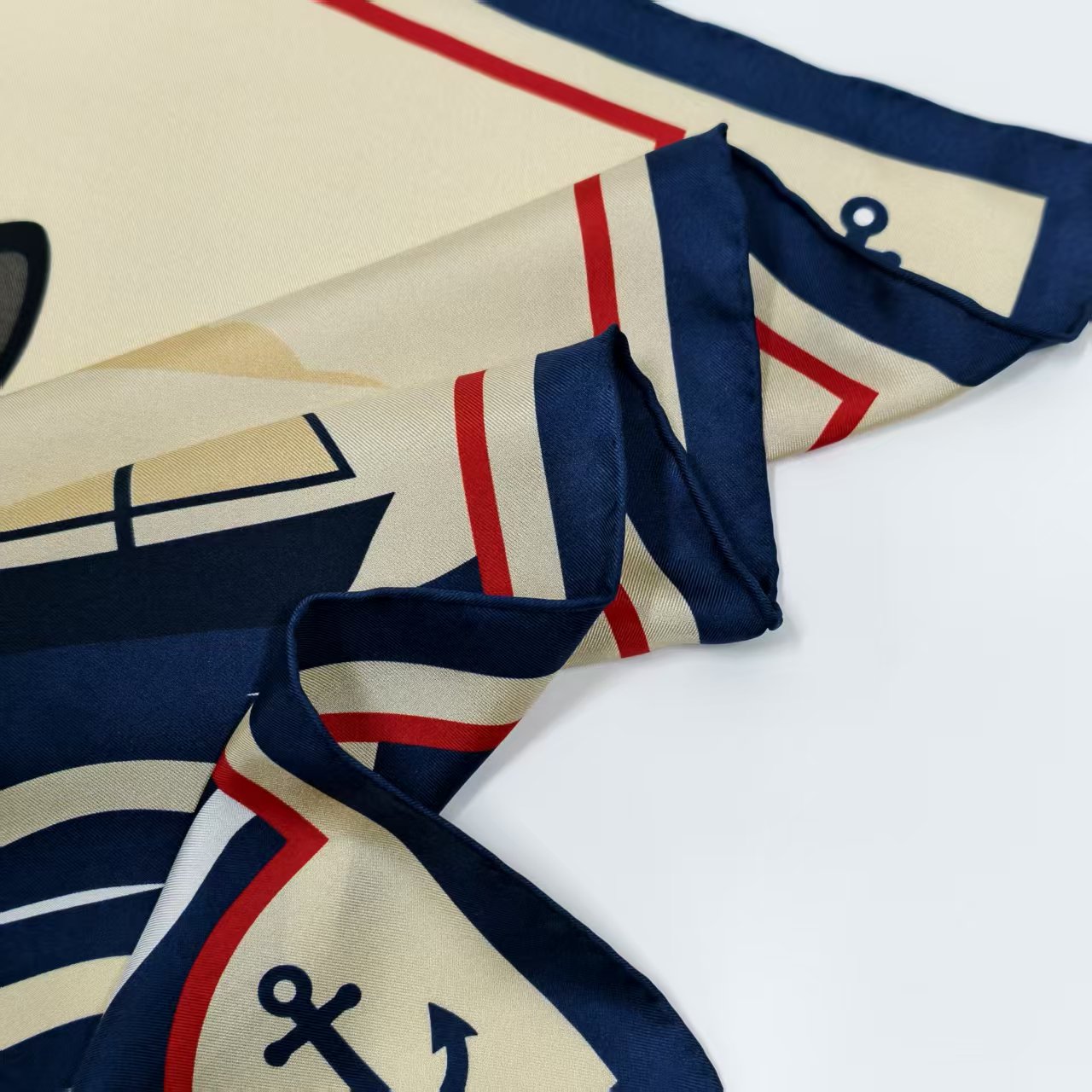
Light yet structured, with a visible diagonal weave. Common for versatile printed squares and branded accessories.
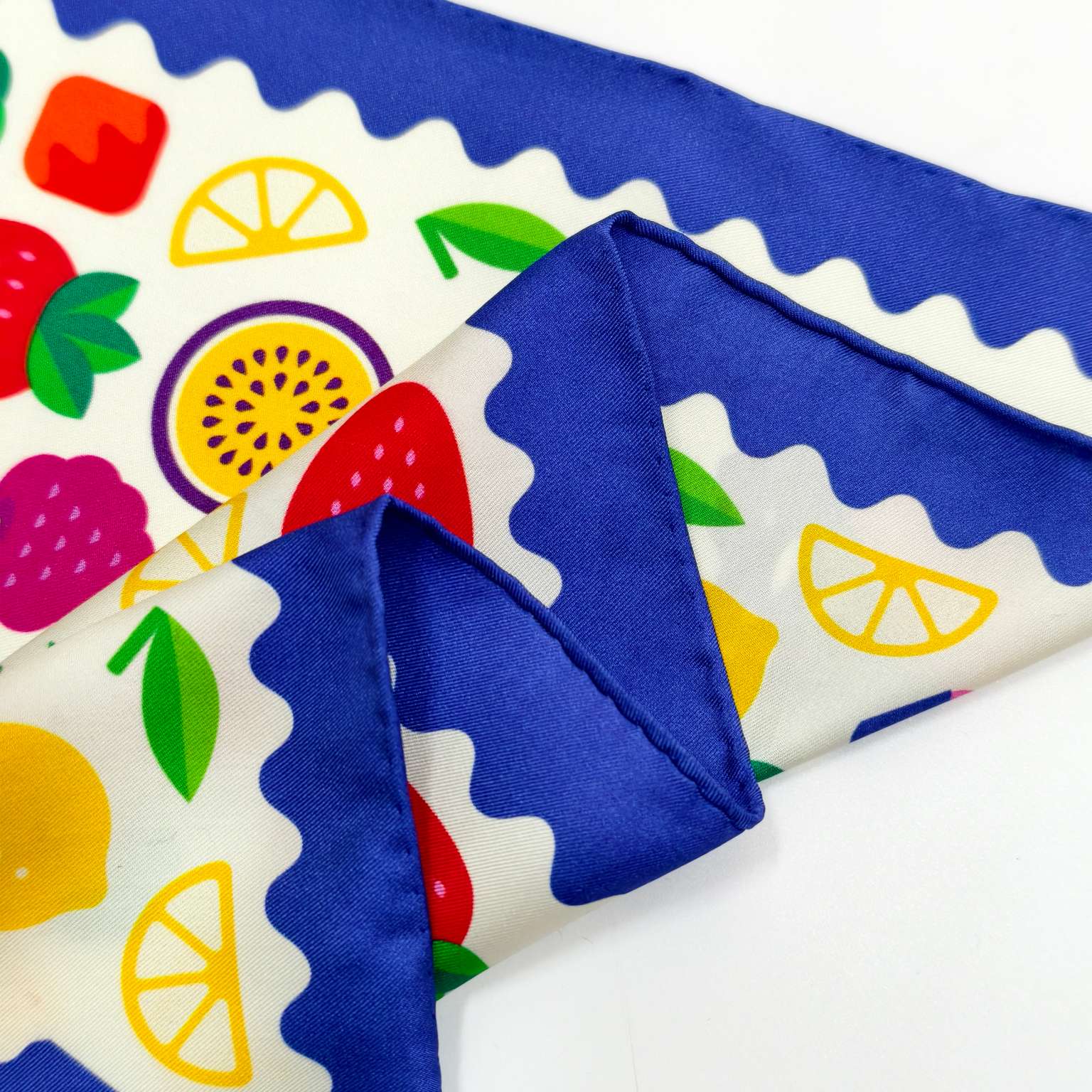
A strong all-round option with better body and opacity for premium squares and more demanding double-sided print structures.
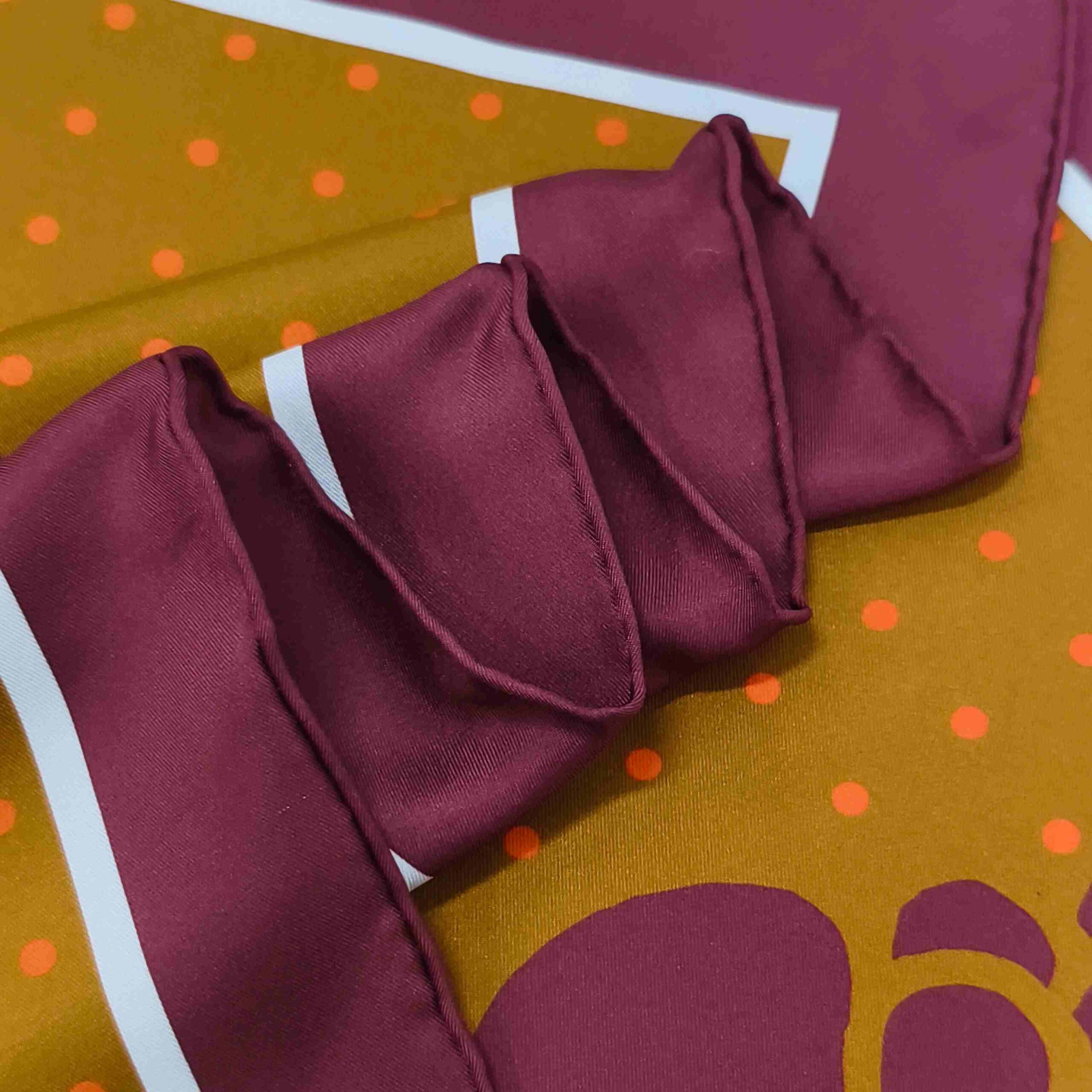
A substantial hand feel for luxury projects that need body, controlled drape and strong visual presentation.
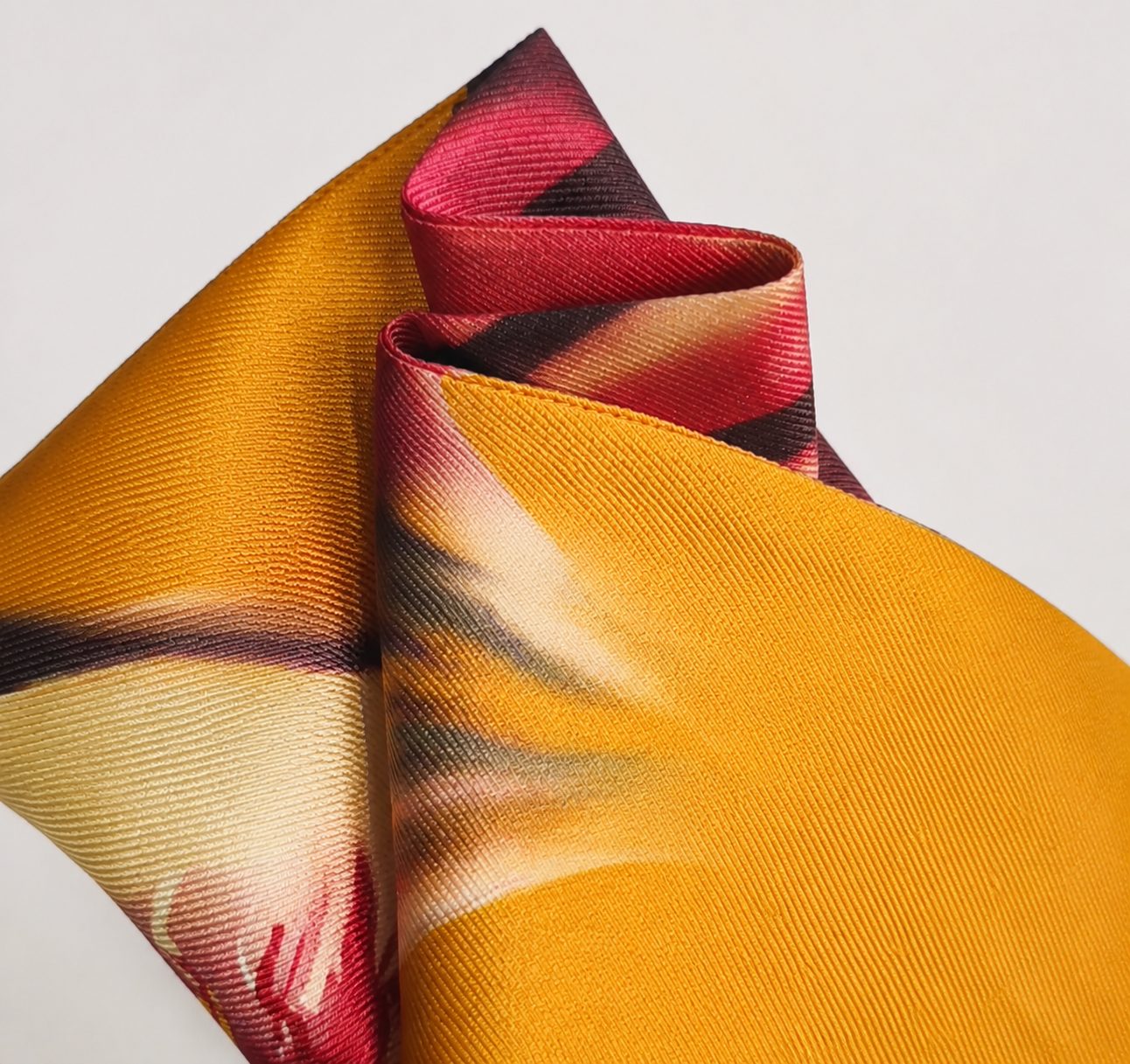
A dense premium option for designs that need weight, opacity, sculptural folds and a highly substantial finish.
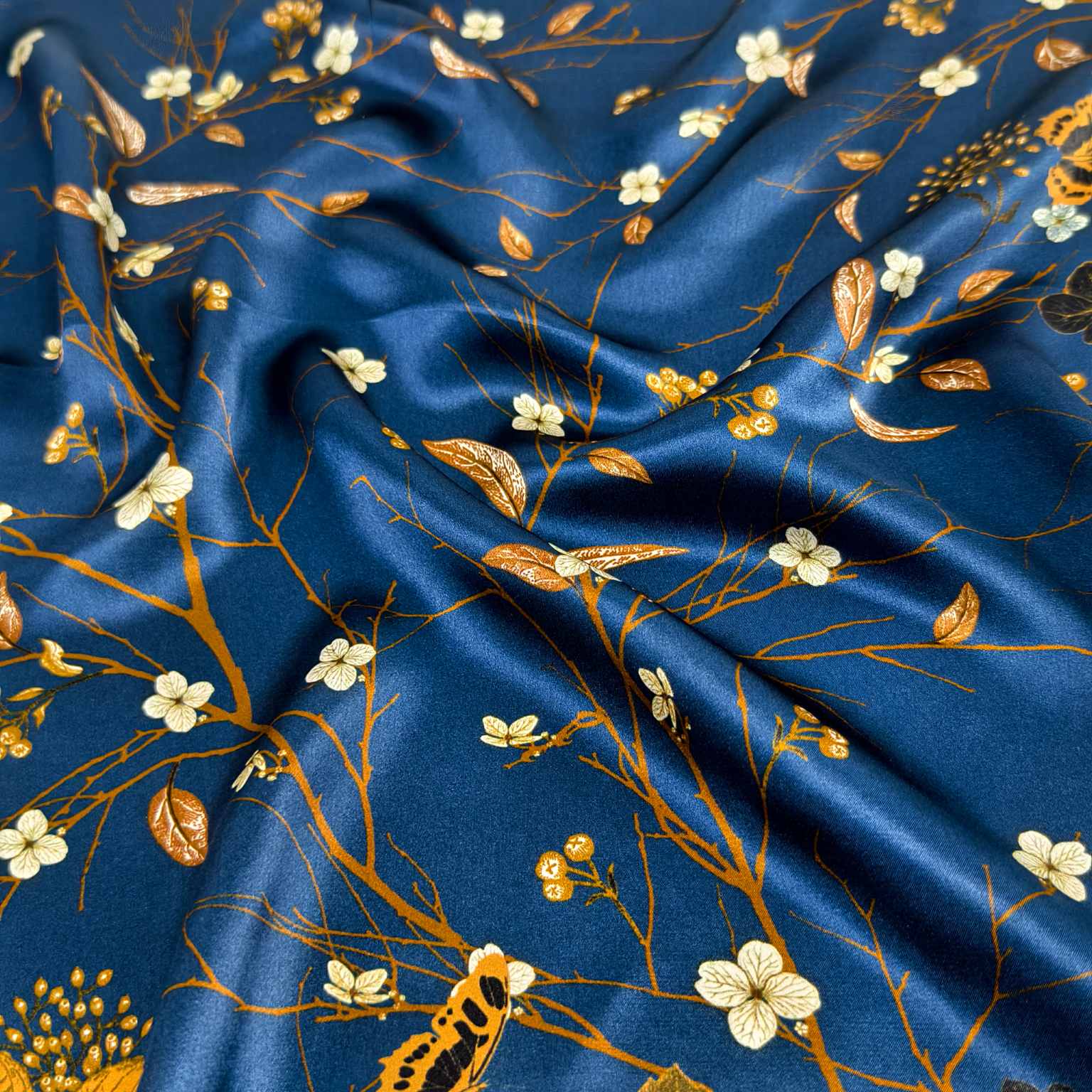
A smooth glossy face with fluid drape. Suitable when the collection needs luster and a softer silhouette than twill.
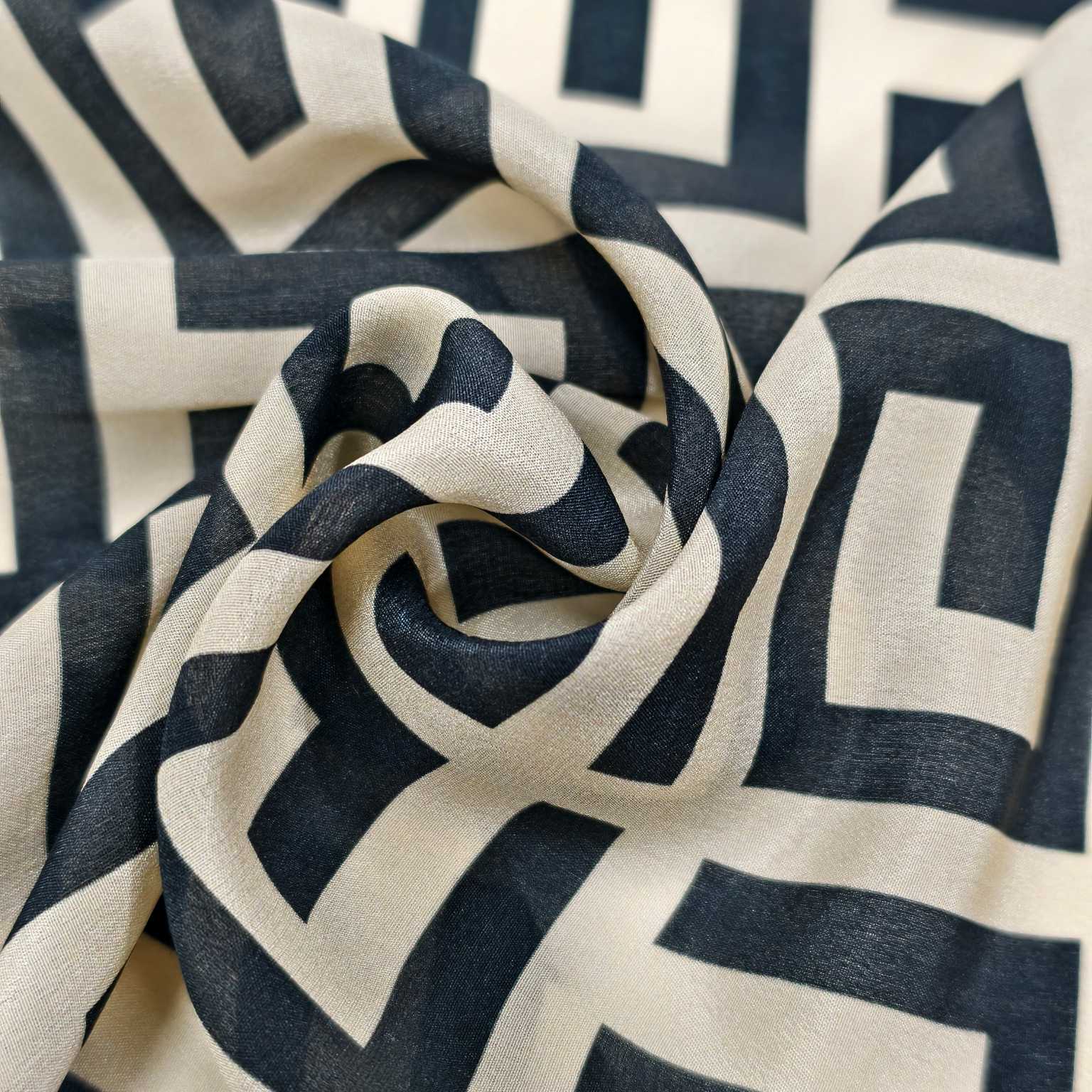
A finely pebbled, lower-gloss silk with fluid drape and a soft hand. It suits understated fashion scarves, refined matte color and designs that need movement without the shine of satin.
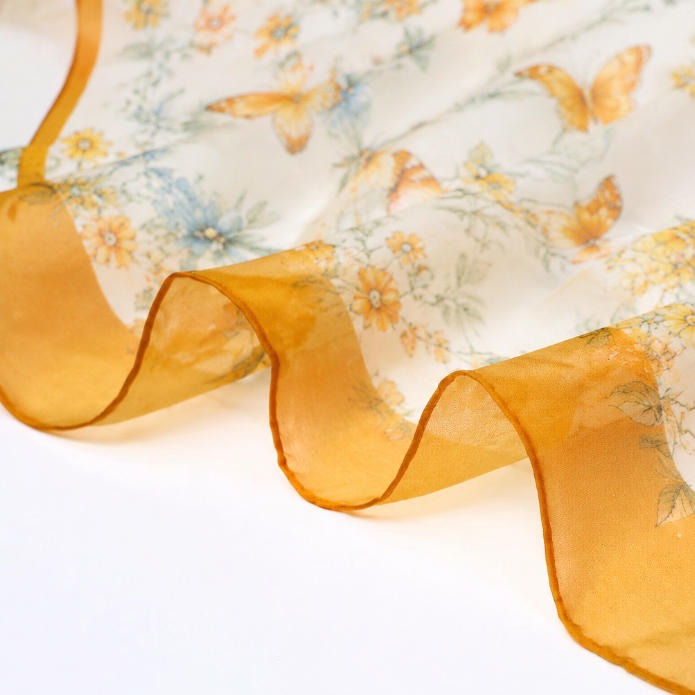
Light, transparent and fluid. Best for airy long scarves, layered effects and collections that prioritize movement.
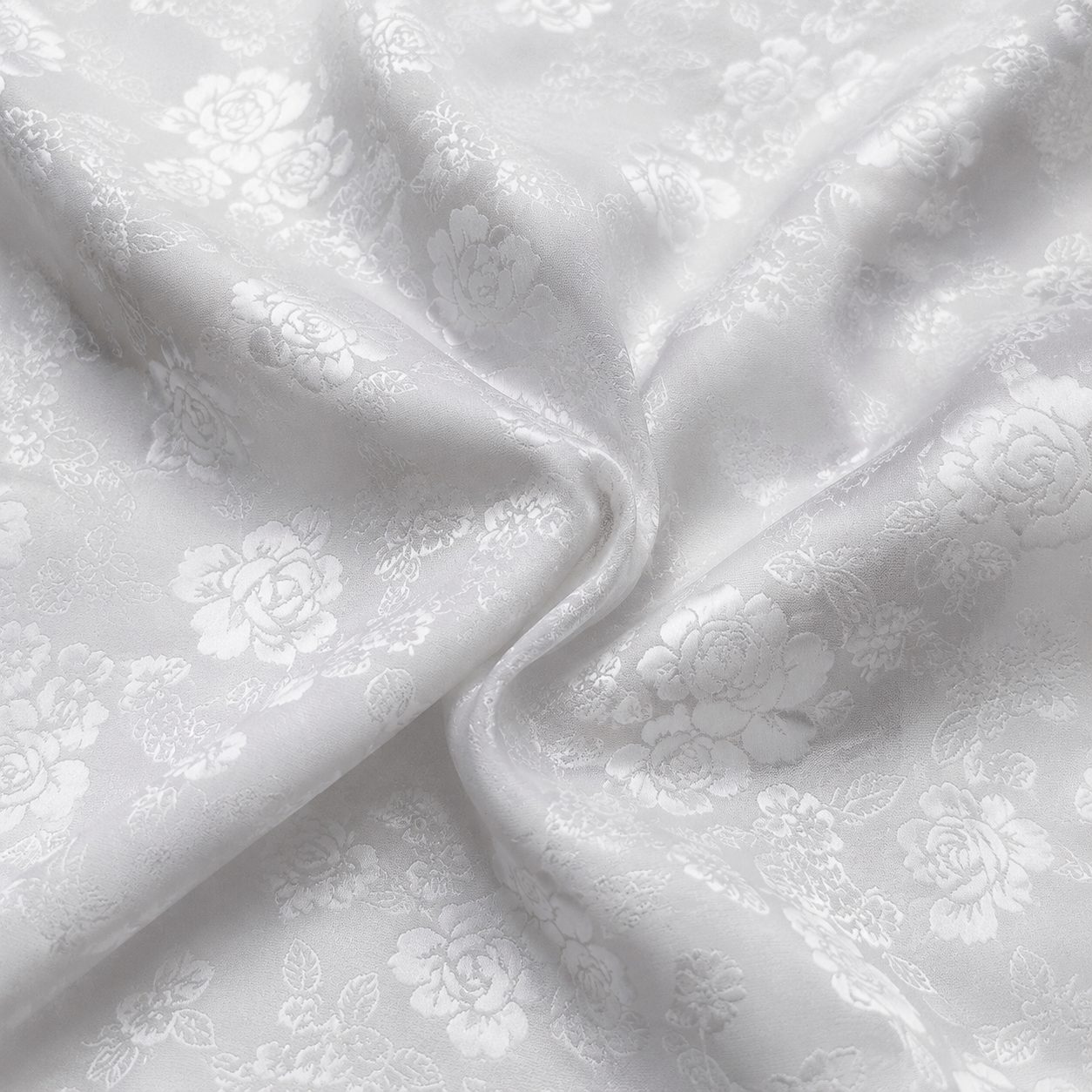
Patterns are created in the weave rather than printed on the surface, adding texture and a subtle tonal structure.
For promotional programs, uniforms, large gift campaigns and price-sensitive collections, DOCSUN can supply silk-like fabrics clearly specified as 100% polyester. These materials are not presented as mulberry silk. Fabric density, yarn quality, print result, colorfastness and finished hand feel are confirmed through sampling before bulk production.
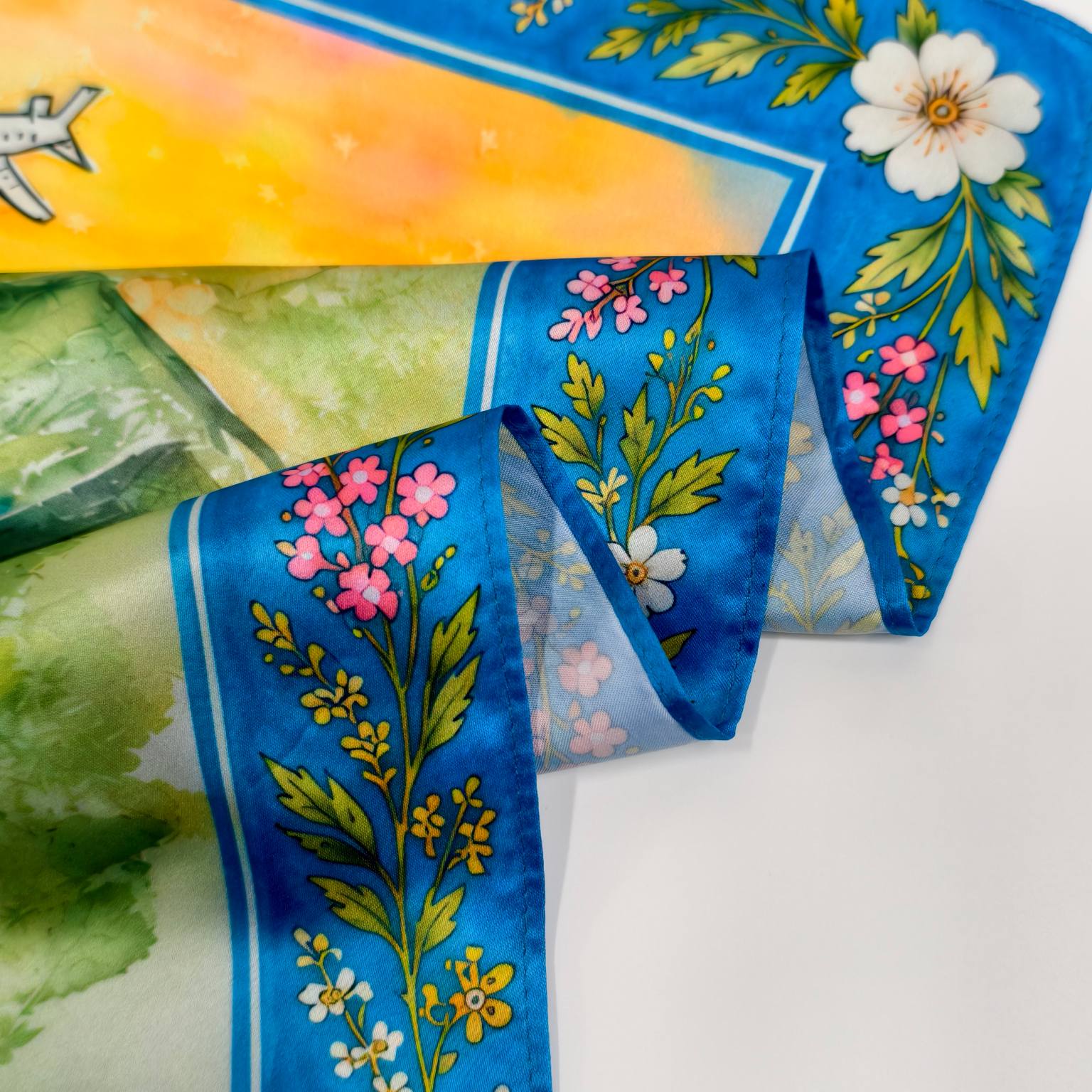
A smooth, lustrous 100% polyester option with fluid drape and strong color presentation. It supports cost-controlled fashion accessories, promotional scarves, uniforms and coordinated gift programs.
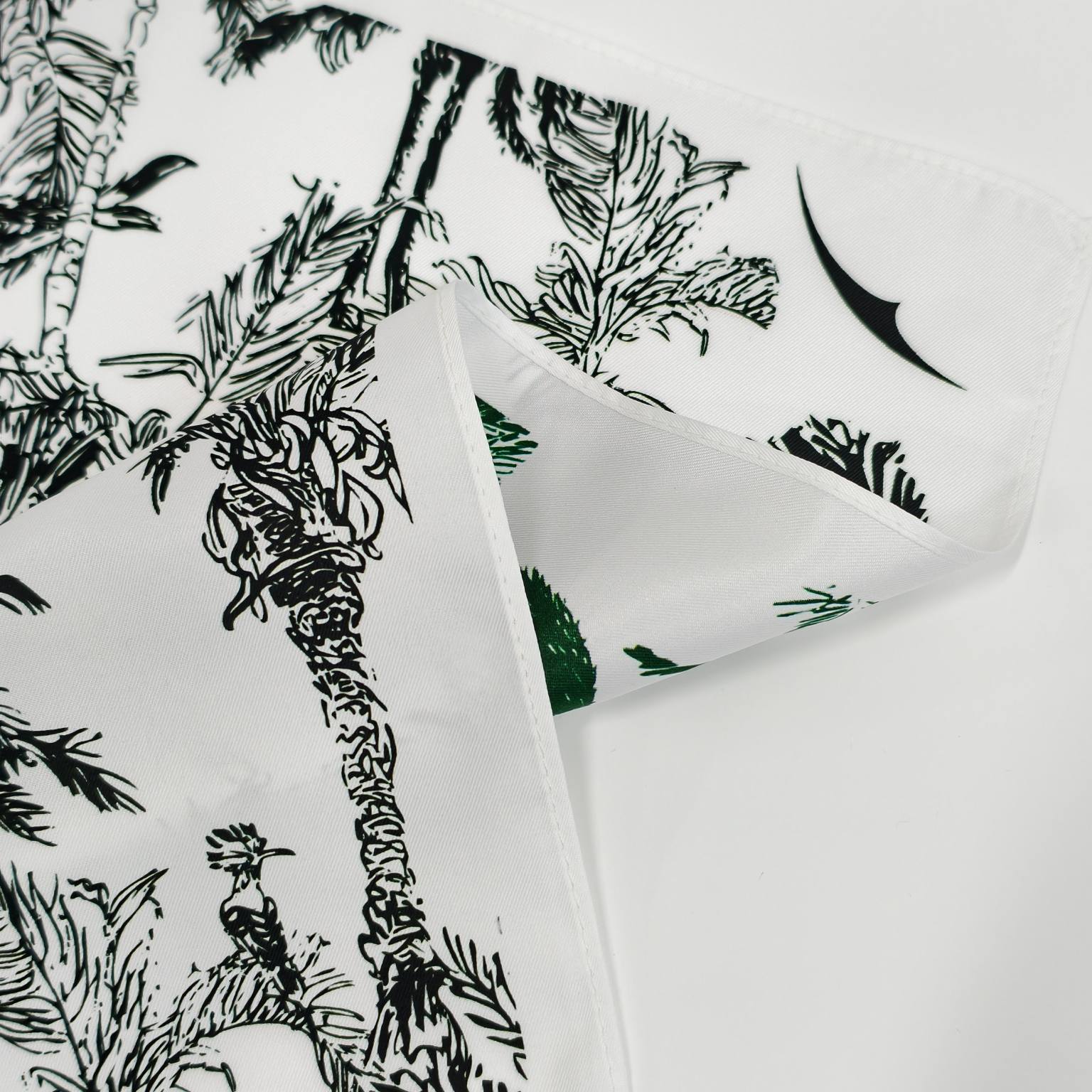
A 100% polyester fabric with a visible diagonal weave, firmer body and practical durability. It is suitable for branded squares and larger-volume programs that need a twill appearance at a more economical unit cost.
| Material Route | Visual & Hand Feel | Care & Durability | Recommended Programs |
|---|---|---|---|
| Mulberry silk twill, satin, crepe or chiffon | Natural luster, fluid drape and a premium hand feel that varies by weave and momme. | Requires care appropriate to the selected silk and print process. | Luxury fashion, museums, designer editions, premium corporate gifts and boutiques. |
| Imitation silk / silk-like polyester satin or twill | High-quality polyester engineered for a silk-like surface, consistent color and scalable construction at a lower unit cost. | Generally easier care and stronger abrasion resistance than natural silk. | Promotional programs, uniforms, large gift campaigns and budget-controlled collections. |
For more detailed comparisons, use the fabric, color and craftsmanship selection page. Fabric and color cards can be requested through our teams supporting the US, UK and Australia.
A printed scarf must be assessed at more than screen level. Fine lines, small logos, border registration, color transitions and the relationship between the front and reverse are checked on the selected fabric. DOCSUN matches the printing route to the artwork, momme, weave, order quantity and required reverse-side result.
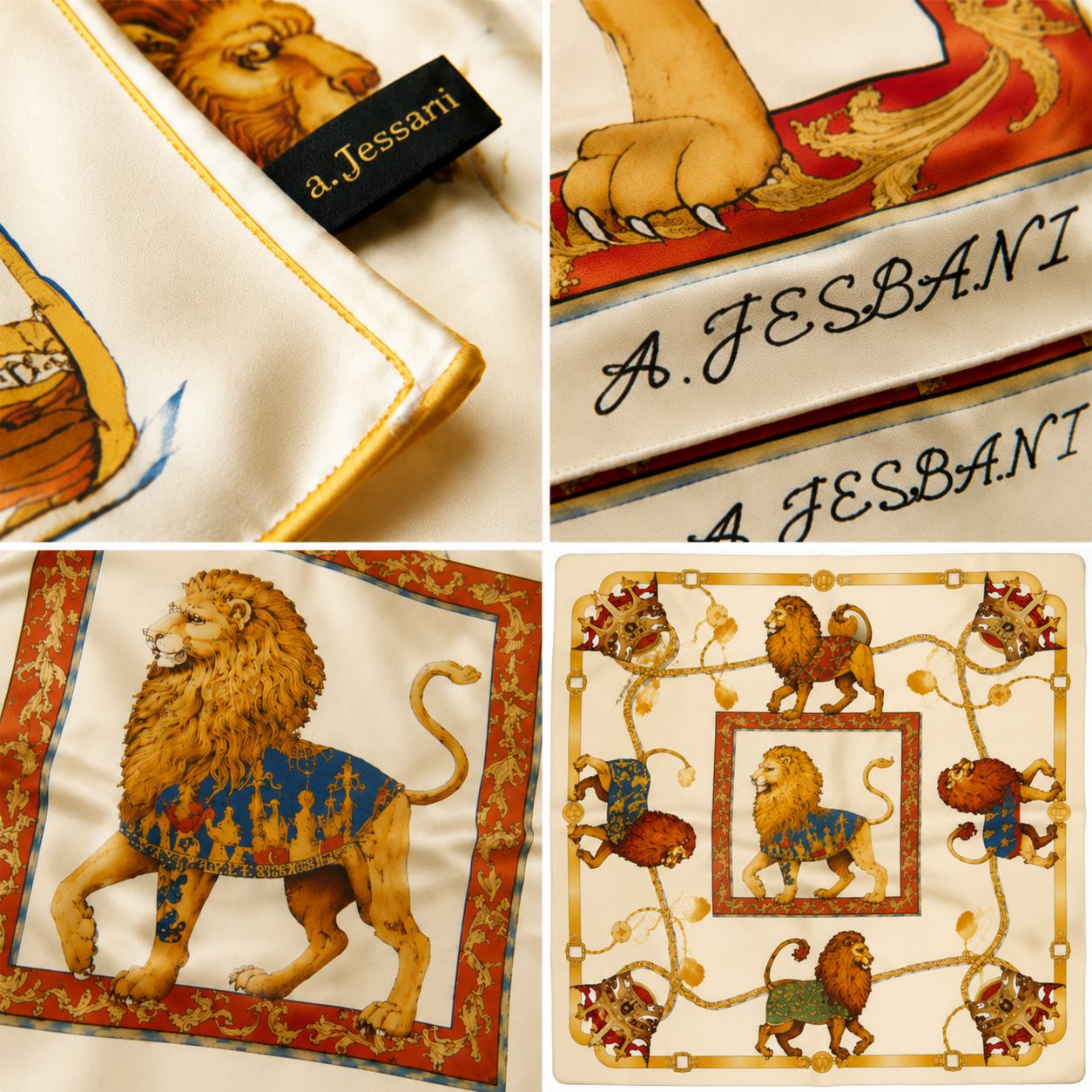
Digital printing reproduces detailed illustration, fine line work, gradients and complex repeat artwork without reducing the design to a small number of screens. The sample is checked for sharp edges, clean small motifs, border alignment and unwanted color spread before bulk approval.
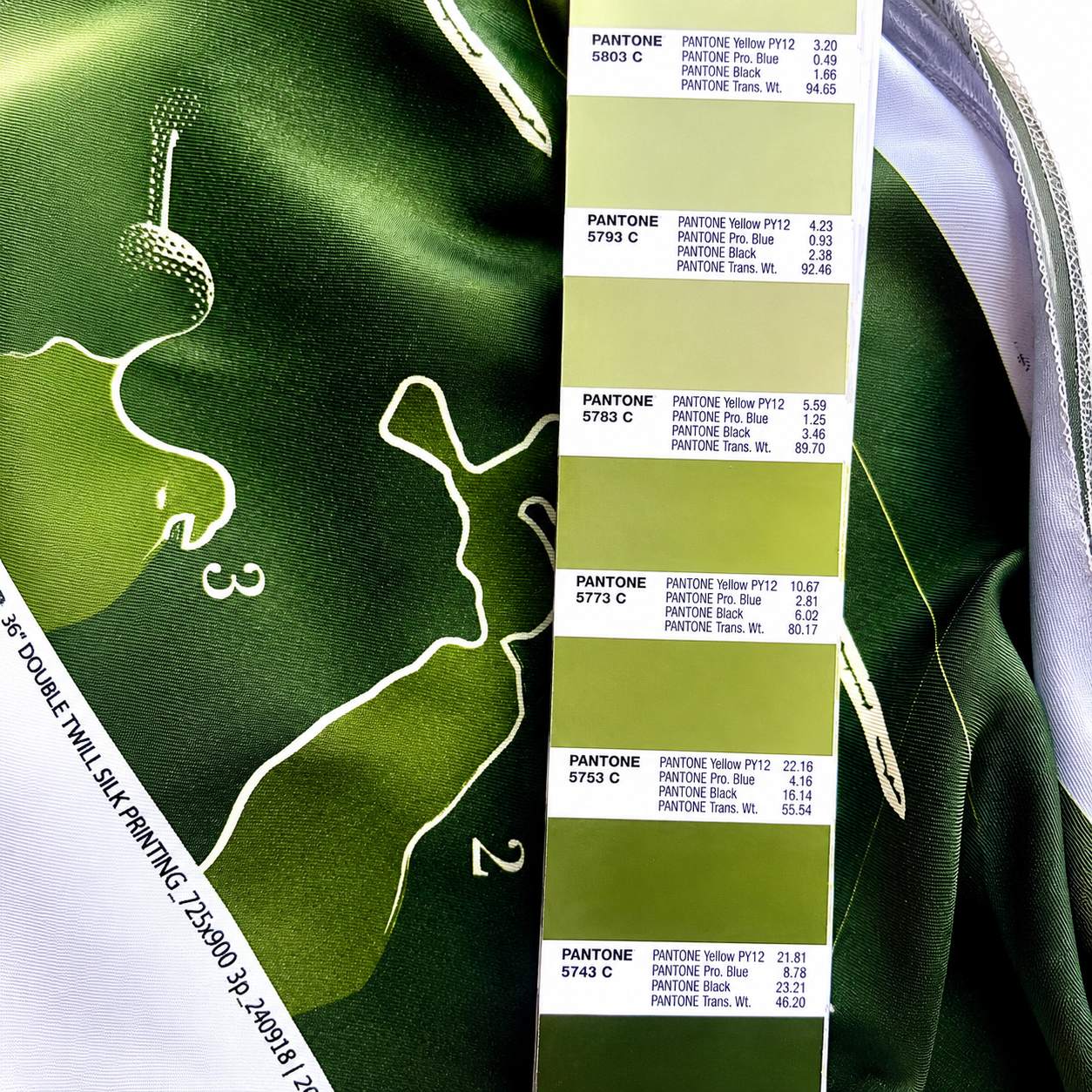
Color is evaluated on the actual silk or silk-like fabric because weave, luster, absorbency and finishing change the visual result. We work from Pantone FHI references or an approved physical swatch, then confirm the printed sample under controlled viewing conditions before production.
Conventional single-sided printing can leave the reverse visibly lighter or close to white, especially on heavier or tightly constructed fabrics. DOCSUN can use a controlled high-penetration single-sided route to carry more color through the fabric and improve the reverse appearance. It remains different from synchronized double-sided printing because the reverse is created by penetration rather than by independently printing a second face.
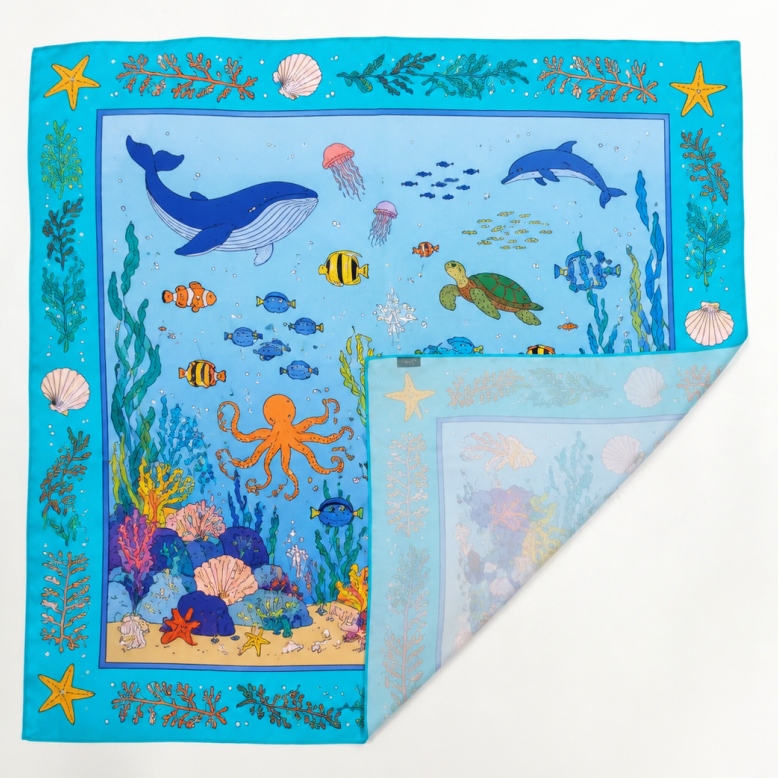
The artwork is applied from the front. The reverse may remain pale or partly white depending on fabric density, color depth and process settings. This route can be practical when the scarf is designed to present one primary face.
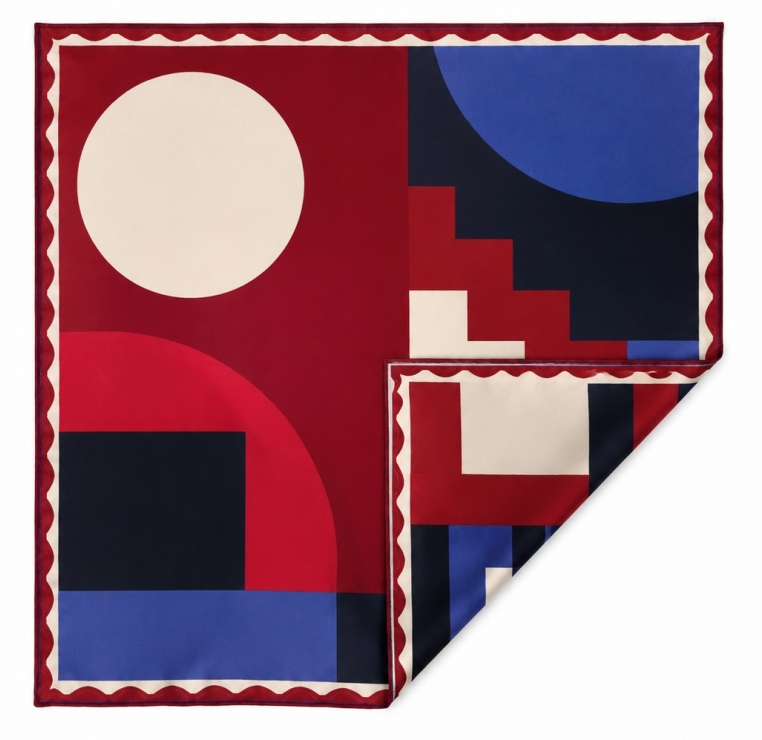
Process control is adjusted to improve dye or ink penetration through the scarf body while protecting detail and hand feel. The approved sample establishes the achievable front saturation and reverse-side color for the selected fabric.
True synchronized double-sided printing controls both faces rather than relying on show-through. Front and reverse artwork must be registered together, and the sample is reviewed for alignment, color interaction, opacity, softness and edge behavior before bulk production.
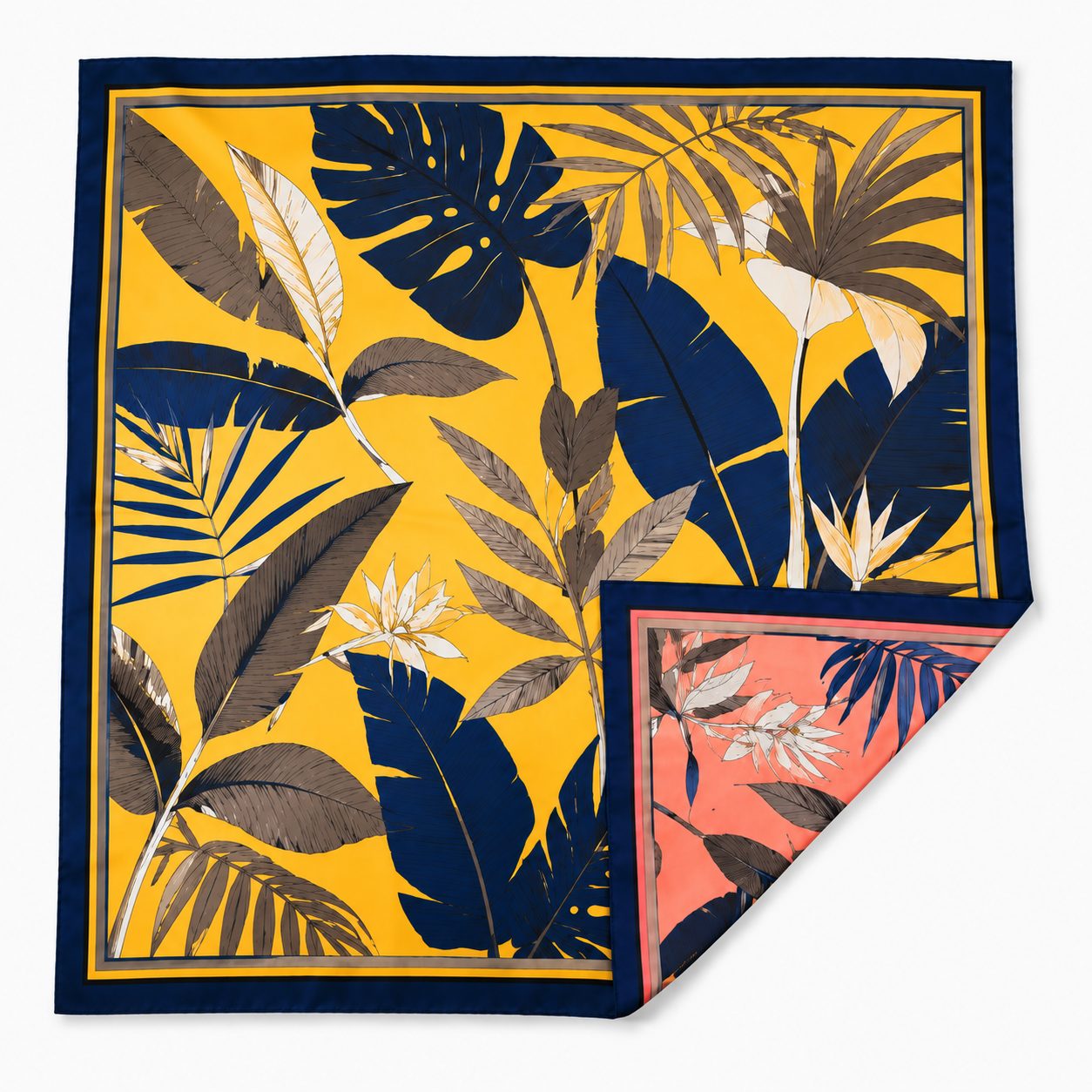
Synchronized equipment and artwork positioning allow both sides to be developed as intentional surfaces. The process is suitable when a brand needs a stronger reversible effect than high-penetration single-sided printing can provide.
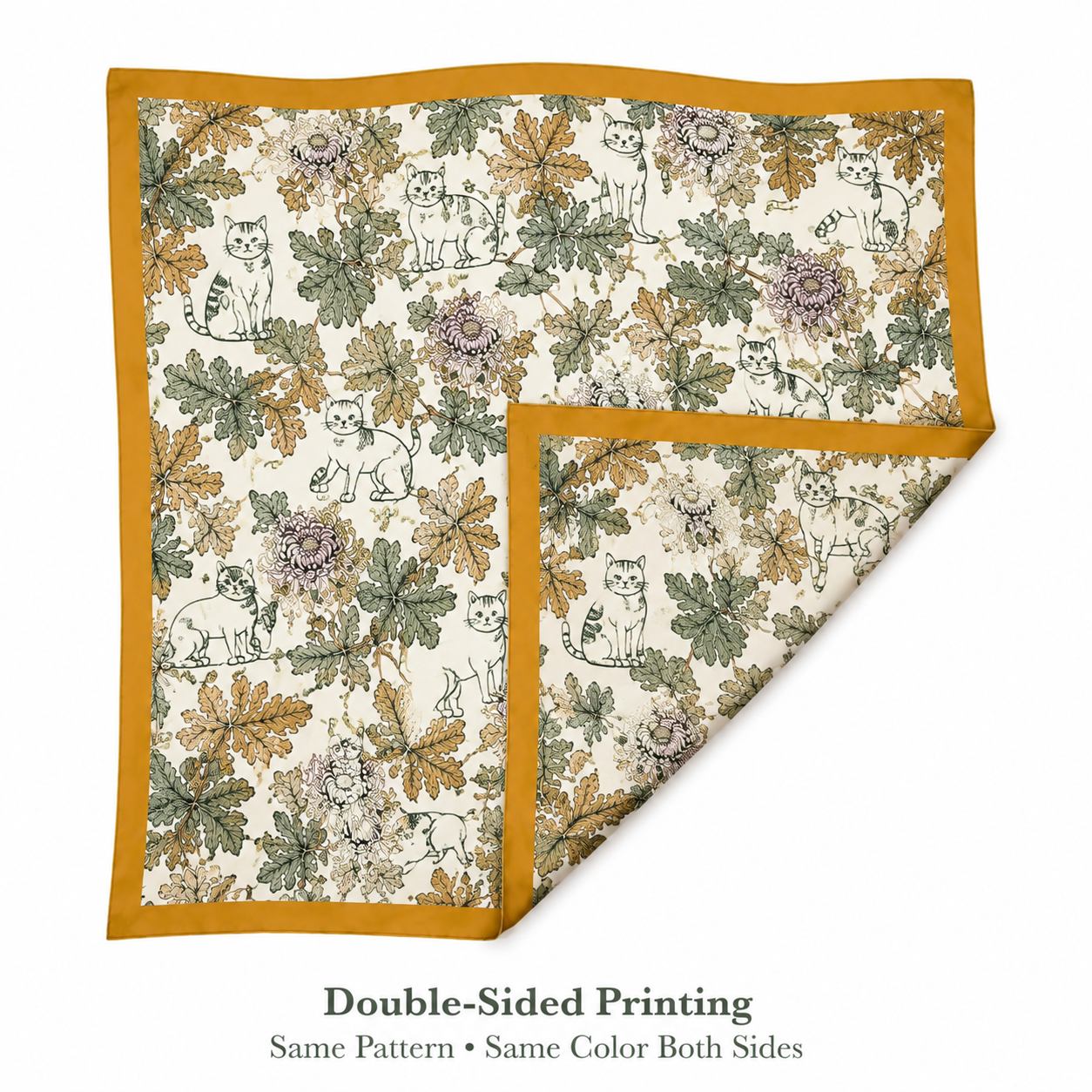
Both faces follow one artwork and color direction. Because the two printed faces build stronger saturation, we recommend silk of at least 14 momme and approve color density on the physical sample.
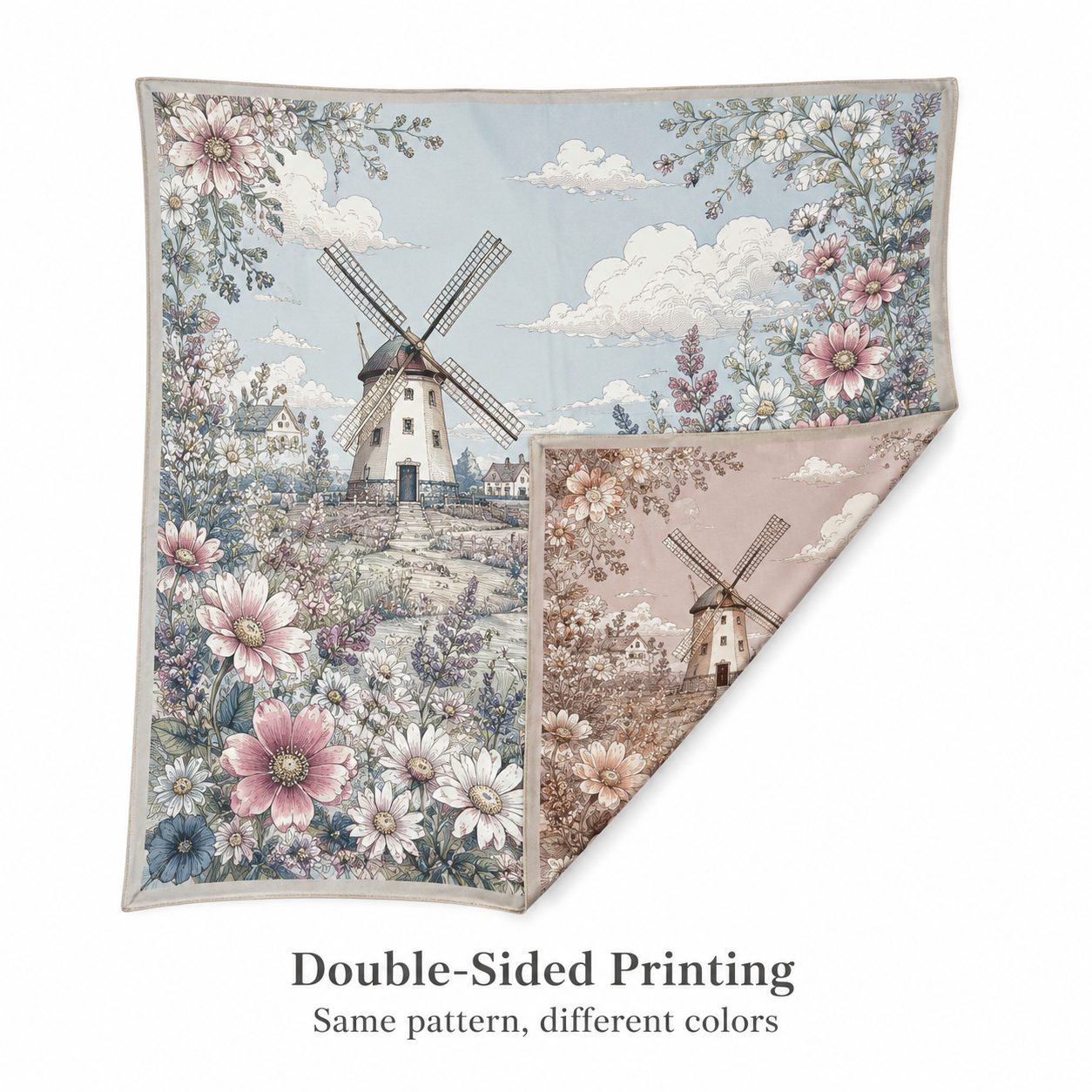
The registration remains aligned while each face uses a different palette. We recommend high-quality silk of at least 16 momme to limit show-through and reduce color interference.
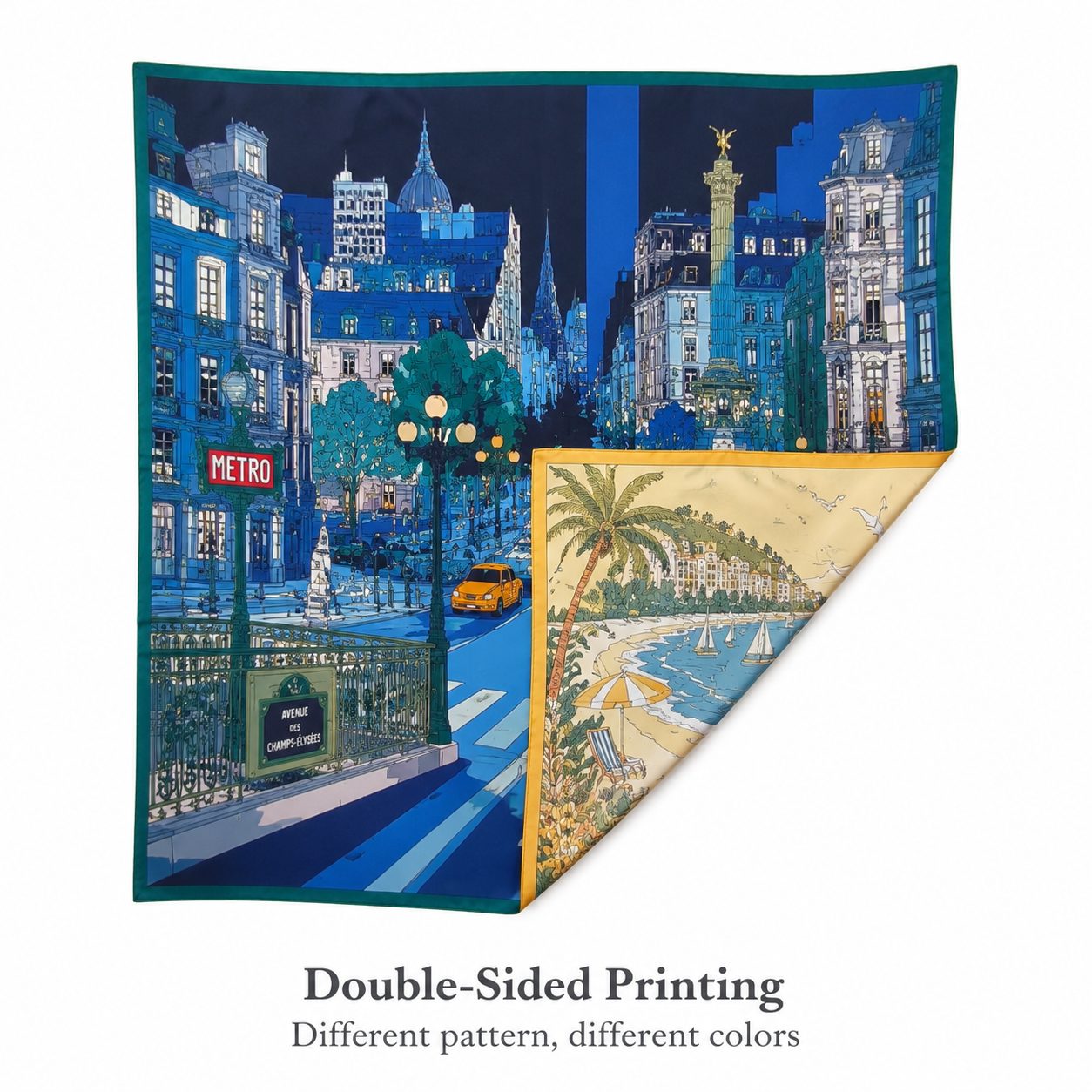
The most demanding reversible route. Artwork registration, opacity and color separation must be assessed together; at least 16 momme premium silk is recommended.
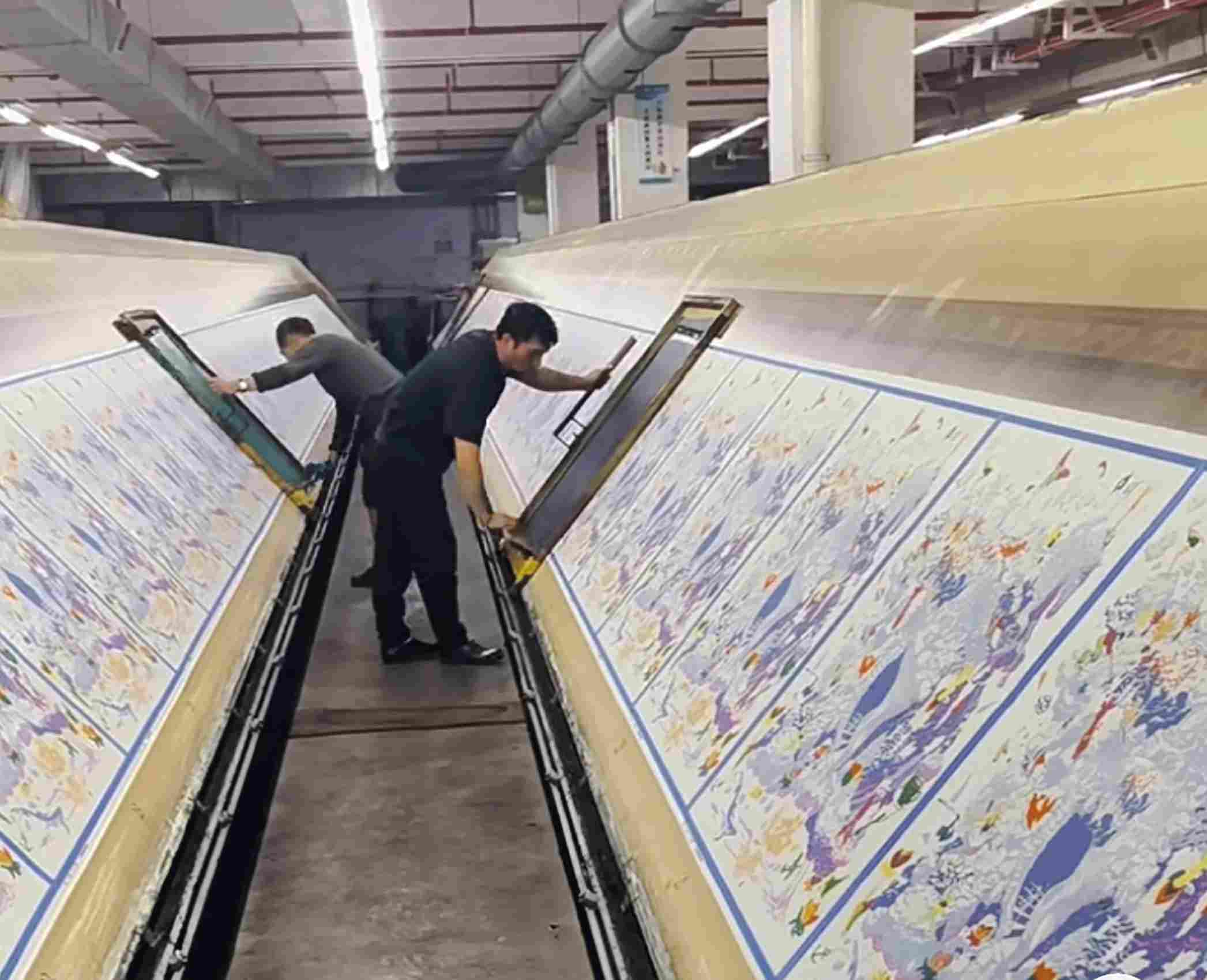
Flatbed screen printing remains suitable for selected larger orders, defined color blocks and specialty effects. Screen count, color count, artwork separation, fabric and target effect determine setup cost and practical MOQ.
Colorfastness is method-specific. A Grade 4 target can be developed under the buyer-agreed test method, material and colorway. Depending on the care specification, testing may include rubbing, washing, perspiration or dry-cleaning performance. Lightfastness uses a separate blue-wool scale and is not represented by the same blanket Grade 4 claim.
See our broader custom textile printing capabilities for artwork and process planning.
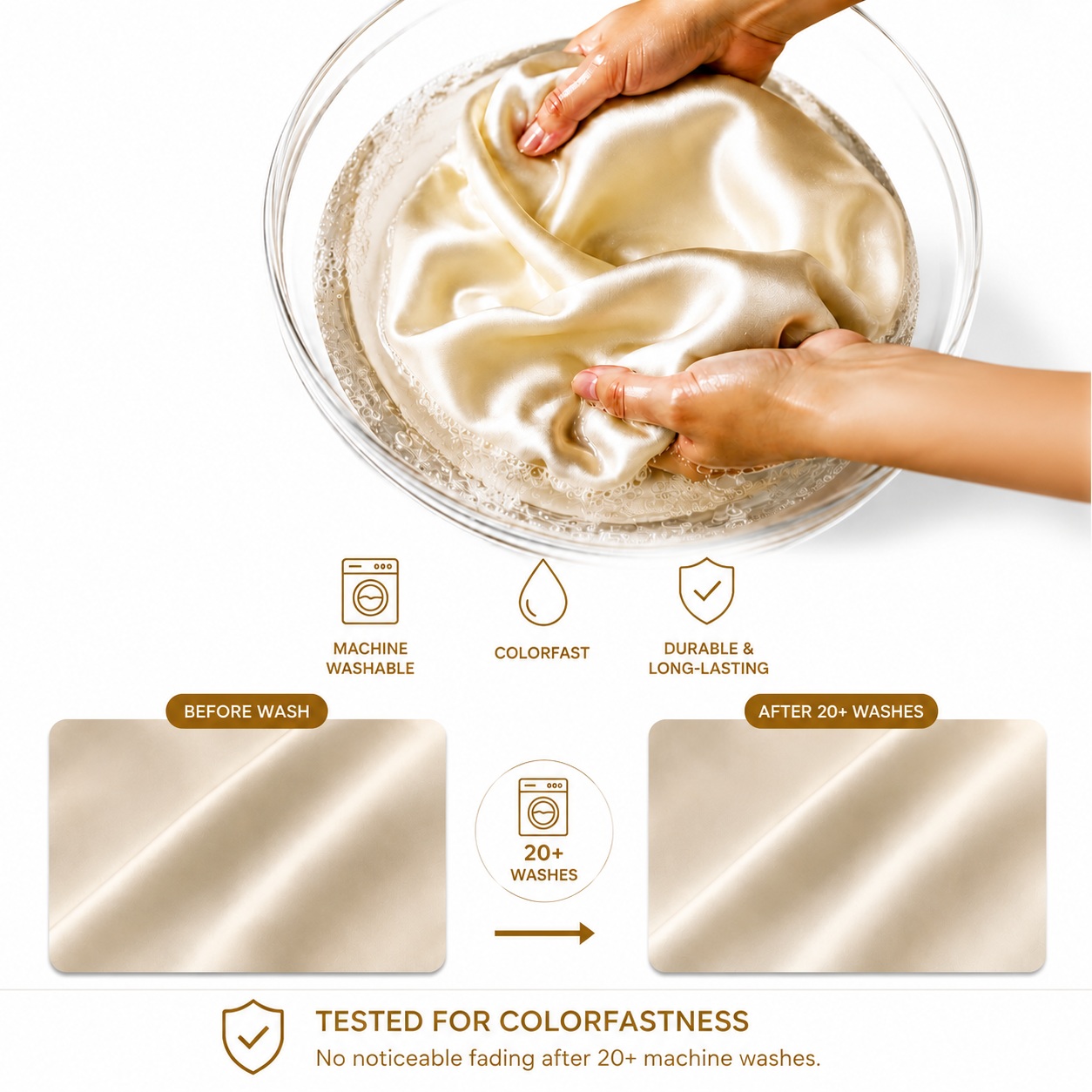
This reference shows how printed color and surface appearance can be compared after repeated care testing. The acceptance standard for each order is tied to the approved fabric, printing chemistry, colorway, care method and agreed test conditions rather than to an unsupported universal no-fade claim.
The edge is both a construction decision and a visible brand signal. Fabric thickness, scarf shape, order quantity and retail position determine whether a hand-rolled edge, machine-rolled hem, overlock, fringe, lace or folded finish is appropriate.
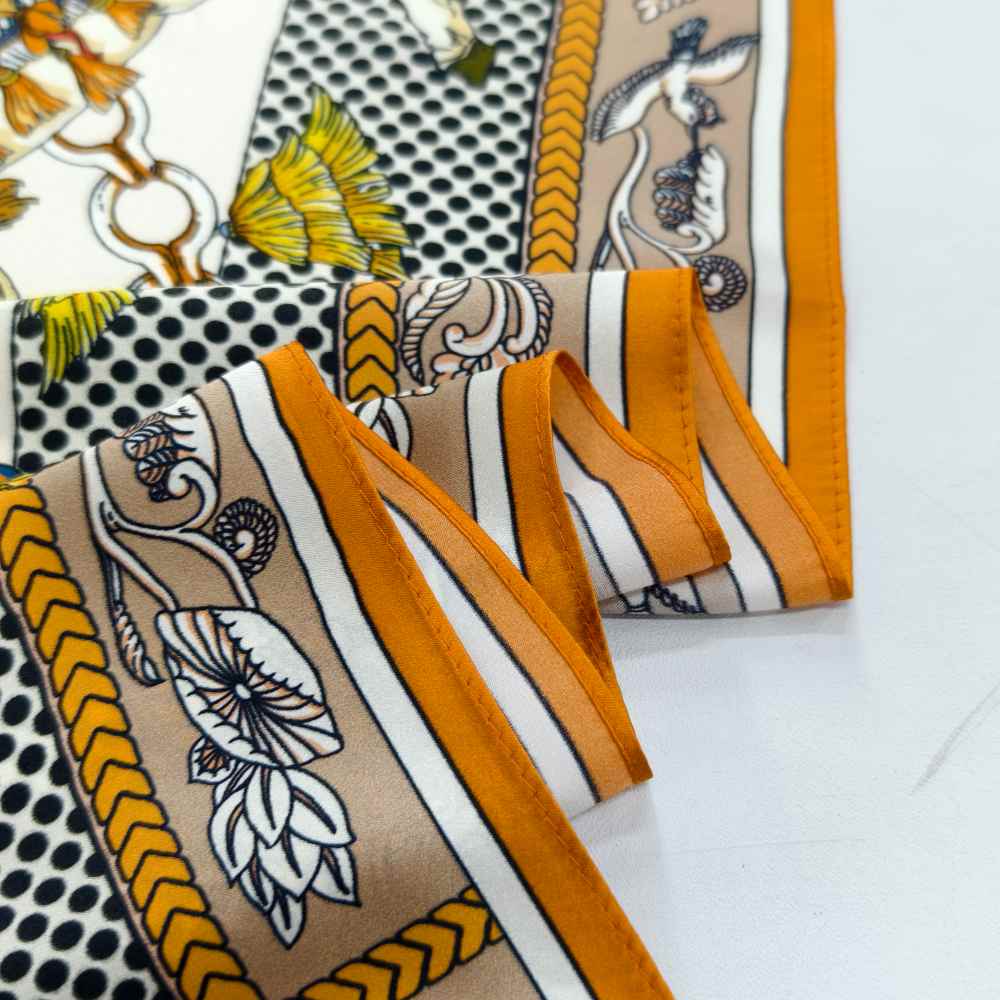
A consistent and scalable finish for commercial collections and larger orders. Thread color, stitch density and finished roll width are approved during sampling.
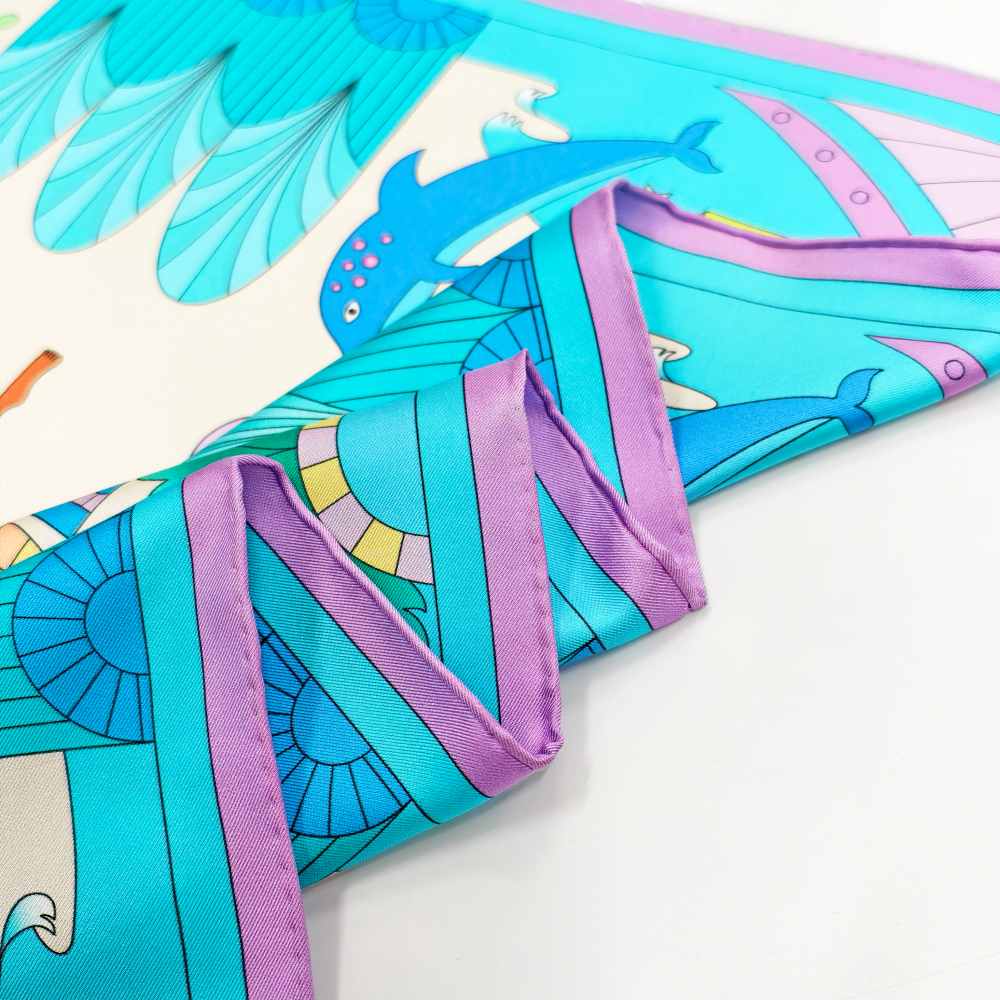
The edge is rolled and hand stitched with controlled spacing. It is recommended for premium scarves where the finish should feel soft, dimensional and visibly handcrafted.
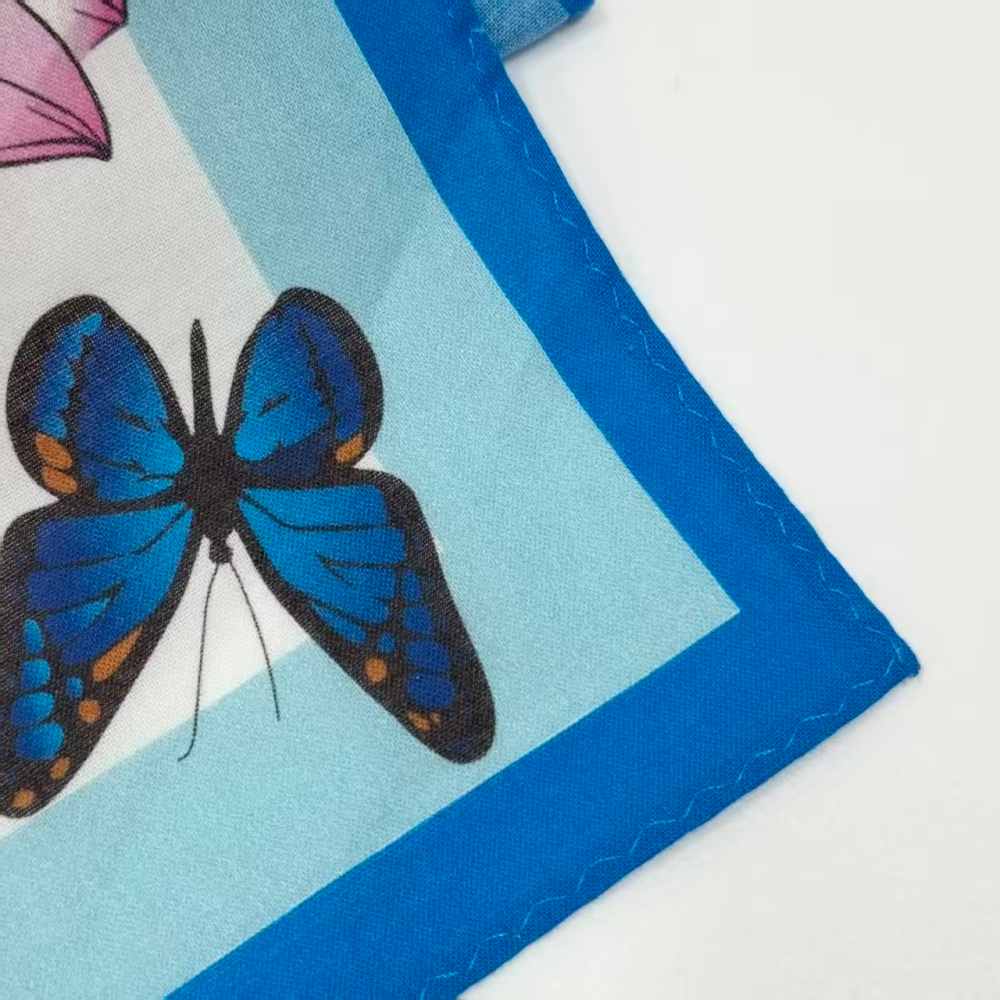
A decorative overlock route that gives the edge a rhythmic stitch pattern. Thread weight, contrast and stitch spacing are matched to the fabric and approved sample.
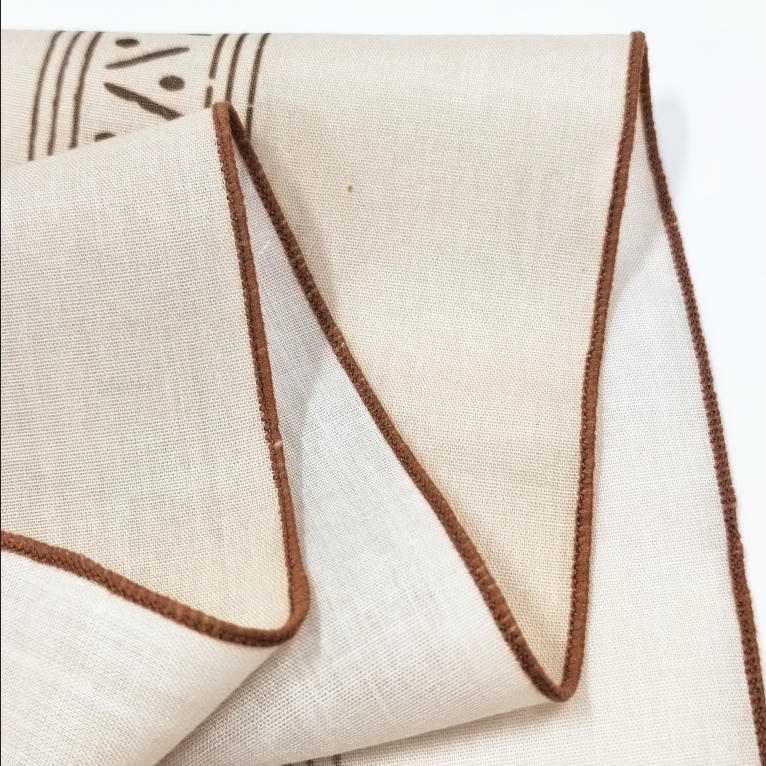
A compact thread-covered edge for lightweight scarves, synthetic qualities and selected promotional programs. Density and tension are adjusted to limit waviness.
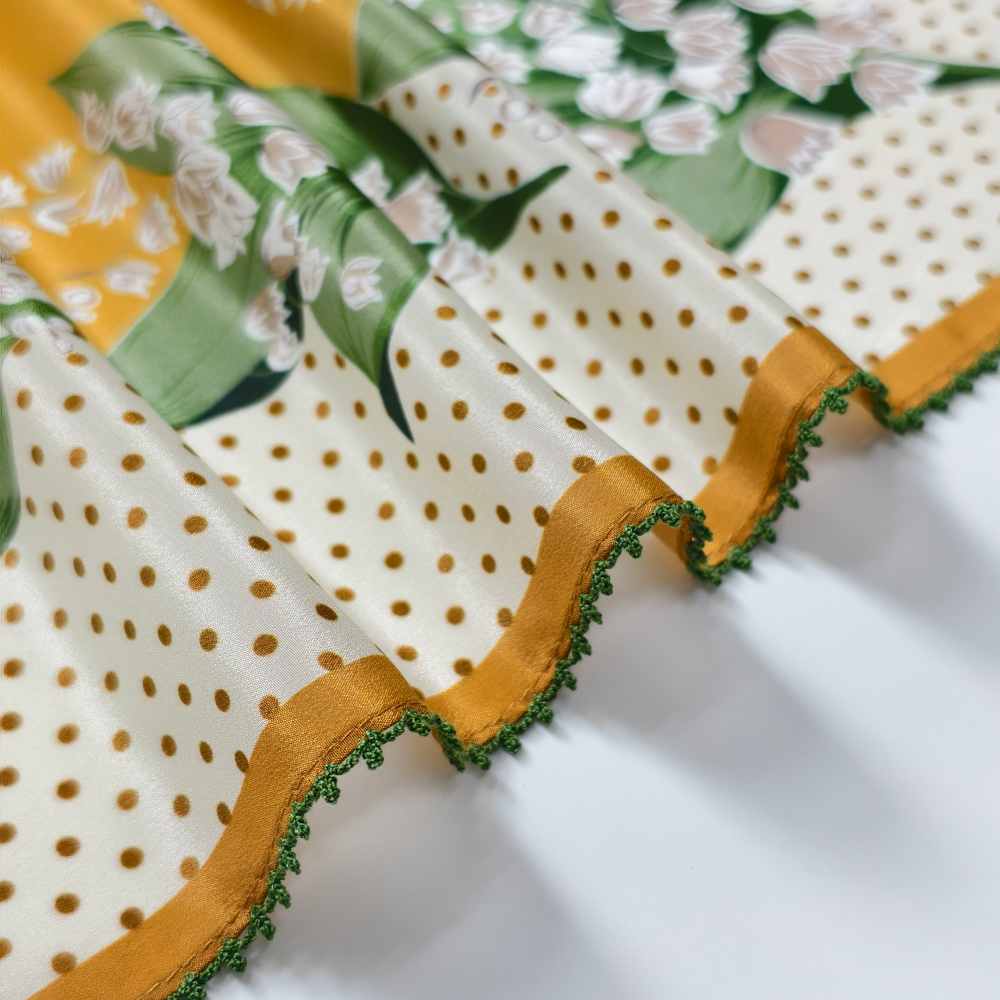
A decorative handcrafted border for boutique scarves and gift editions. Yarn composition, color, attachment security and care behavior are confirmed before bulk production.
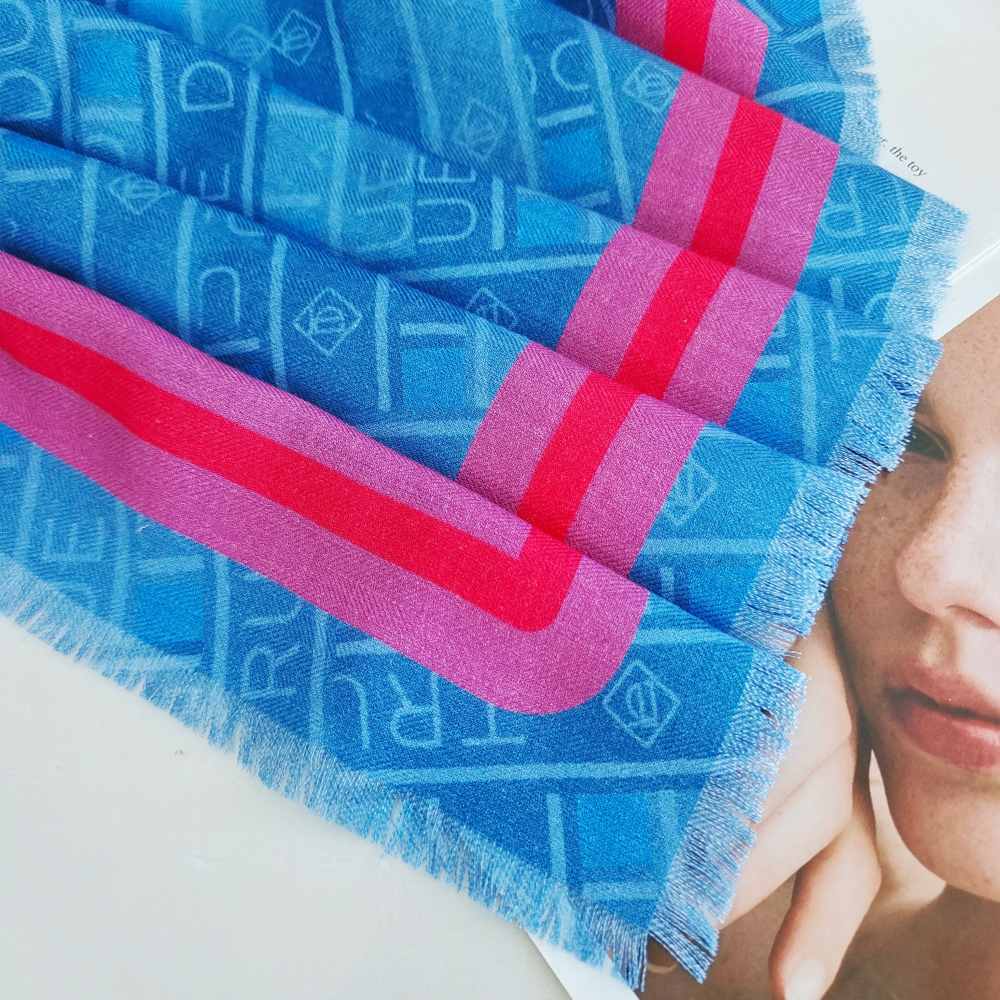
Controlled yarn removal creates a soft short fringe. Fringe depth and edge stabilization are specified to reduce uneven unraveling during wear and care.
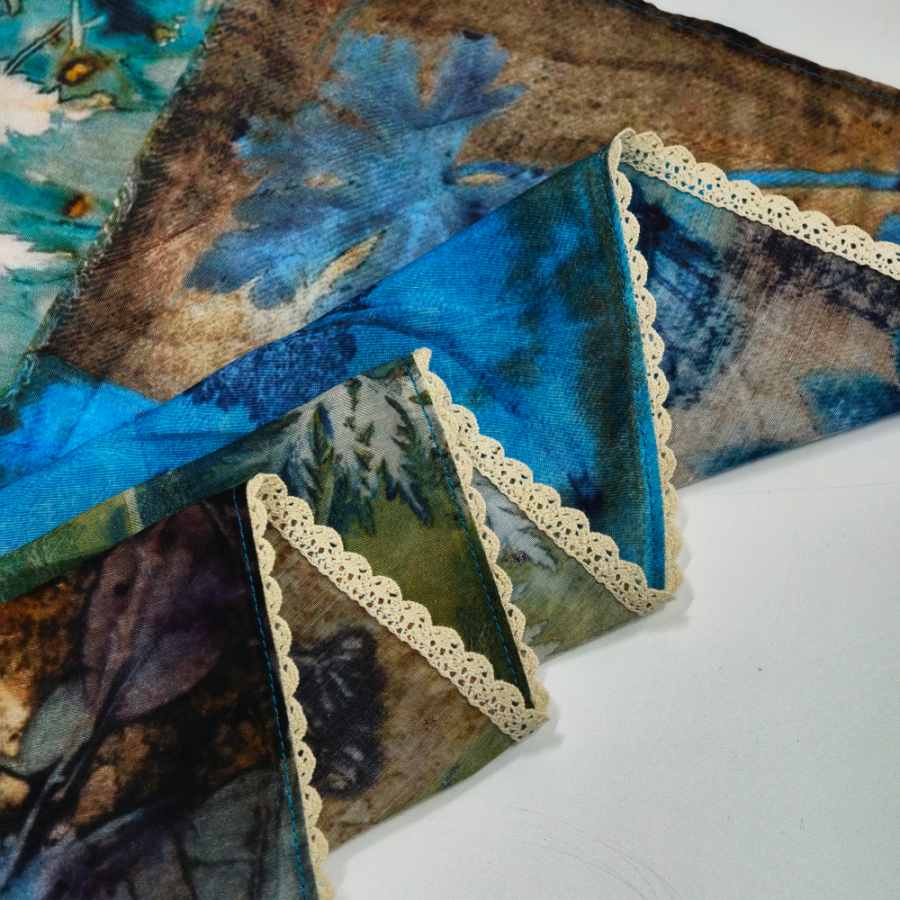
Lace can be attached at the edge or integrated into the body design. Weight, stretch, seam allowance and wash behavior are tested with the selected base fabric.
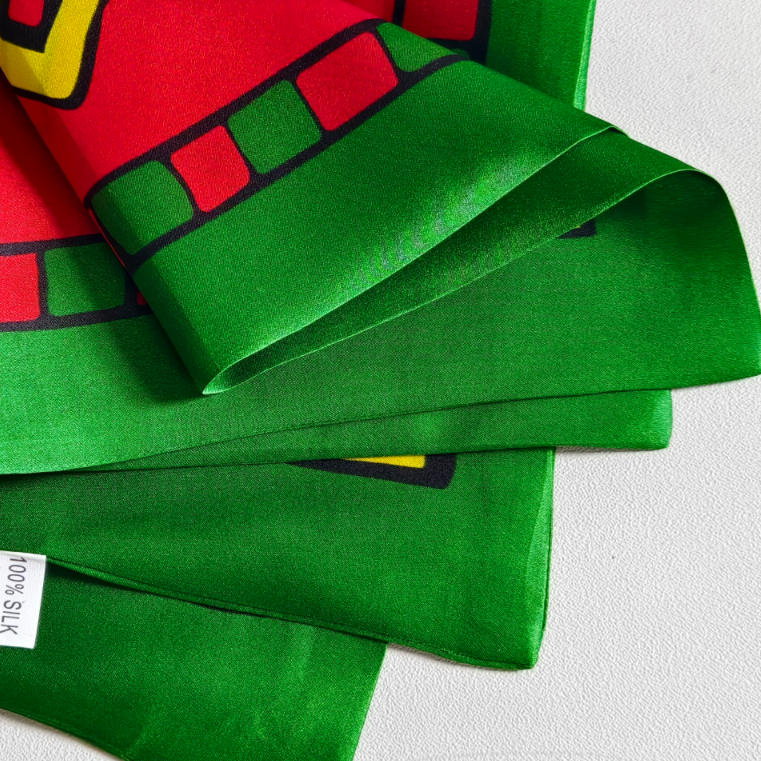
A clean folded finish for selected premium and heavier scarves. French mitered corners can reduce bulk and create a flatter corner when the fabric, border width and construction permit.
Construction note: French seams are available for double-layer, joined or tubular scarf constructions where raw seam allowances need to be enclosed. A standard single-layer square scarf normally uses an edge finish such as hand rolling, machine rolling, overlock or a folded edge instead.
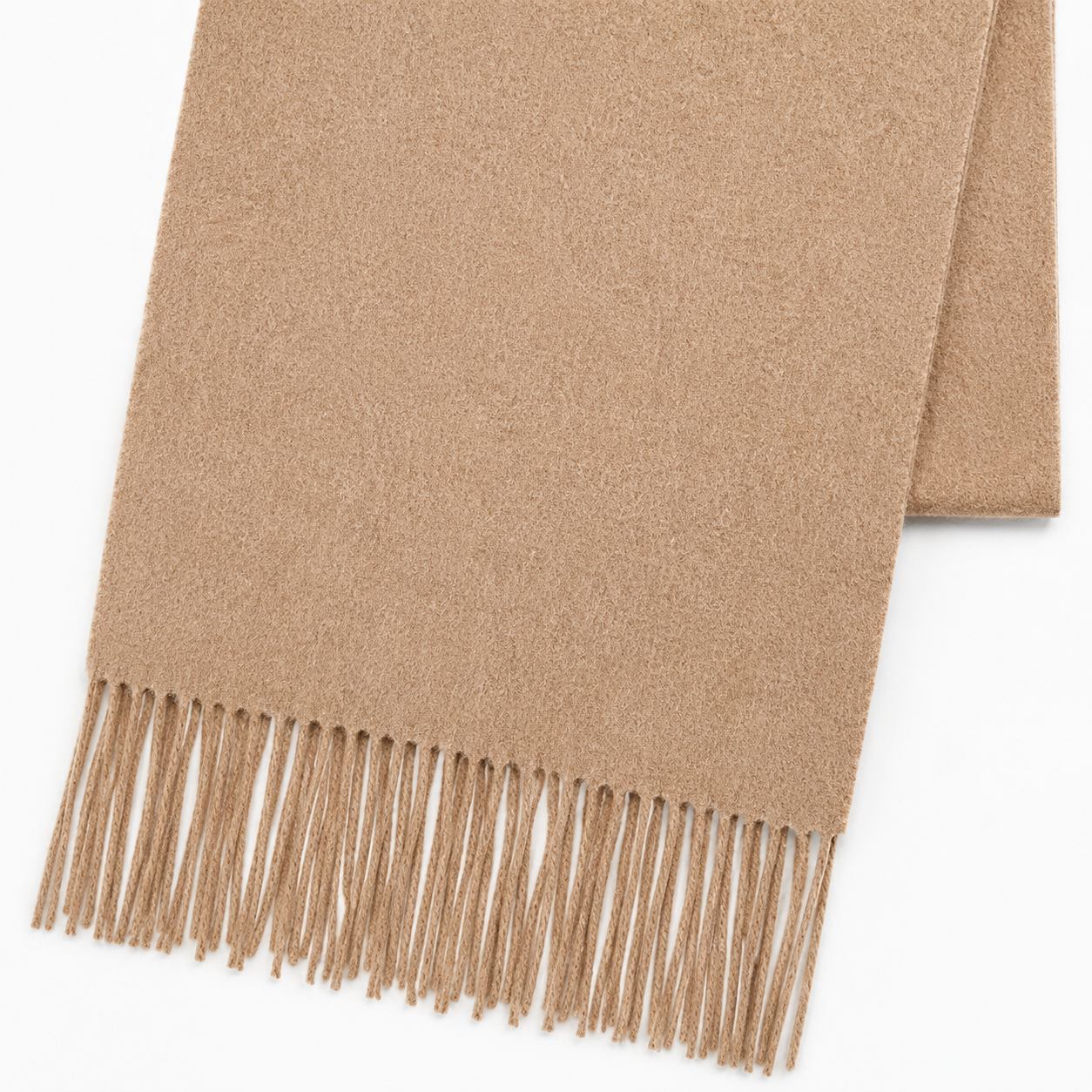
Added tassels create weight and movement for long scarves and shawls. Attachment strength, spacing and color are confirmed in the sample.
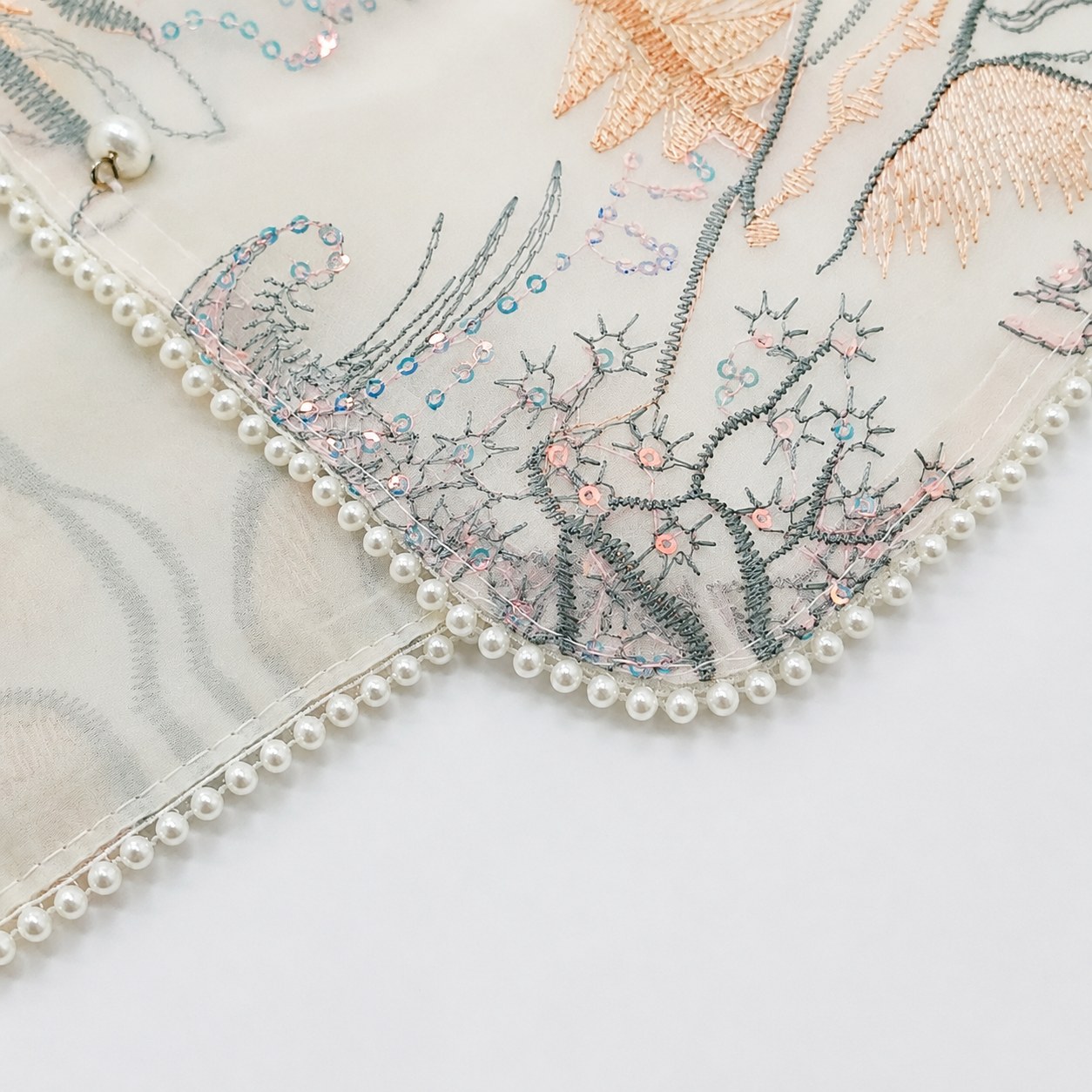
A decorative premium option where bead weight, spacing, attachment security and scarf drape need to be balanced.
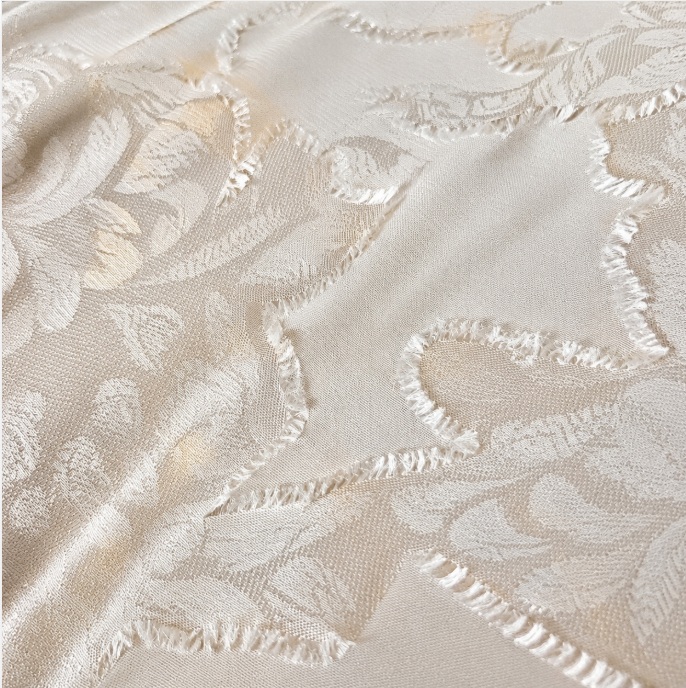
Selected floating yarns are cut to create texture and controlled transparency. This belongs to a specialty woven development route rather than a standard printed finish.
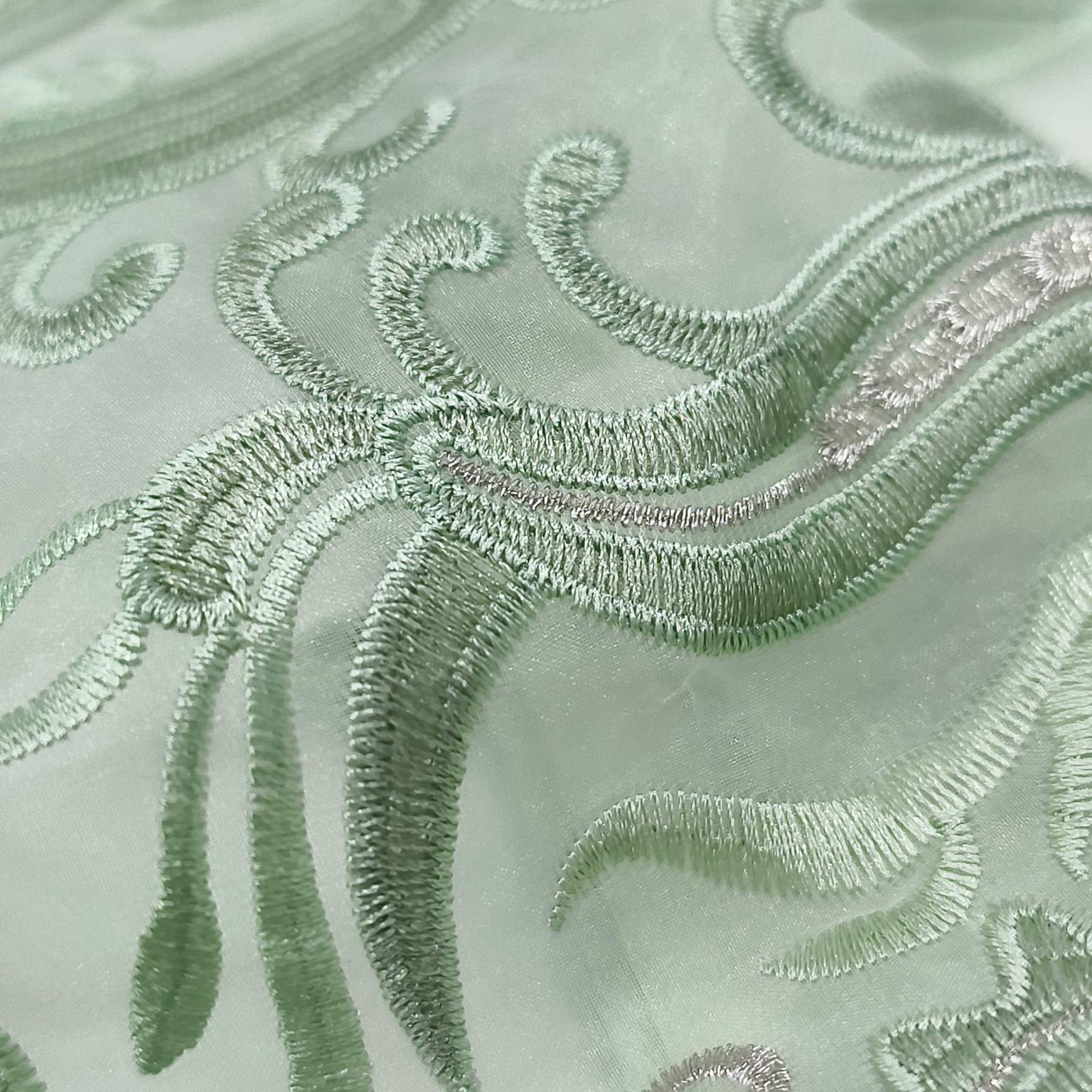
Artwork density, backing, stitch direction and placement are engineered to reduce distortion on lightweight scarf fabrics.
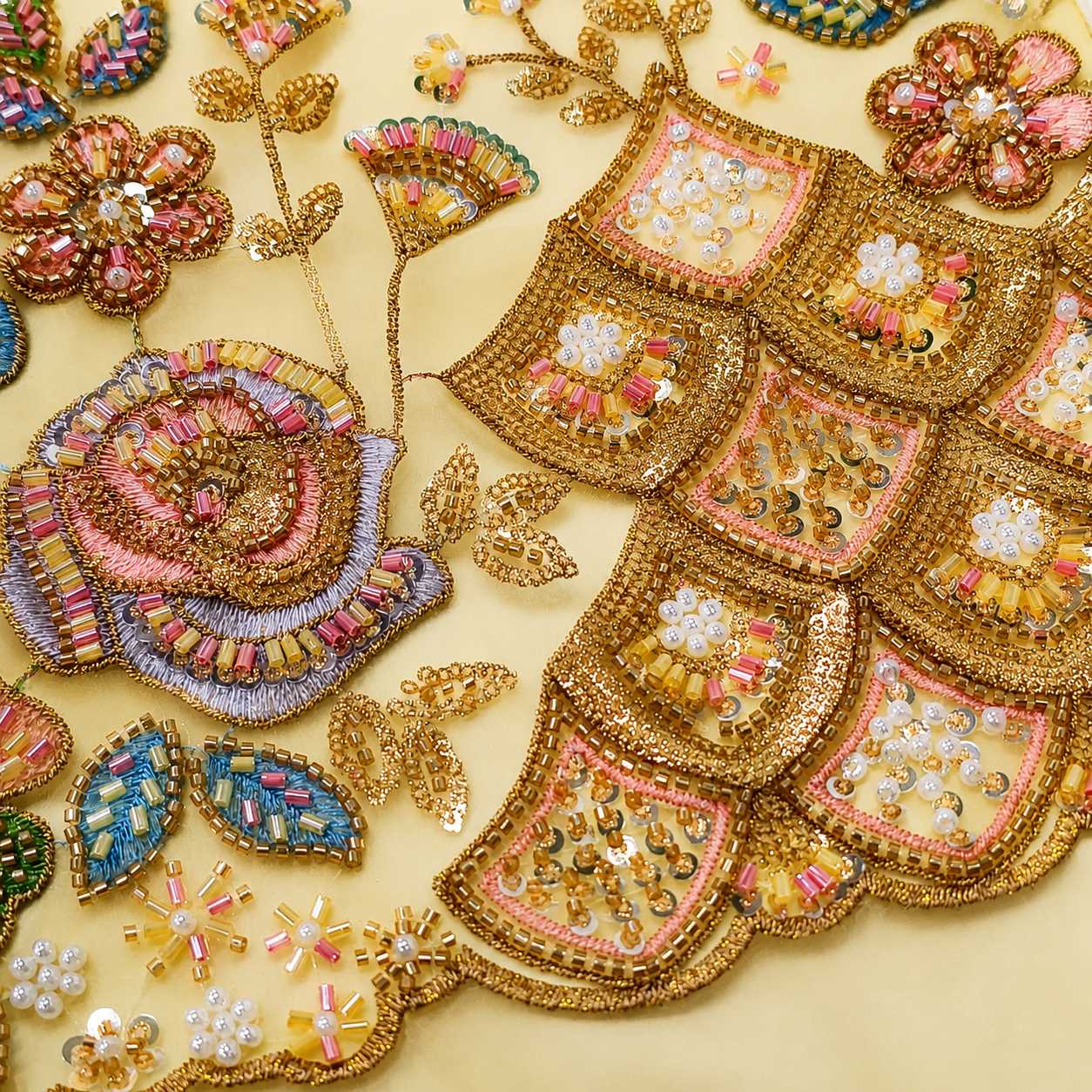
Hand-applied or combined embellishment for limited luxury editions. Weight and attachment testing are essential before bulk approval.
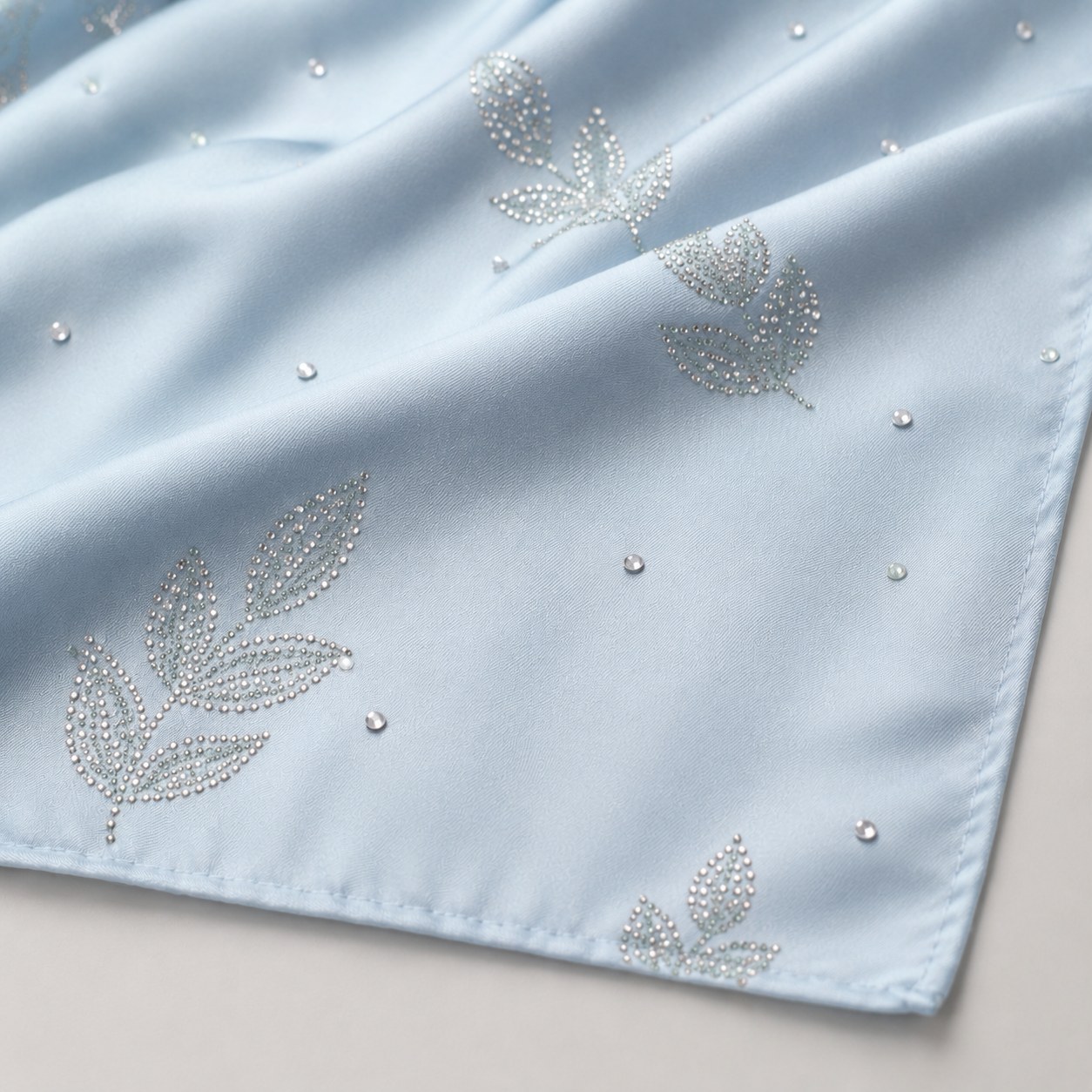
Used for selected decorative programs after testing temperature, adhesive compatibility, placement accuracy and care requirements.
Branding should be planned as part of the scarf specification, not added after production. Logo scale, label weight and packaging dimensions all affect the finished presentation.
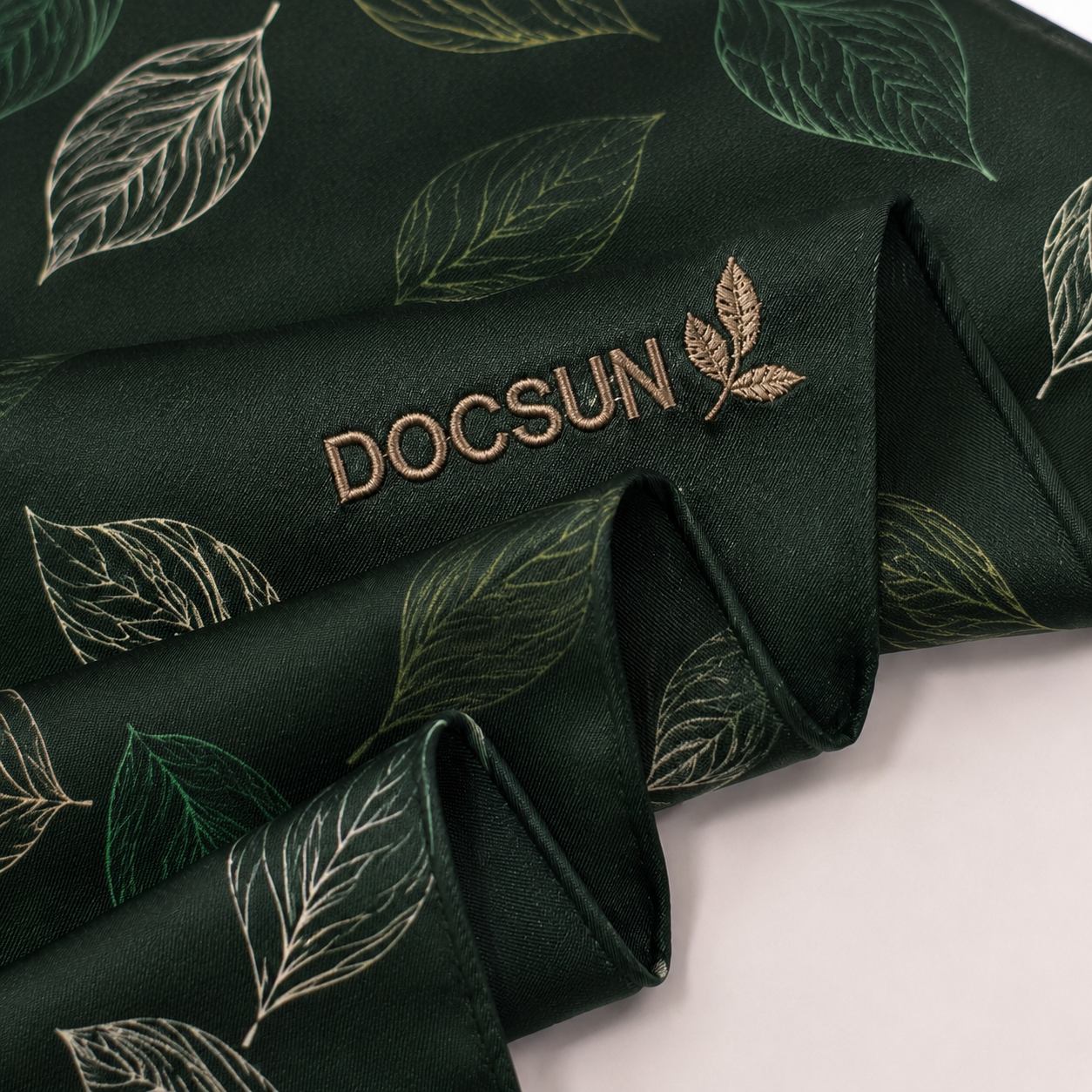
Suitable for selected fabrics and placements after stitch density, backing and fabric distortion are evaluated.
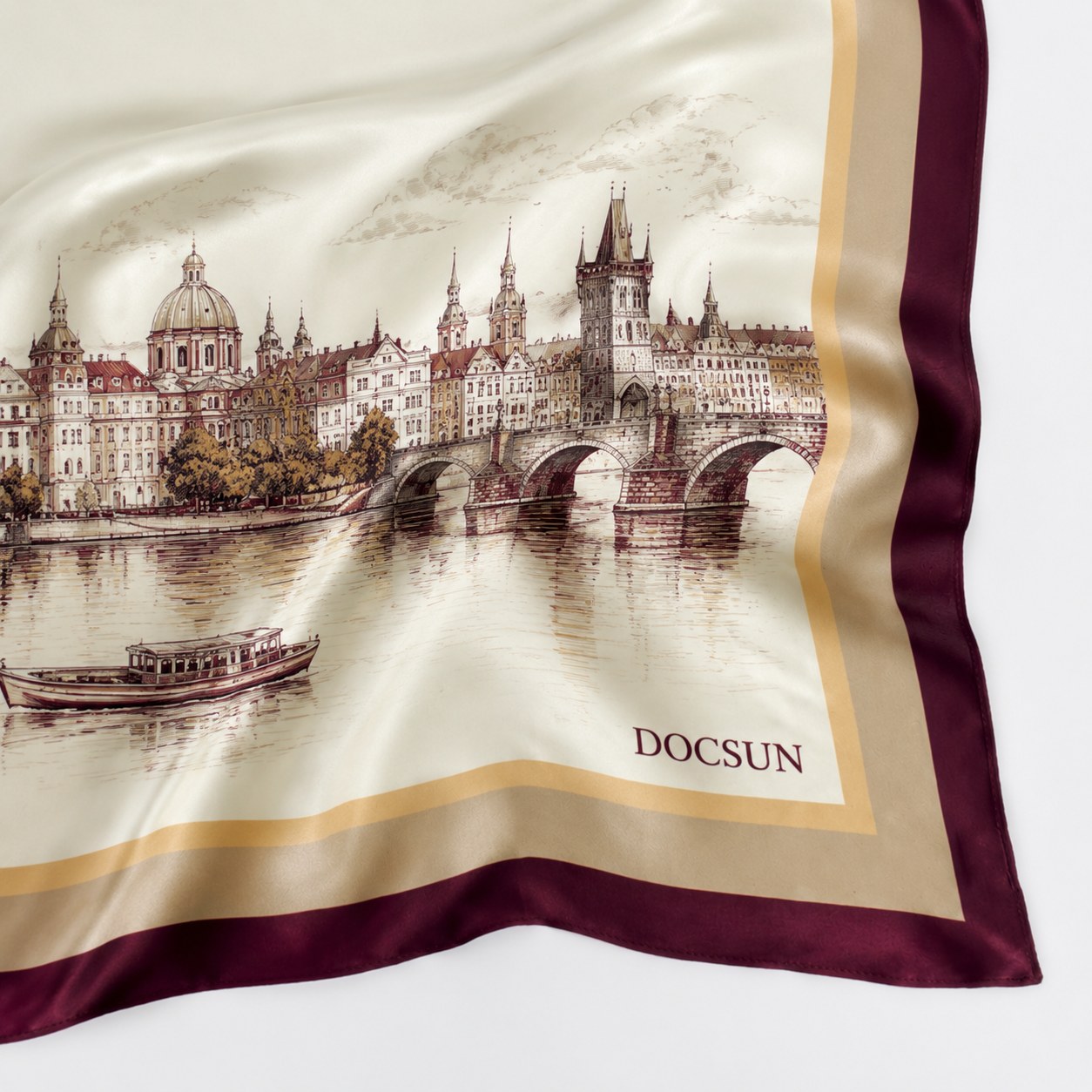
Logos can be incorporated into borders, corners, repeat artwork or a center composition while maintaining the brand's clear space and scale.
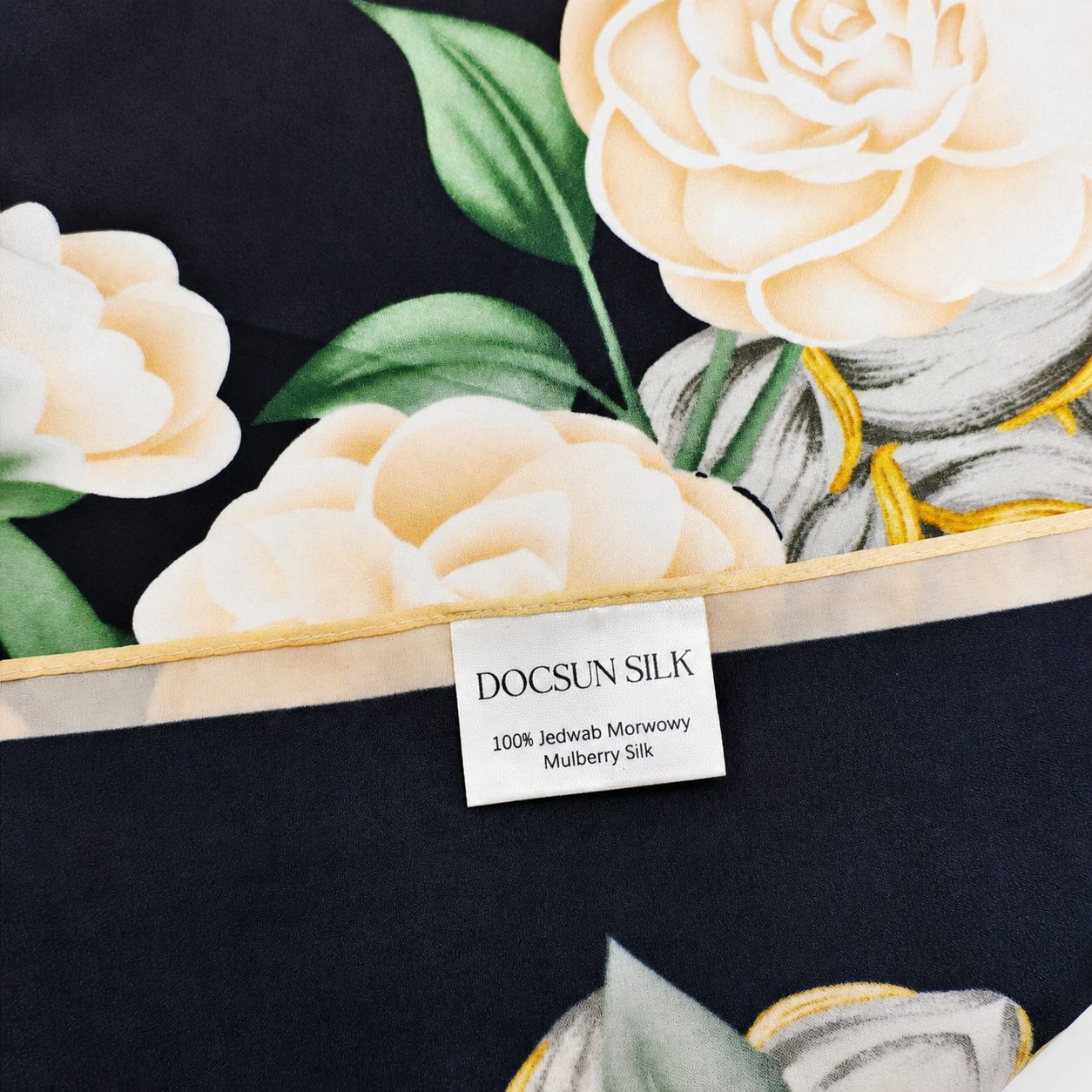
Placement is reviewed in the complete artwork so the logo remains visible without interrupting borders, folds or wearability.
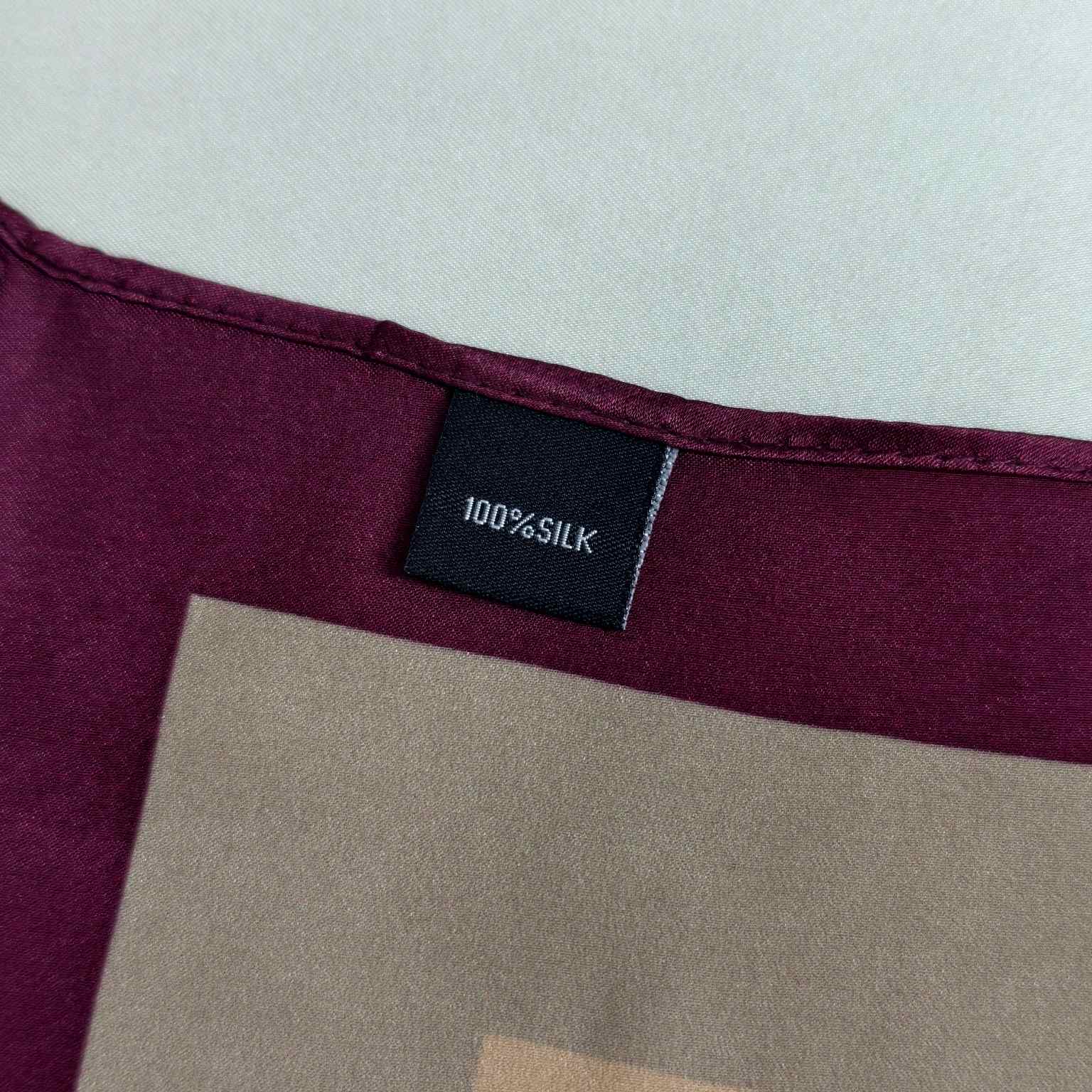
Label dimensions, fold type, fiber content, country-of-origin information and care text are supplied or approved by the buyer.
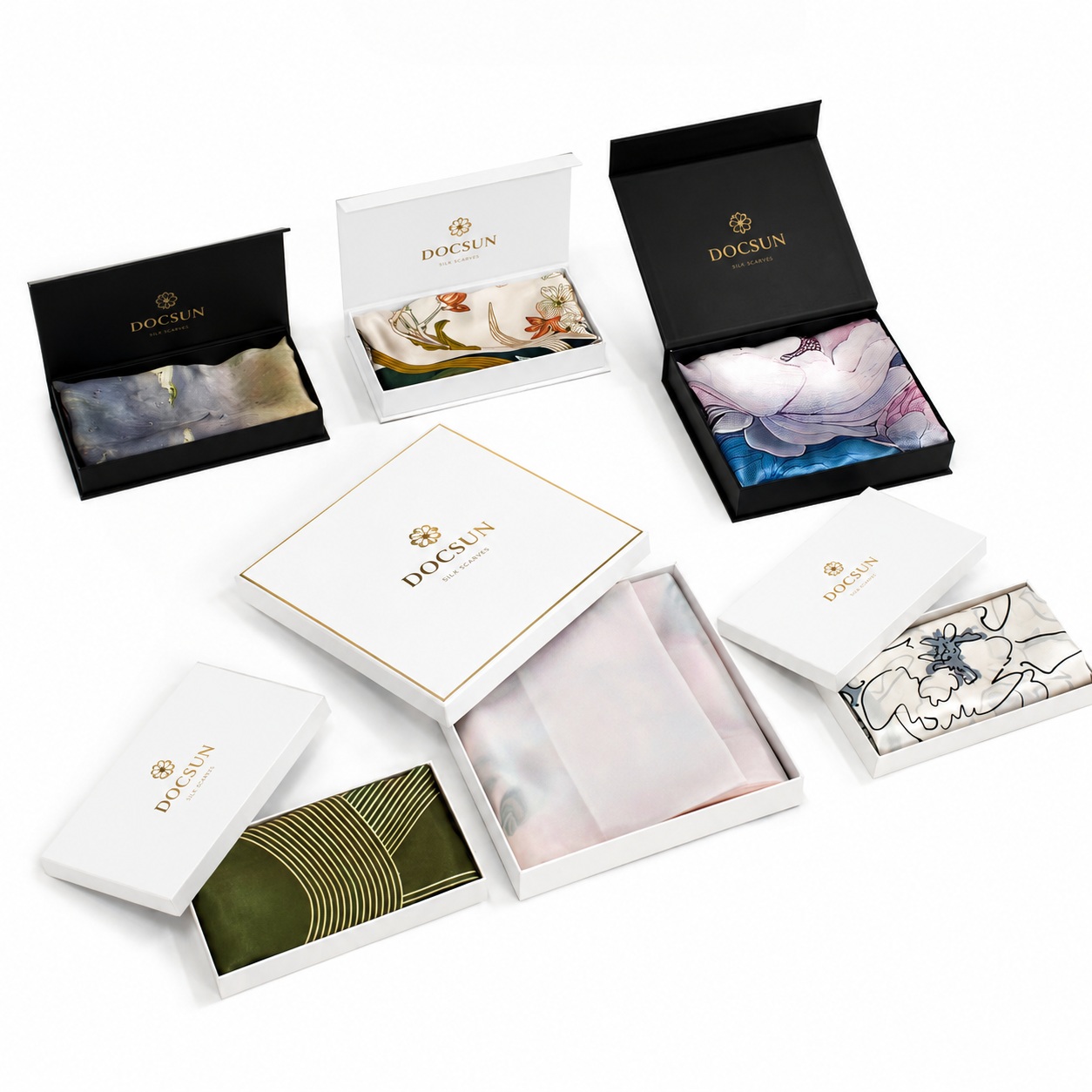
Custom size, paper finish, insert and logo treatment for premium retail or gifting.
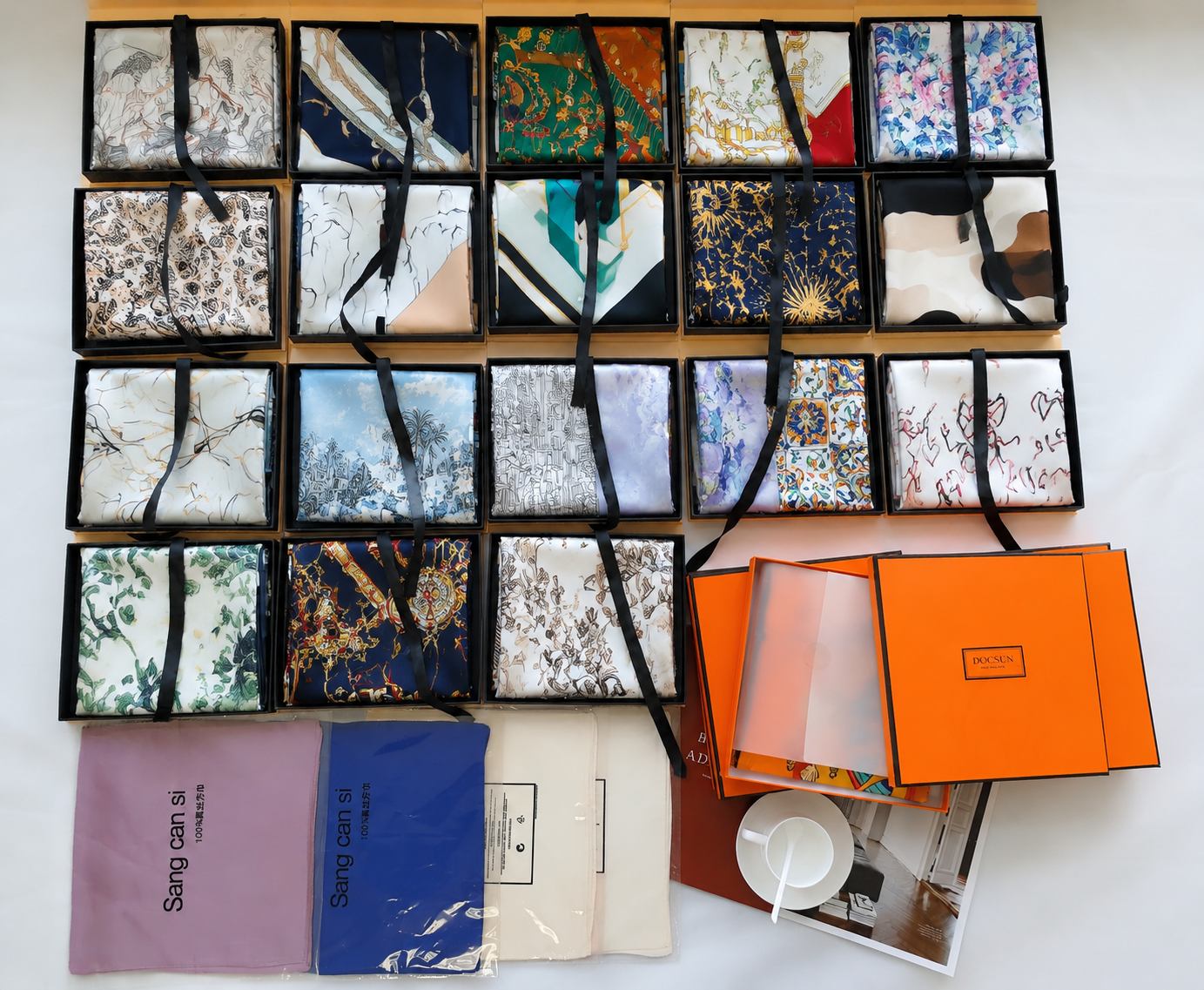
Coordinated color and artwork can extend the scarf story into the unboxing experience.
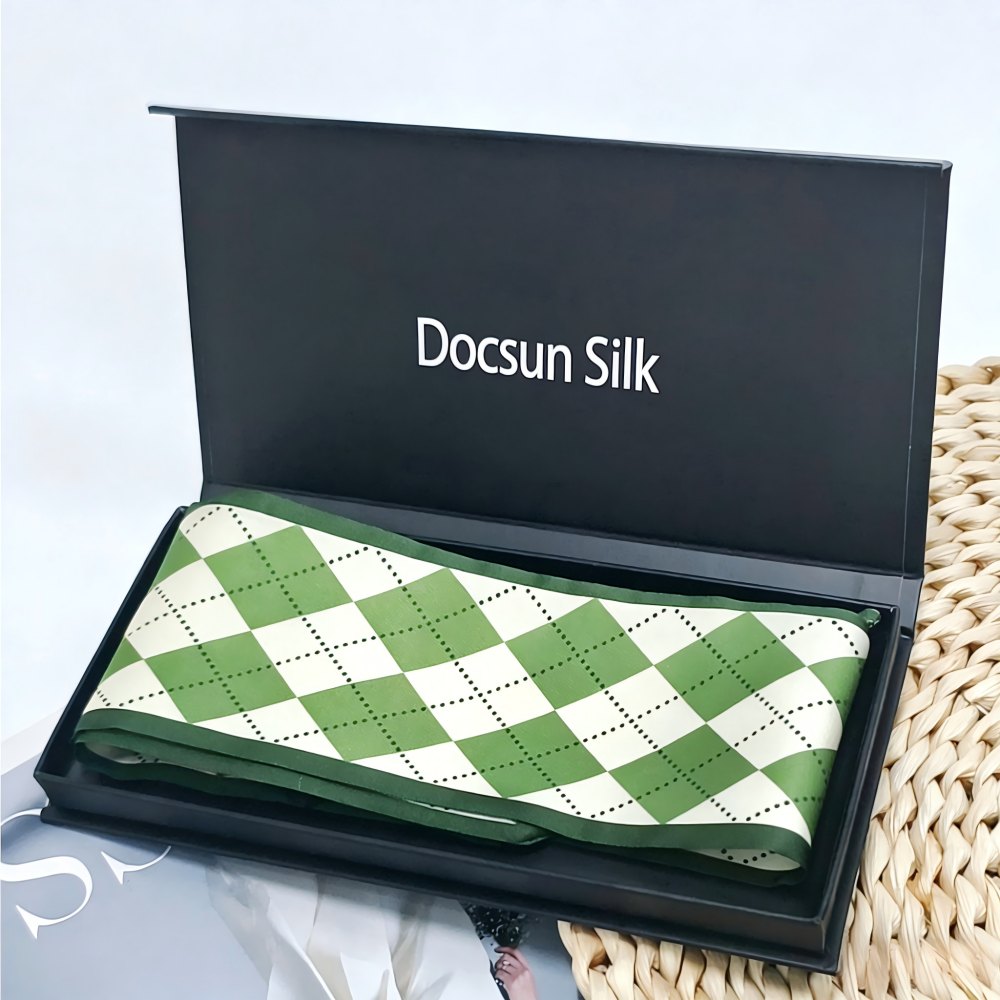
A compact presentation that reduces empty space and supports small accessory gift programs.
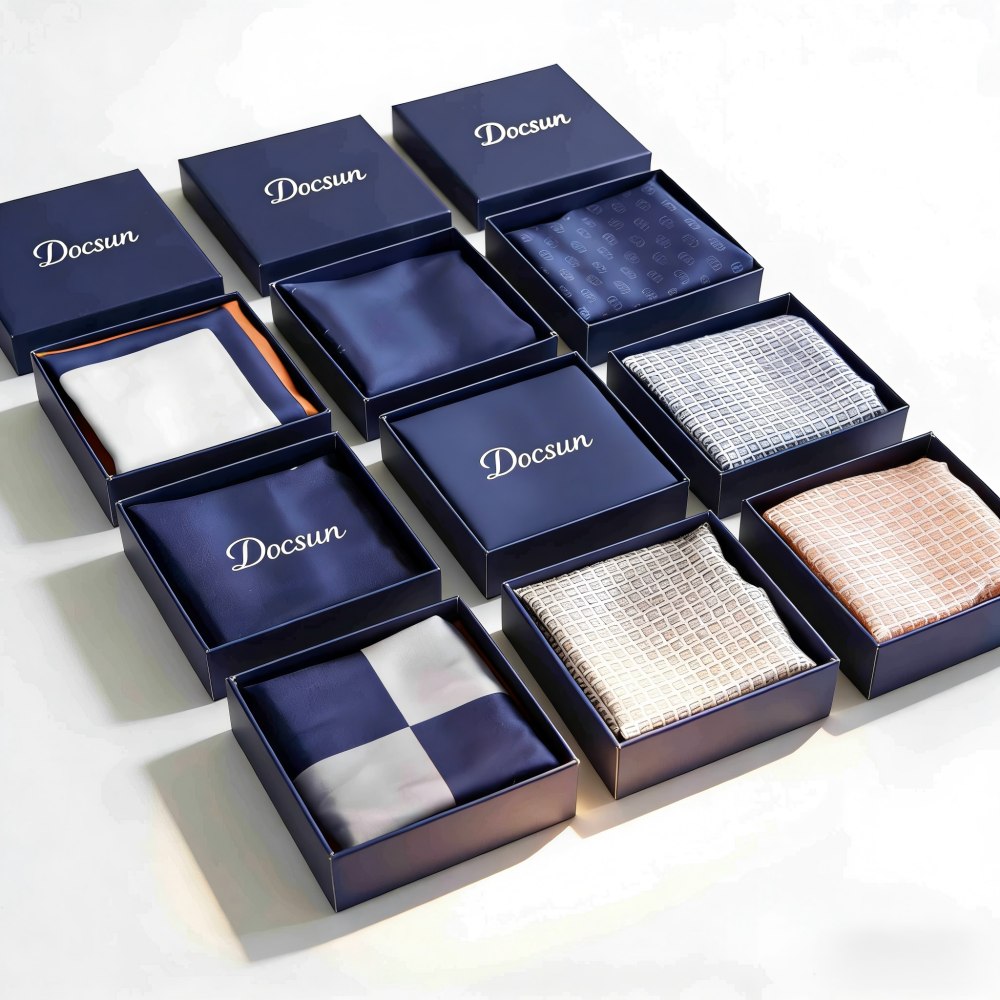
Suitable for scarves under 53 cm, pocket squares and tightly controlled retail sets.
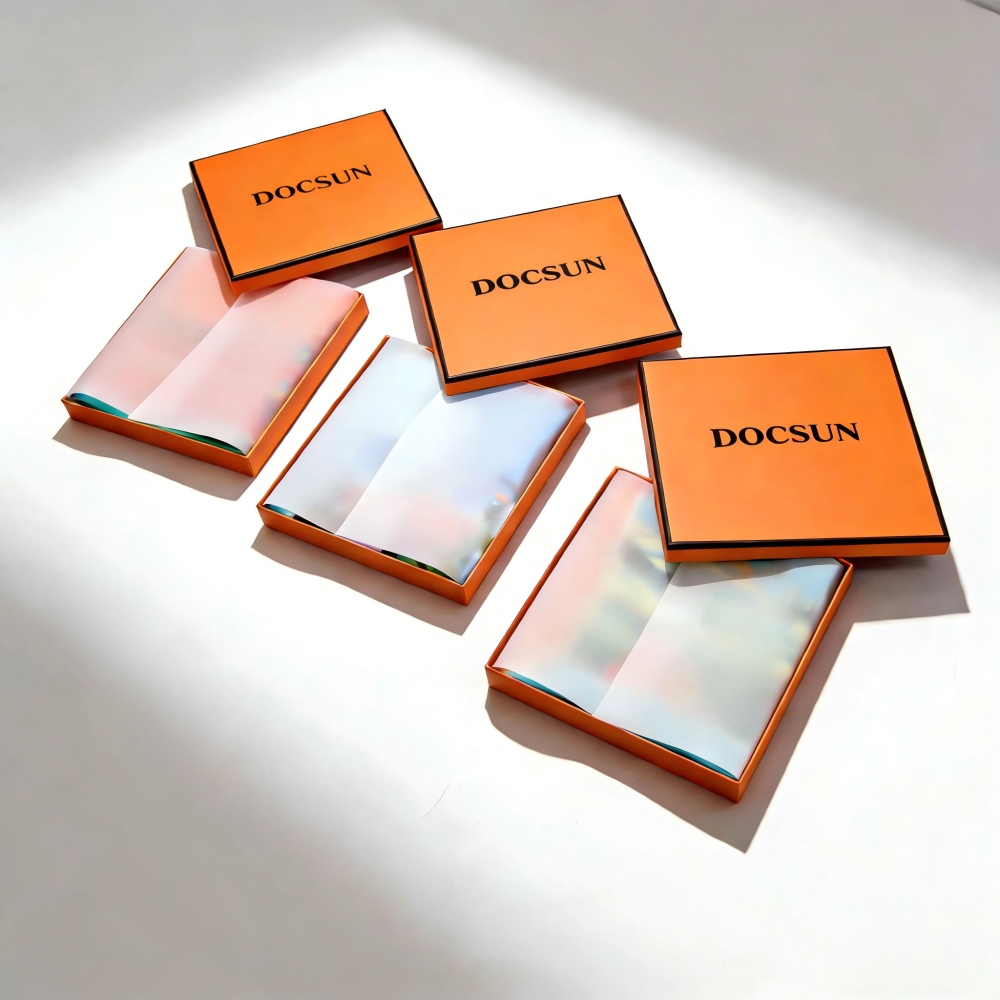
Rigid construction for corporate gifts, museum editions and premium seasonal collections.
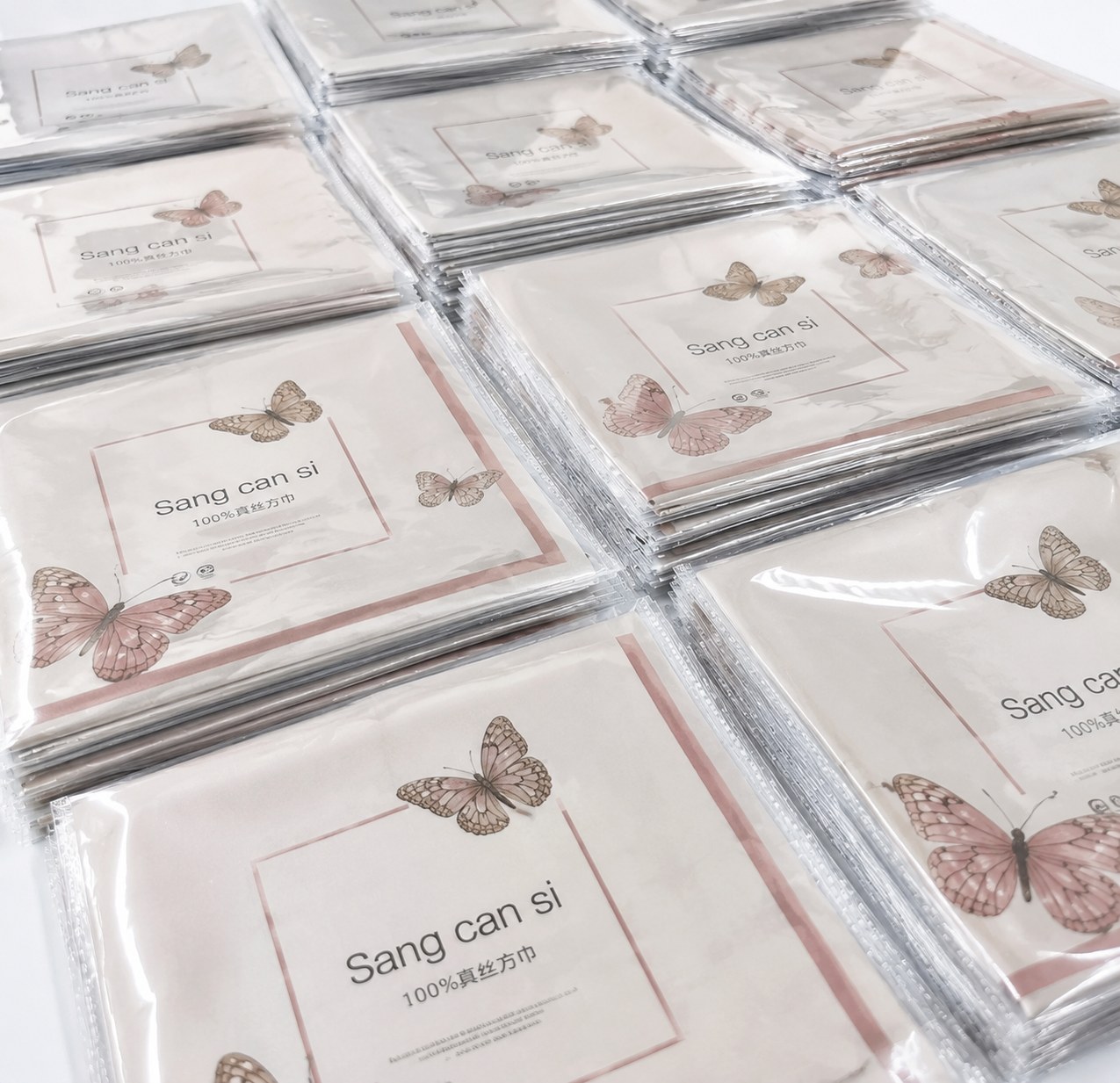
A practical cost-controlled option for bulk programs, inner protection and wholesale distribution.
Review more structures on the custom packaging page. Packaging MOQ, tooling and lead time are quoted separately from the scarf when required.
Our production team can start from completed print artwork or help organize a reference into a production-ready layout. The objective is to identify scale, repeat, borders, edge allowance, logo placement and color references before the sample is printed.
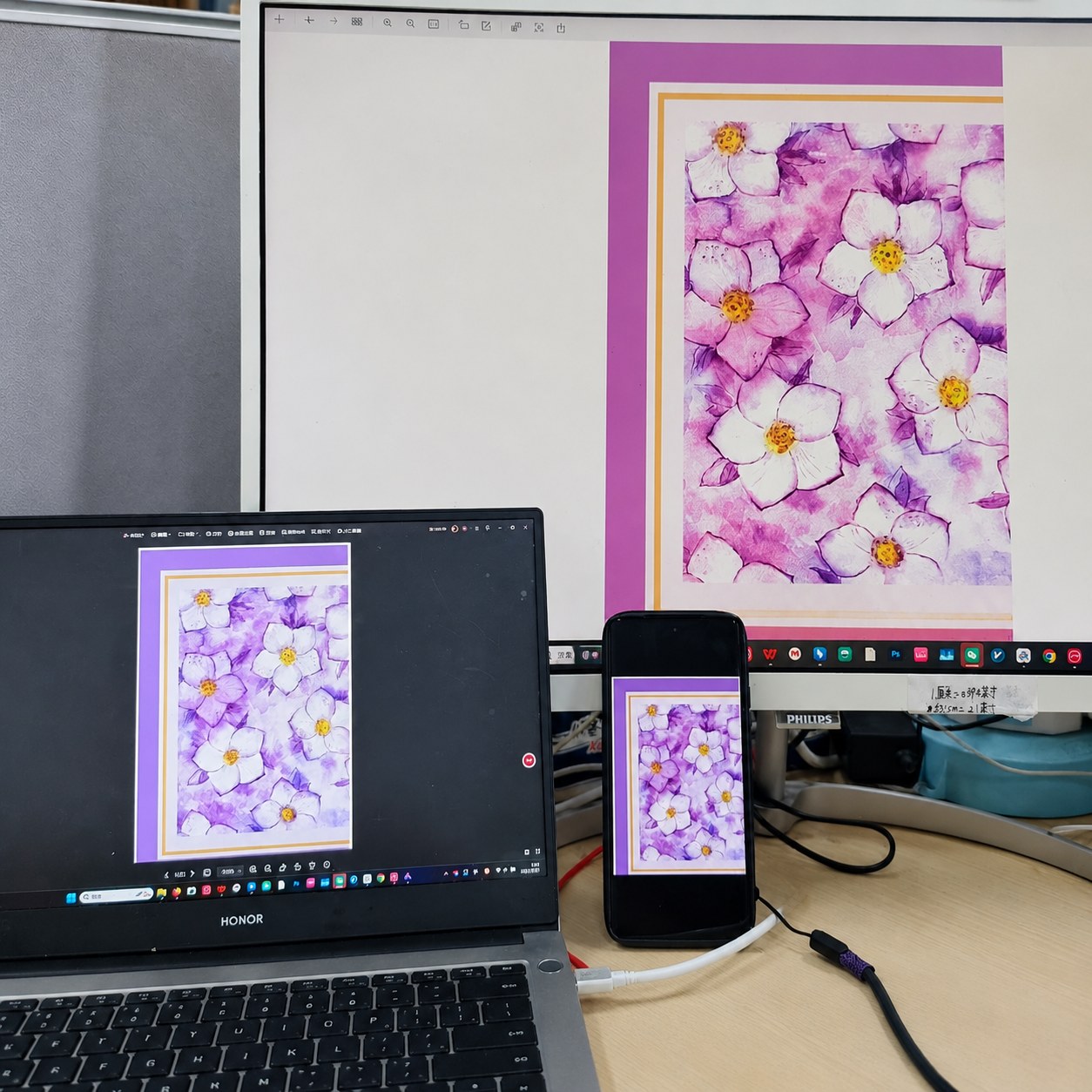
Vector AI, EPS or PDF files are preferred for logos and line work. PSD, TIFF or high-resolution JPG files may be used for raster artwork, normally at 150–300 DPI at final print size.
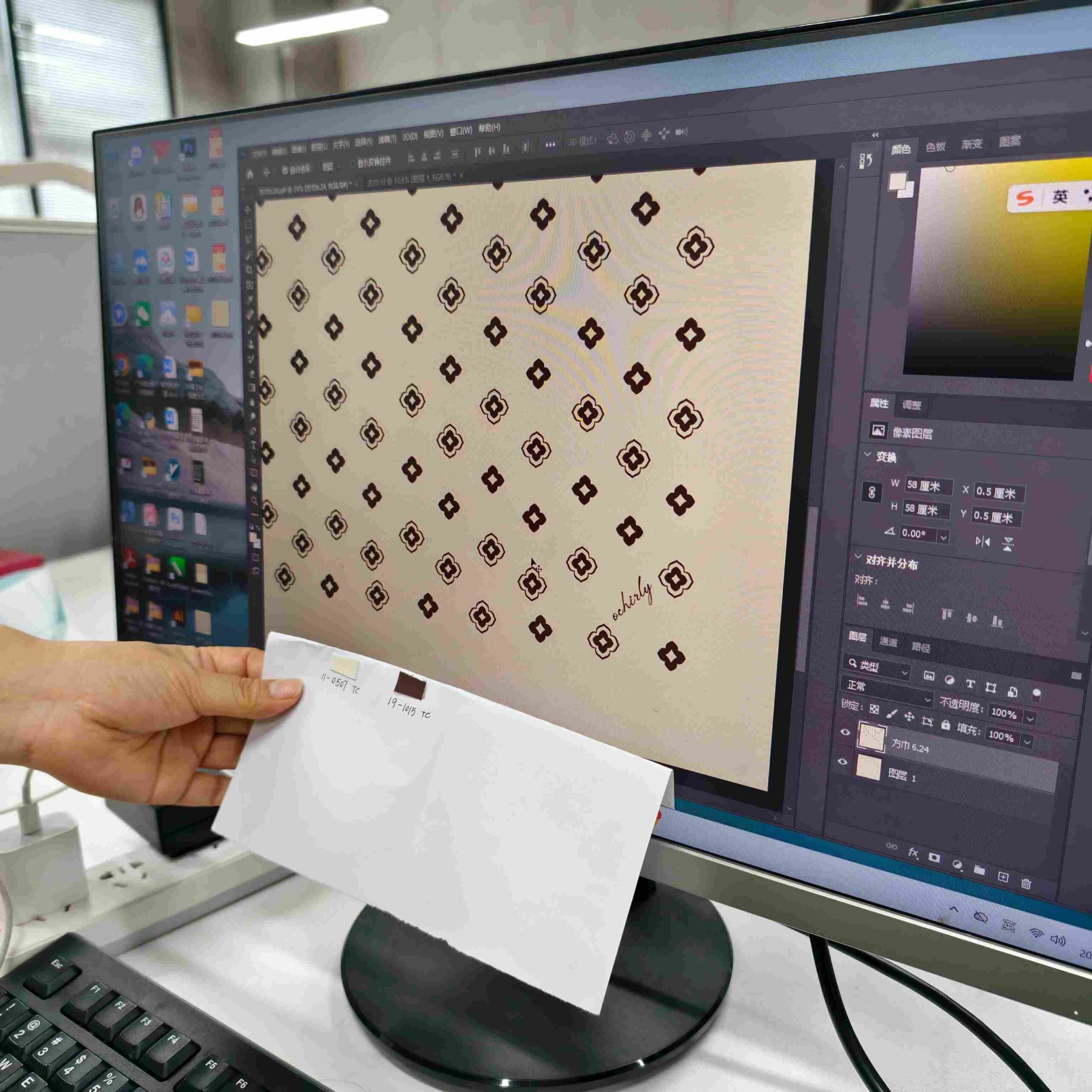
Pantone FHI textile references or an approved physical swatch are more appropriate for fabric color than coated paper references. PMS coated or uncoated values remain useful for packaging and graphic print.
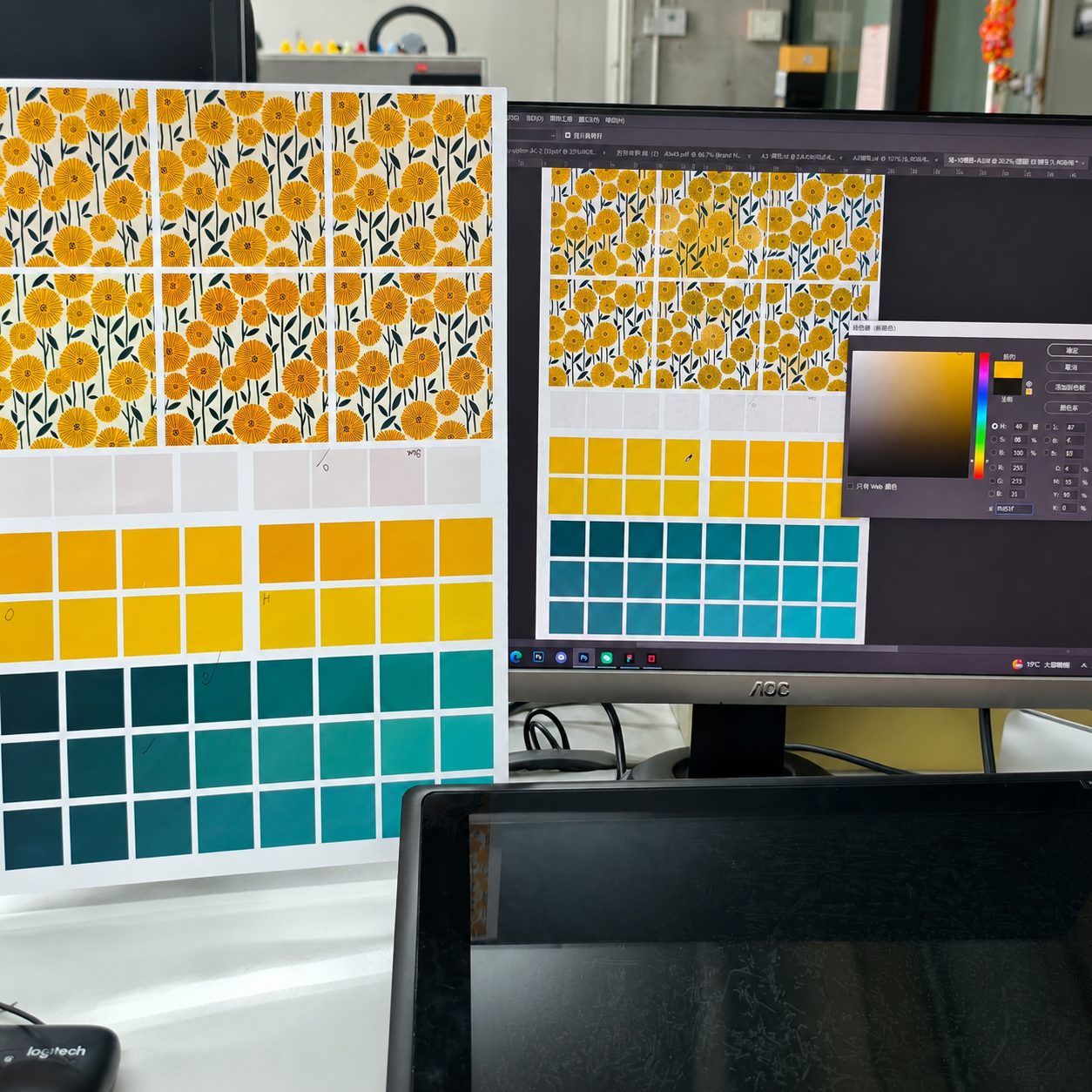
The printed sample is reviewed against layout, scale, color direction, penetration, edge treatment and hand feel before bulk authorization.
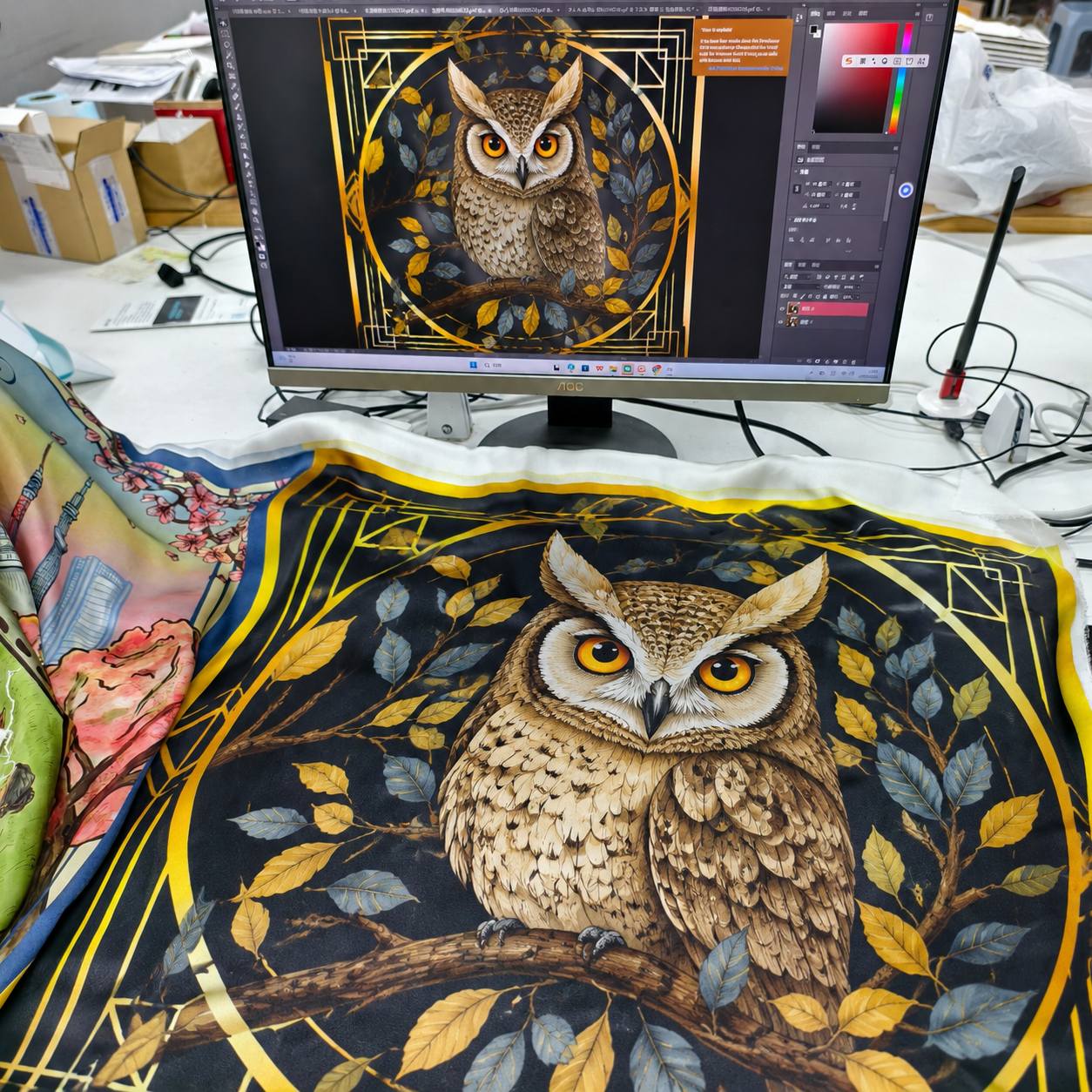
Fabric cards, color cards and selected references are held in the US, UK and Australia. Availability varies, so request the relevant location and project type through DOCSUN contact support.
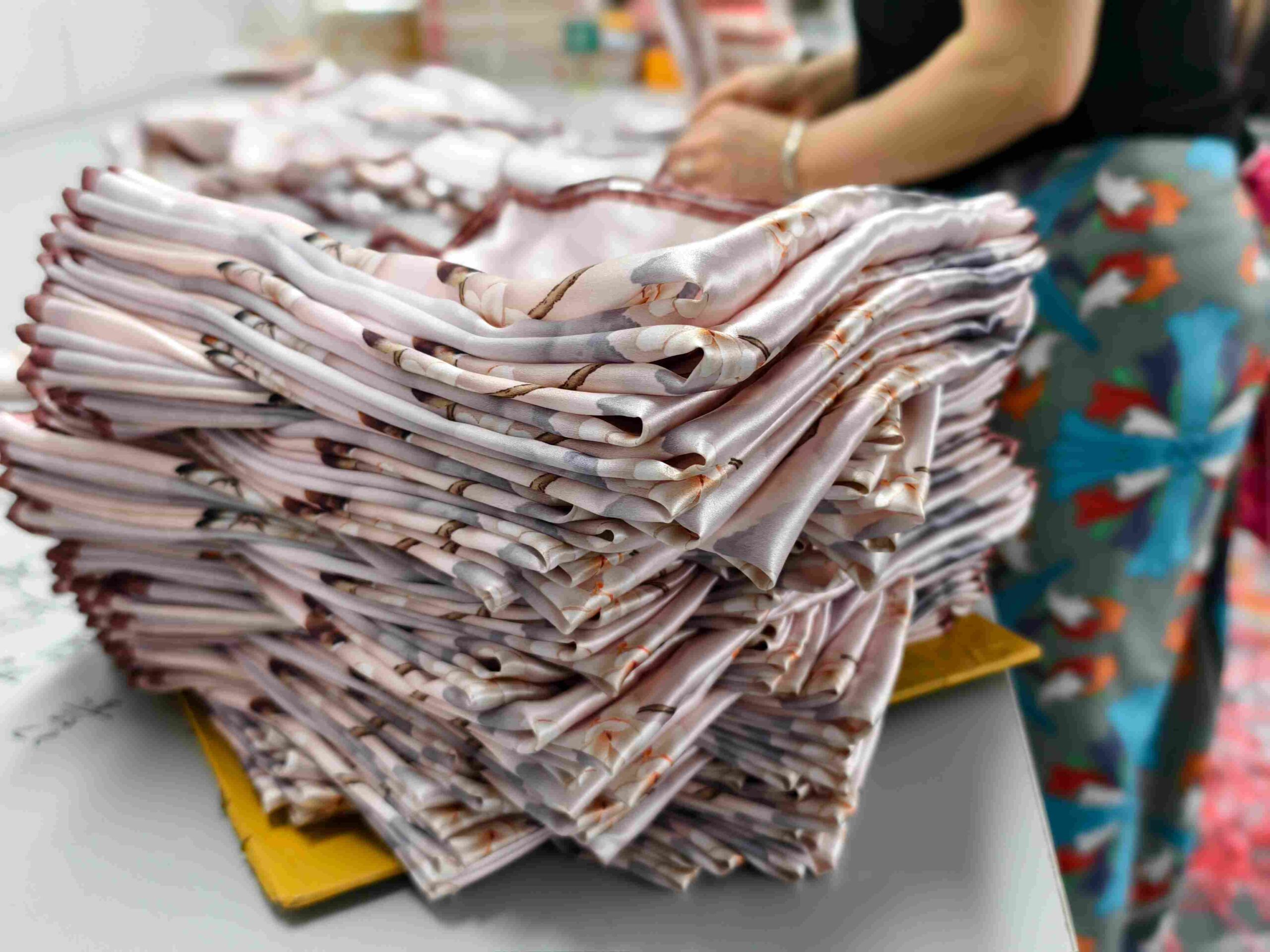
The production route changes with fabric and printing method, but approval points remain consistent. Material, artwork, sample and bulk specifications are checked before the project advances to the next stage.
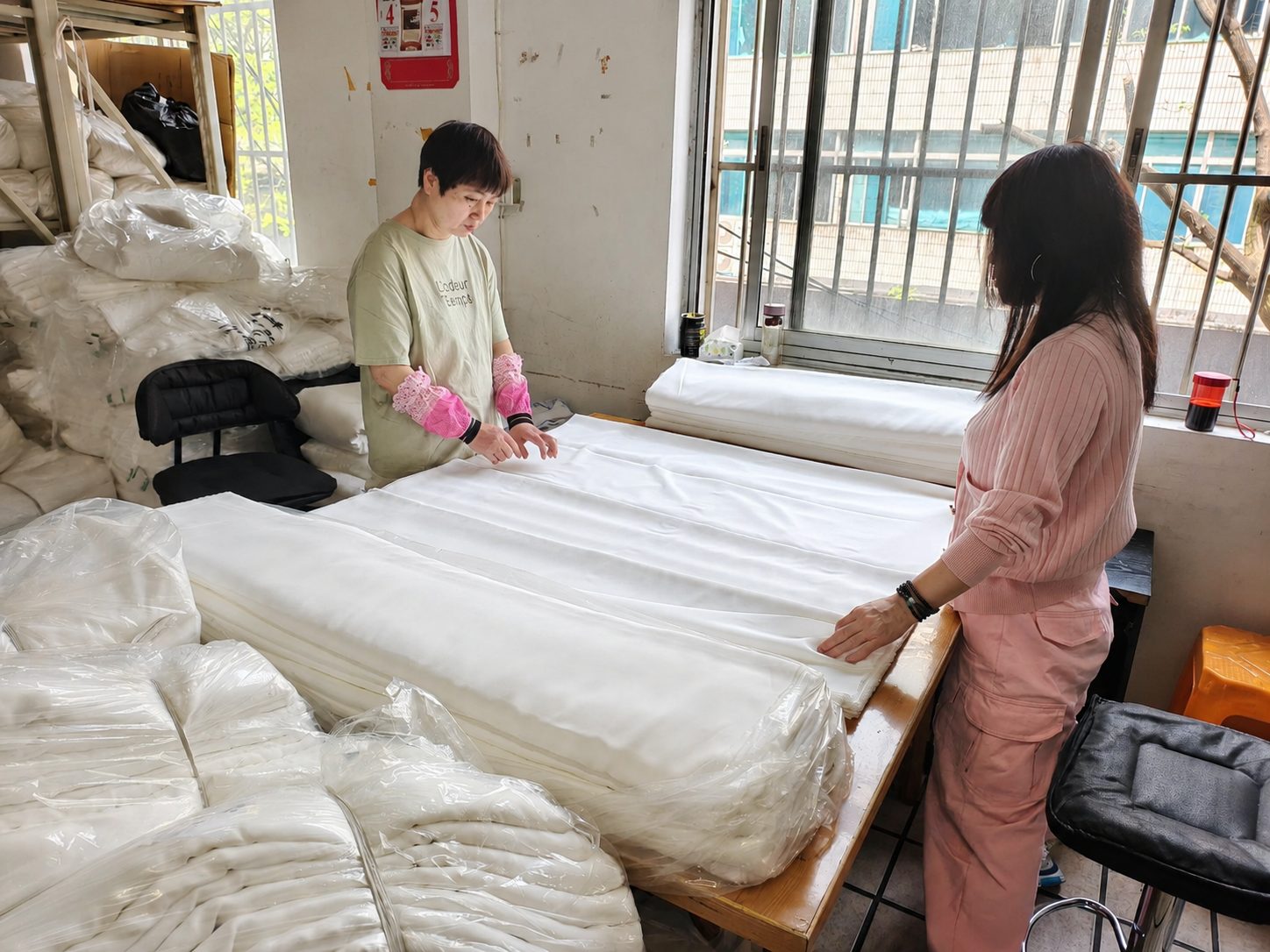
Check the selected fabric for visible defects, construction consistency and suitability for the approved print and finishing route.
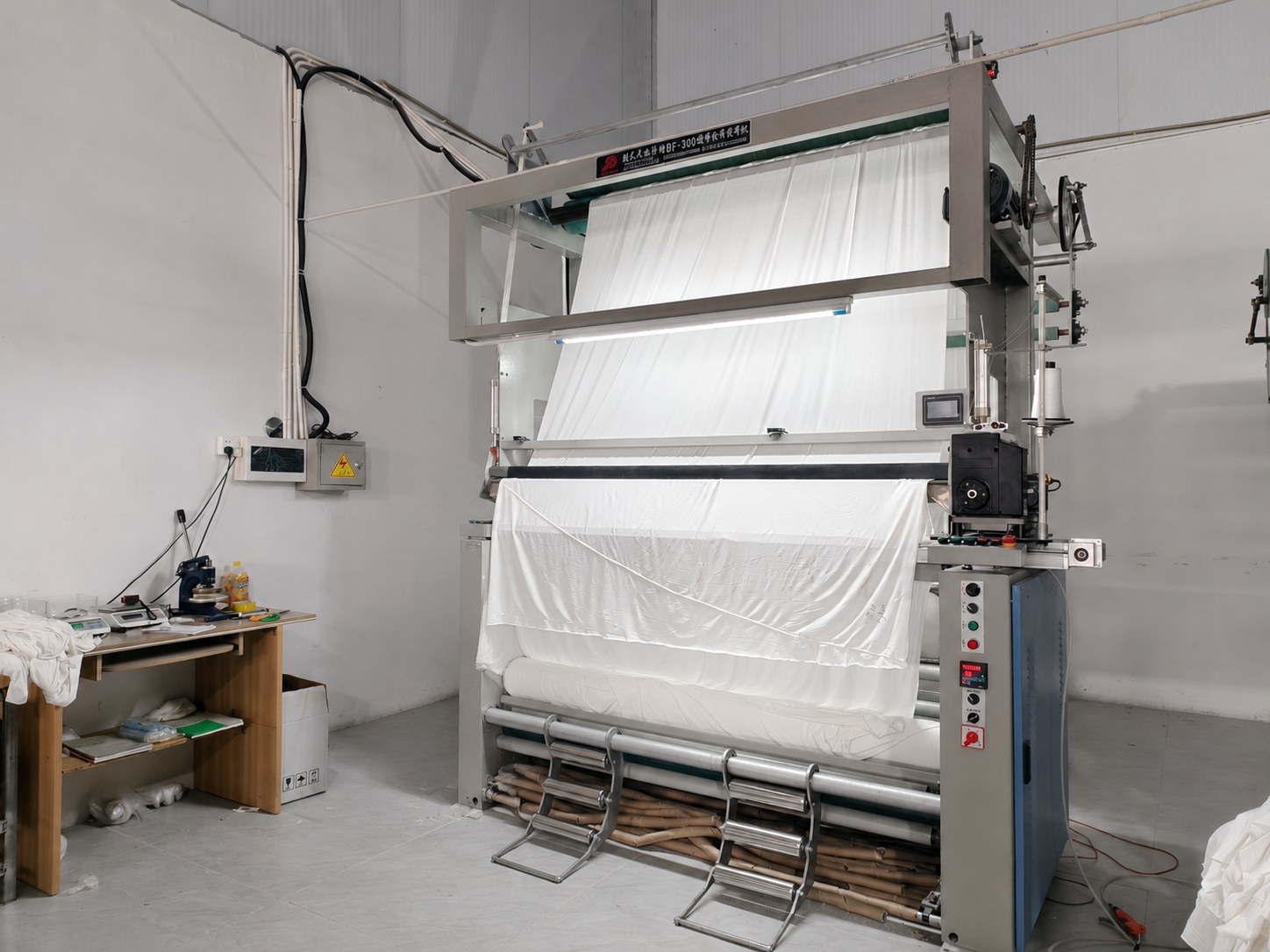
Release stored tension before printing and cutting so the fabric can settle and uncontrolled movement is reduced.

Apply the preparation required by the selected fiber, dye chemistry and print method to improve stability and print performance.

Develop a controlled base or solid color when the approved product specification requires dyed fabric before printing or finishing.
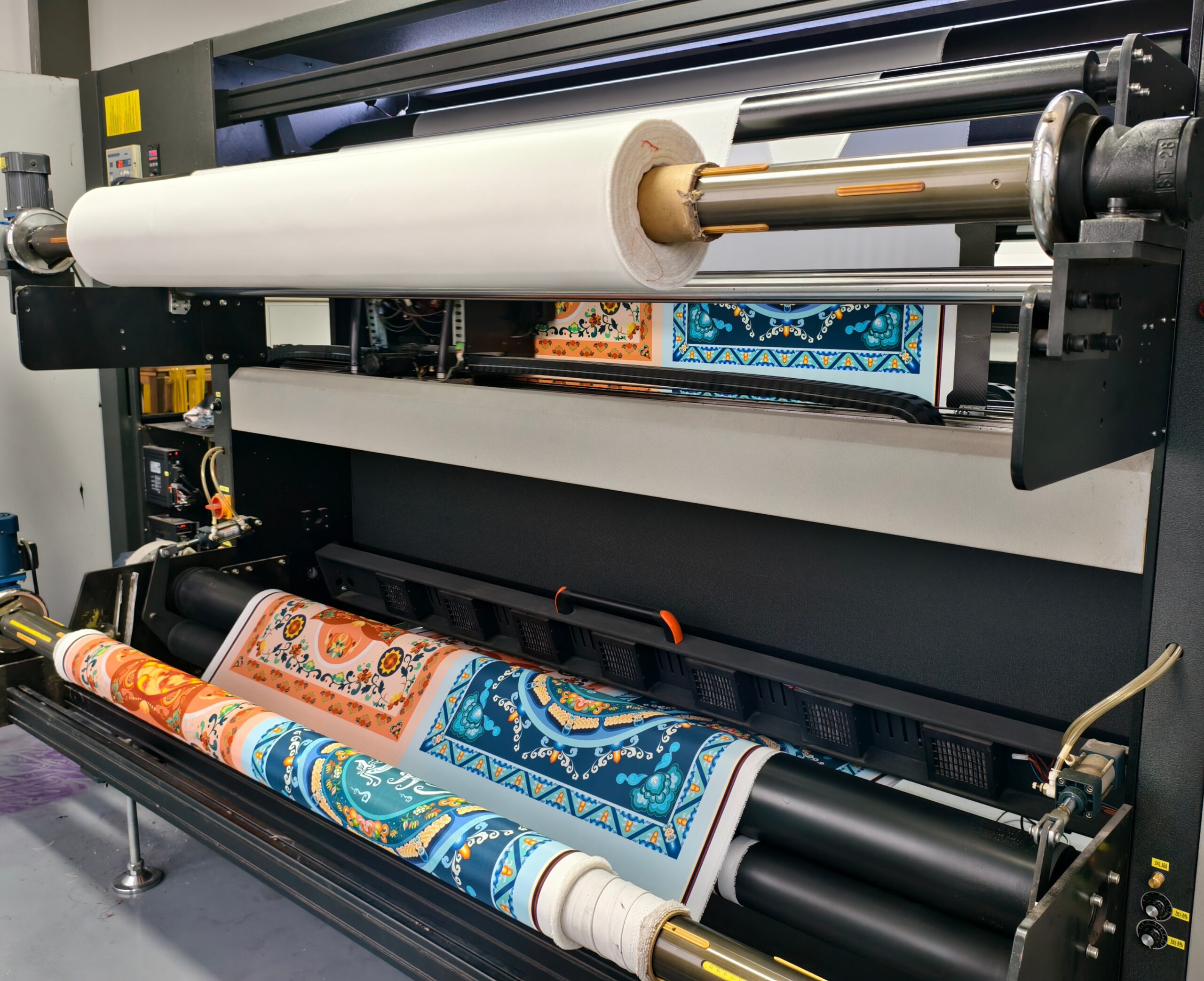
Run the approved artwork using the selected digital, screen, high-penetration or synchronized double-sided printing route.

Steam the printed fabric under controlled conditions so reactive color develops and bonds appropriately, then stabilize the material for the following wash and finishing stages.

Remove residual unfixed color and process chemicals, then dry the fabric under controlled conditions.
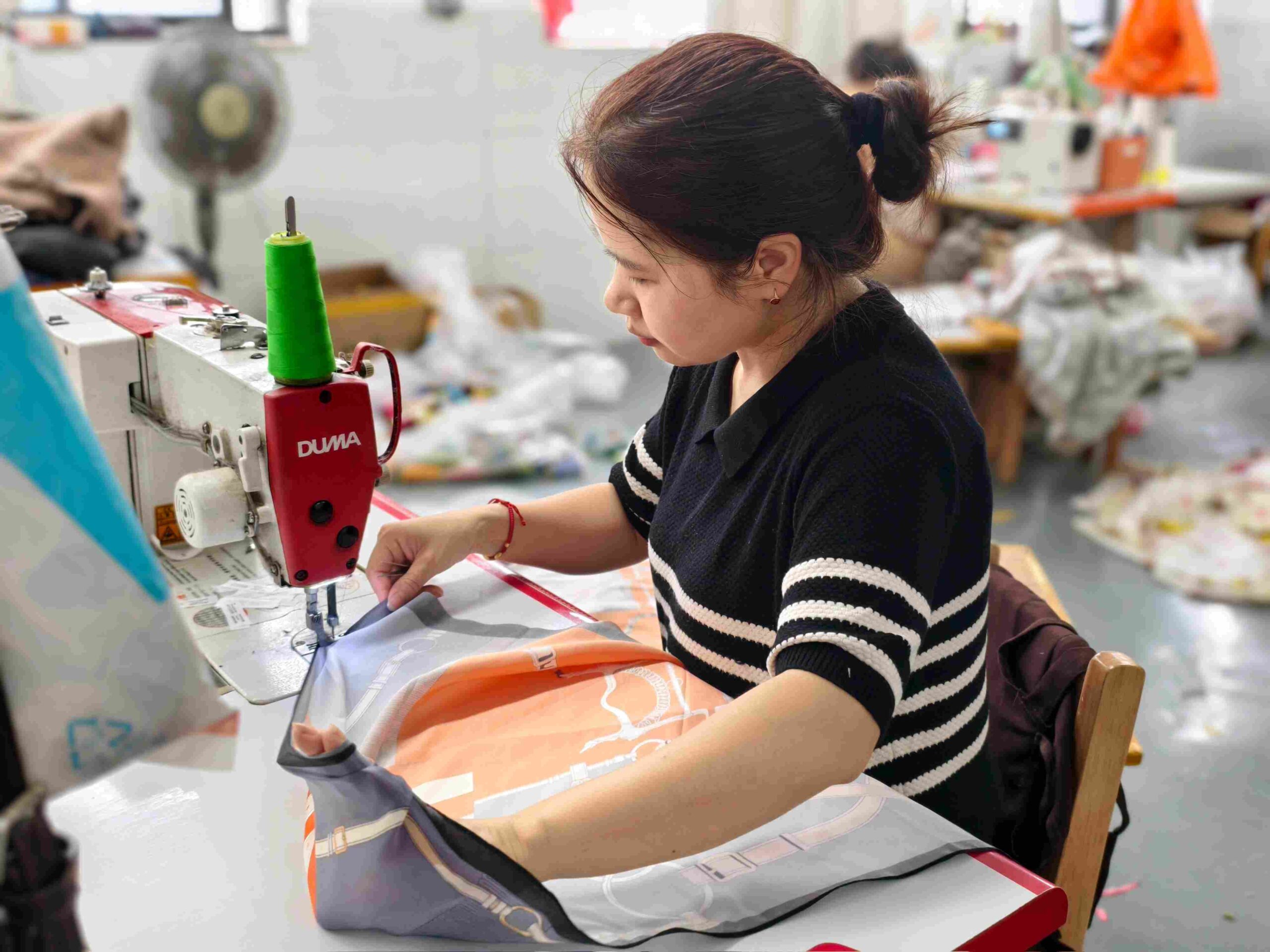
Cut to the approved dimensions and complete the specified hand-rolled, machine-rolled, overlock, fringe, lace or folded edge construction.
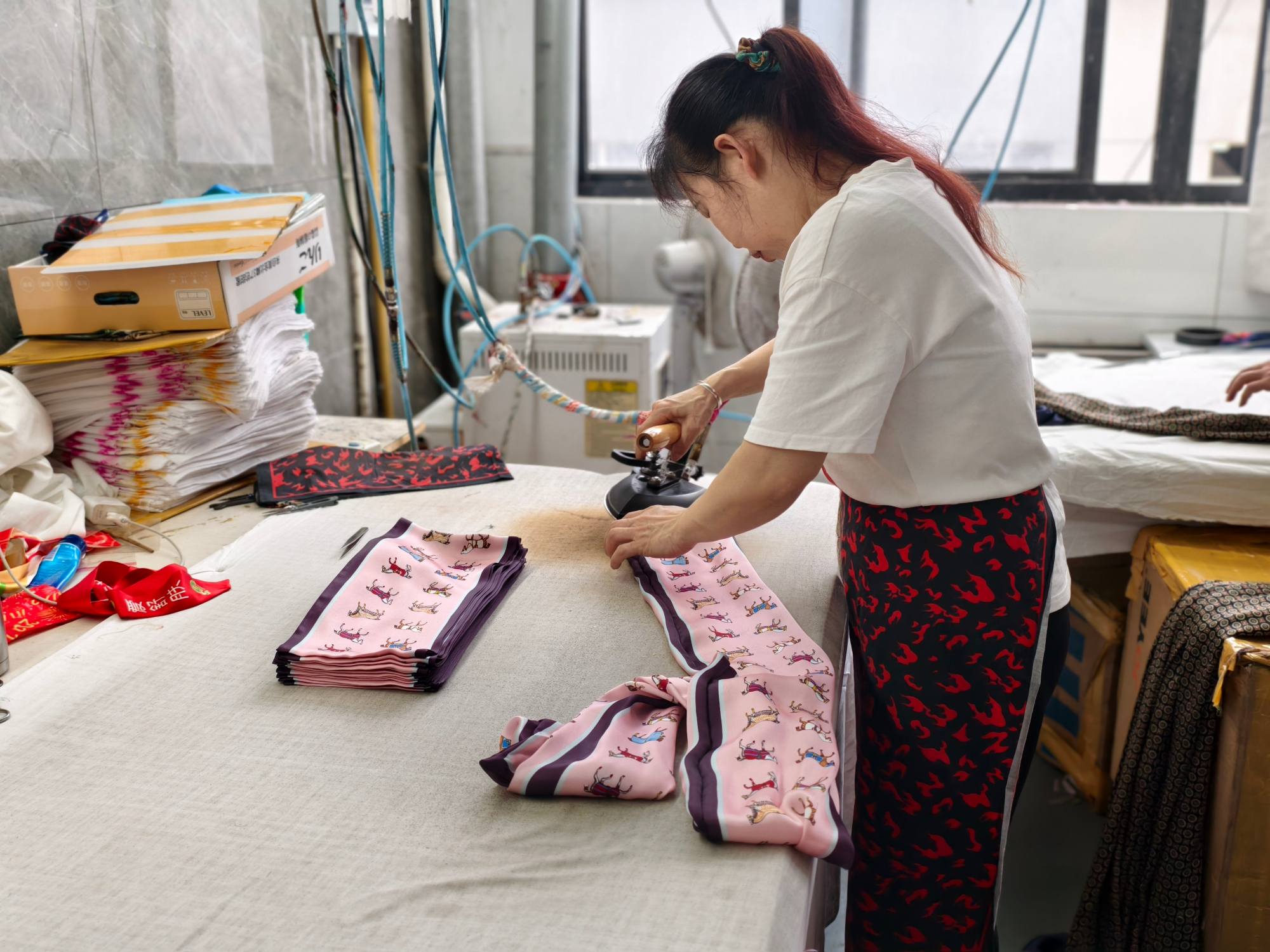
Control temperature and pressure to present the scarf without damaging luster, print definition or edge work.
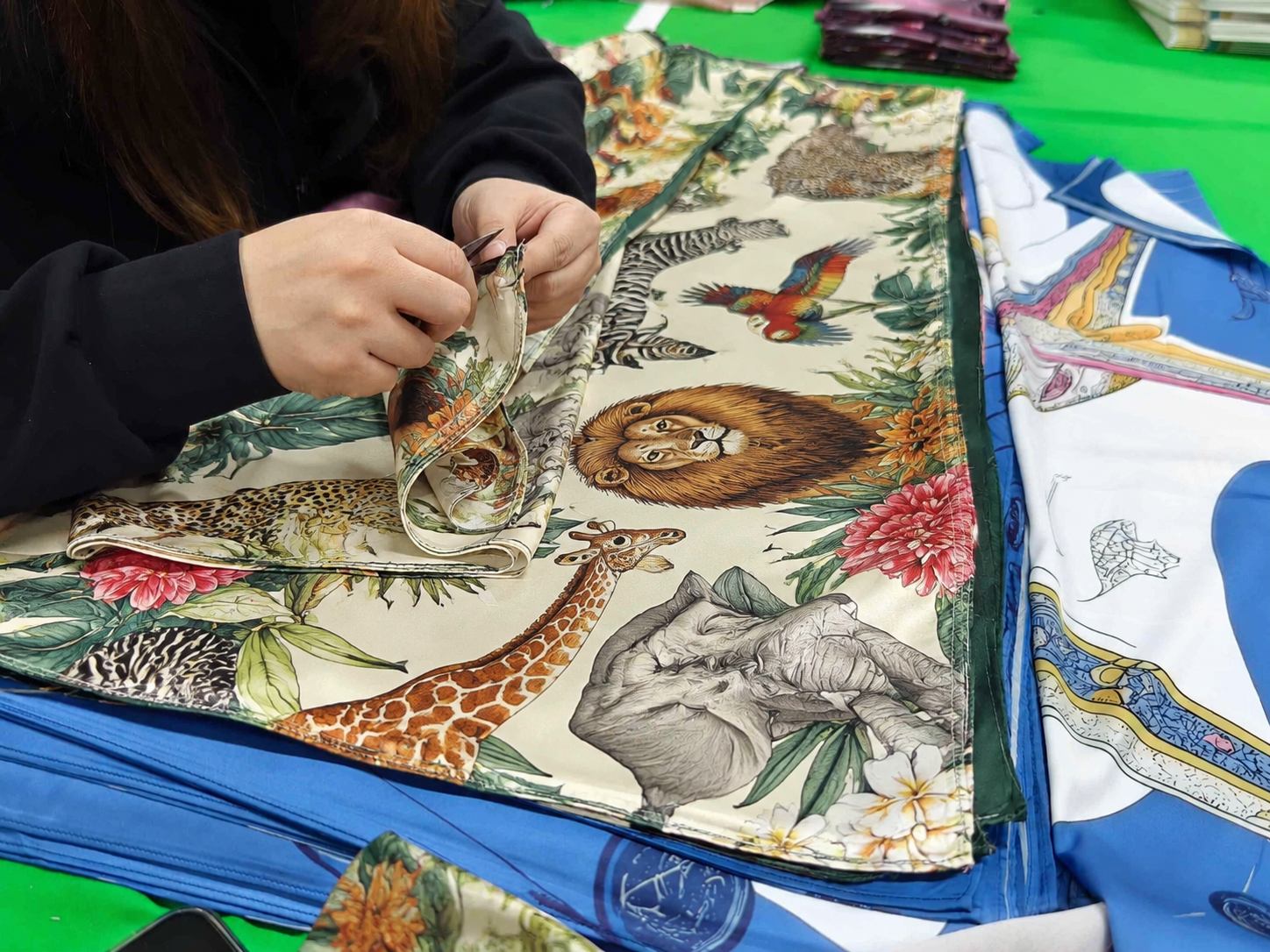
Every finished scarf is checked before packing for visible defects, print alignment, color issues, dimensions, edge quality and order conformity.
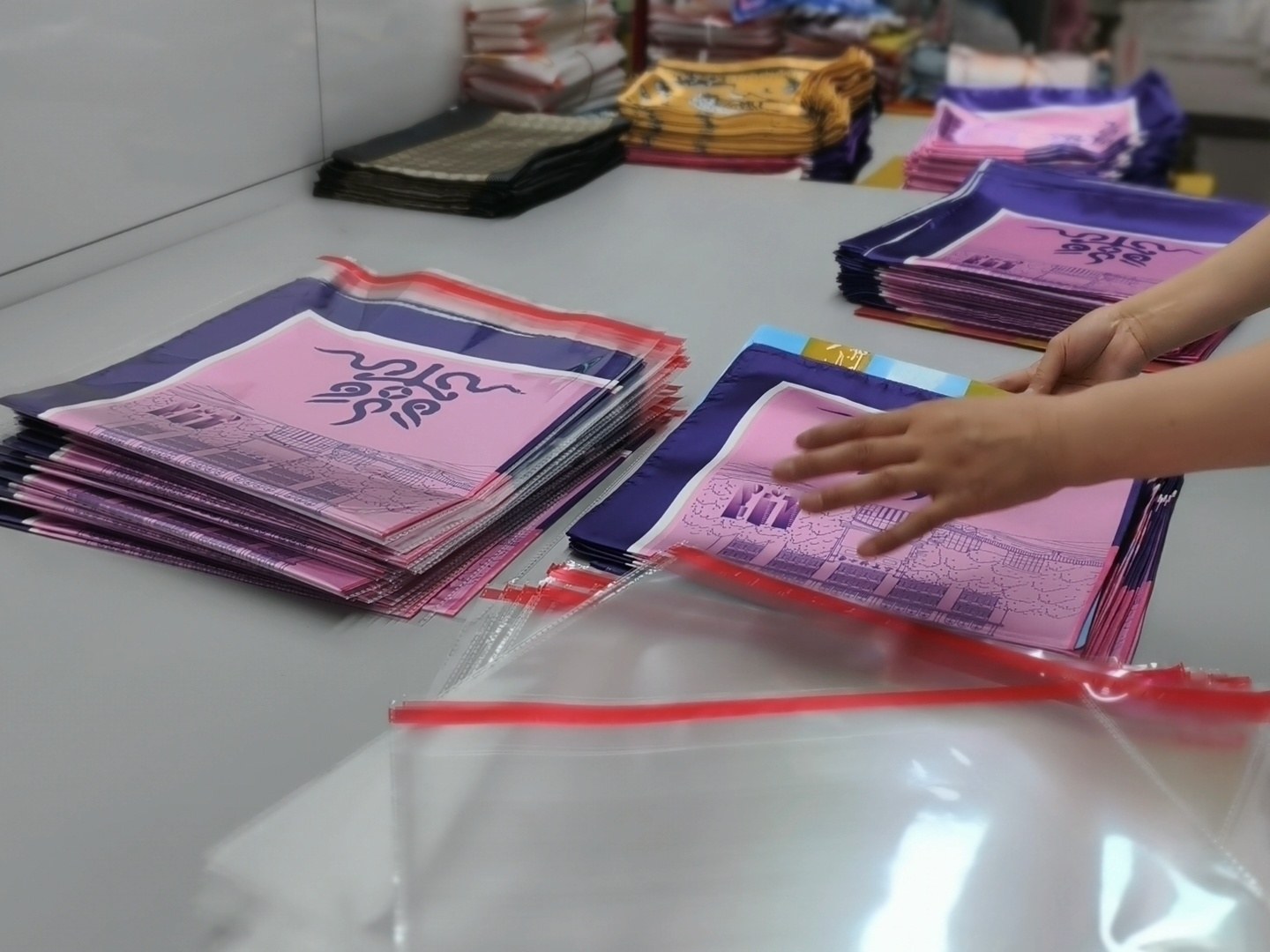
Fold and pack each scarf using the approved transparent bag, label, insert and presentation specification.
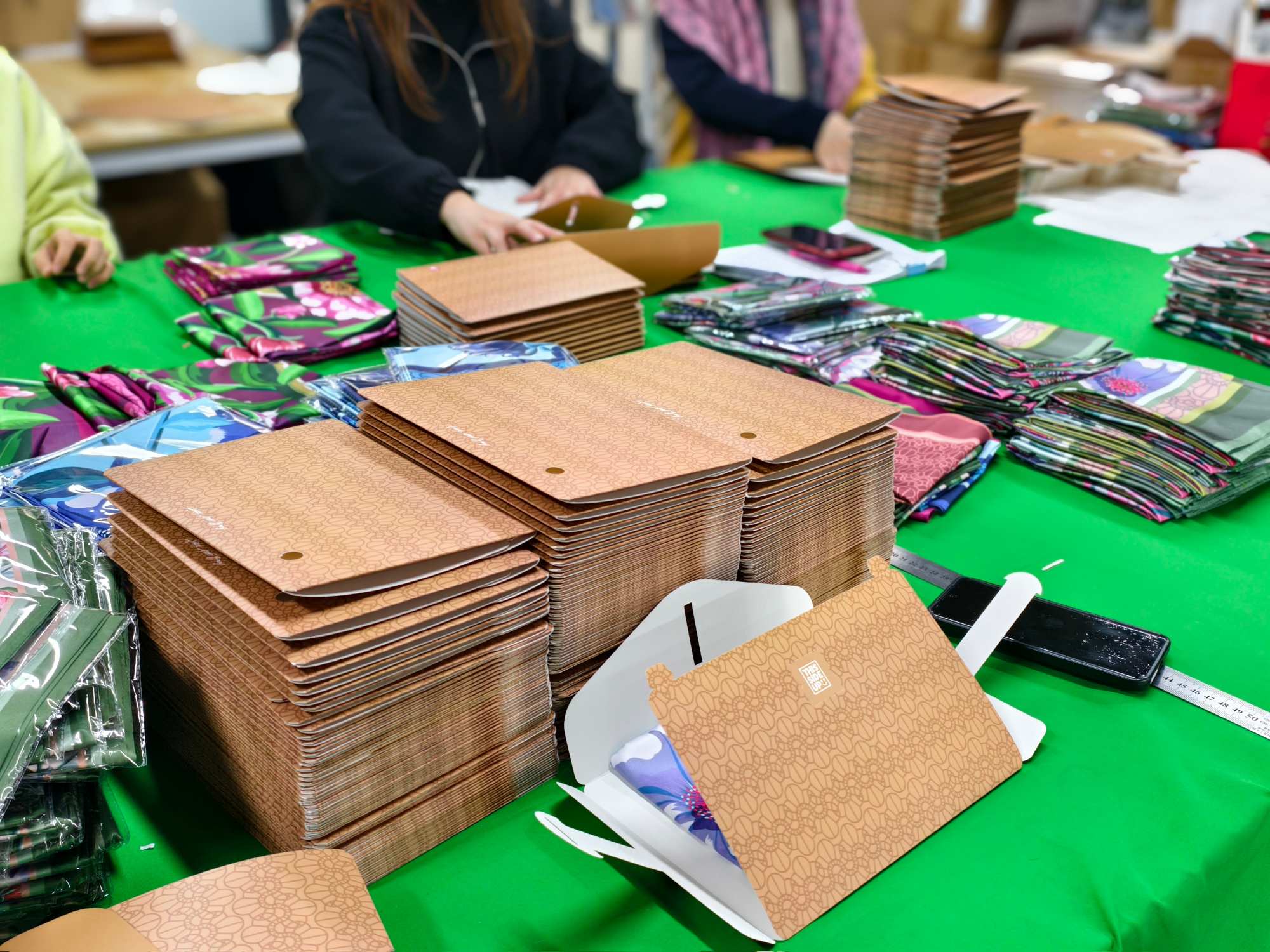
Assemble approved retail or gift packaging, complete carton checks and prepare the bulk order for the agreed international delivery route.
Inspection is not limited to the final table. Material checks, proof approval, post-print color review and finishing checks are built into the route, followed by 100% final inspection before packing.
OEKO-TEX Standard 100 certified material options and related documents can be discussed according to the selected fabric and order requirements. Certification applies to the documented material or product scope, not as a blanket claim for every component.
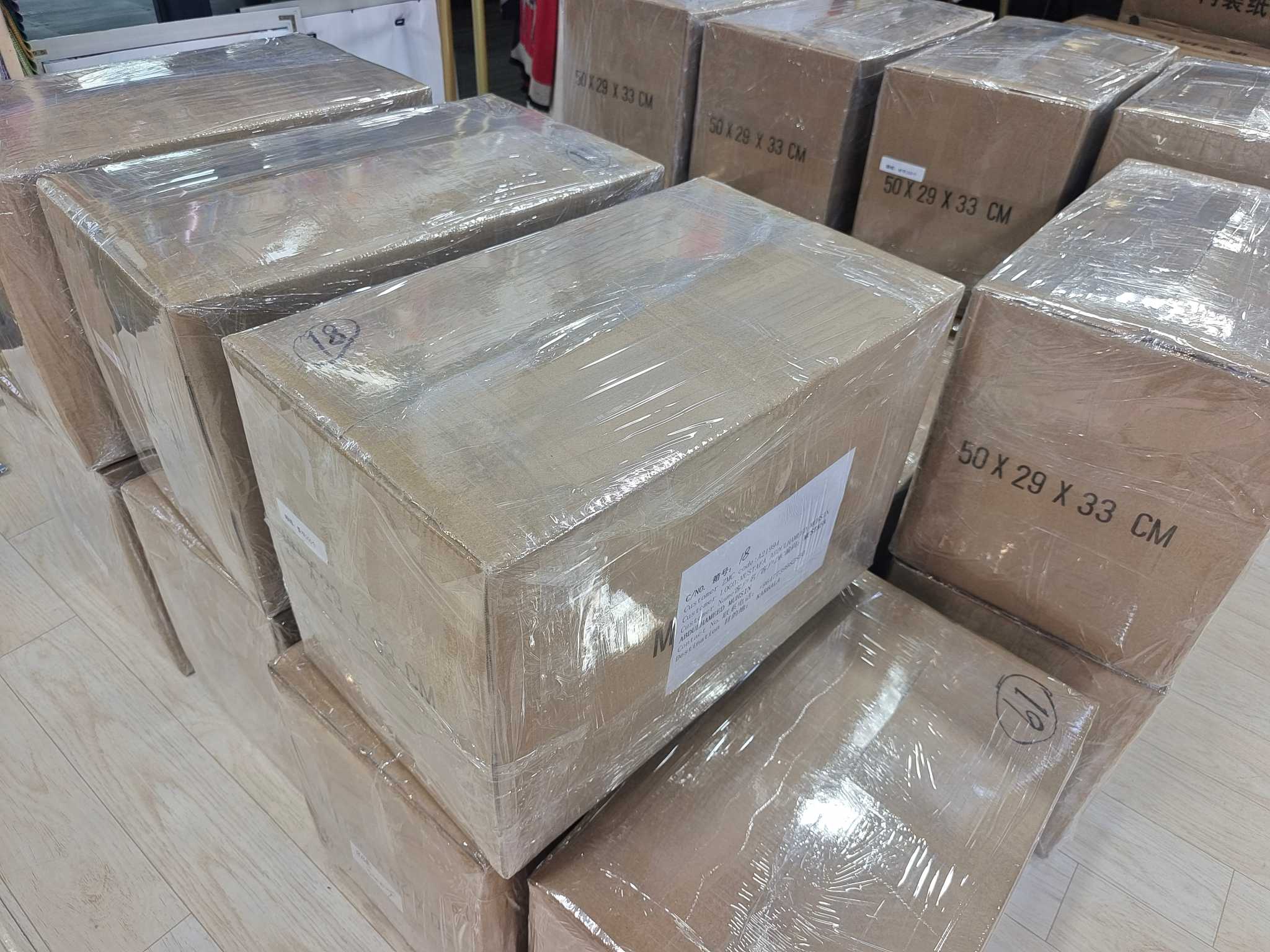
Shipping is selected by volume, destination and deadline. DDP can be arranged for supported destinations and must be confirmed with the named place and customs requirements in the quotation.
Provide the scarf size, intended fabric or target hand feel, artwork file, expected quantity per design/color, printing preference, edge finish, logo or label requirements, packaging route, target delivery date and destination. If some details are undecided, send the commercial goal and reference images so we can identify the practical options.
MOQ starts from 50 pieces per design and color. One sample piece is available before bulk production. Final MOQ is confirmed against fabric, size, printing, finishing and packaging.
A custom sample typically takes about 15 days after the artwork and specification are confirmed. A 200-piece bulk order typically takes about 25 days after sample approval.
Fourteen and sixteen momme silk twill cover many printed scarf programs. Eighteen and twenty-two momme options provide more body and opacity. Size, artwork, print route and intended hand feel should be assessed together.
Single-sided printing applies artwork from one face and allows controlled penetration. True double-sided printing independently controls both faces and can use the same or different patterns and colors. At least 14 momme silk is recommended for same-pattern same-color projects, and at least 16 momme high-quality silk for different-color or different-pattern structures.
Yes. We can review artwork scale, repeat, borders, edge allowance and logo placement. Physical textile references or Pantone FHI references are preferred for fabric color, with proofs approved before bulk production.
Yes. Options include hand-rolled hems, machine hems, fringes, tassels, embroidery, woven labels, printed care labels, protective bags and custom retail or gift boxes.
The Grade 4 target must be tied to a specific test method, material and colorway. Depending on the care specification, rubbing, washing, perspiration or dry-cleaning tests may be arranged. Lightfastness is assessed on a different scale.
DDP is available for supported destinations and must be confirmed per quotation. Express, air and sea freight can also be evaluated according to shipment volume and deadline.
For production examples, review selected custom scarf cases.
Send your artwork, reference scarf, target size, quantity and market position. DOCSUN will help identify the fabric, printing, edge finish, label and packaging route needed for sampling and a production quotation.