
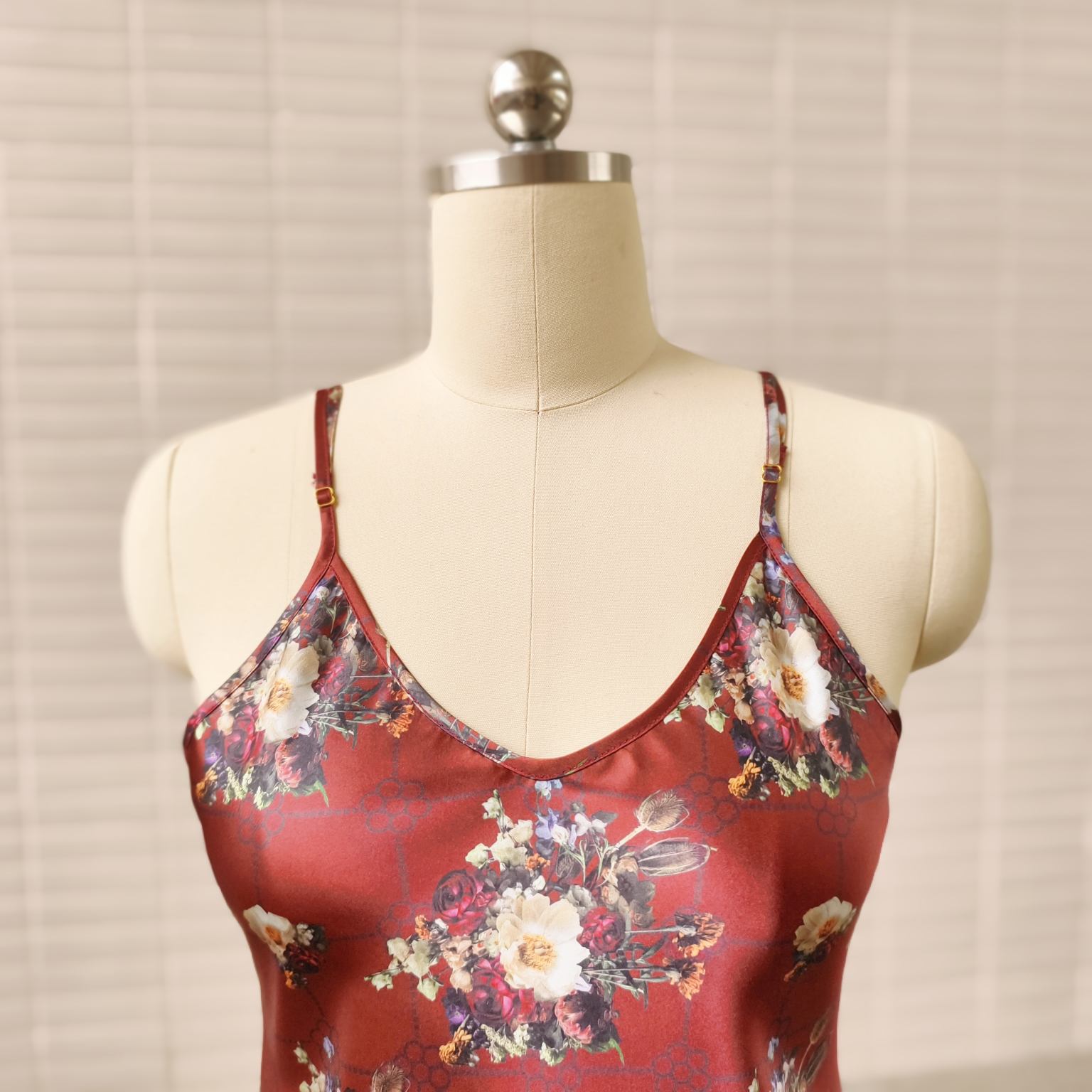
Start with the Brand Brief
A custom silk slip dress should not begin with fabric alone. It should begin with the brand brief. The development team needs to understand the customer profile, retail price level, season, styling use, size range, and whether the garment is planned for a capsule collection, resort line, sleepwear collection, event product, or private label launch.
For a fashion brand, the same slip dress silhouette can be interpreted in different ways. A minimal solid-color dress may need a refined satin surface and clean fit. A printed silk dress may need careful artwork placement and color approval. A premium gift set may need labels, hangtags, tissue paper, and a custom box.
Before sampling, prepare the design reference, target measurements, fabric direction, print files, label requirements, packaging expectation, and estimated order quantity. This prevents the project from becoming a series of disconnected decisions.
Choose the Right Silk Fabric
Fabric choice determines the hand feel, drape, opacity, print effect, and perceived value of a silk slip dress. Mulberry silk satin is often selected when the brand wants smooth luster and fluid movement. Silk crepe satin can add a more subtle surface and better body. Silk charmeuse is another option for a soft, elegant appearance.
For dresses, weight matters. A fabric that works for a scarf may feel too light for apparel. The garment must move beautifully while still offering enough coverage and stability. If the design is unlined, opacity becomes especially important. If the dress is printed, the base fabric should support color clarity and repeatable production.
Plan Artwork, Color, and Print Placement
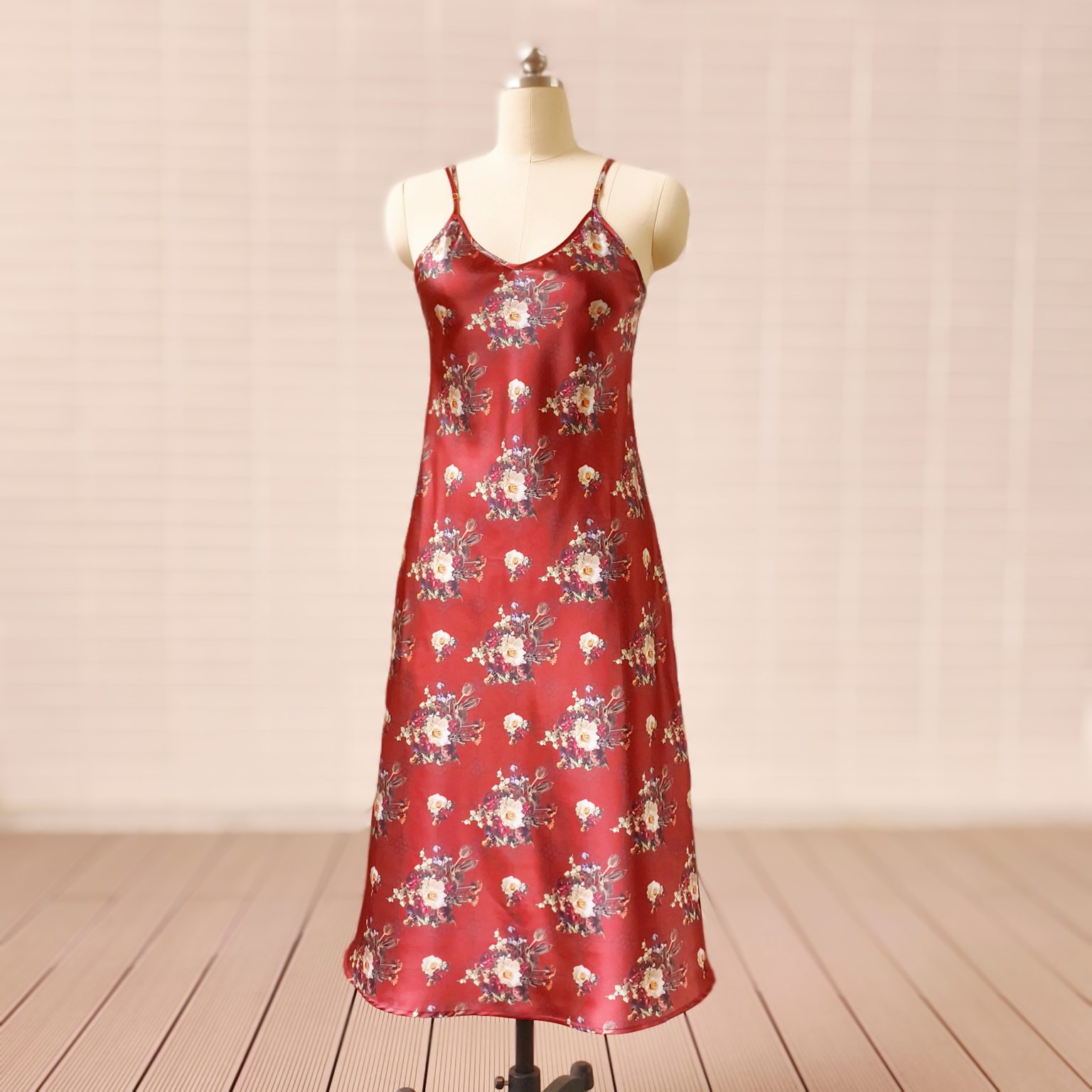
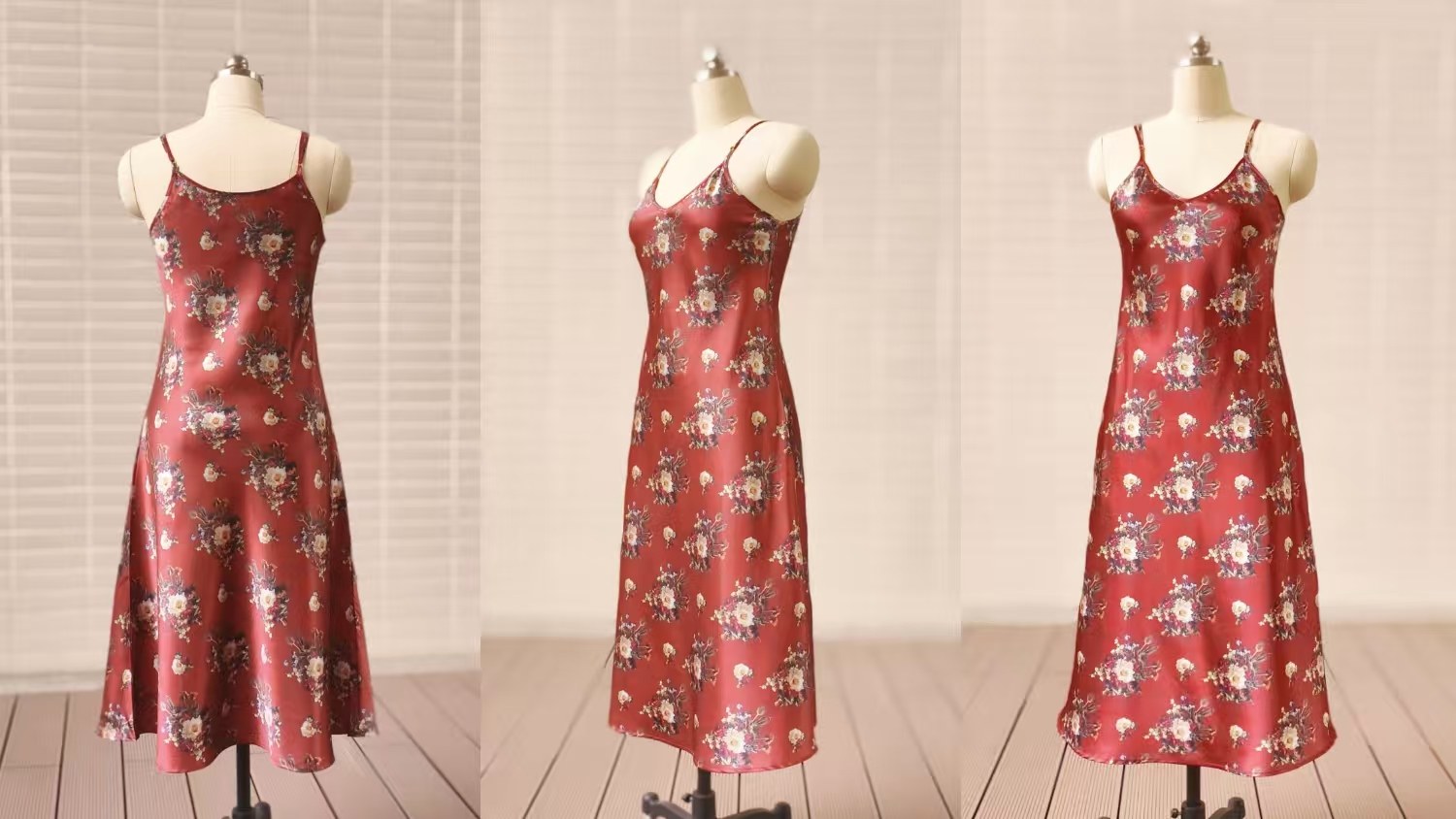
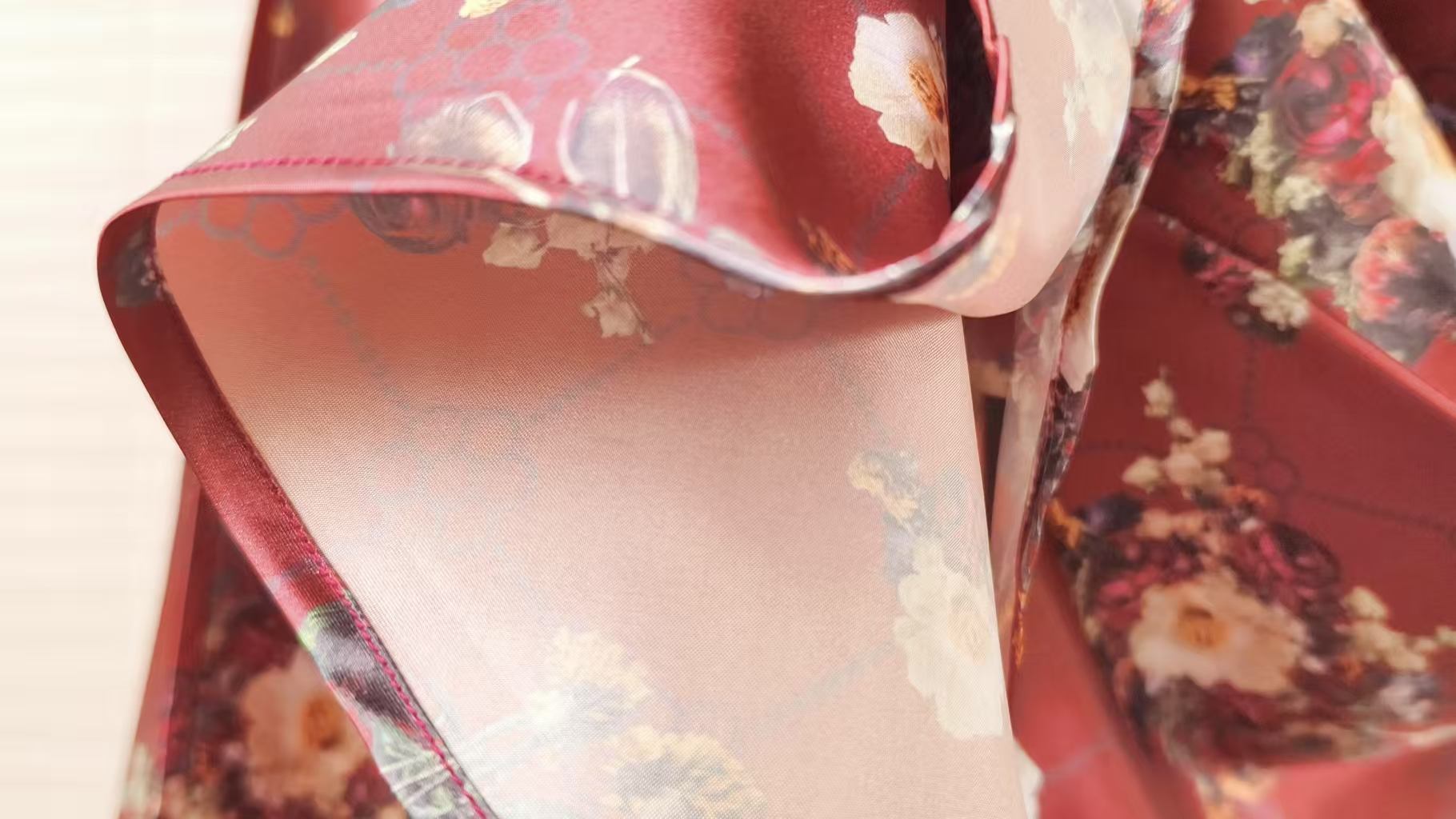
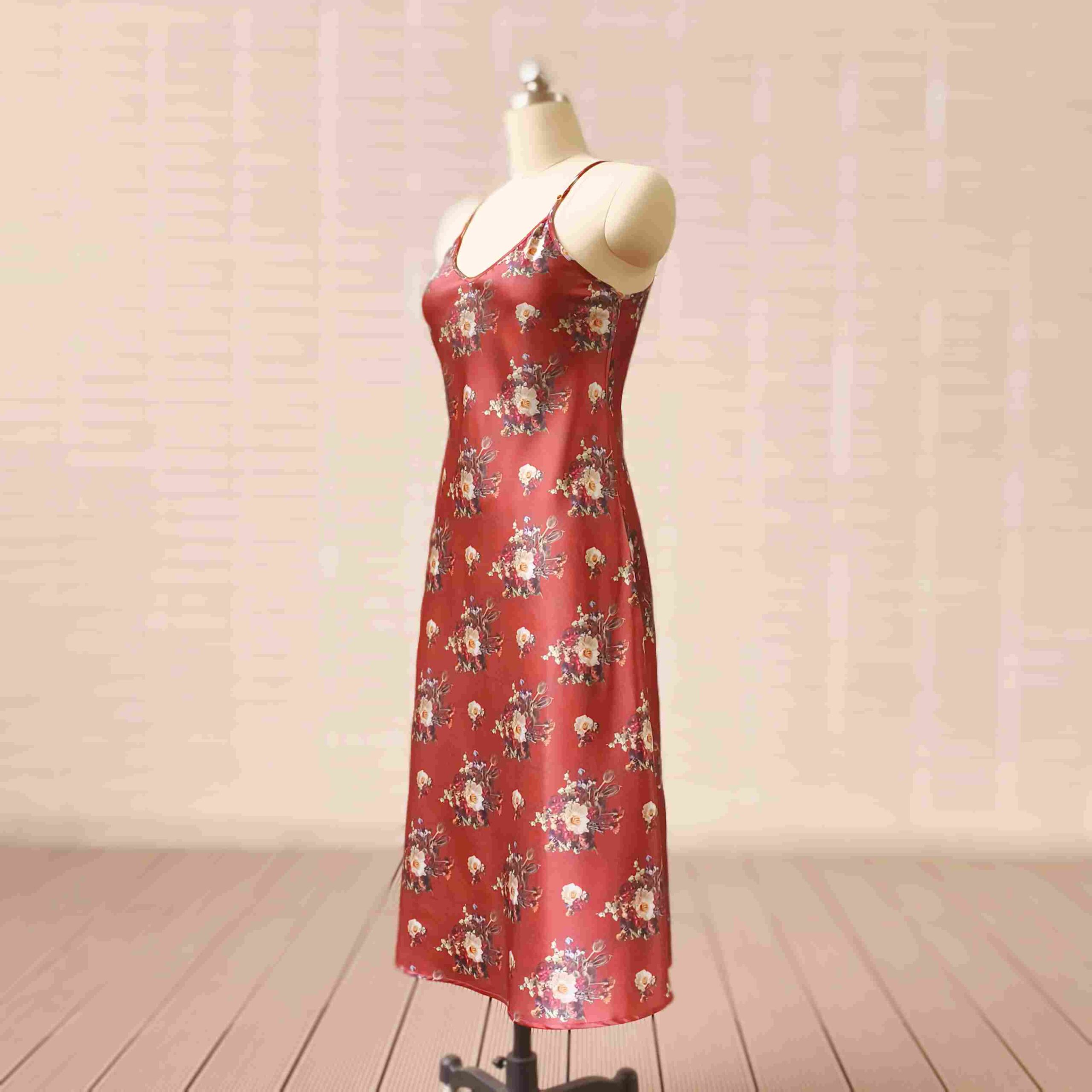
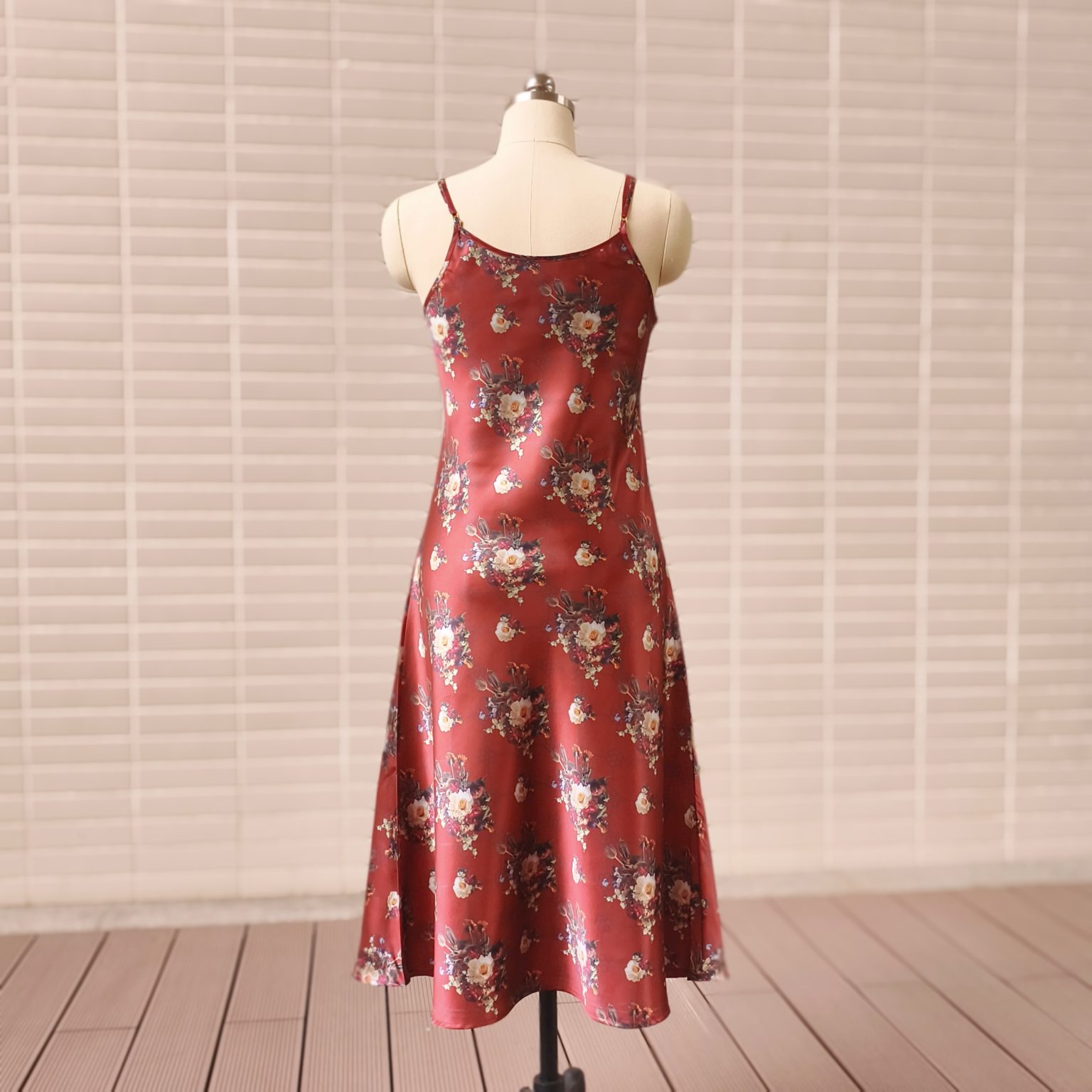
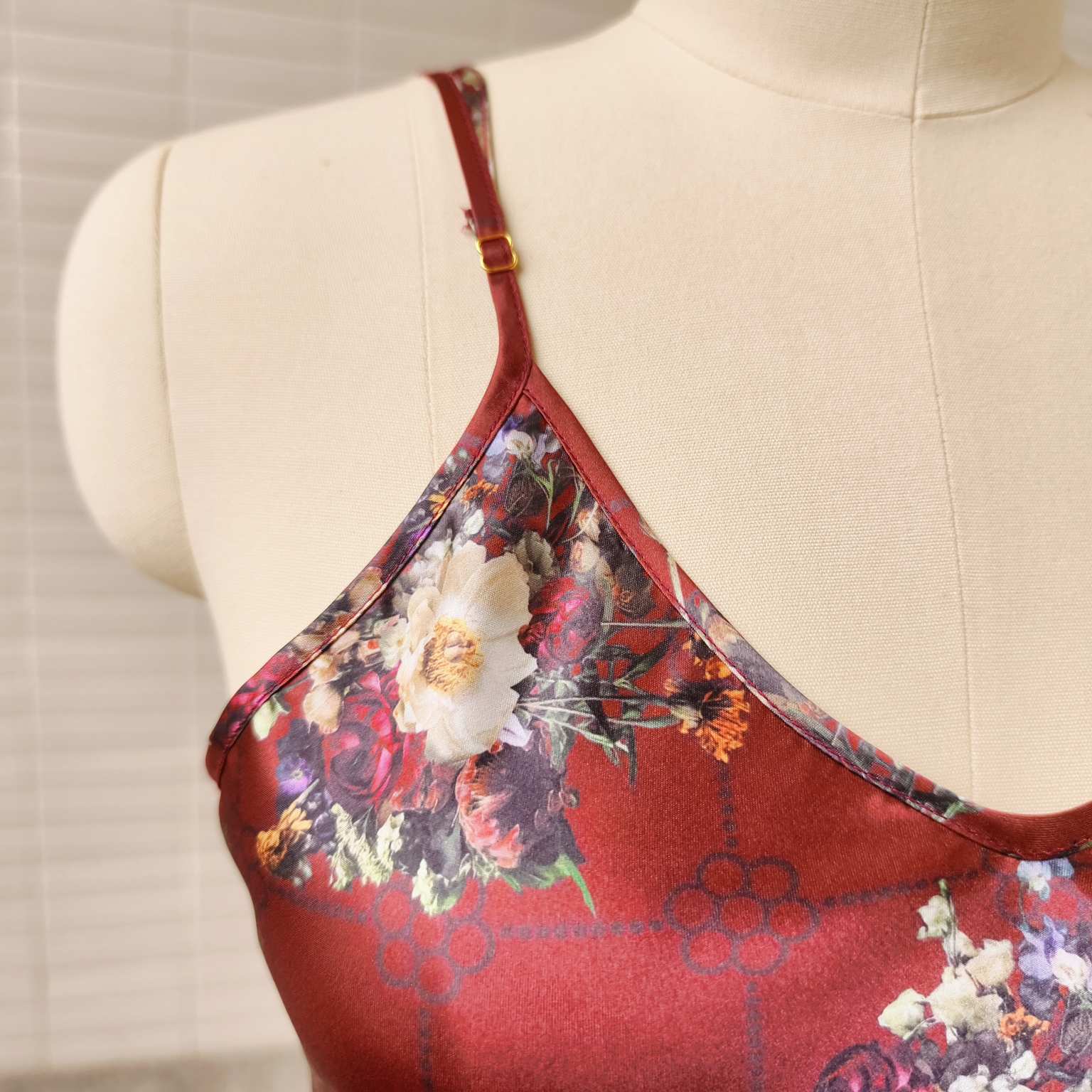
A printed silk slip dress needs more planning than a flat fabric print. Artwork must work on the body, not only on a digital file. Designers should consider front and back placement, side seam matching, motif scale, neckline position, hem balance, and how the print looks when the dress moves.
For digital printing, provide high-resolution artwork and color references. For repeat patterns, check the repeat size and direction. For placed prints, confirm the garment panel layout before production. A print sample or fabric strike-off can help confirm color before cutting.
If your project includes printed silk, review DOCSUN's custom printing process and fabric planning support. For more technical development, the fabric, color, and craftsmanship page can help your team compare options before sampling.
Develop the Pattern, Fit, and Size Range
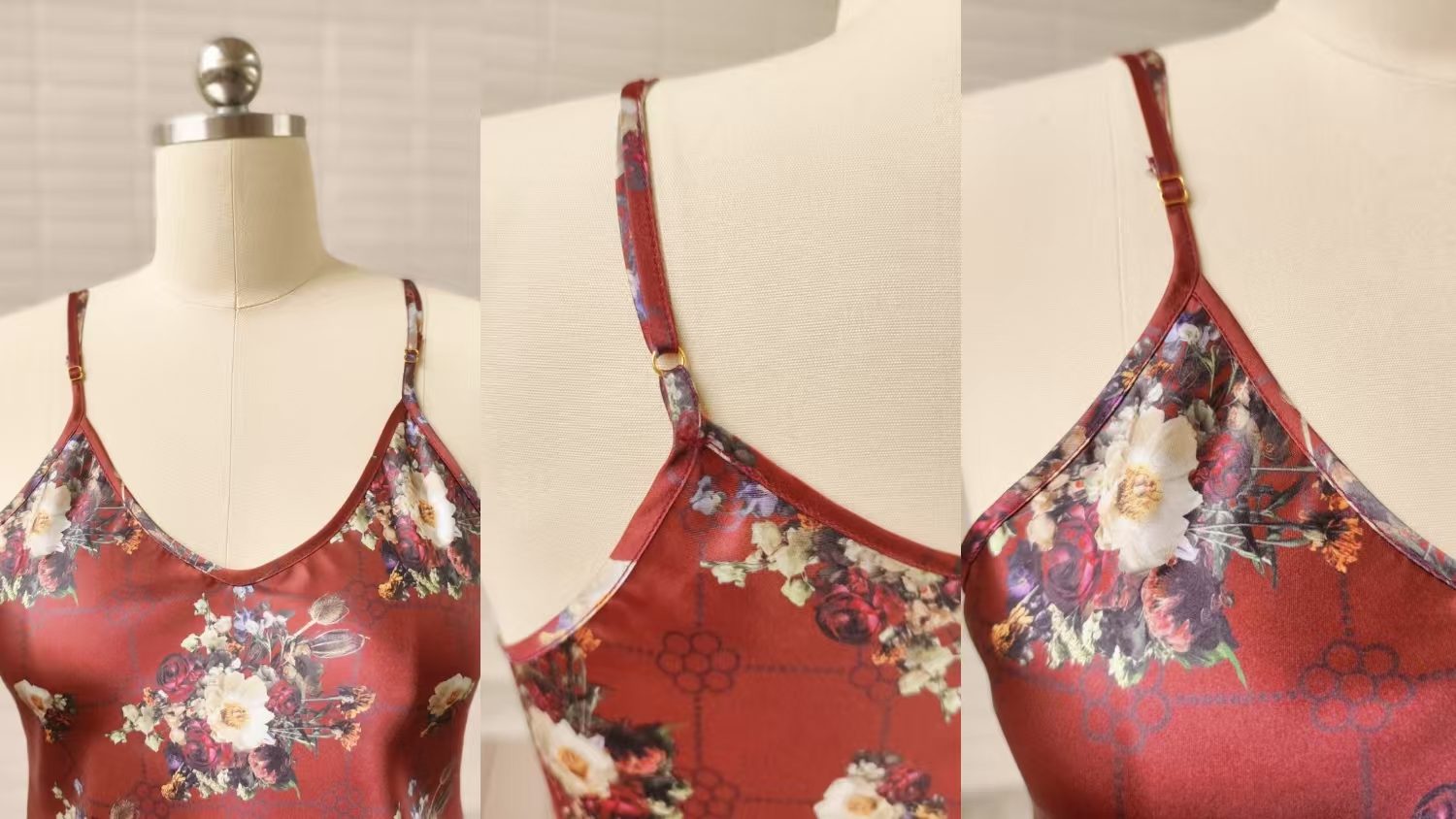
The fit of a slip dress is sensitive because the garment is close to the body and often made from fluid fabric. Small changes in neckline depth, strap length, bust shaping, waist ease, hip ease, side seam angle, and hem length can change the final look.
Brands should decide whether they need a bias-cut silhouette, straight cut, adjustable straps, lining, side slit, invisible zipper, elastic detail, or lace trim. Each choice affects production time, cost, and fit stability. For size grading, confirm the base size first, then build the size range from approved measurements.
Use Samples to Control Production Risk
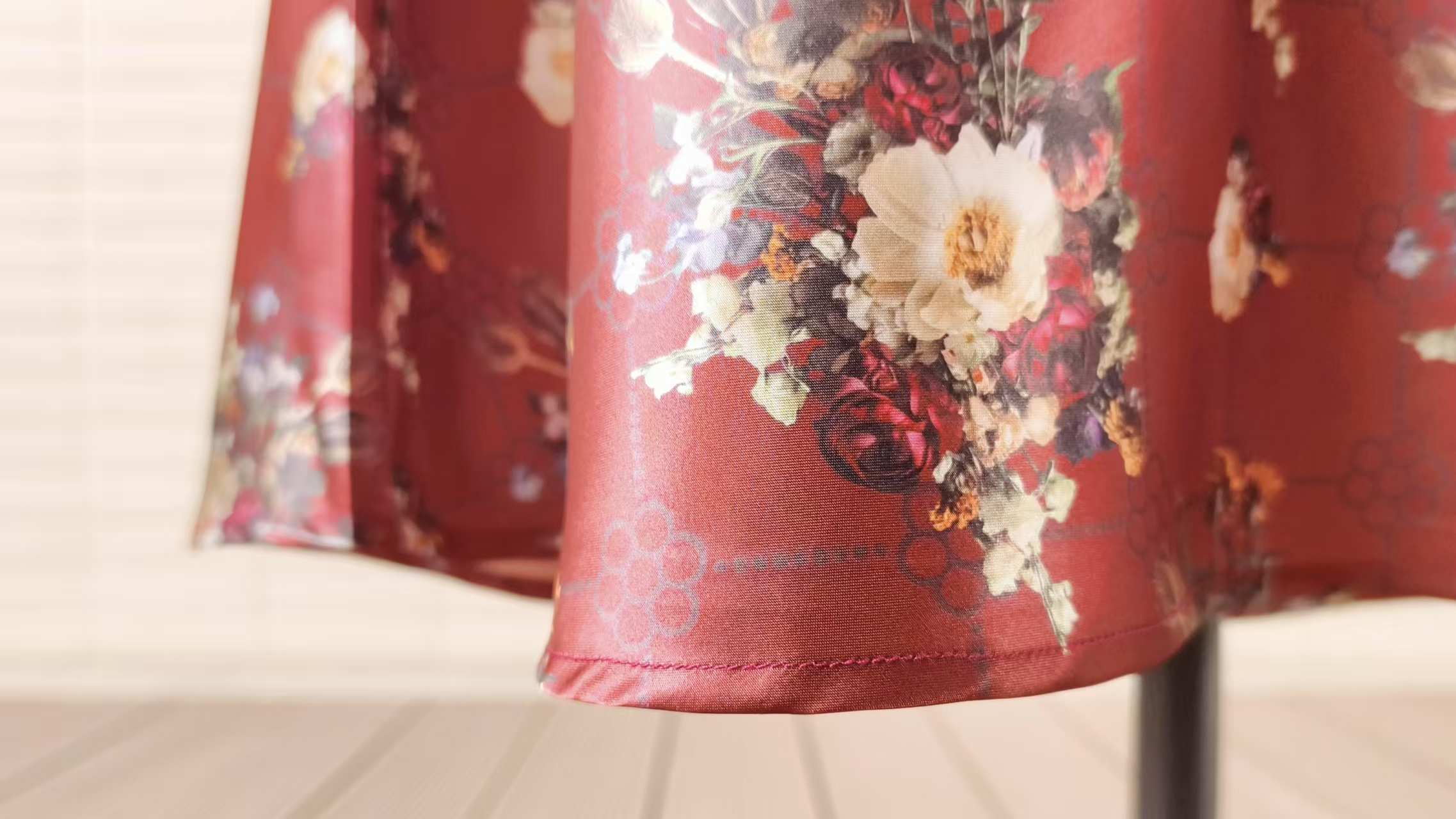
Sampling is the bridge between idea and production. A custom silk slip dress sample should confirm fabric, print, fit, seam quality, neckline shape, strap length, length balance, label placement, and packaging plan. It should also help the buyer identify whether the garment needs lining or fabric weight adjustment.
Approve samples in writing. If changes are needed, record them clearly with measurements, photos, comments, and version numbers. This is especially important for international production because a small misunderstanding can affect bulk cutting or sewing.
When the sample is approved, the manufacturer should keep the sample, artwork, color reference, measurement chart, and packaging notes as the production standard.
Finishing, Labels, and Packaging
Finishing choices affect the way a silk dress is perceived. Clean seams, stable straps, neat hems, and accurate labels are essential. For premium brands, custom woven labels, care labels, hangtags, garment bags, tissue paper, and gift boxes can all support the final presentation.
Packaging should match the product position. A silk slip dress sold as a luxury apparel item may need stronger presentation than a basic wholesale garment. For brand packaging options, see DOCSUN's custom packaging service.
Production Checklist for Buyers
| Area | What to confirm | Why it matters |
|---|---|---|
| Fabric | Fiber content, weave, weight, color, hand feel, opacity | Controls drape, comfort, coverage, and price level. |
| Artwork scale, placement, repeat direction, color reference | Prevents print imbalance after garment cutting. | |
| Pattern | Neckline, strap, bust, waist, hip, length, slit, lining | Determines fit, wearability, and brand style. |
| Sampling | Prototype, fit sample, print sample, revised sample if needed | Reduces risk before bulk production. |
| Branding | Woven label, care label, hangtag, packaging, barcode | Supports retail readiness and customer experience. |
| QC | Measurements, stains, print defects, seams, loose threads, packing | Protects brand reputation and repeat orders. |
Working with a Silk Apparel Manufacturer
A strong custom silk dress manufacturer should do more than sew the garment. The supplier should help evaluate fabric suitability, print feasibility, pattern details, sample comments, production risk, and packaging requirements. This is especially useful for emerging brands that need both technical support and flexible order planning.
For DOCSUN, silk product development is connected across scarves, apparel, home textiles, and accessories. This helps brands coordinate material selection, print direction, packaging, and collection-level consistency. If you are preparing a silk apparel project, you can contact us to discuss fabric cards, sample planning, and production details.
Frequently Asked Questions
What fabric is suitable for a custom silk slip dress?
Mulberry silk satin, silk charmeuse, and silk crepe satin are common options. The best choice depends on the desired luster, drape, opacity, print effect, and retail price level.
Can a silk slip dress be custom printed?
Yes. Custom printed silk slip dresses can use repeat artwork or placed prints. The artwork should be checked on the garment pattern so the motif scale and placement work on the body.
Do brands need a sample before bulk production?
Yes. A garment sample is strongly recommended because it confirms fabric, print, fit, sewing quality, labels, and packaging details before bulk cutting begins.
Should a silk slip dress be lined?
It depends on fabric weight, opacity, target price, and styling use. Some designs work unlined, while lighter or more premium garments may need lining for coverage and structure.
Can DOCSUN support private label silk dress production?
Yes. DOCSUN can support fabric selection, printing, sample development, labels, packaging, and production coordination for custom silk dress and related silk apparel projects.
Develop a Custom Silk Slip Dress for Your Brand
Send us your design idea, target fabric, print direction, size range, and packaging needs. Our team can help you evaluate fabric, sample details, production workflow, and brand presentation.
Contact DOCSUNFabric cards, color references, and craftsmanship options are available for project discussion.