Why This Case URL Should Become a Branded Scarf Guide
This page originally sits in the scarf case section, but it should not expose a customer identity or become a thin project recap. A stronger use is a case-based guide: keep the URL, mention the US project context lightly, and explain how branded silk scarf development works for buyers planning custom artwork and logo printing.
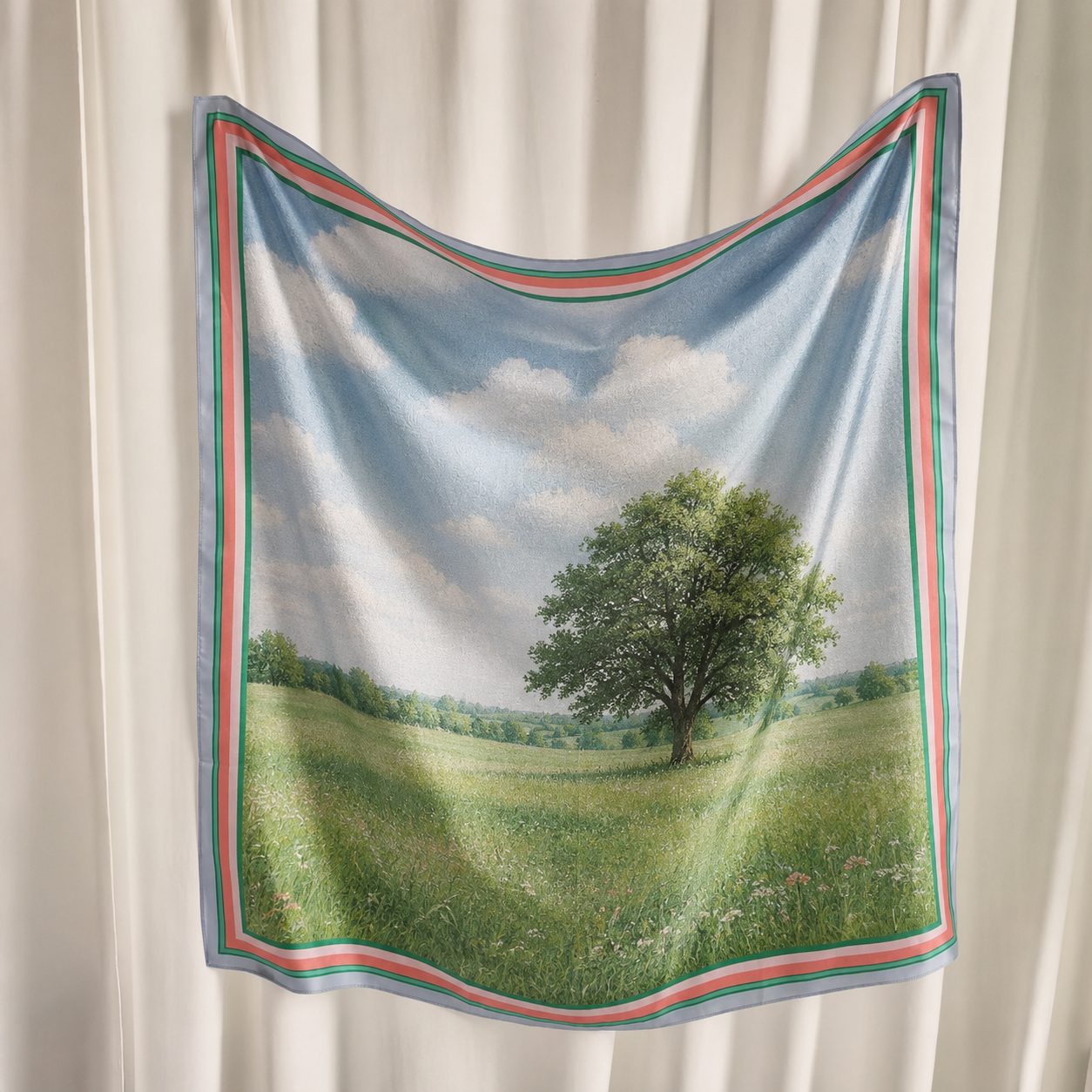
The article can support the main custom silk scarf page and the broader scarf custom cases section. The reusable value is not the customer name. It is the decision path: branded artwork, tree motif, green colorway, fabric, printing, edge, label, package, and sample approval.
Build the Design Around Branded Artwork, Not Only a Logo
A logo can be part of a silk scarf, but it should not be the only design idea. The best branded scarves still feel wearable when folded, tied, styled with clothing, or photographed for retail. Buyers should decide whether the logo appears as a corner mark, border detail, repeat pattern, hidden signature, central emblem, or hang tag connection.
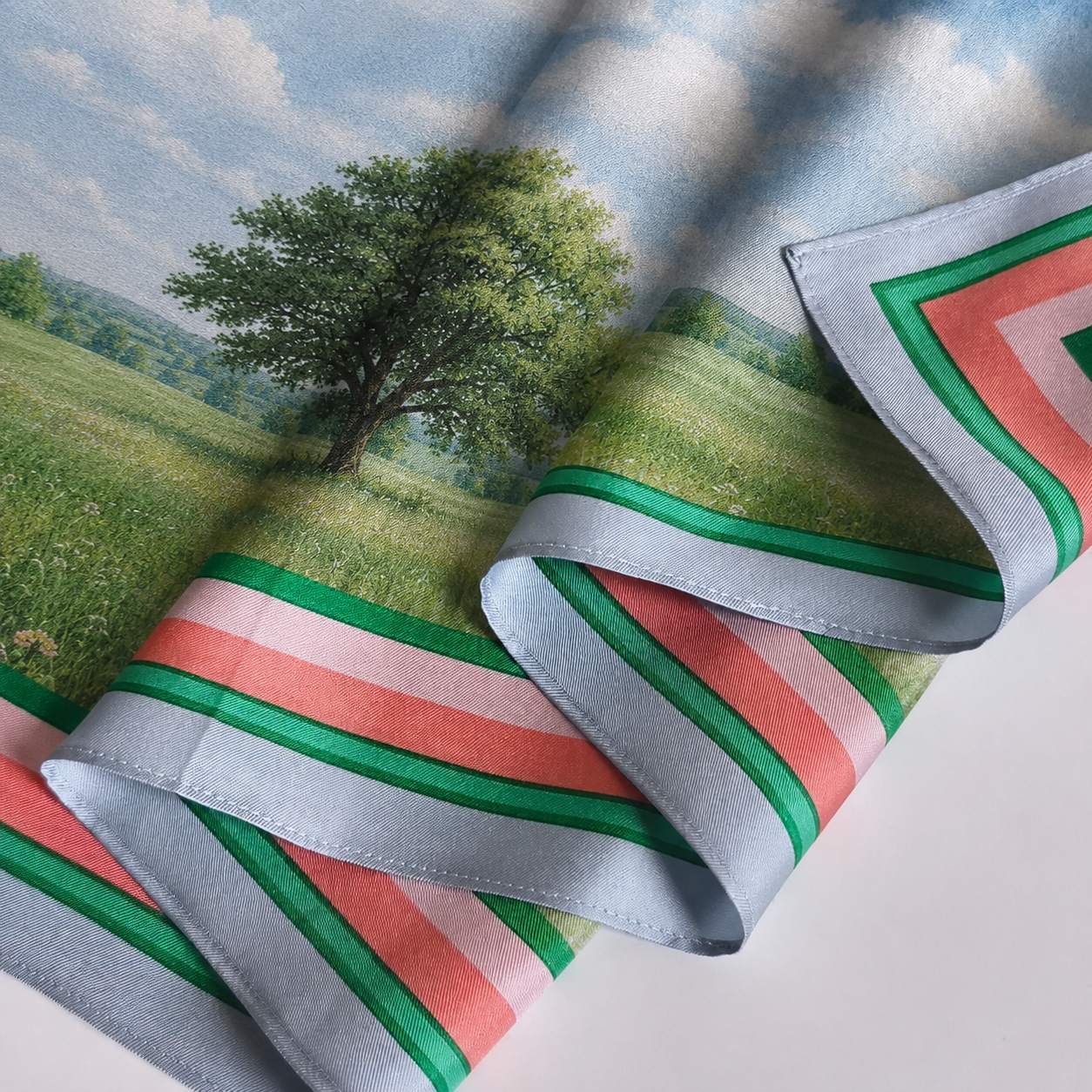
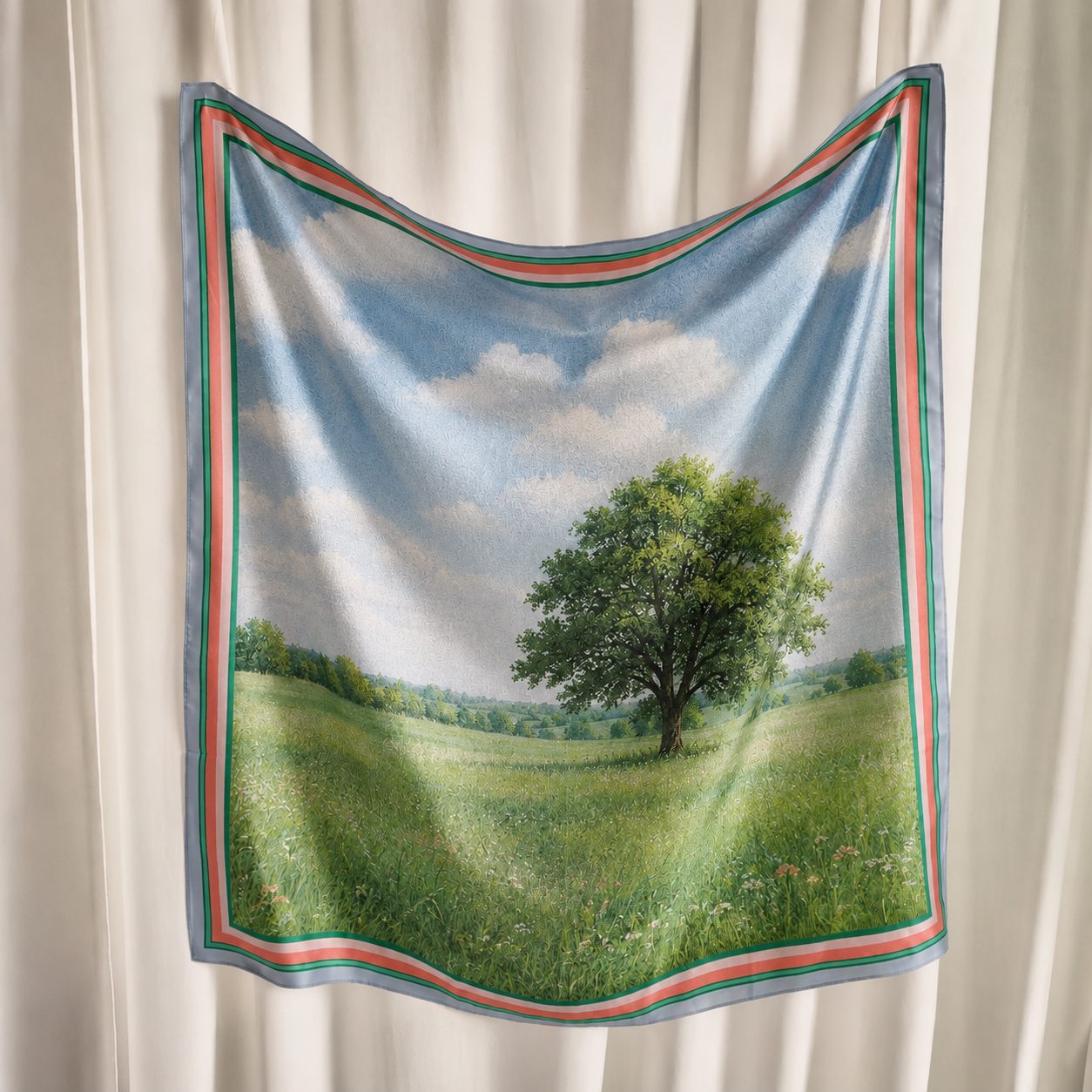
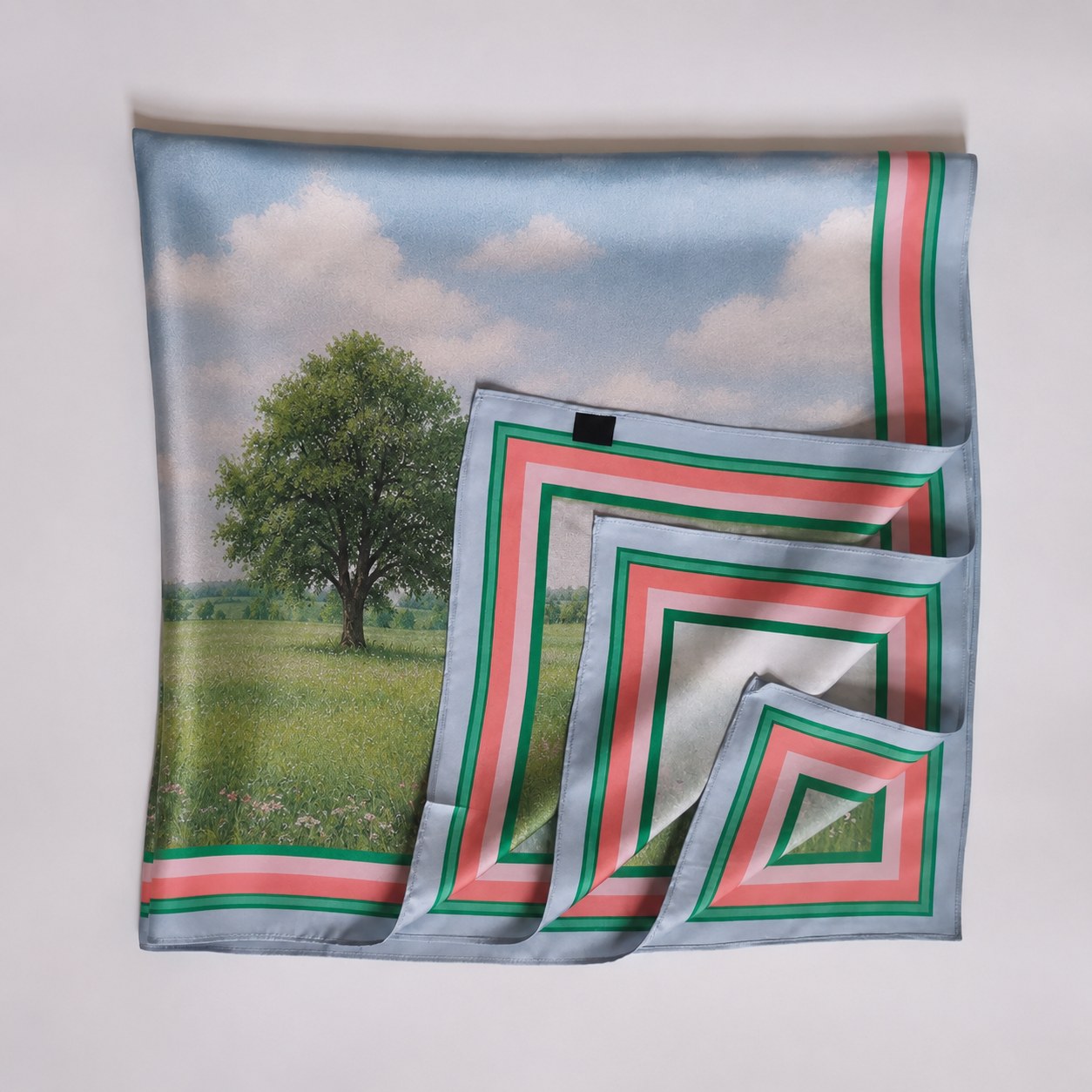
In this project direction, the tree motif and green colorway are stronger design signals than a logo alone. Tree artwork can communicate nature, growth, sustainability, heritage, or place-based storytelling. Green shades can feel calm and premium, but they need careful color control because silk sheen can make greens appear warmer, cooler, darker, or brighter than the digital file.
Choose Silk Fabric for Print Clarity and Styling
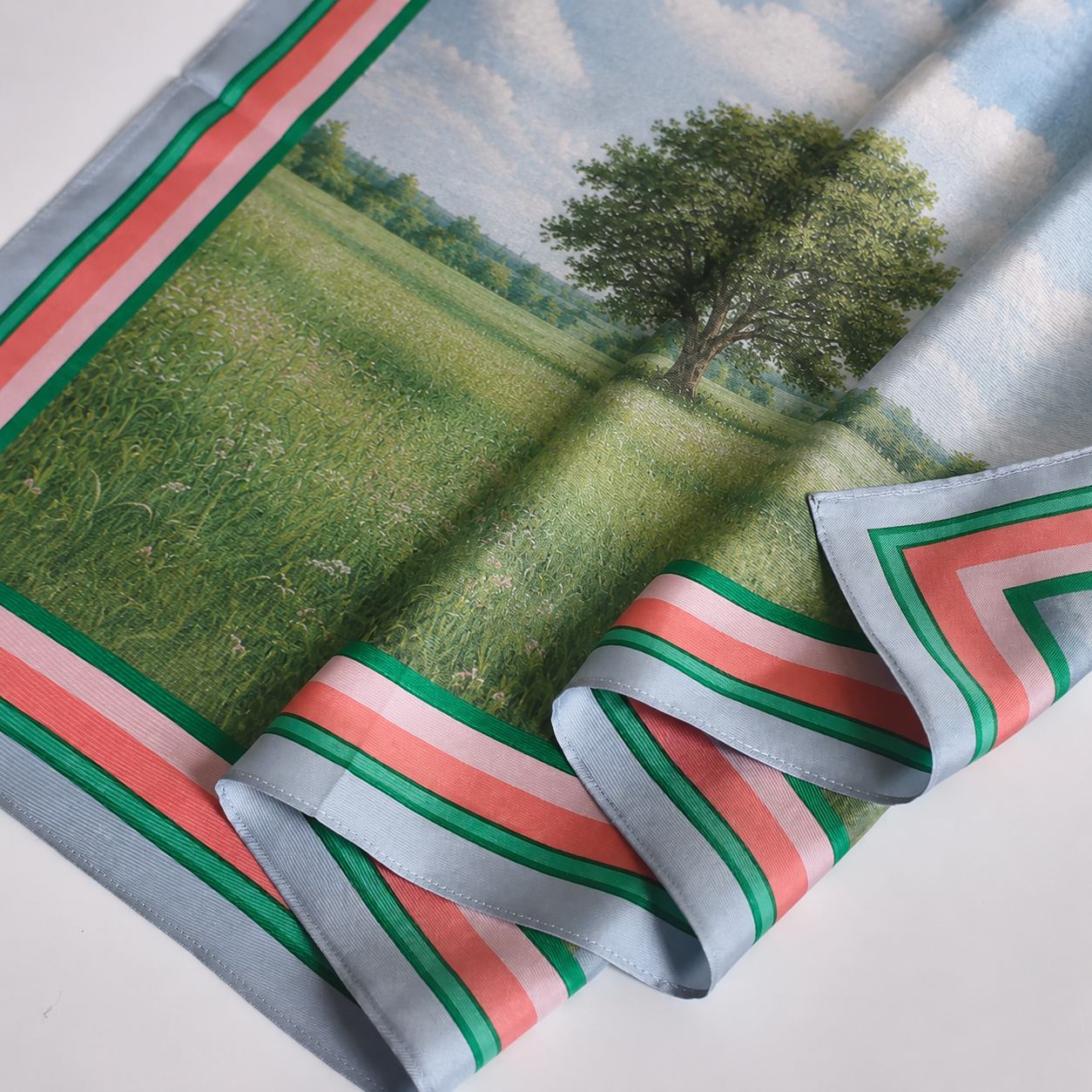
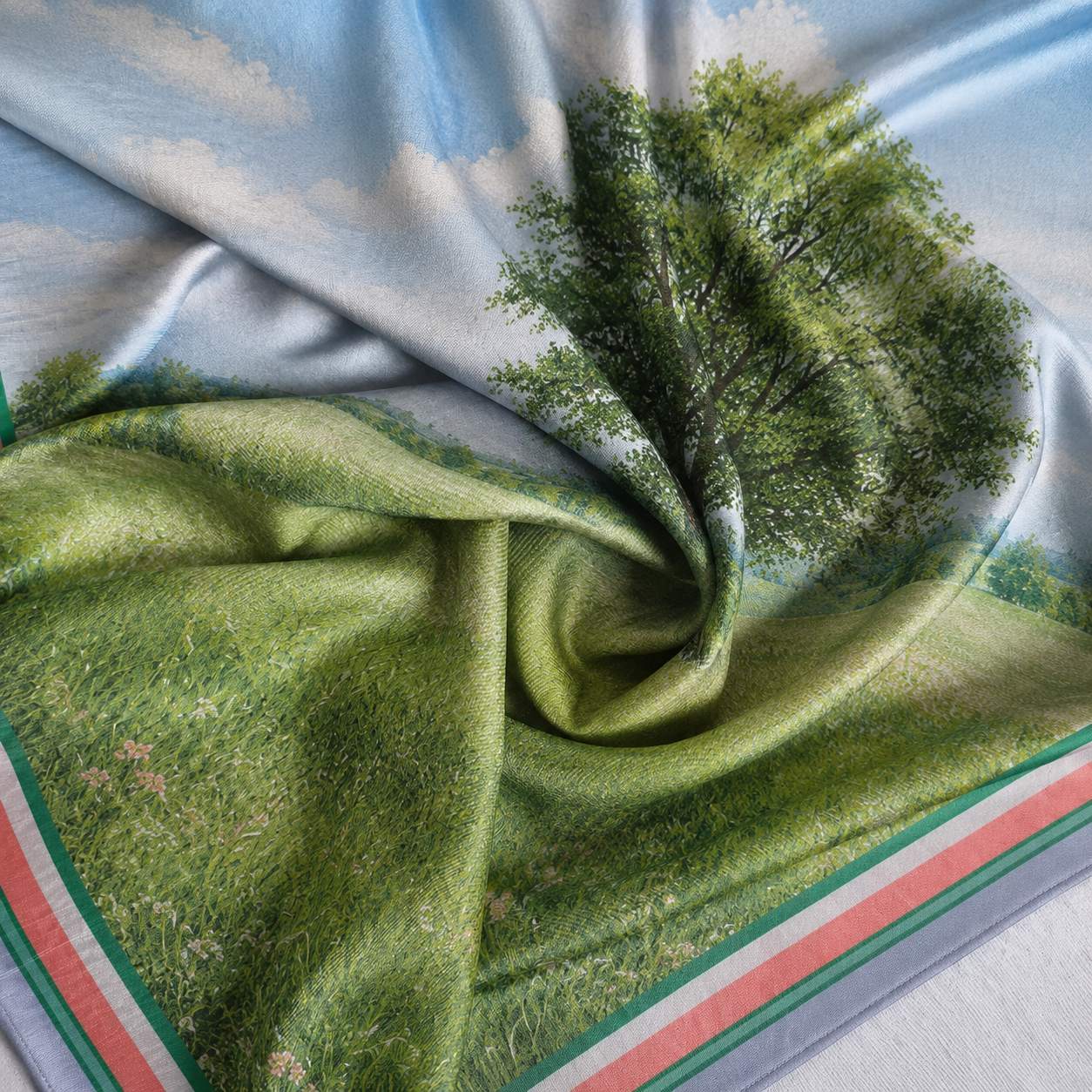
Fabric choice changes the final branded scarf. Silk twill is often chosen for premium square scarves because it gives structure, print clarity, and a refined diagonal texture. Silk satin creates a smoother and shinier surface for polished gift or fashion programs. Crepe de chine gives a softer matte hand feel. Silk chiffon is lighter and more translucent, which can work for airy styling but may soften color strength.
Buyers should compare fabric hand feel, shine, opacity, drape, print clarity, and target price through fabric, colors, and craftsmanship review before approving the sample. If the scarf uses a logo, border, or tree motif, fabric choice also affects how crisp those details appear.
Plan Digital Printing, Screen Printing, and Color Control
Digital printing is usually the practical route for detailed branded artwork, tree motifs, gradients, rich greens, and small-batch development. It gives buyers more flexibility during sampling and can reproduce fine details that would be difficult to simplify into a few flat colors.
Screen printing can still be considered when the artwork has fewer colors, the quantity is higher, or the brand wants a more traditional print route. The decision should depend on artwork complexity, color count, fabric, quantity, target price, and color requirements. DOCSUN's custom printing workflow can help buyers compare routes before production.
For branded scarves, color control should be physical. Pantone or brand color references are useful, but the real approval should happen on the selected silk fabric. The sample should be checked flat, folded, and styled because the visible color changes with silk shine, layering, and lighting.
Confirm Edges, Labels, Packaging, MOQ, and Samples
Edge finishing should match the brand position. Hand rolled hems can support premium square scarves. Machine hems are clean and practical for many branded wholesale orders. Baby hems can suit lighter scarf formats. The edge should be planned with the artwork margin so logos, borders, or tree motifs do not become too close to the hem.
Private-label details should be included before sampling. Buyers can plan woven labels, printed care labels, hang tags, barcode stickers, SKU labels, gift boxes, pouches, tissue wrap, insert cards, poly bags, and carton marks. DOCSUN's custom packaging support can connect scarf fold, label placement, package structure, and retail presentation.
Many branded silk scarf projects can start from 30 to 50 pieces, depending on fabric, size, print method, edge finish, label, and packaging. Sampling usually takes about 5 to 7 working days after artwork, fabric, color references, size, edge finish, label, and packaging details are confirmed. The sample should be approved as a complete product, not only as a printed fabric panel.
| Decision | What to confirm | Why it matters |
|---|---|---|
| Brand artwork | Logo placement, tree motif scale, border spacing, file resolution | Protects wearability and brand recognition |
| Color | Green shade, Pantone reference, physical silk proof | Controls brand color and batch variation risk |
| Production | Fabric, print method, edge finish, label placement | Turns the concept into a repeatable custom scarf |
| Presentation | Fold, care label, hang tag, gift box, pouch, carton marks | Completes the retail, gifting, or campaign experience |
FAQ
Should a branded silk scarf make the logo the main visual element?
Not always. A branded silk scarf can use a logo, but the stronger product often balances logo placement with artwork rhythm, motif scale, borders, color control, and wearability.
Which silk fabrics work for branded scarf printing?
Common options include silk twill, silk satin, crepe de chine, and silk chiffon. Buyers should compare print clarity, shine, drape, opacity, hand feel, and price before approving the sample.
Can digital printing and screen printing both be used?
Yes. Digital printing is useful for detailed artwork, gradients, and small-batch development. Screen printing may be considered for selected artwork, fewer colors, or larger quantities.
What should buyers prepare before sampling branded silk scarves?
Buyers should prepare logo or artwork files, color references, scarf size, silk fabric preference, print method, edge finish, label plan, packaging needs, quantity, and delivery timeline.
Develop a Branded Silk Scarf With DOCSUN
Send your logo or artwork, green or brand color references, target silk fabric, scarf size, print method preference, edge finish, label plan, packaging needs, and quantity. DOCSUN can review the details and prepare a sample-ready custom scarf plan.
Start a Branded Scarf Project