
Why Cultural Patterns Work on Silk Scarves
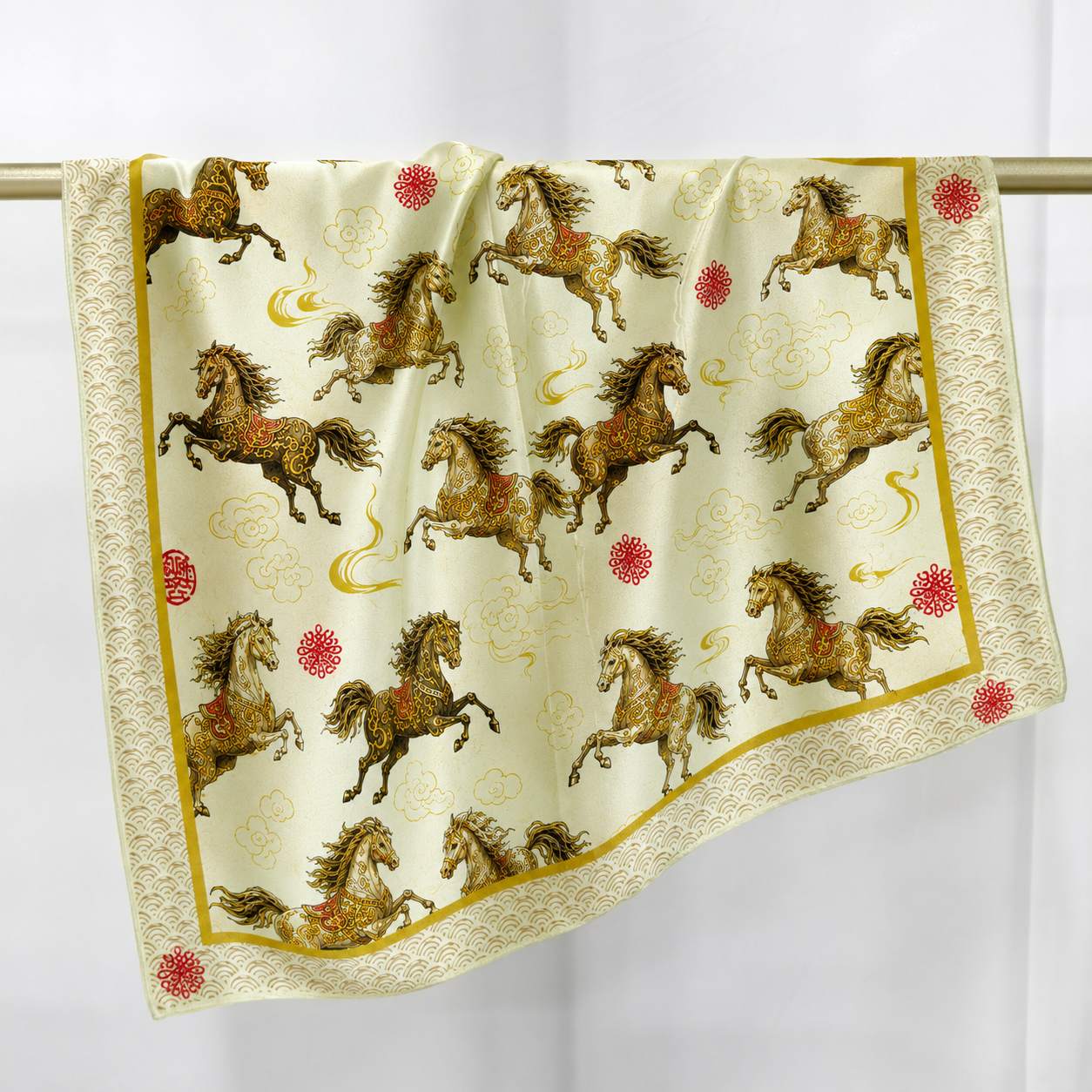
A silk scarf is a natural canvas for cultural patterns because it combines visual storytelling with daily wear. Unlike a framed artwork, a scarf moves with the body, folds into new compositions, and can be styled in many ways. This makes it useful for brands, museums, hotels, cultural institutions, regional gifts, and limited-edition fashion projects.
Cultural pattern design should not simply copy a traditional motif onto fabric. The design needs to be interpreted for scarf scale, border balance, color rhythm, folding behavior, and customer use. A strong scarf design can preserve symbolic meaning while still feeling modern and easy to style.
For brands, this kind of scarf can also support customer relationship building. A meaningful design can become a gift, a collectible, a souvenir, or a conversation piece that reflects the client's identity and story.
Choose Symbols with Clear Meaning
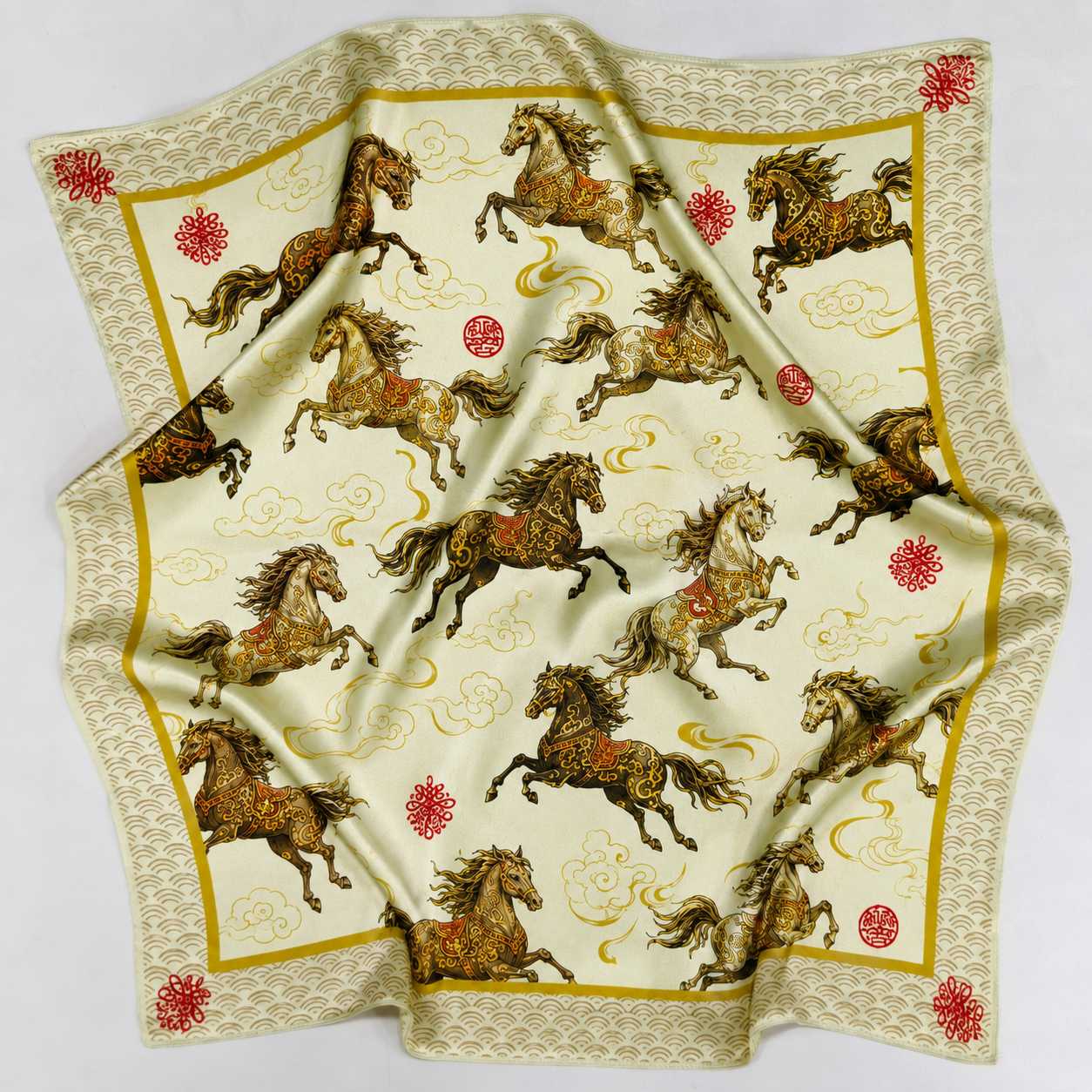
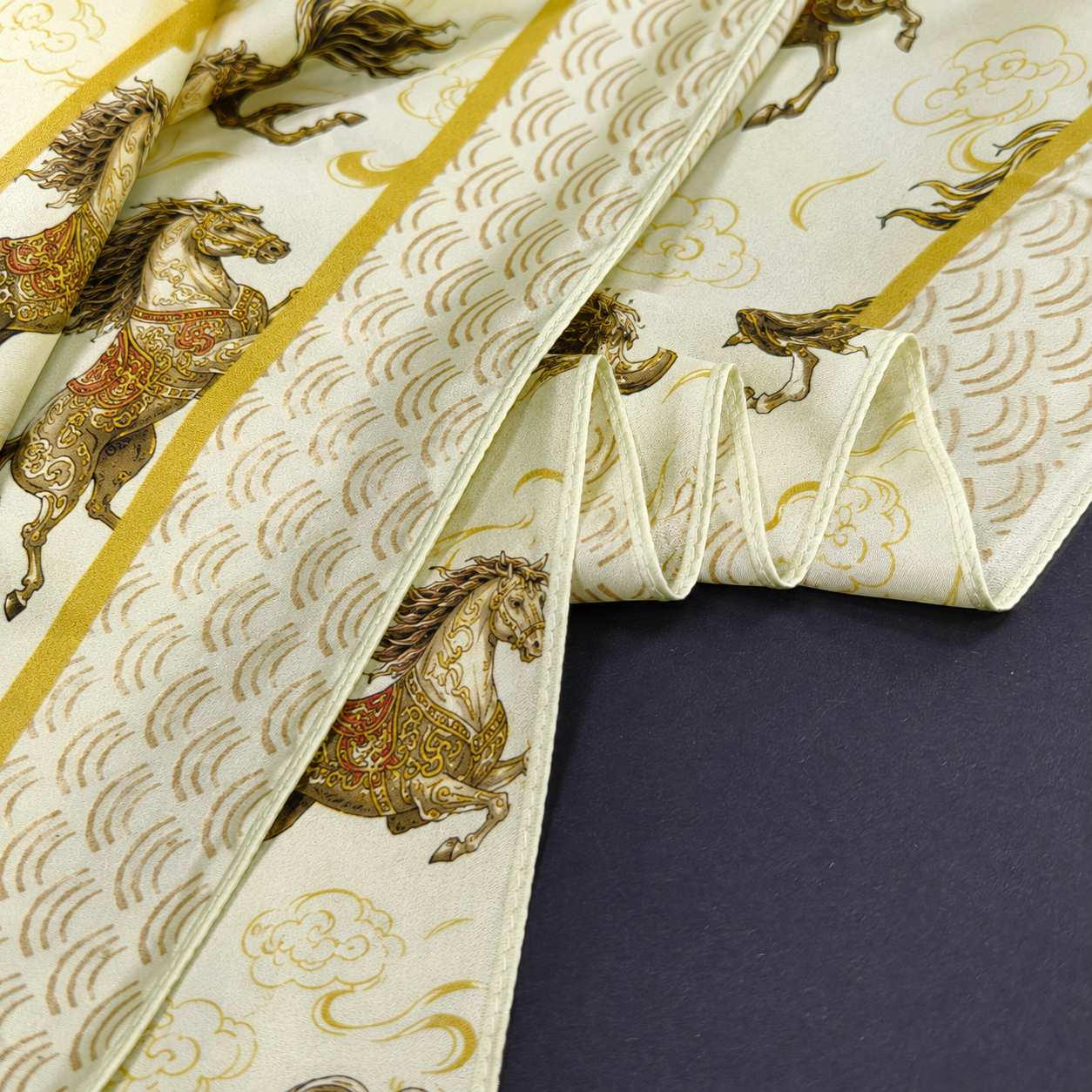
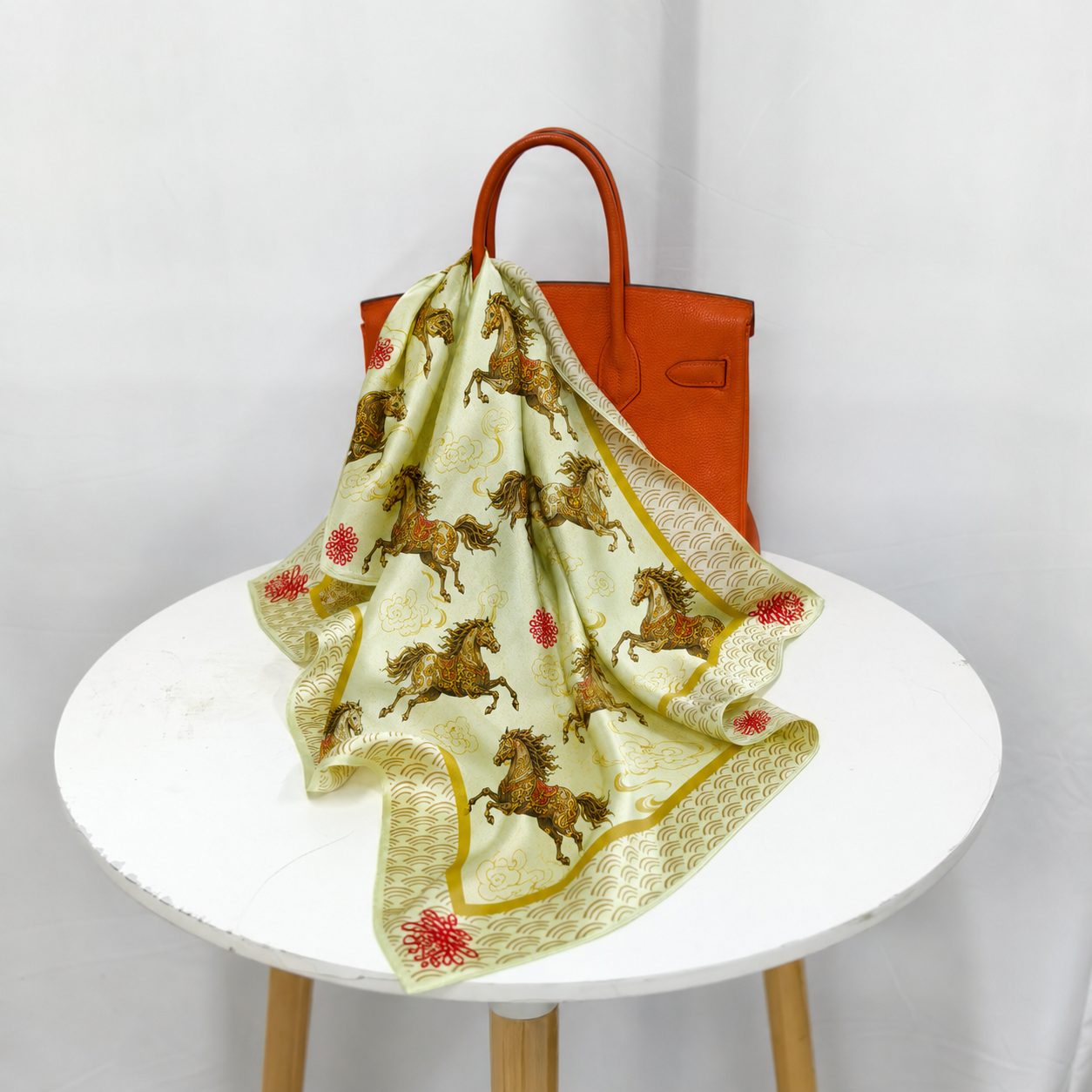
Symbols should be chosen with purpose. Horses may communicate movement, strength, elegance, or freedom. Cloud patterns can suggest blessing, continuity, travel, and atmosphere. Gold backgrounds can create a sense of warmth, celebration, and premium value. Borders can frame the design and give the scarf a more finished visual system.
When adapting cultural references, avoid overcrowding the scarf. A few well-controlled symbols usually work better than many small motifs fighting for attention. The center, corners, border, and negative space should each have a role.
Build Color, Border, and Visual Hierarchy
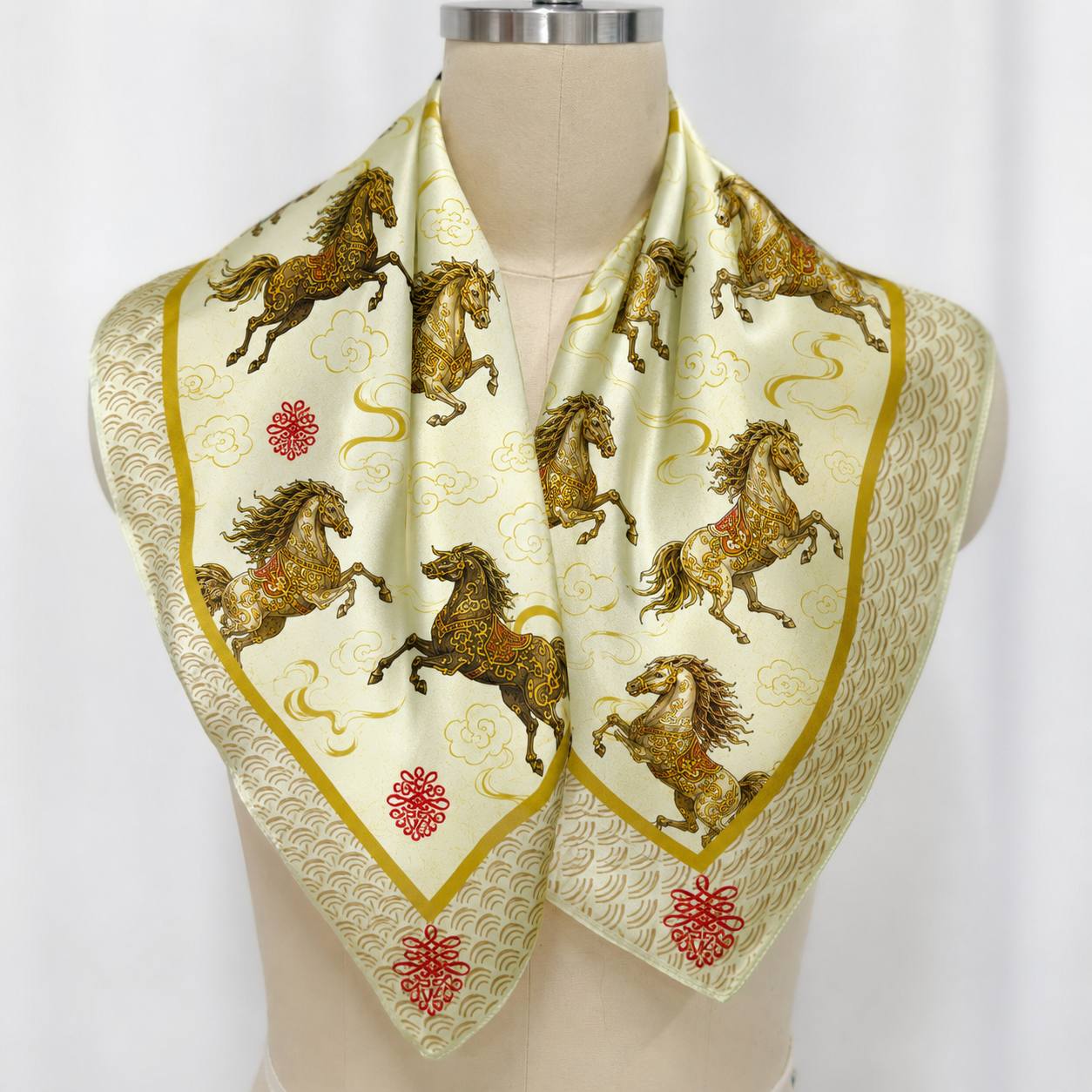
Color is one of the fastest ways to communicate mood. Gold can feel ceremonial and luxurious, while deeper contrast colors can make motifs more visible. For cultural pattern scarves, color planning should consider both the full flat layout and the way the scarf appears when tied.
Borders are especially important. They help frame the composition, protect the artwork visually from the edge, and create a more recognizable premium scarf structure. Corners can hold small symbolic details, logos, or secondary motifs, but they should not become too crowded.
If the scarf includes a brand logo or client mark, it should be integrated into the design language. A logo can appear in a corner, within the border, or as a subtle signature. It should not interrupt the cultural pattern unless the design intentionally requires a strong branded statement.
Match Fabric and Printing to the Artwork
Silk fabric and printing method determine whether the final scarf can express the original artwork. Silk twill is a strong option for detailed square scarves because it has body, print clarity, and a premium hand feel. Silk satin can create a more luminous surface. The right choice depends on the brand's desired texture, drape, and price level.
For detailed cultural motifs, digital printing is often suitable because it can reproduce fine lines, gradients, and rich color. The artwork should be checked for scale, border alignment, color references, and print precision before production. A sample or strike-off is important because screen color and printed silk color are never exactly the same.
For technical planning, review DOCSUN's custom printing service and fabric, color, and craftsmanship options before confirming the final design.
Finishing, Labels, and Packaging
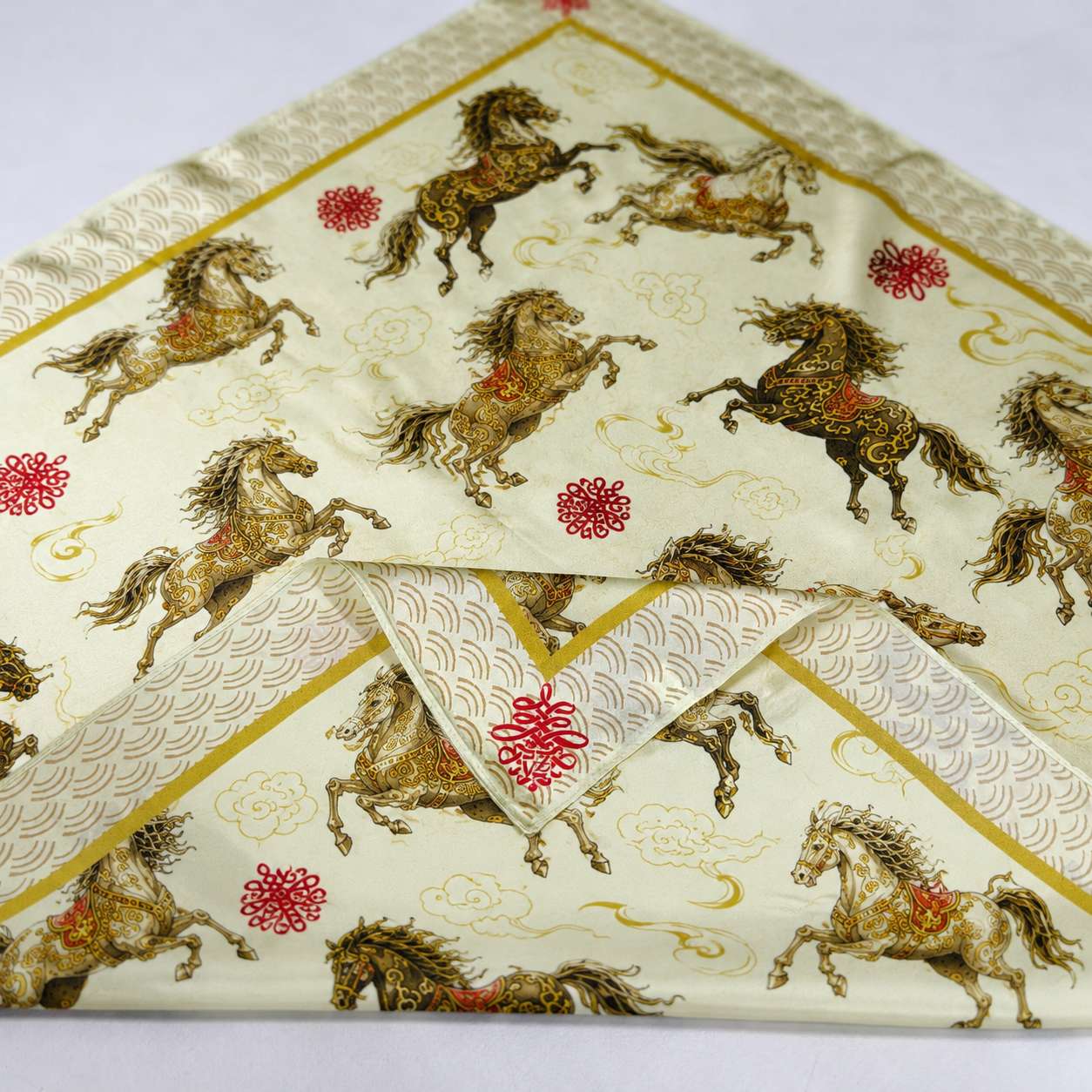
Finishing should match the meaning and value of the design. Hand-rolled edges can support a luxury or collectible scarf. Machine hemming may be suitable when the project needs a cleaner cost structure, faster delivery, or a specific functional look.
Labels should not weaken the design. For cultural pattern scarves, many brands prefer discreet woven labels, small corner labels, or packaging-led branding. If the scarf is a gift or client relationship item, the box, care card, and tissue paper can carry important brand messages without overloading the scarf surface.
Packaging options can include tissue paper, envelope-style boxes, rigid gift boxes, care cards, thank-you cards, and custom sleeves. DOCSUN can support these choices through custom packaging.
Brand Checklist Before Sampling
| Area | What to confirm | Why it matters |
|---|---|---|
| Cultural reference | Main symbols, meaning, region, and usage context | Prevents decorative design from losing its story. |
| Artwork structure | Center, border, corners, negative space, logo position | Keeps the scarf readable when flat, folded, and worn. |
| Color | Primary colors, contrast, gold tone, print references | Controls mood, visibility, and brand alignment. |
| Fabric | Silk twill, satin, weight, opacity, hand feel | Affects drape, print detail, and perceived value. |
| Finishing | Hand-rolled edge, machine hem, label placement | Connects craftsmanship with price positioning. |
| Packaging | Gift box, care card, tissue, sleeve, brand message | Completes the cultural gift or retail experience. |
Frequently Asked Questions
What makes cultural patterns suitable for silk scarves?
Silk scarves provide a flexible visual canvas. Cultural motifs can be shown through color, borders, symbols, and composition while remaining wearable and giftable.
How should brands choose cultural symbols for scarf design?
Brands should choose symbols with clear meaning, simplify them for scarf scale, and check that the final design feels respectful, readable, and wearable.
Which silk fabric works well for detailed cultural patterns?
Silk twill is often suitable for detailed square scarves because it offers print clarity, body, and a premium hand feel. Satin may be chosen when a shinier surface is desired.
Should cultural pattern scarves use hand-rolled edges?
Hand-rolled edges are recommended for premium, collectible, and gift-oriented scarves. Machine hemming can also work when the project needs faster delivery or a different cost structure.
Can DOCSUN help turn regional or cultural ideas into scarf artwork?
Yes. DOCSUN can help review cultural references, artwork structure, fabric choice, printing, finishing, and packaging so the scarf is production-ready.
Develop a Cultural Pattern Silk Scarf
Send us your symbols, color direction, target market, artwork references, fabric preference, and packaging idea. DOCSUN can help translate the concept into a production-ready custom silk scarf.
Contact DOCSUNFabric cards, color references, craftsmanship cards, and packaging options are available for project discussion.