Double-Sided Printed Silk Scarves: A Guide to Custom Design, Production, and Client Collaboration
A double-sided printed silk scarf is more than a beautiful accessory. It is a production decision that affects artwork planning, color control, edge finishing, packaging, sampling, and the relationship between a brand and its scarf manufacturer.
What Double-Sided Printing Means
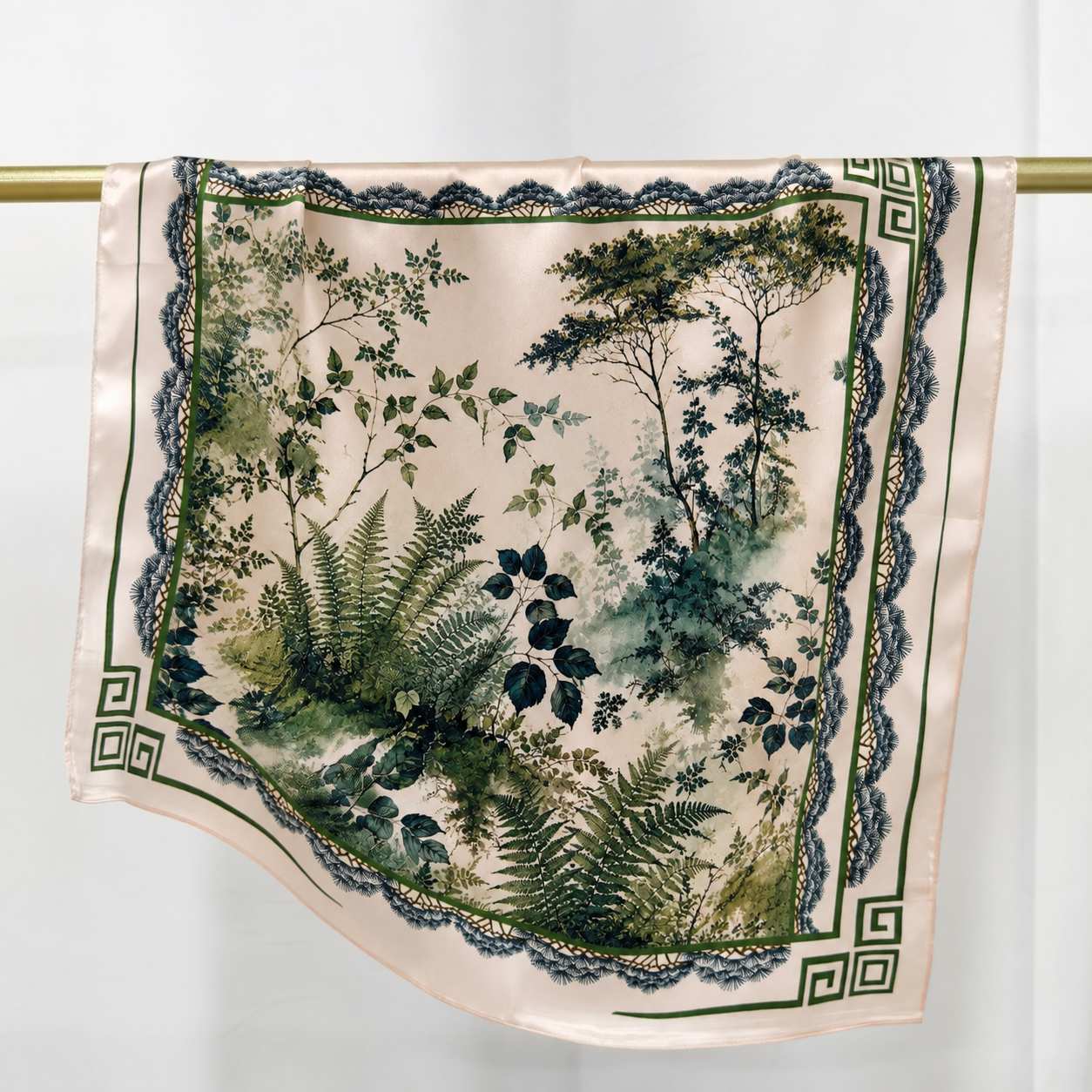
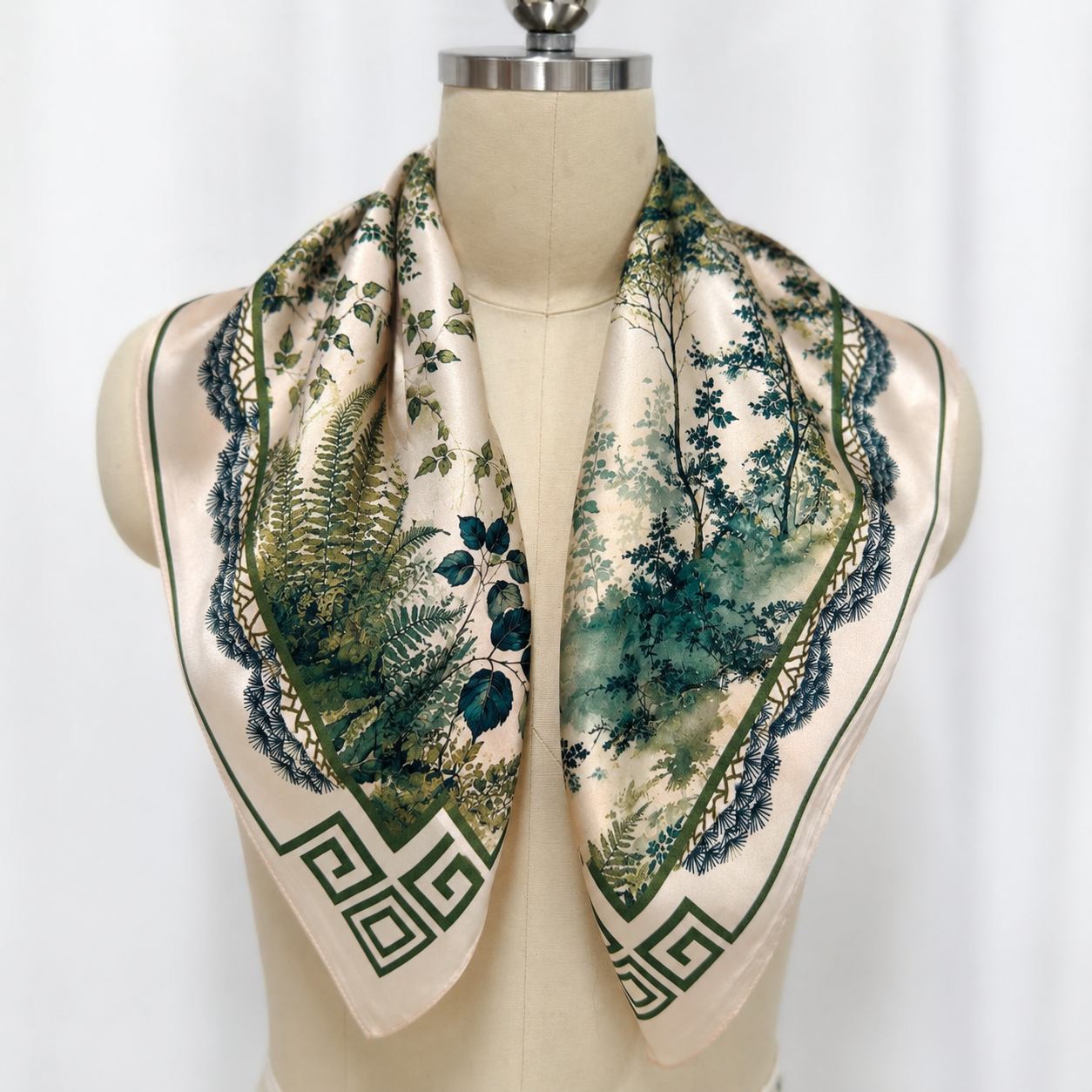
A double-sided printed silk scarf is designed so that both the front and reverse side carry a strong visual effect. This is different from a standard single-sided scarf, where the reverse side may appear lighter, softer, or less defined. For luxury scarf brands, the reverse side matters because scarves are rarely worn flat. They twist, fold, drape, and move.
For a 100% mulberry silk scarf, double-sided printing can increase perceived value because customers see consistent artwork from more angles. This is especially important for square scarves, neck scarves, bandanas, silk shawls, and designer scarves used in styling photos.
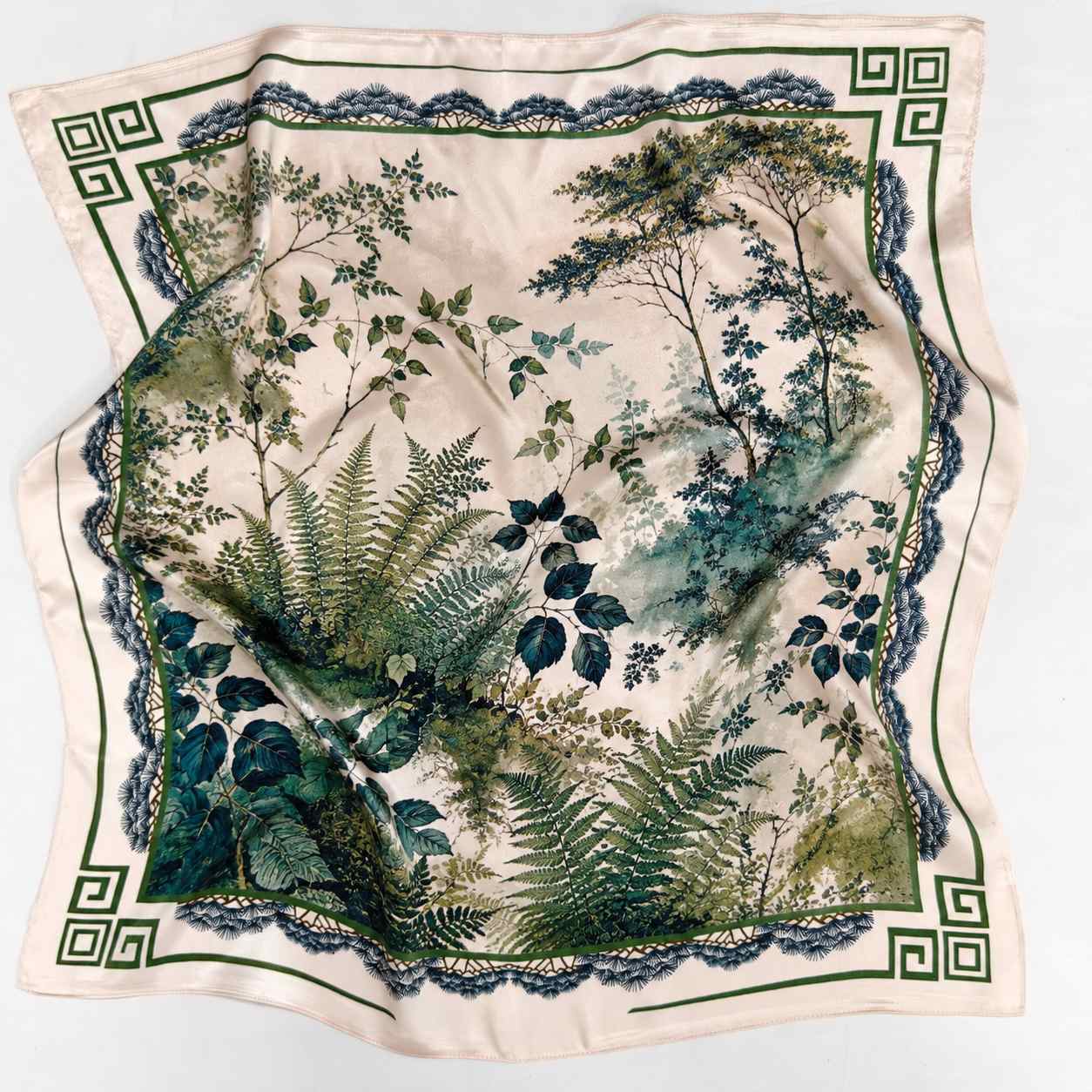
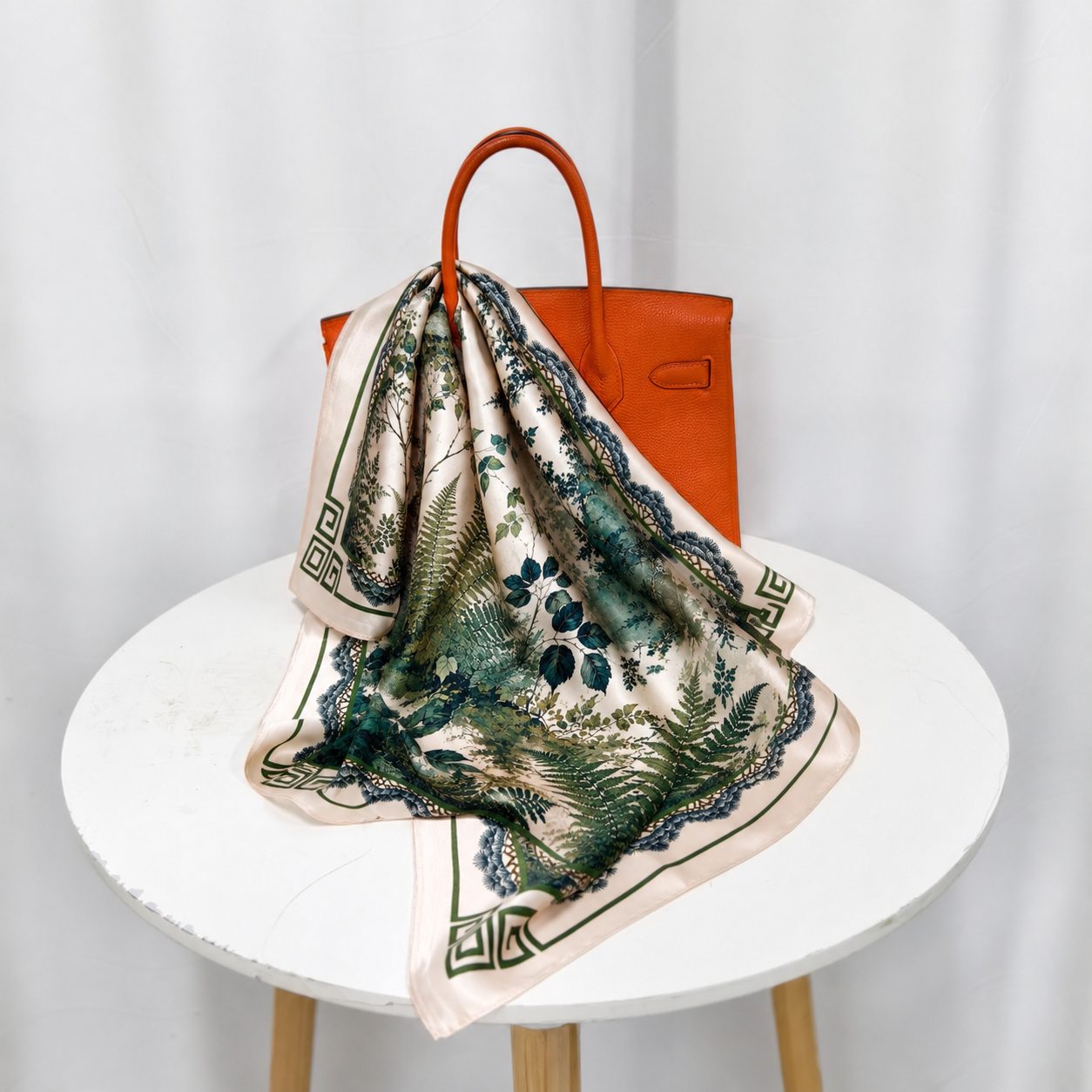
The original Portuguese custom scarf case showed how a landscape artwork, border detail, machine hemming, and custom packaging could be combined into one refined project. In this guide, we use that case as a starting point and turn it into a practical framework for brands planning custom double-sided printed silk scarves.
When Brands Should Choose Double-Sided Scarves
Double-sided printing is not necessary for every scarf. It is most useful when the scarf will be styled in ways that expose both sides, or when the brand wants a premium product with stronger tactile and visual value. For a scarf manufacturer, the first step is not simply accepting artwork. It is understanding how the scarf will be used.
A museum shop may need the artwork to feel collectible. A fashion brand may need both sides to photograph beautifully. A corporate client may need logo visibility from multiple angles. A boutique may need a higher retail price supported by better finishing and packaging. These different goals affect fabric choice, print method, sample review, and production tolerance.
Fabric, Size, and Artwork Decisions
The best fabric depends on how the brand wants the scarf to feel. Silk twill offers a structured luxury hand and is common for printed square scarves. Silk satin has shine and fluid drape. Silk habotai is lighter and softer. Some brands prefer a lighter silk for airy styling, while others prefer a denser silk for stronger retail presence.
Common sizes include 53 x 53 cm, 65 x 65 cm, 70 x 70 cm, 90 x 90 cm, long narrow scarf sizes, and custom dimensions. The original Portuguese project used a 70 x 70 cm format, a practical size for neck styling, handbag styling, and gift collections.
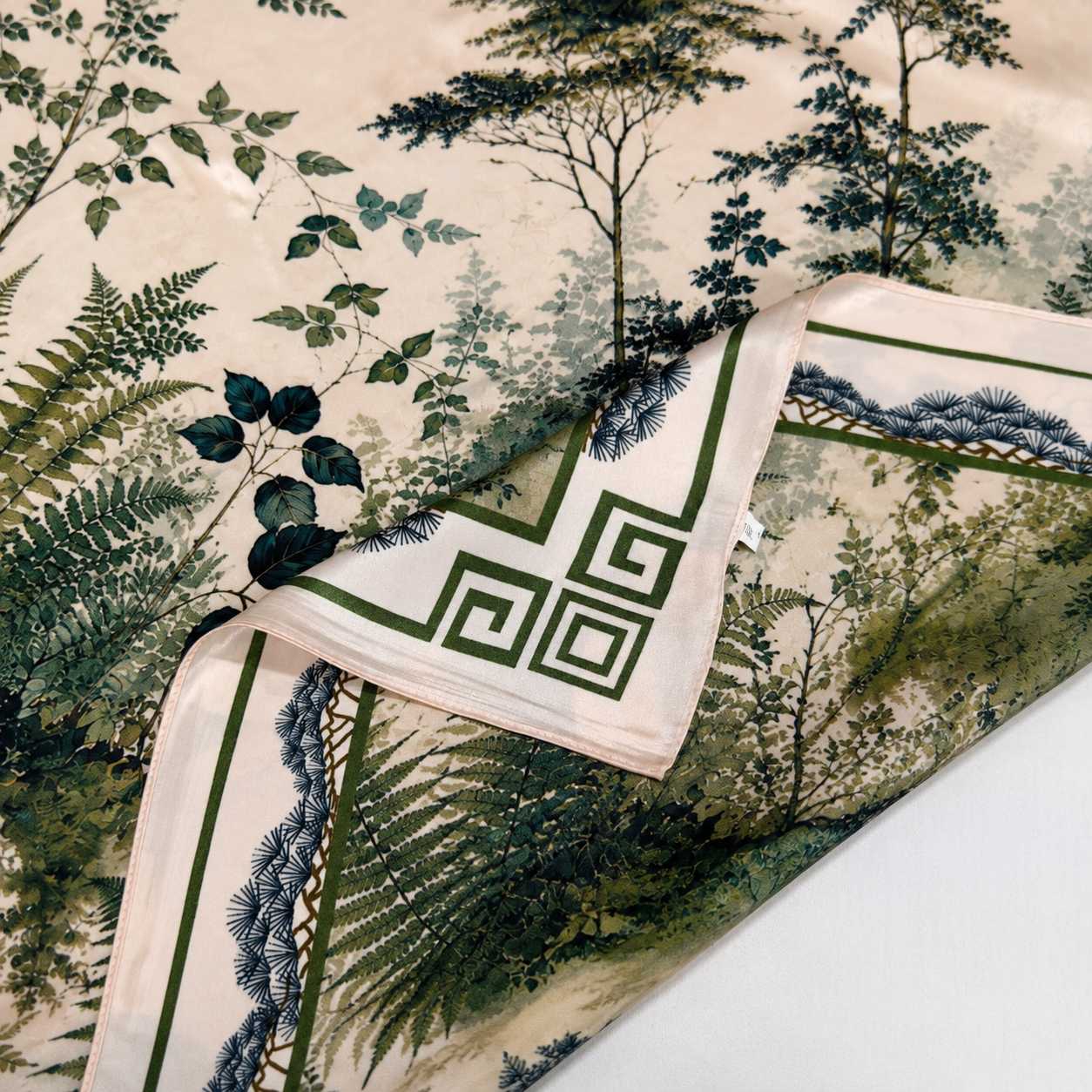
Artwork should be prepared with enough resolution, clear border logic, and a plan for how the scarf looks after folding. A centered motif may look strong when flat but disappear when tied. A border may look elegant when folded diagonally but awkward if the repeat is not aligned. This is why custom printing and artwork checking should happen together.
| Decision | What to confirm | Why it matters |
|---|---|---|
| Fabric | Silk twill, satin, habotai, or other 100% mulberry silk fabric | Changes drape, shine, opacity, color depth, and target price. |
| Size | Square, long scarf, bandana, shawl, or custom dimension | Affects styling use, artwork layout, packaging, and retail positioning. |
| Artwork | Resolution, border, repeat, motif scale, and color target | Prevents loss of important details when folded or tied. |
| Reverse side | Color strength, alignment expectation, and final hand feel | Defines whether the scarf feels truly double-sided or only lightly penetrated. |
Three design structures: same artwork, color variation, or different artwork
Double-sided scarf design can be planned in three main ways: same artwork and same color on both sides, same artwork with different colors on each side, or completely different artwork and different colors on each side. These choices affect color saturation, fabric selection, cost, and quality-control standards.
Compared with single-sided printed silk scarves, double-sided printed silk scarves must be planned more carefully because color penetration can influence the final effect. When the design uses the same artwork and same color on both sides, the color saturation can become stronger. For this option, we recommend using 100% mulberry silk greige fabric of at least 14 momme.
For same artwork with different colors, or different artwork with different colors, we recommend using high-quality silk of at least 16 momme. A denser, higher-quality silk base helps reduce front-and-back color interference and supports a cleaner double-sided result.
If the project uses polyester-based fabric instead of silk, the fabric quality becomes even more important. A high-density, high-quality woven base is necessary. Low-quality satin can cause serious front-and-back color bleeding because of coarse yarns and a loose weaving structure, making it difficult to achieve a clean double-sided scarf.
| Double-sided design type | Recommended fabric base | Production note |
|---|---|---|
| Same artwork, same color | At least 14 momme 100% mulberry silk | Color saturation may be stronger than single-sided printing, so sample approval is important. |
| Same artwork, different colors | At least 16 momme high-quality silk | Higher-density silk helps reduce color interference between the two sides. |
| Different artwork, different colors | At least 16 momme high-quality silk | Artwork direction, color blocks, borders, and reverse-side control must be checked carefully. |
| Polyester-based fabric | High-density, high-quality woven base | Avoid low-quality satin because loose construction and coarse yarns can cause serious color bleeding. |
Production Workflow and Quality Control
A reliable double-sided silk scarf workflow usually starts with a project brief. The brand should provide artwork, target size, fabric preference, color references, quantity, edge finish, label needs, packaging requirements, and launch deadline. If the brand does not know the best fabric yet, fabric cards and sample options should be reviewed first.
DOCSUN can support brands through fabric and craftsmanship selection, print testing, edge finishing, packaging, and bulk production. During sample approval, we recommend checking the scarf under natural light and indoor light, then reviewing the front side, reverse side, border, corners, hand feel, and sewing.
Machine hemming or hand-rolled edges?
For standard custom silk scarf projects, machine hemming can be practical because it gives consistent edges and supports larger production runs. However, for high-quality double-sided printed silk scarves, we usually recommend hand-rolled edges because the scarf is positioned as a premium accessory and both sides are visible during styling.
For the same reason, woven labels and hand-sewn labels are often a better match than low-cost label applications. They make the product feel more intentional and help the finished scarf support a higher retail price. Brands should also plan custom packaging at the sample stage, including box structure, care card, tissue paper, label placement, and gift presentation.
Customer Relationship and Communication
Double-sided scarf production is a relationship-driven project. The manufacturer needs to understand not only the artwork, but also the customer's market, retail price, brand tone, packaging plan, and tolerance for color variation. A strong customer relationship reduces rework because both sides make decisions with the same goal in mind.
For the Portuguese custom scarf case, the product was not only about printing a landscape image. It also involved translating cultural artwork into a wearable luxury accessory, choosing a scarf size, selecting 100% mulberry silk, confirming machine hemming, and preparing custom packaging. This is the type of communication that turns a one-time order into a repeatable brand program.
We recommend that buyers share the following information early:
Packaging and Retail Presentation
Packaging is part of the product experience. A double-sided printed silk scarf already offers higher visual value, but the final impression is shaped by folding, tissue paper, box choice, labels, hang tags, care cards, and gift readiness. For boutiques, museum shops, and corporate gifts, packaging can decide whether the scarf feels like a premium accessory or a simple textile item.
Brands can connect double-sided printing with custom packaging, private labels, care instructions, and repeatable SKU documentation. If you are building a scarf line, it is worth planning packaging at the same time as the sample rather than after bulk production.
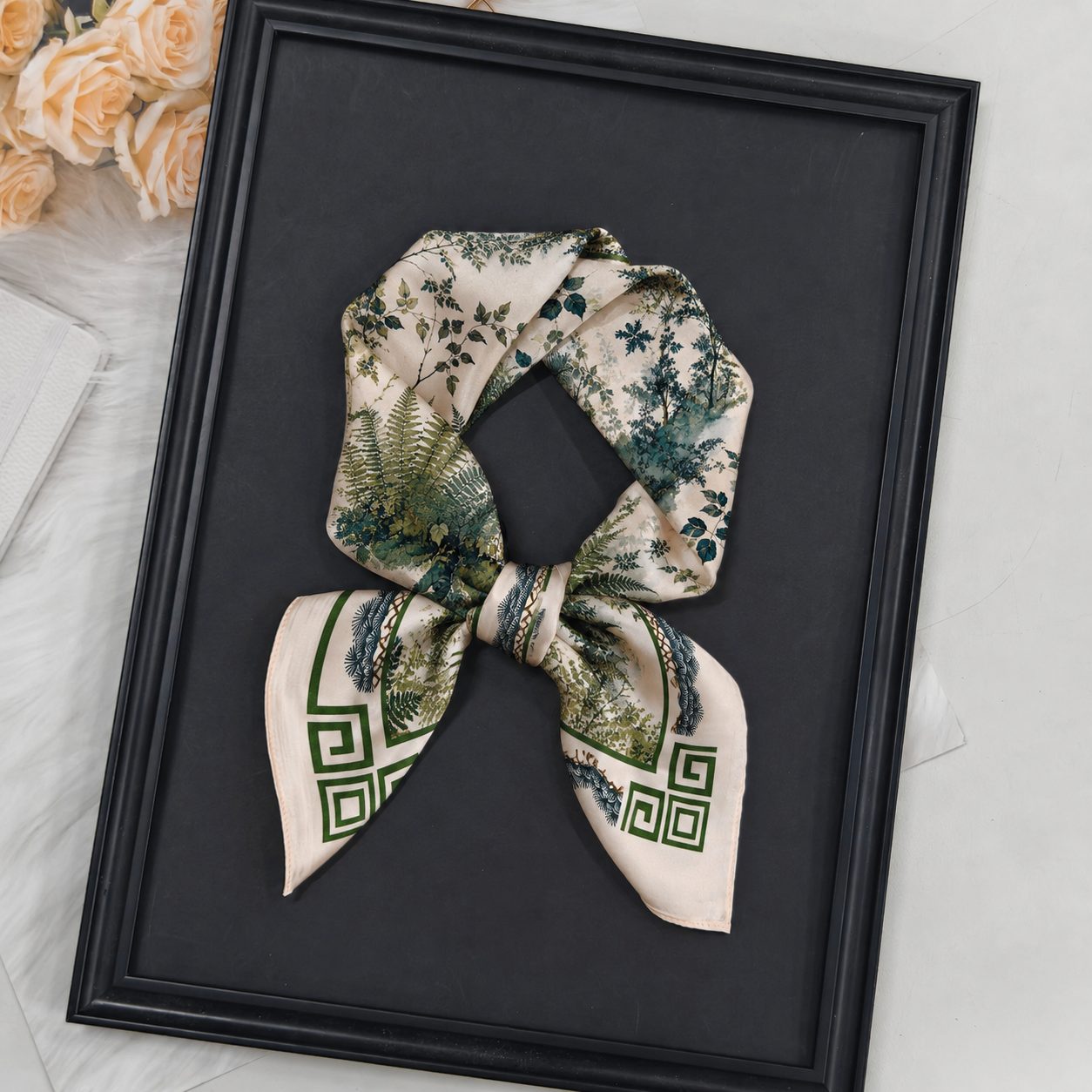
For brands comparing scarf options, double-sided printing is usually a better fit when quality perception matters more than the lowest unit cost. A single-sided scarf may be enough for simple promotional use, but a custom double-sided silk scarf supports a stronger product story, better styling flexibility, and a more premium customer experience.
Frequently Asked Questions
What is a double-sided printed silk scarf?
It is a scarf where the artwork is visible on both sides, giving a more complete appearance when the scarf is tied, folded, or draped.
When should a brand choose double-sided printing?
Choose it for premium scarves, designer collections, museum products, corporate gifts, and any scarf that will be styled or photographed from multiple angles.
Which silk fabrics work well for double-sided scarves?
Silk twill, silk satin, and silk habotai can all work depending on drape, shine, opacity, artwork detail, and target price. Sampling is recommended before bulk production.
How does customer communication affect double-sided scarf quality?
Clear communication helps the manufacturer understand artwork priorities, color expectations, edge finishing, packaging, quantity, and approval timing, reducing risk before bulk production.
Can DOCSUN support custom double-sided silk scarf production?
Yes. DOCSUN can support fabric selection, artwork checking, sample development, custom printing, edge finishing, packaging, and bulk production for custom silk scarf projects.
Start a Custom Double-Sided Silk Scarf Project
Send us your artwork, size, quantity, preferred silk fabric, edge finish, packaging idea, and target delivery date. Our team can help you develop a sample and confirm the right production plan for your brand.
Contact DOCSUNFabric cards, color cards, and craftsmanship references are available through our Australia, U.S., and U.K. office support when needed.