Why This Should Stay as a Design Trend Guide
This URL is best kept as a trend and design guide. It should not become a product landing page, but it can support the custom silk scarf service page and the broader custom scarves category by helping buyers understand how rich pattern ideas become real scarf products.
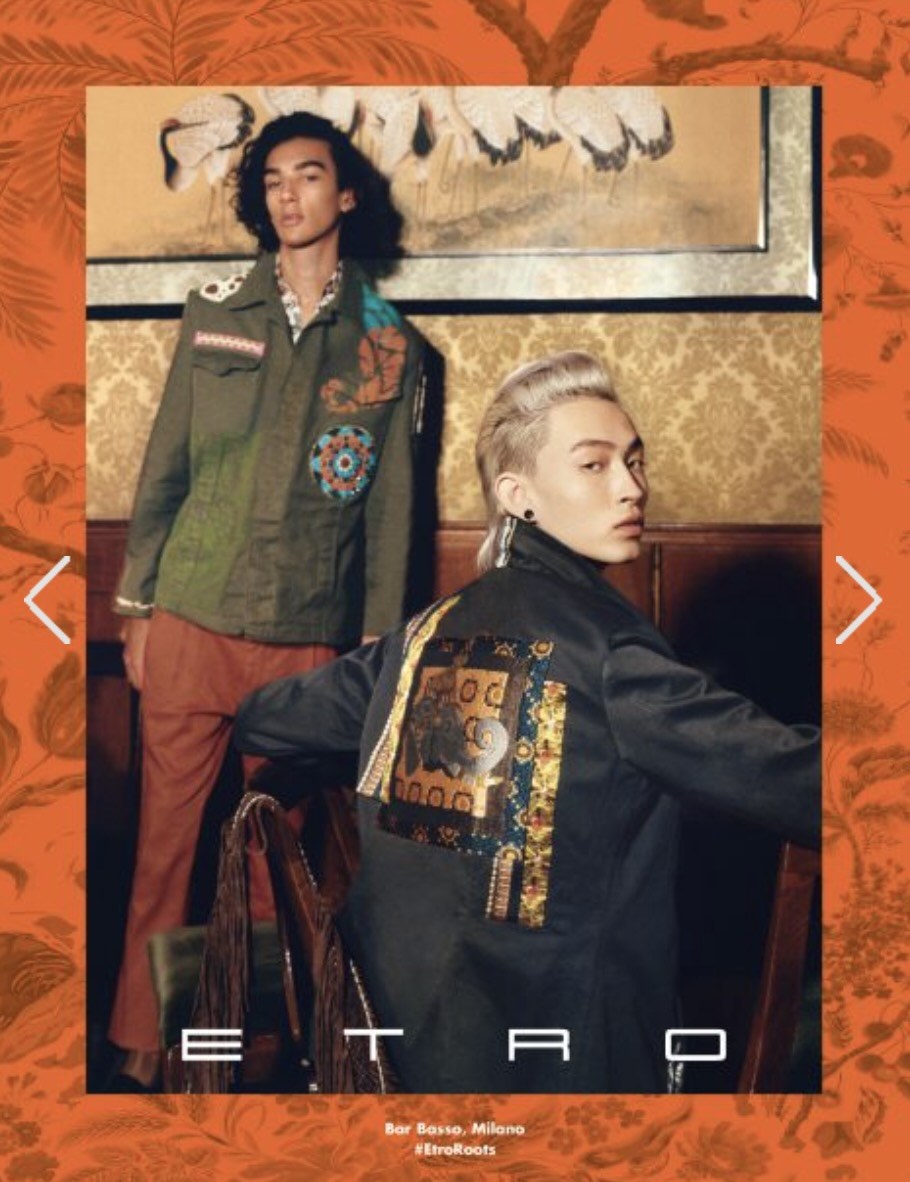
The original article used Etro as a familiar reference point because many people associate the brand with paisley and expressive textile design. In a DOCSUN context, the useful purpose is different: to help brand buyers look beyond one famous motif and build original artwork that can be printed, sampled, packaged, and sold under their own name.
Use Paisley as a Starting Point, Not the Whole Story
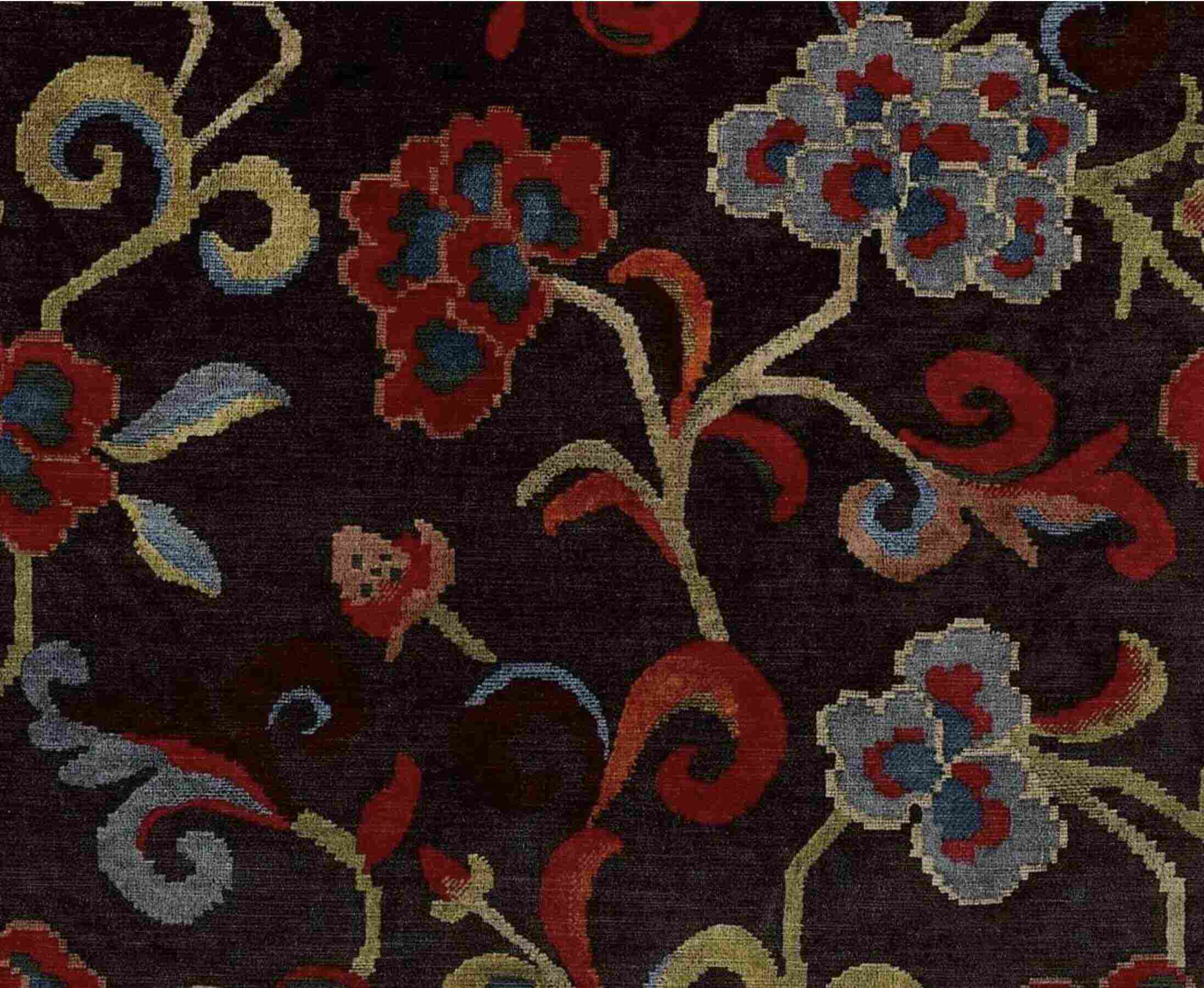
Paisley is instantly recognizable because it carries movement, heritage, and decorative rhythm. But a scarf that only repeats paisley can feel flat if the artwork has no scale change, no border logic, and no color hierarchy. Stronger custom artwork often treats paisley as one layer among several design tools.
For brand collections, paisley can become a center motif, a corner detail, a border element, a small repeat, or a secondary texture behind florals and geometric shapes. The key is to decide what the buyer should notice first when the scarf is flat, folded, tied, or wrapped around a bag.
Layer Florals, Baroque Details, and Ikat Geometry
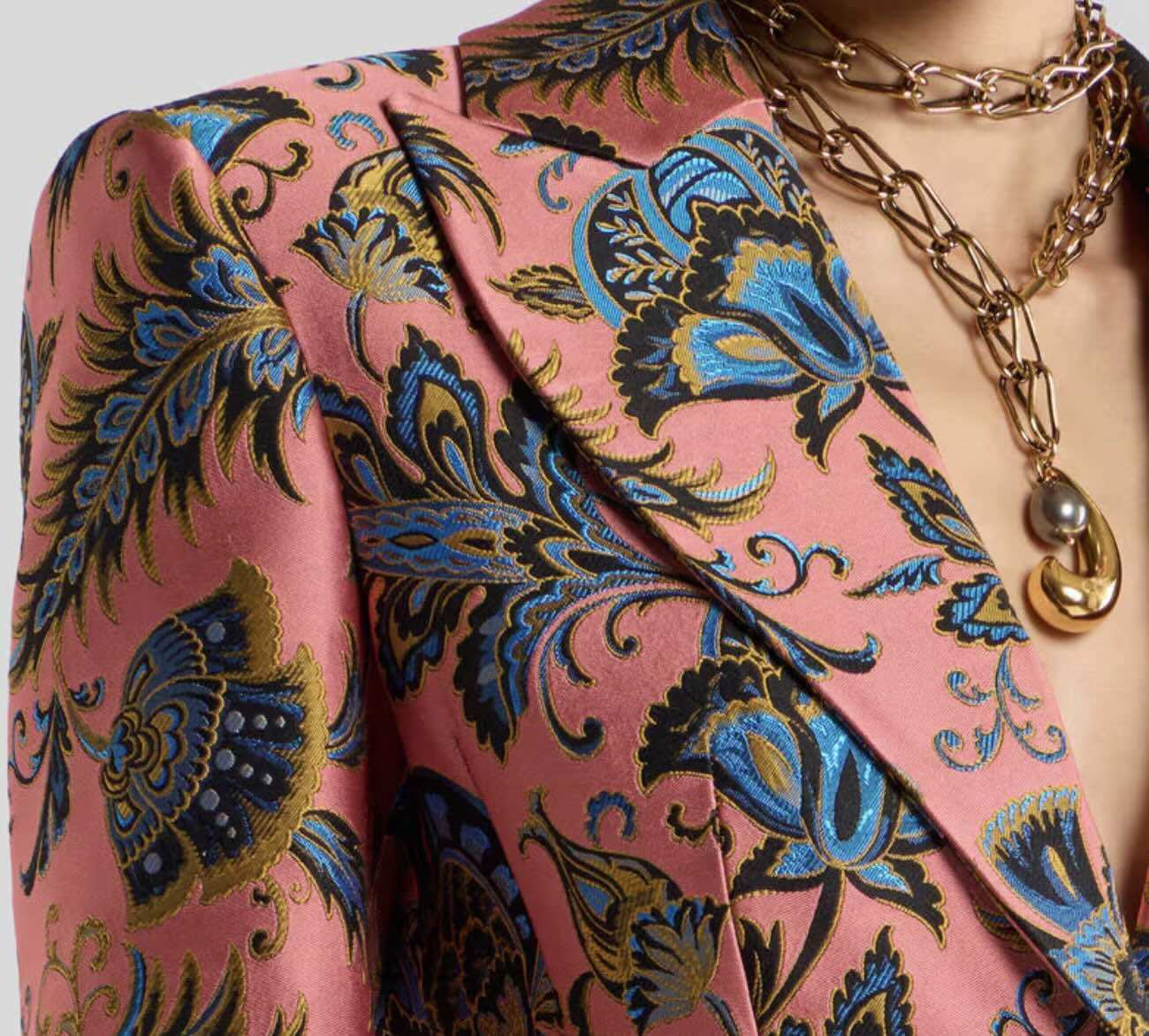
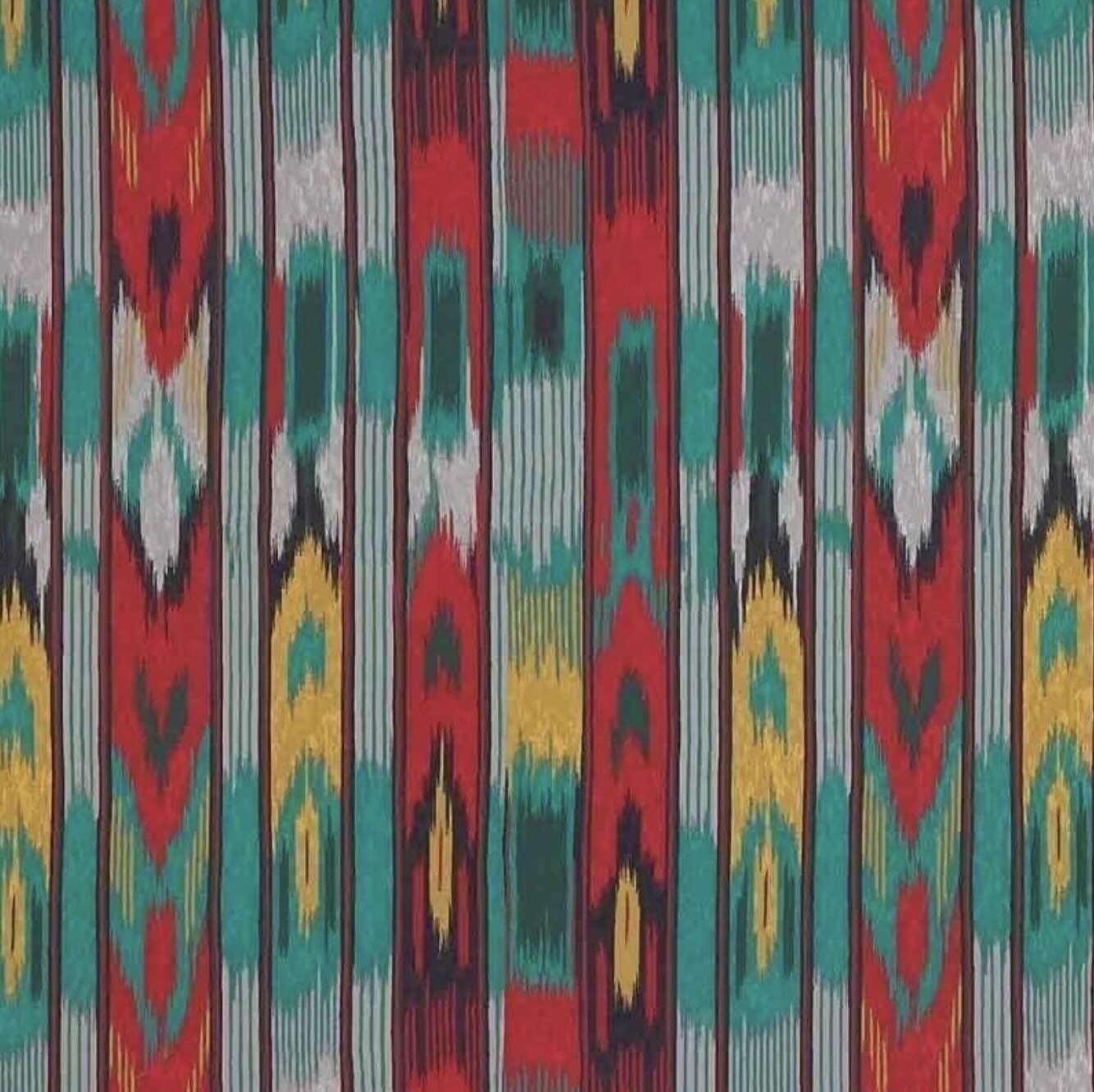
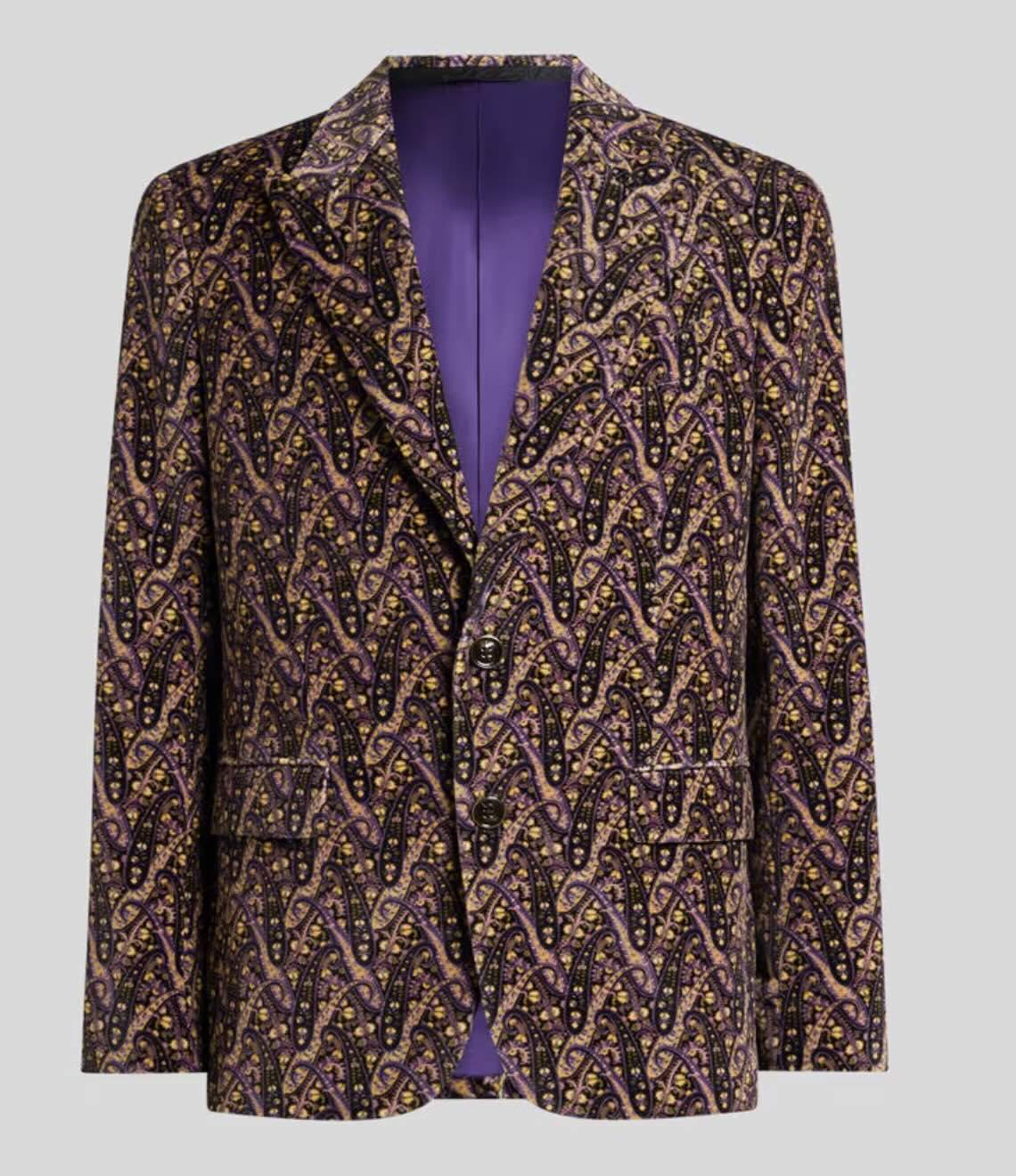
Layered florals are useful because they can soften a scarf and give it a vintage, romantic, or travel-inspired feeling. Baroque-style details add scrolls, frames, medallions, and ornamental borders. Ikat and geometric patterns bring a slightly blurred, handcrafted feeling that can make a print look less mechanical.
These directions should still be controlled. If every motif has the same scale and color strength, the artwork becomes noisy. A good scarf design usually needs a primary motif, supporting texture, border system, and color anchor. Buyers can work with DOCSUN to review motif scale, color references, and print feasibility through fabric, colors, and craftsmanship planning.
Design Scarves Like Artworks With Borders and Placement
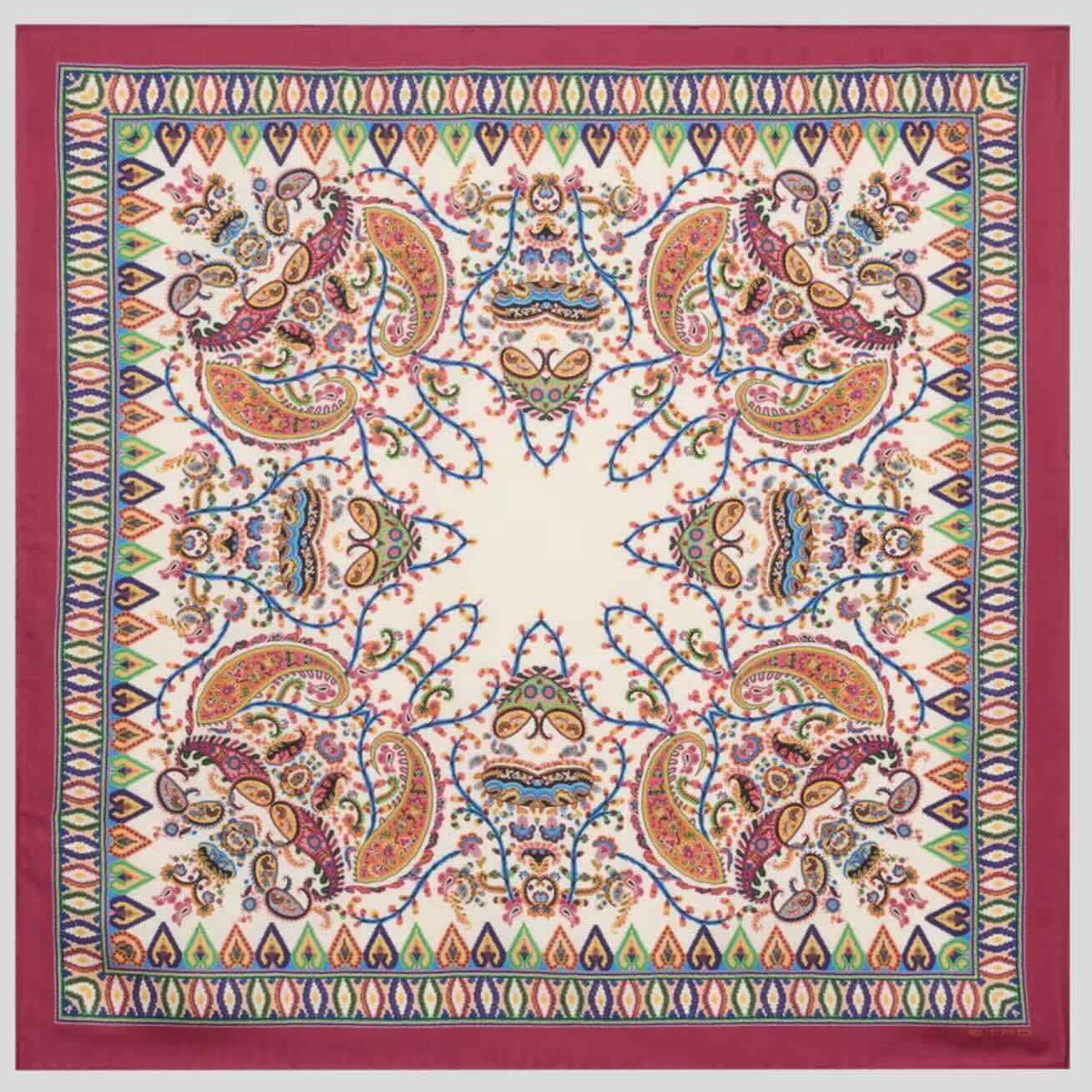
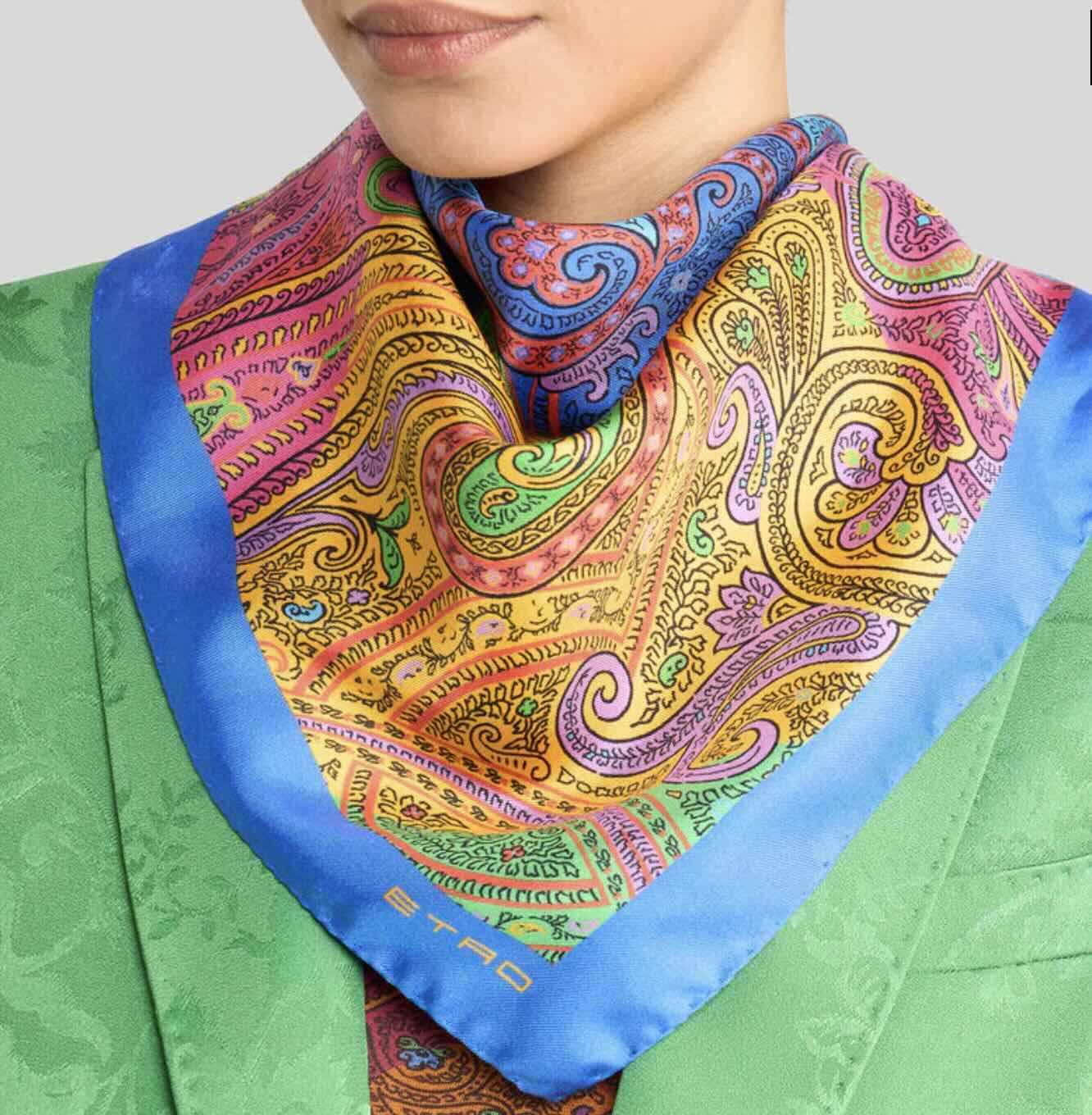
One reason richly patterned scarves feel like statement pieces is layout. A scarf is not only a square print. It is also a folded object, a tied object, a packaged object, and sometimes a framed artwork. Clear borders, corner motifs, center medallions, placed logos, and balanced negative space help the design remain readable in different uses.
For custom silk scarf development, buyers should review the artwork in flat view and in folded simulations. A border that looks small on screen may disappear after hemming. A center motif may be hidden when the scarf is tied. A corner logo may need more margin. These details should be resolved before sample approval.
Why Maximalist Pattern Feels Relevant Again
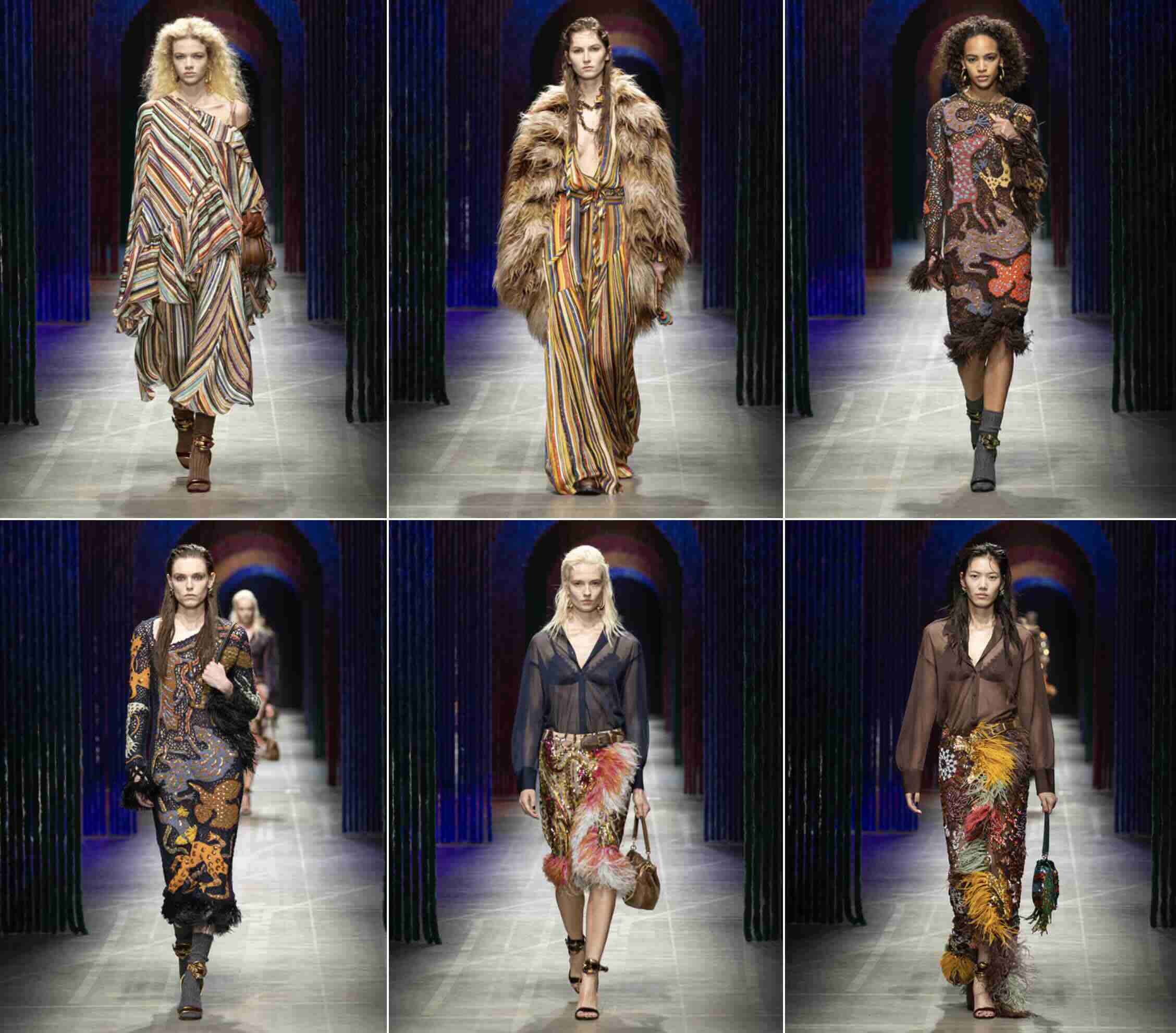
After years of minimal styling, many fashion buyers are again looking for color, texture, story, and personal expression. Scarves are especially suitable for this change because they let a brand test a strong pattern direction without committing to a full garment collection.
A rich scarf can support fashion boutiques, museum shops, hotel gifts, travel retail, corporate gifts, cultural programs, and private-label collections. The same design language can also extend into bandanas, dresses, jackets, and other printed products when the artwork is scaled and cropped correctly.
Turn Pattern Inspiration Into Producible Scarf Specs
For production, pattern inspiration has to become a specification. Buyers should confirm artwork ownership, file resolution, motif scale, color reference, scarf size, silk fabric, printing method, edge finish, label position, packaging style, MOQ, and sample timeline before bulk approval.
Silk twill is often a strong choice for premium square scarves because it holds structure and shows detailed artwork well. Silk satin gives a smoother, shinier effect. Crepe de chine creates a softer and more matte look. Silk chiffon can work for light, airy styling. DOCSUN's custom printing workflow can help compare print route, color proofing, and sample review for complex artwork.
| Design idea | Production decision | Buyer checkpoint |
|---|---|---|
| Layered florals | Silk twill, satin, or crepe de chine with digital printing | Check print clarity, color softness, and folded view |
| Baroque borders | Clear edge margin and planned hem allowance | Check that borders do not crowd the rolled or machine hem |
| Ikat geometry | Controlled color blur and repeat scale | Check whether the effect looks intentional after printing |
| Artwork-style scarf | Center motif, corner details, packaging fold | Check flat, tied, folded, and boxed presentation |
Labels and packaging should also be planned early. Buyers can use woven labels, printed care labels, hang tags, barcode stickers, paper sleeves, pouches, gift boxes, tissue wrap, insert cards, and carton marks. DOCSUN's custom packaging support can connect the scarf fold, label placement, retail presentation, and shipping requirements.
Many custom silk scarf projects can start from 30 to 50 pieces, depending on fabric, print method, size, edge finish, label, and packaging. Sampling usually takes about 5 to 7 working days after artwork, fabric, size, color reference, edge, label, packaging, and quantity details are confirmed.
FAQ
What does beyond paisley mean for scarf design?
It means using paisley as one reference point, then expanding the artwork with layered florals, baroque borders, ikat geometry, framed layouts, and richer color stories instead of relying on one repeated motif.
Can brands reference Etro-style richness without copying a brand?
Yes. Brands should study the design principles, such as pattern layering, border placement, color balance, and textile storytelling, while creating original artwork, proprietary motifs, and their own brand language.
Which silk fabrics work well for maximalist scarf artwork?
Silk twill is strong for premium square scarves and clear borders. Silk satin gives more shine. Crepe de chine softens the look, while silk chiffon is lighter and more transparent for airy styling.
What should buyers check before producing complex printed scarves?
Buyers should check artwork ownership, file resolution, color references, motif scale, border spacing, silk fabric, print method, edge margin, label position, packaging, and a physical sample before bulk production.
Turn a Rich Pattern Direction Into a Custom Silk Scarf
Send your pattern direction, artwork files, silk fabric preference, scarf size, edge finish, label plan, packaging idea, and quantity. DOCSUN can help review the design for printing, sampling, and bulk production.
Start a Custom Scarf ProjectFor product planning, start with custom silk scarf options and then confirm artwork, fabric, printing, and packaging details.