
Etro: The Italian Master of Paisley and Poetic Prints
ETRO transformed a centuries-old ornamental motif into one of the most recognizable pattern languages in modern Italian luxury. Its story begins with textiles, then expands through scarves, clothing, bags, interiors, and a broader philosophy of color, travel, and layered decoration.
Quick answer: ETRO did not invent paisley. The motif has much older roots in Persian, Indian, and wider Asian textile traditions. What ETRO did exceptionally well was reinterpret paisley through sophisticated textile design, layered color, ornamental borders, and a complete luxury lifestyle language spanning fashion, accessories, and interiors.
Paisley Before ETRO
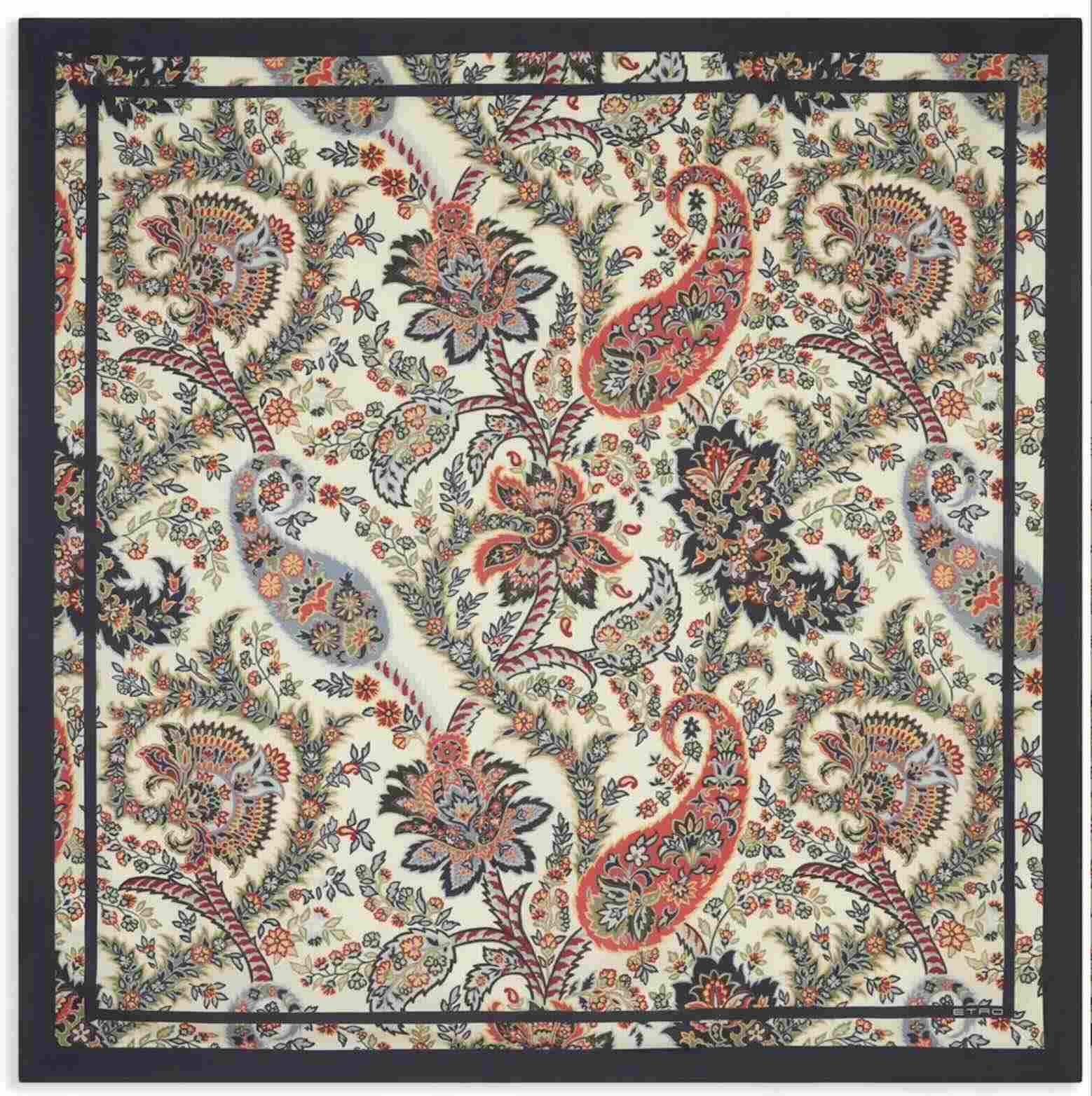
The curved teardrop commonly called paisley existed long before the Italian fashion house. Related forms appear across Persian, Indian, Central Asian, and South Asian textile traditions, where the motif evolved through shawls, weaving, embroidery, and print. Its meanings and names vary by place and period, so it should not be reduced to a single origin story.
European demand for patterned shawls helped the motif circulate widely, and the Scottish town of Paisley later became closely associated with industrial production of similar designs. By the twentieth century, paisley had moved between luxury textiles, counterculture, interiors, menswear, scarves, and mass-market print.
ETRO's contribution was not invention but sustained reinterpretation. The brand treated paisley as a living design system: a motif that could be enlarged, miniaturized, mirrored, layered, recolored, framed by borders, or combined with flowers, stripes, geometry, and figurative imagery.
From Milan Textile House to Luxury Brand
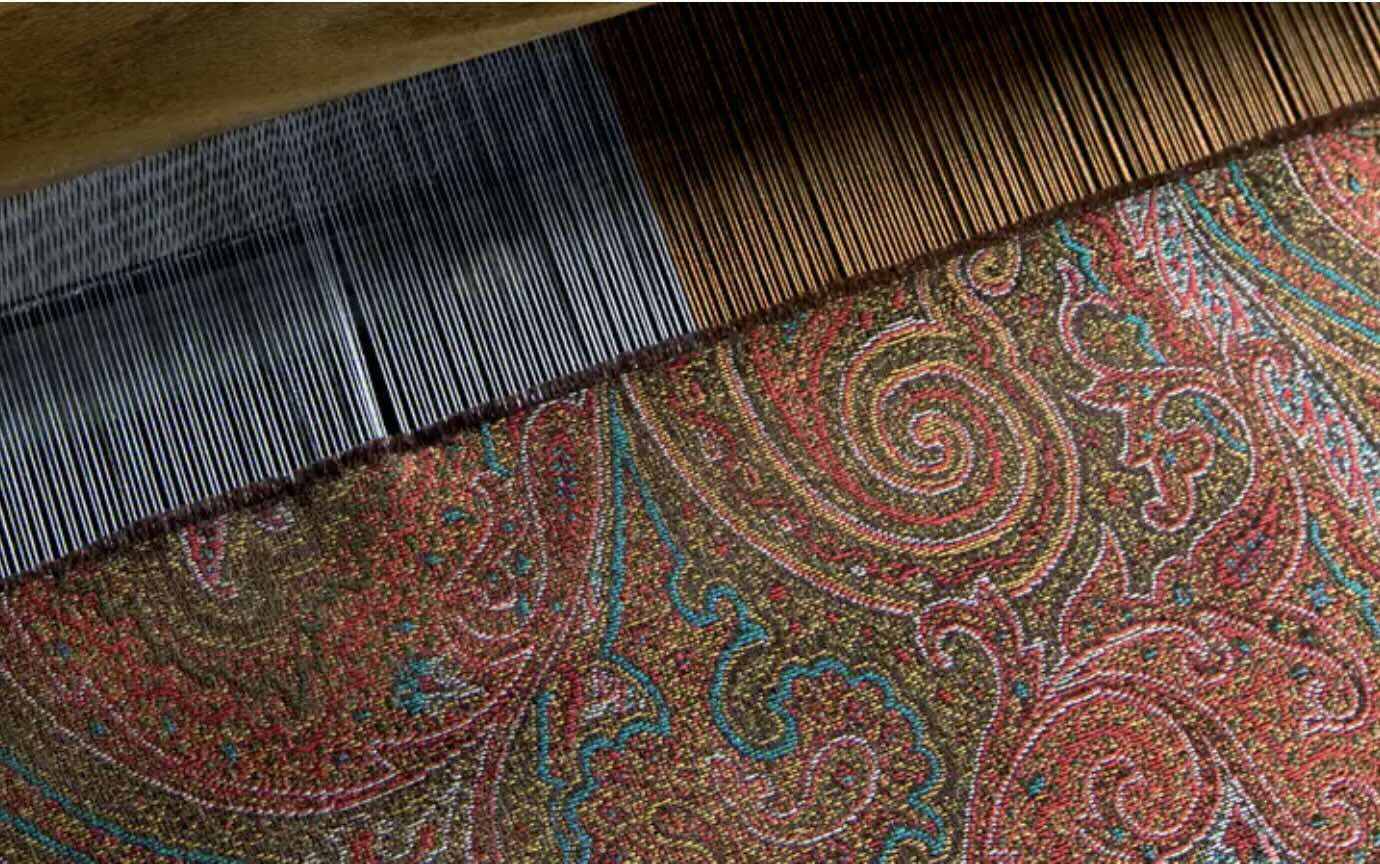
Gerolamo "Gimmo" Etro founded the company in Milan in 1968 as a textile business. That beginning matters: fabric, surface, print, and color were not decorative additions to a finished garment; they were the starting point.
The company's textile knowledge supported its later growth into ready-to-wear, leather goods, accessories, fragrance, and home products. Across those categories, the house maintained a material-first perspective. A jacket, scarf, bag, or cushion could carry the same ornamental vocabulary while adapting it to a different scale and construction.

- 1968: ETRO is founded in Milan as a textile company.
- 1980s: Paisley becomes increasingly central to the brand's textile identity.
- 1984: The company expands into leather goods using patterned jacquard fabrics.
- 1985: ETRO develops its home collection.
- 1990s: Ready-to-wear and runway presentations make the house's textile language more visible internationally.
- 2018: The Generation Paisley exhibition in Milan marks the brand's fiftieth anniversary and explores its archive.
How Paisley Became an ETRO Signature
ETRO's defining move was to use paisley repeatedly without making it visually static. Instead of one fixed pattern, the house developed families of related motifs. Some are densely packed and jewel-toned; others are enlarged, softened, abstracted, or mixed with florals and geometric bands.
This variation gives paisley the flexibility of a brand code. It can signal ETRO even when the product category, color palette, and scale change. For textile designers, that consistency-with-variation is an important lesson: recognizable identity comes from a system of decisions, not from endlessly repeating one artwork.
ETRO's Poetic Print Language
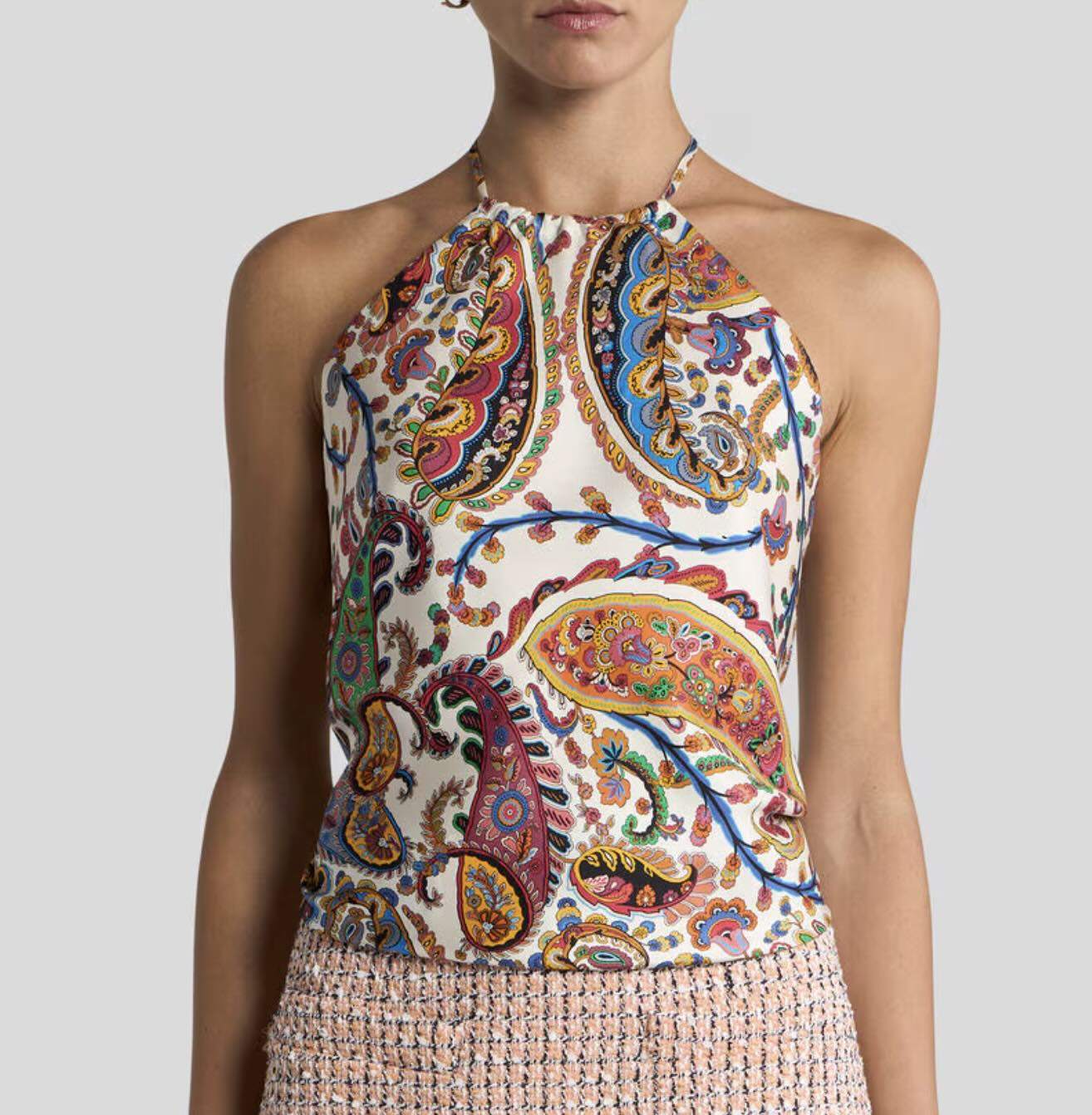
The brand's prints often feel collected rather than mechanically assembled. They suggest travel, archives, botanical studies, antique textiles, bohemian interiors, and imagined cultural encounters. Color is frequently layered rather than flat, with warm and cool tones placed in deliberate tension.
Borders are equally important. On scarves and shawls, they control the composition when the piece is open, folded, tied, or draped. Small secondary motifs create texture at close range, while larger paisley forms remain readable from a distance. This multiscale approach helps patterns perform across both product photography and real wear.
Signature Product Categories
Scarves and Shawls
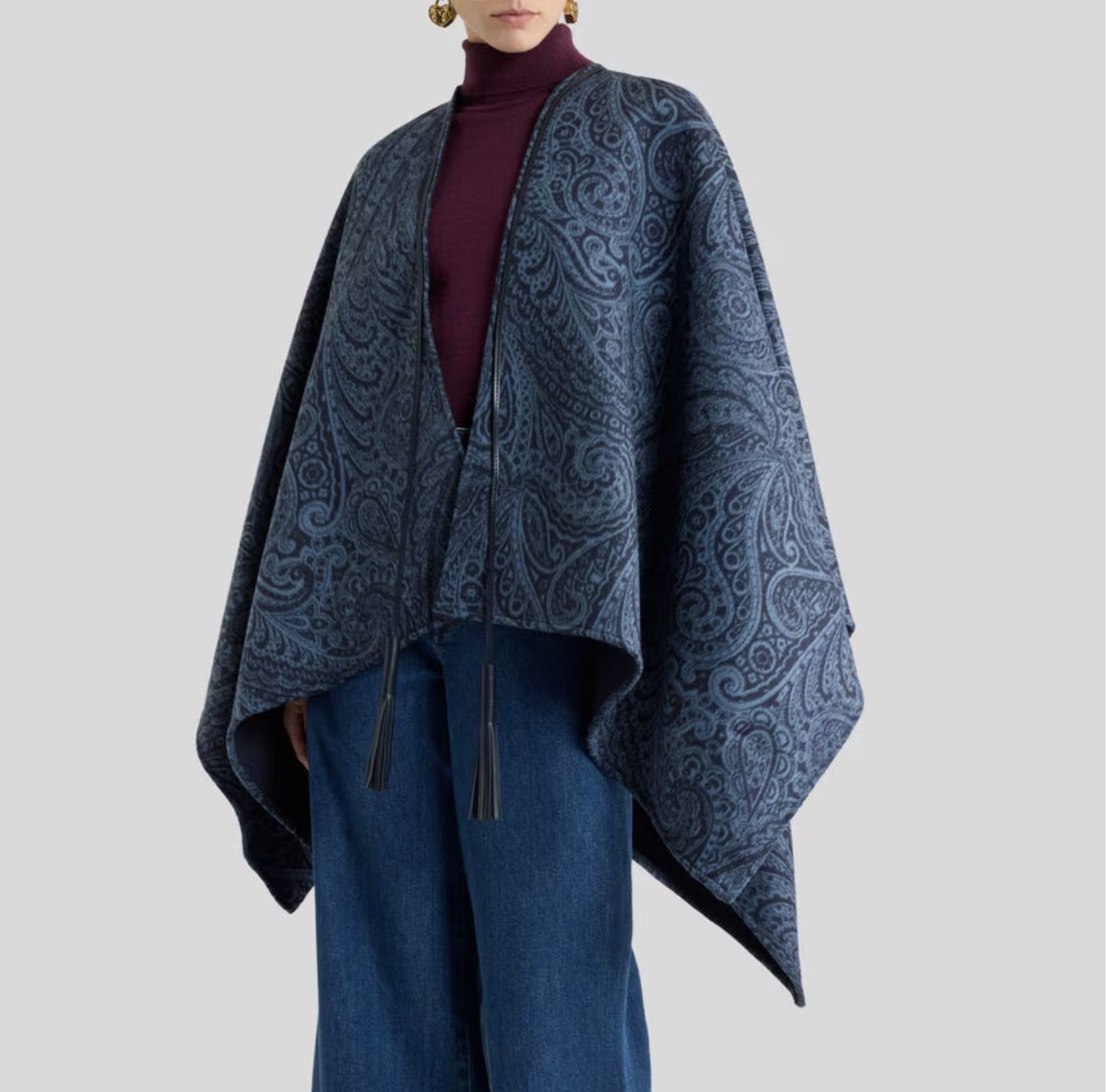
Scarves and shawls provide a natural canvas for ETRO's pattern language. The full textile can be seen as a composition, while folding creates new combinations of borders, colors, and motifs. Silk twill supports detailed scarf prints and structured folds; wool and cashmere blends suit larger, warmer formats.
Leather Goods and Bags
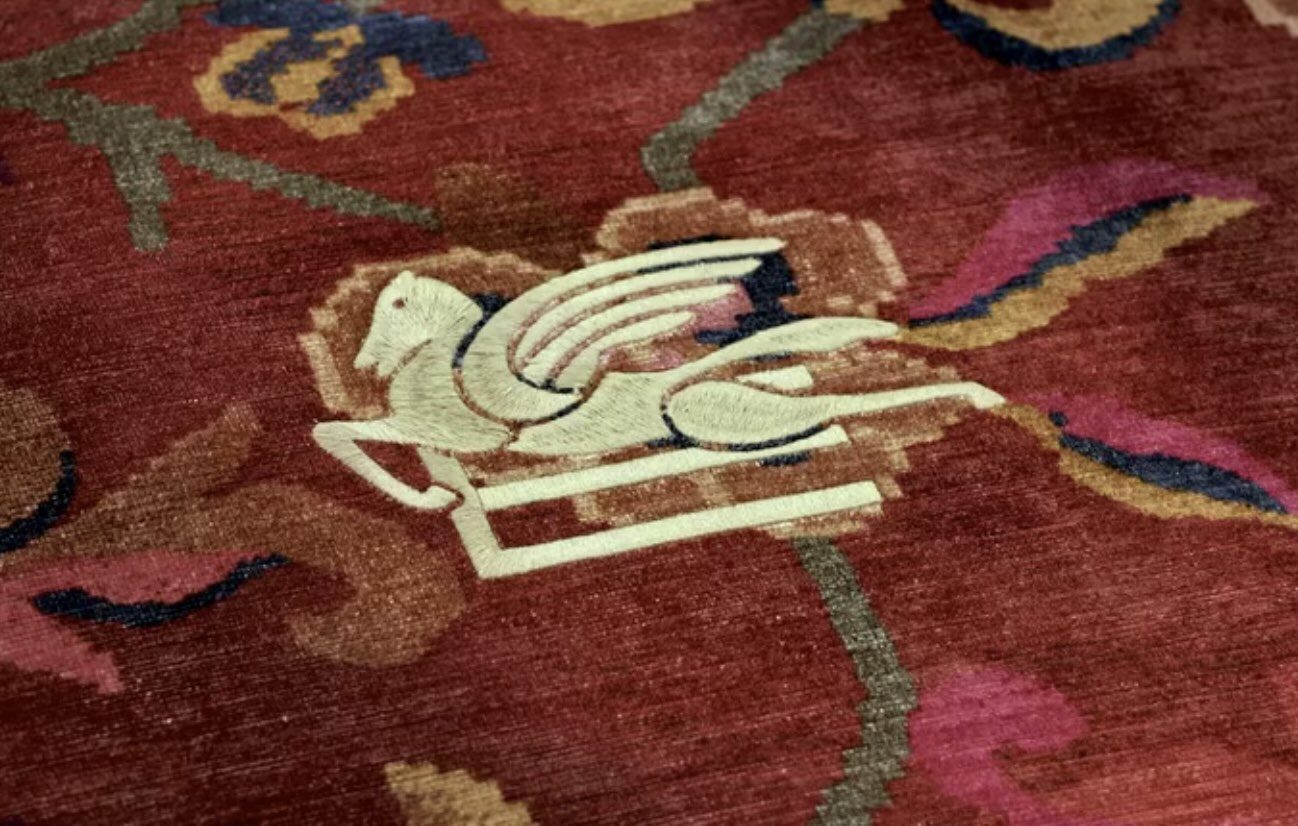
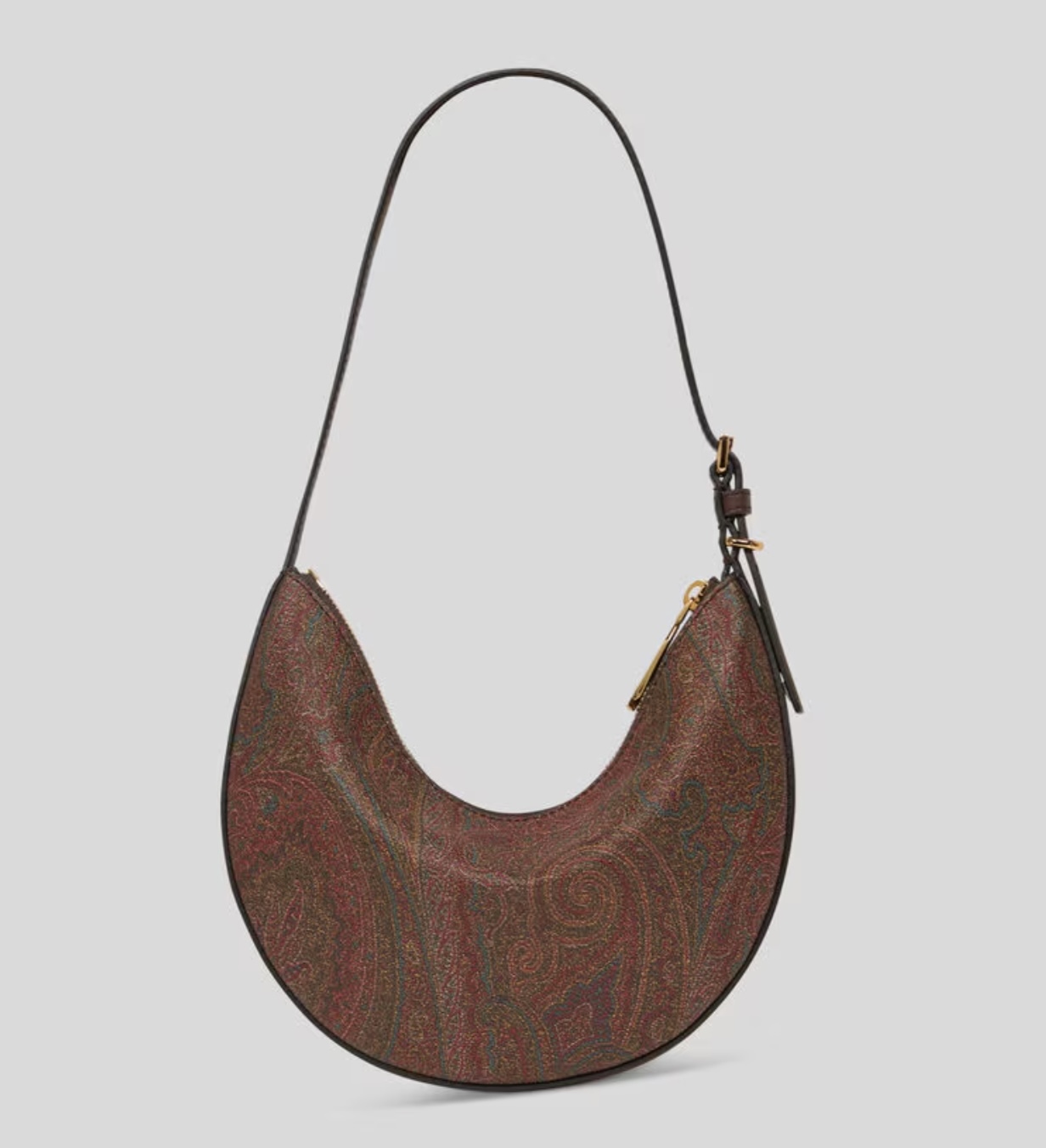
Patterned jacquards allow the house's textile identity to move into durable accessories. Leather trims, handles, hardware, and controlled pattern placement provide structure around the ornate surface.
Home Textiles
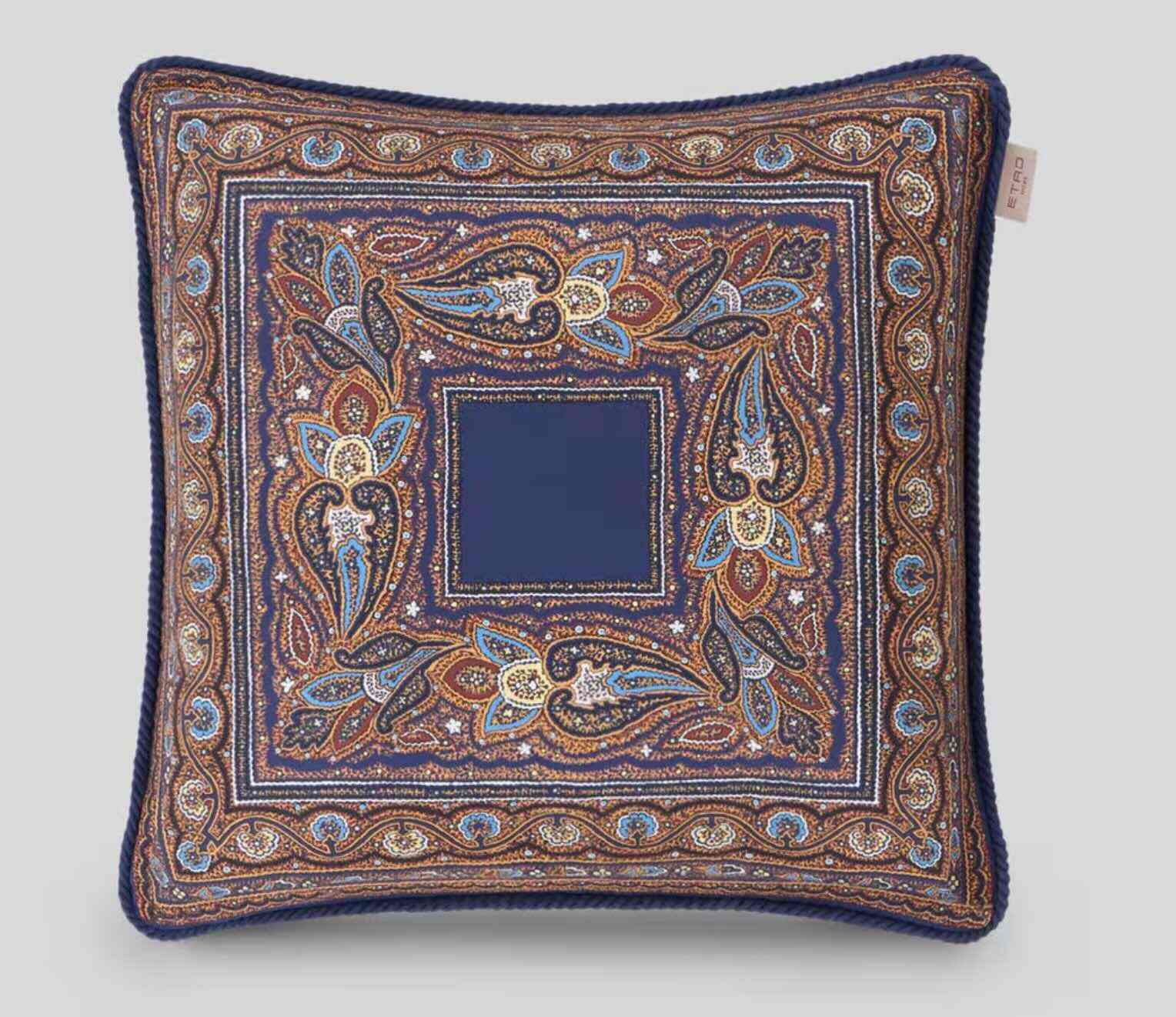
Home products reveal the lifestyle potential of a strong print system. A motif developed for fashion can move into cushions and furnishings when its scale, repeat, material, and color density are adjusted for interiors.
Design Lessons for Original Textile Collections
Designers can learn from ETRO's approach without copying ETRO artwork. Begin with the historical paisley vocabulary, then develop an original motif family, palette, border system, repeat, scale hierarchy, and product application. Avoid reproducing ETRO's Pegasus emblem, logos, product artwork, or distinctive compositions.
Build an Original Paisley-Inspired Collection
- Research historical textile references beyond one modern fashion brand.
- Draw new paisley forms rather than tracing existing branded artwork.
- Define a proprietary color palette and border language.
- Test motif scale for scarves, ties, apparel, bags, cushions, and packaging.
- Use physical strike-offs to approve fine lines, color, repeat, and fabric hand.
- Document ownership and licensing for all artwork and reference images.
DOCSUN supports original textile development through custom process planning, custom printing, and fabric, color, and craftsmanship selection. Review our custom scarf cases and custom scarf capabilities for product directions.
Frequently Asked Questions
Why is ETRO associated with paisley?
ETRO began as a Milanese textile company and developed paisley into a recurring house code through layered color, ornamental borders, jacquards, prints, accessories, fashion, and interiors. The motif existed for centuries before ETRO, but the brand helped make it recognizable in modern Italian luxury.
Did ETRO invent the paisley pattern?
No. Paisley has much older roots connected to Persian, Indian, and wider Asian textile traditions. ETRO reinterpreted the motif and made it central to its own visual identity.
When was ETRO founded?
ETRO was founded in Milan in 1968 by Gerolamo "Gimmo" Etro as a textile company. Its expertise in fabric, color, pattern, and surface design shaped its later expansion.
Can a brand create an original paisley-inspired textile design?
Yes. Study paisley's historical language and develop an original composition, scale, border, palette, and motif system. Do not copy ETRO trademarks, logos, protected product artwork, or another brand's distinctive design.
Which fabrics work well for detailed paisley prints?
Silk twill supports detailed motifs, borders, and structured scarf folds. Silk satin creates luminosity, chiffon offers transparency, and wool or cashmere blends suit larger shawls. Always sample on the actual fabric.
Final Thoughts
ETRO's lasting achievement lies in treating print as a complete identity rather than seasonal decoration. Its work shows how textile archives, material knowledge, color, border design, and product development can turn an old motif into a flexible contemporary language.
Develop an Original Paisley-Inspired Textile
Send us your original artwork, product type, fabric preference, size, quantity, color references, finishing, labels, and packaging needs. Our team can help translate the concept into a production-ready sample.
Request a QuoteFast response within 24 hours