Why the Word Satin Can Be Confusing
Many sleep bonnets, pillowcases, and hair accessories are marketed as satin. The problem is that satin describes a weave or a glossy surface, not the fiber itself. A satin bonnet may be made from polyester, nylon, acetate, silk, or a blend.
That distinction matters. A polyester satin bonnet can feel slick at first touch, but it does not behave like mulberry silk fabric during a full night of contact with hair and skin. For beauty sleep products, the fiber's moisture behavior, static tendency, friction, and thermal comfort are as important as surface shine.
Moisture and Breathability
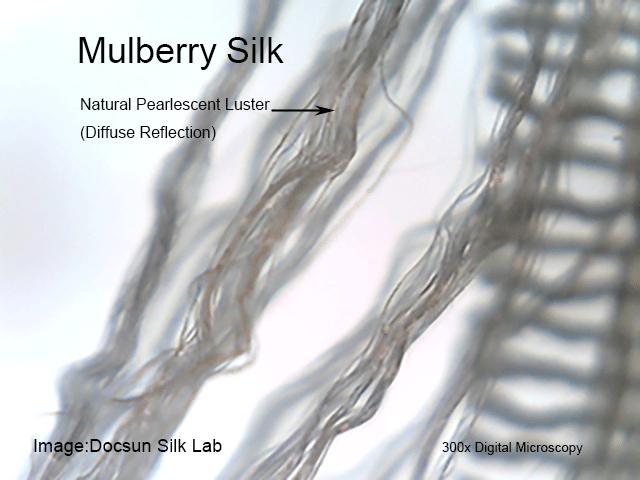
Mulberry silk is a natural protein fiber. It contains hydrophilic groups and a fine internal structure that helps absorb and release moisture vapor. This does not mean silk feels wet; it means the fabric can help moderate the microclimate around hair and skin.
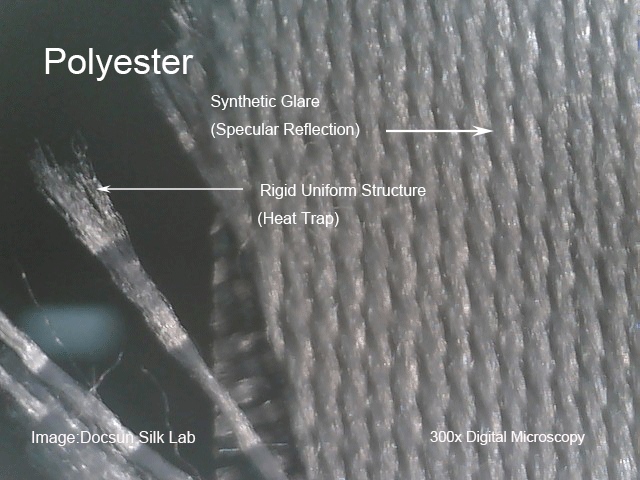
Polyester behaves very differently. It is a hydrophobic synthetic fiber with very low moisture regain. When used in sleep bonnets or masks, polyester can trap heat and vapor more easily, especially if the weave is dense. Some users experience this as stuffiness, sweating, or a warmer scalp environment during sleep.
Static Electricity and Frizz
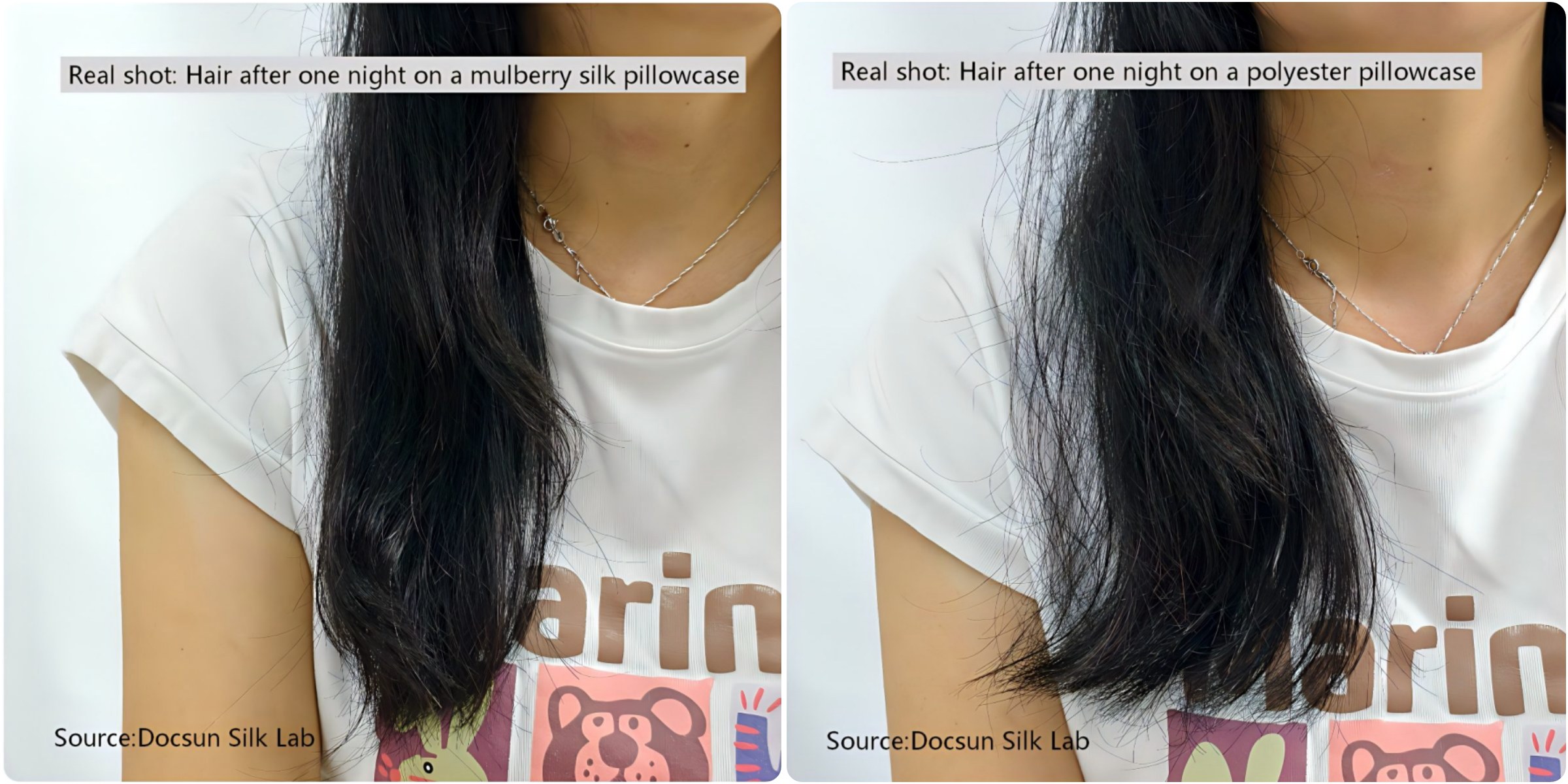
Frizz is not only a styling issue. It can also be a material issue. During sleep, hair repeatedly contacts the bonnet surface. If the material accumulates static and does not dissipate charge efficiently, hair strands may lift away from each other and cuticles can feel rougher by morning.
Mulberry silk's moisture regulation helps reduce static buildup. Polyester is drier and more insulating, so it can hold static more easily. That is one reason a smooth-looking polyester satin bonnet may still leave hair looking puffy, flyaway, or less defined.
| Property | Mulberry silk | Polyester satin | Why it matters for bonnets |
|---|---|---|---|
| Fiber type | Natural protein fiber | Synthetic petrochemical fiber | Changes skin feel, breathability, and sourcing position |
| Moisture behavior | Absorbs and releases moisture vapor | Very low moisture absorption | Affects scalp comfort and night sweating |
| Static tendency | Lower static buildup | Higher static risk | Affects frizz, flyaways, and hair cuticle comfort |
| Care | Needs gentle washing | Easy-care and quick-drying | Affects price point and customer instructions |
Friction, Skin Feel, and Comfort
Both silk satin and polyester satin can be physically smooth, but their comfort is not identical. Mulberry silk has a soft, natural hand feel and a gentle surface that works well for hair-contact and skin-contact products such as custom bonnets, silk scrunchies, pillowcases, and sleep masks.
Polyester can also be smooth, but it lacks the same natural moisture regulation and biological affinity. For budget products, polyester may be acceptable. For premium beauty accessories, sleep products, or hair-care positioning, mulberry silk usually supports a stronger product story and better user experience.
Durability and Care
Polyester does have real advantages. It is strong, quick-drying, wrinkle-resistant, easy to wash, and low cost. These qualities make it useful for fast-fashion accessories or highly price-sensitive products.
Mulberry silk is more delicate. It should be washed gently with neutral detergent, protected from strong alkali, and dried away from harsh direct sun. For premium hair accessories, that care requirement is often acceptable because the product is purchased for softness, comfort, and material value.
How Brands Should Choose Bonnet Materials
For a brand developing sleep bonnets, the material choice should match the product's promise. If the promise is low price and easy care, polyester satin may fit. If the promise is hair protection, breathable comfort, luxury sleep, and a premium beauty routine, mulberry silk is usually the stronger choice.
Before production, confirm the fiber content, fabric weight, hand feel, color, elastic tension, stitching, label, and packaging. For private label development, DOCSUN can help review material options for custom hair accessories, custom silk bonnets, and related sleep products such as custom eye masks.
Frequently Asked Questions
Why can polyester satin bonnets cause frizz?
Polyester absorbs very little moisture and can accumulate static during sleep friction. For some users, that combination can make hair feel dry, lifted, and frizzy by morning.
Is satin the same as mulberry silk?
No. Satin is a weave or surface effect, not a fiber. A satin bonnet may be polyester satin, silk satin, or another smooth fabric. Mulberry silk refers to the natural silk fiber.
Why is mulberry silk better for sleep bonnets and hair accessories?
Mulberry silk is naturally smooth, breathable, moisture-regulating, and less prone to static buildup than polyester. These qualities make it suitable for hair-contact products and premium sleep accessories.
Does polyester have any advantages?
Yes. Polyester is durable, low-cost, quick-drying, wrinkle-resistant, and easy to wash. It can be suitable for budget products, but it does not offer the same natural moisture regulation and skin-friendly feel as mulberry silk.
Can DOCSUN develop custom mulberry silk bonnets?
Yes. DOCSUN can support custom silk bonnet development with fabric selection, size planning, color matching, elastic or tie construction, labels, packaging, sampling, and bulk production.
Develop Custom Mulberry Silk Bonnets
Share your target fabric, size, color, elastic structure, label, packaging, and quantity. DOCSUN can help develop custom silk bonnets and hair-care accessories for beauty, sleep, and private label collections.
Contact DOCSUNFast response within 24 hours.