Define the Scarf's Brand Purpose
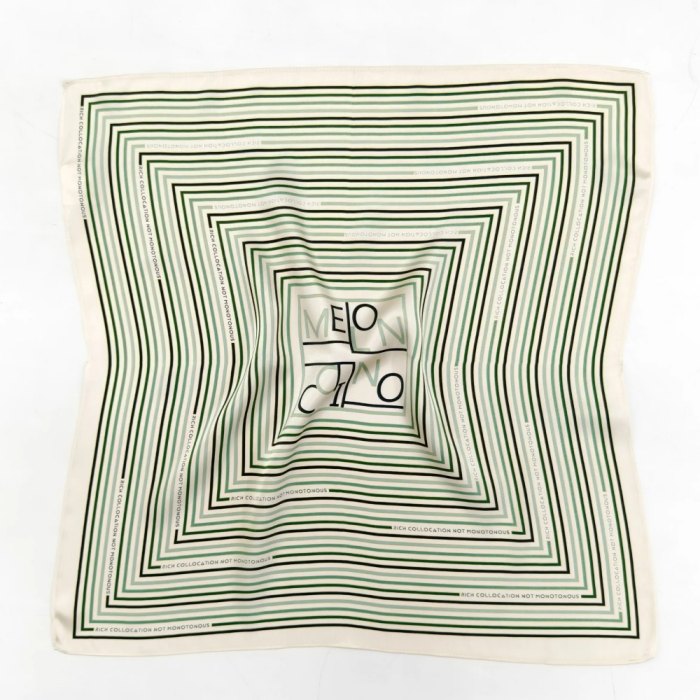
Before artwork begins, decide what the scarf needs to do for the brand. A silk scarf for a luxury capsule collection has different requirements from a museum gift, hotel uniform accessory, corporate event scarf, beauty brand gift, or one-piece prototype.
Clarify the target customer, retail price, season, styling use, artwork story, order quantity, launch date, and packaging level. These decisions affect every technical choice that follows. A scarf designed for a retail shelf may need premium packaging and sharper color control, while a uniform scarf may need durability, repeatability, and a controlled unit cost.
Choose the Right Scarf Size and Format
Scarf size shapes both styling and cost. Smaller scarves work well for hair, neck, bag handles, and promotional gifts. Medium square scarves are easy to style and can carry more artwork detail. Larger squares and long scarves create stronger visual impact but require more fabric and more careful pattern placement.
| Format | Typical use | Brand advantage |
|---|---|---|
| Small neck or hair scarf | Hair styling, neck tie, bag accessory | Lower unit cost and strong gift potential |
| 68cm or 70cm square | Fashion accessory, resort styling, retail gift | Balanced artwork space and flexible wear |
| 90cm square | Premium neck scarf, shoulder scarf, statement accessory | More luxurious presentation and larger artwork story |
| Long scarf | Brand uniform, seasonal accessory, styling piece | Strong movement and clear logo or border placement |
Select Silk Fabric and Hand Feel
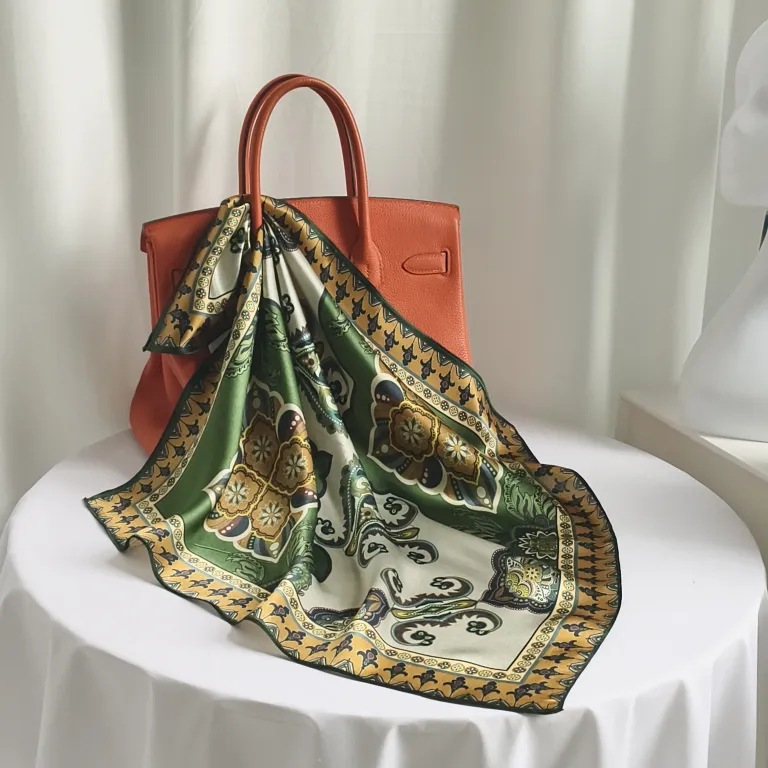
Fabric selection influences touch, shine, drape, opacity, print effect, and price. Common options for custom silk scarves include silk twill, silk satin, silk crepe de chine, silk habotai, and silk chiffon. Twill offers a refined diagonal texture and stable structure. Satin gives stronger shine and a smoother surface. Crepe de chine feels softer and more matte. Habotai is light and fluid.
If your project depends on print clarity and premium retail value, compare fabric swatches before confirming bulk production. A beautiful artwork file can still feel weak if the fabric hand feel, weight, or edge finishing does not match the brand level. For more detailed material planning, see fabric, colors, and craftsmanship options.
Prepare Artwork, Borders, and Color Matching
Silk scarf artwork should be built for the final scarf size, not only for a digital preview. Check whether the design needs a central motif, repeated pattern, border, corner details, logo, or signature element. Border placement is especially important because the hem will fold part of the edge.
Color matching should be discussed before sampling. Pantone references, original artwork files, and target fabric all affect the final result. Digital screens cannot fully predict silk printing color, so sampling is important for brand-sensitive collections.
Choose Printing and Edge Finishing
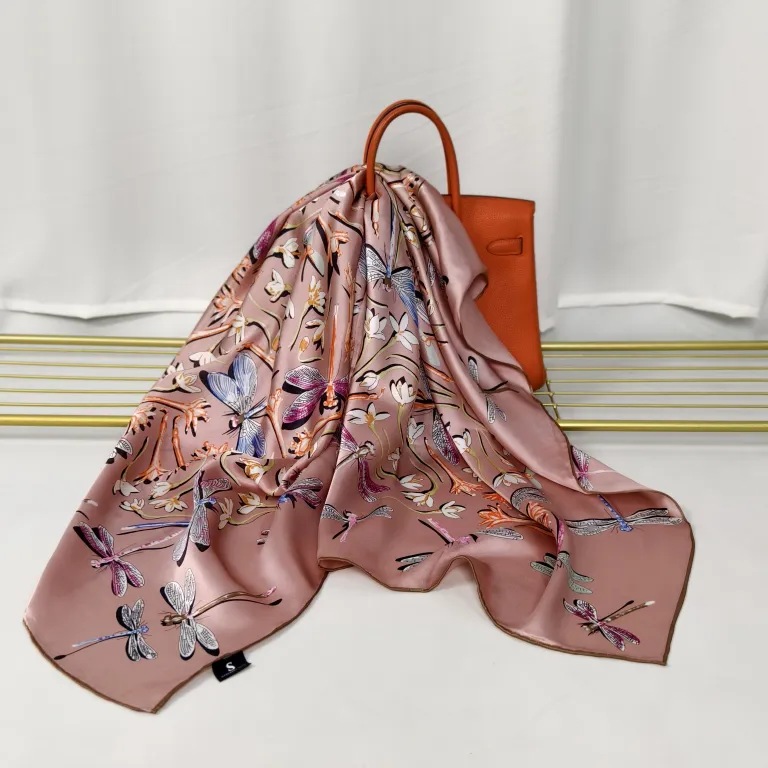
Digital printing is often suitable for detailed artwork, gradients, small batches, and many colors. Screen printing can work well for larger orders, flat colors, and specific color-control requirements. The right choice depends on artwork complexity, order quantity, budget, and expected color effect. You can compare common methods in our custom printing guide.
Edge finishing also changes the perceived value. Hand-rolled edges communicate craftsmanship and luxury, while machine hemming offers cleaner consistency and faster production. Other edge options may fit specific product briefs, but the hem should always match the fabric weight and target price.
Plan Labels, Packaging, and Presentation
A custom silk scarf is often sold or gifted as a complete brand object. Labels, hang tags, care cards, sleeves, envelopes, boxes, and ribbons can change how customers perceive the same scarf. If the scarf is for retail, museum shops, corporate gifting, or luxury campaigns, packaging should be planned early instead of added at the end.
For gift-ready programs, coordinate scarf size, folded presentation, care label, barcode or SKU label, and carton packing method. This helps the scarf arrive ready for sales, events, or fulfillment. See custom packaging for more options.
Production Checklist for Brands
- Confirm target customer, use, price range, and launch deadline.
- Choose scarf size, fabric type, momme weight, and hand-feel direction.
- Prepare artwork at production scale with border and hem allowance considered.
- Confirm color references and sampling expectations before bulk production.
- Select digital printing, screen printing, or another suitable printing method.
- Choose hand-rolled, machine hemmed, or another edge finishing method.
- Decide label, care instruction, packaging, and final presentation.
- Check sample size, print clarity, color, hem quality, fabric defects, and packaging before approval.
Frequently Asked Questions
What should a brand prepare before designing a custom silk scarf?
A brand should prepare the target customer, scarf use, size, artwork direction, brand colors, fabric preference, edge finishing, label or packaging needs, expected quantity, and launch deadline. These details help the manufacturer recommend a practical production route.
Which silk scarf size is best for a fashion brand?
Common custom silk scarf sizes include small neck scarves, 53cm or 68cm squares, 70cm squares, 90cm squares, and long scarves. The best size depends on styling use, artwork scale, price point, and whether the scarf will be worn around the neck, hair, bag, or shoulders.
Can DOCSUN help turn artwork into a printable silk scarf design?
Yes. DOCSUN can help review artwork scale, border placement, repeat logic, color matching, print method, fabric choice, edge finishing, label, packaging, and sample development before bulk custom silk scarf production.
Should a brand choose digital printing or screen printing for custom silk scarves?
Digital printing is often better for detailed artwork, gradients, small batches, and many colors. Screen printing can be suitable for larger orders, flat color areas, and specific color-control requirements. The right method depends on artwork, quantity, color target, and budget.
What details affect the final quality of a custom silk scarf?
Final quality is affected by silk fabric type, momme weight, print clarity, color matching, hemming method, size tolerance, label placement, packaging, inspection standard, and whether the sample matches the approved brand brief.
Start Your Custom Silk Scarf Project
Share your artwork, size idea, fabric preference, quantity, and packaging needs. DOCSUN can help your brand develop custom silk scarves from concept and sampling to production and delivery.
Contact DOCSUNFast response within 24 hours.