
Quick answer: Silk-wool blend scarves are practical for commuting, offices, travel, cool evenings, autumn, winter, and spring. Silk adds softness, drape, and refined color; wool adds insulation and resilience. Compared with silk-cotton, silk-wool is normally warmer, while silk-cotton is lighter and better suited to warm climates.
What Is Silk-Wool Blend Scarf Fabric?
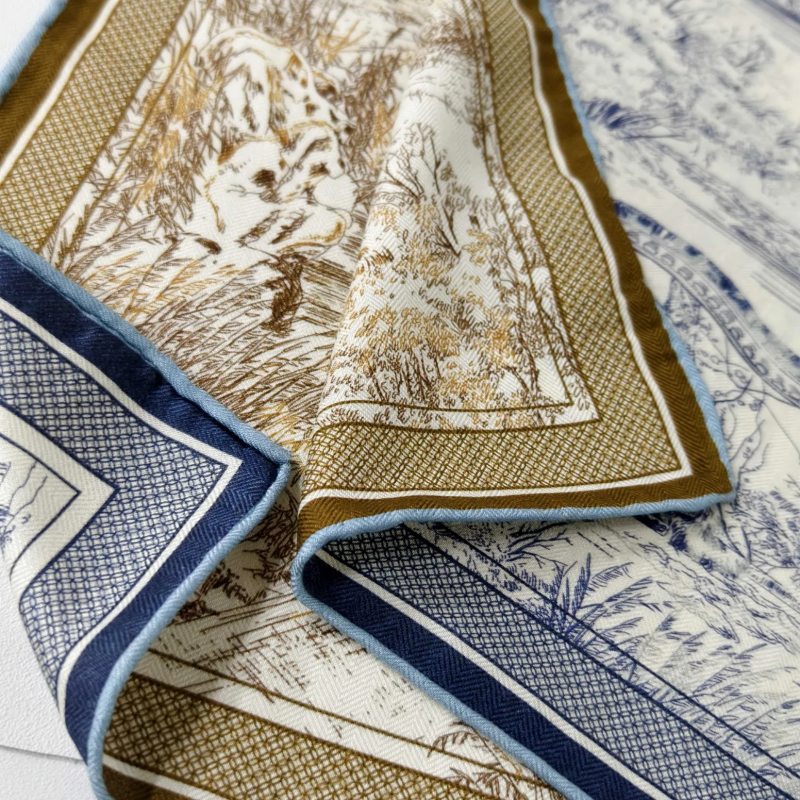
Silk-wool fabric combines two natural protein fibers. Silk contributes a smooth hand, elegant drape, color clarity, and subtle luster. Wool contributes warmth, elasticity, resilience, and the ability to trap insulating air. The blend can feel softer and lighter than a conventional wool scarf while offering more warmth and body than many pure silk constructions.
Not every silk-wool blend behaves the same way. The fiber ratio, wool type, yarn thickness, weave, fabric weight, brushing, washing, and finishing all change the final result. A product specification should state the tested composition and construction rather than treating "silk-wool" as one fixed fabric.
Natural fibers can support long product life and may be biodegradable under suitable conditions, but sustainability depends on sourcing, dyeing, finishing, care, durability, and end-of-life handling. Avoid assuming that every blend is automatically low impact.
Why Silk-Wool Works for Everyday Life
Warmth Without Heavy Bulk
Wool fibers create insulating air spaces, while silk helps keep the fabric light and supple. This makes a silk-wool scarf useful when a heavy knitted scarf would feel excessive, especially during transitional seasons and indoor-outdoor movement.
Comfort Across Changing Temperatures
A lightweight blend can protect the neck and shoulders on a cool commute, then remain comfortable in an air-conditioned office. The exact comfort range depends on fabric weight, scarf size, weave density, and how the scarf is folded.
Refined Surface and Color
Silk can bring luminosity and clearer color to the blend, while wool softens the reflection and creates visual depth. Solid shades, woven patterns, painterly prints, and double-sided artwork can all work well when matched to the right construction.
Resilience for Repeated Styling
Wool adds recovery and body, which can help a scarf retain attractive folds. Silk contributes tensile strength, but both fibers still require protection from sharp jewelry, rough surfaces, excessive friction, and improper washing.
Silk-Wool Blend vs Silk-Cotton Fabric
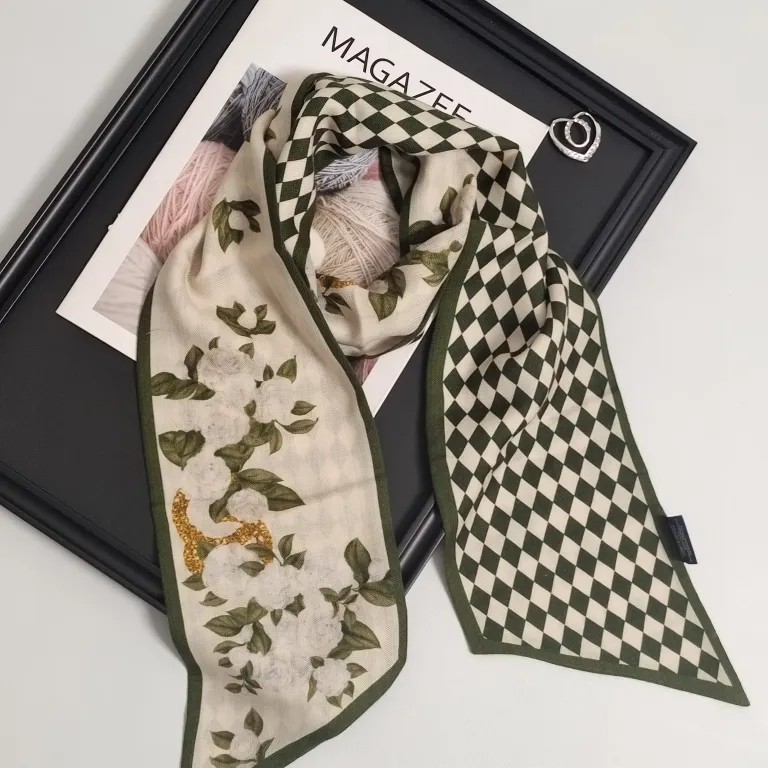
| Feature | Silk-Wool Blend | Silk-Cotton Blend |
|---|---|---|
| Warmth | Warmer because wool traps insulating air | Lighter and usually cooler |
| Best climate | Cool weather, transitional seasons, travel, air conditioning | Warm climates, spring and summer, lightweight layering |
| Hand feel | Soft, warm, resilient, sometimes lightly textured | Soft, breathable, dry, and familiar |
| Drape | Supple with more body and warmth | Light and relaxed, depending on weave |
| Typical products | Scarves, shawls, wraps, travel accessories | Light scarves, blouses, dresses, casual accessories |
| Care | Often requires dry cleaning or approved gentle hand care | May allow gentler washing, but the care label still controls |
Neither blend is universally better. Choose silk-wool when warmth, softness, and multi-season versatility matter. Choose silk-cotton when breathability, a lighter touch, and warm-climate comfort are the priorities.
Everyday Uses of Silk-Wool Blend Scarves
Daily Commuting
Wear it over a coat, jacket, knit, or blazer to protect the neck without carrying a bulky winter scarf.
Office and Professional Wear
A controlled fold or simple drape adds color and warmth in cool offices while maintaining a polished appearance.
Travel
Use a larger format as a neck scarf, shoulder wrap, or light blanket on flights and trains. It packs more compactly than heavy wool.
Evening Events
Drape a refined print or solid color over the shoulders to add warmth without obscuring formal clothing.
Weekend Styling
Pair it with denim, knitwear, trench coats, or simple dresses for an easy contrast of texture and color.
Premium Gifting
The combination of practical warmth and refined material makes silk-wool suitable for corporate, museum, hospitality, and seasonal gifts.
Design and Customization Options
For a custom collection, the intended use should guide the fabric and product specification. A compact neck scarf, large shawl, travel wrap, and premium gift scarf require different dimensions, weights, edges, and packaging.
DOCSUN can support custom scarf development with fabric and color selection, artwork preparation, custom printing, labels, finishing, and custom packaging. Review available fabrics, colors, and craftsmanship before approving the sample.
- Composition and construction: Confirm fiber ratio, weave, fabric weight, softness, warmth, and surface appearance.
- Size: Select a neck scarf, square scarf, long rectangle, shawl, or custom dimensions according to use.
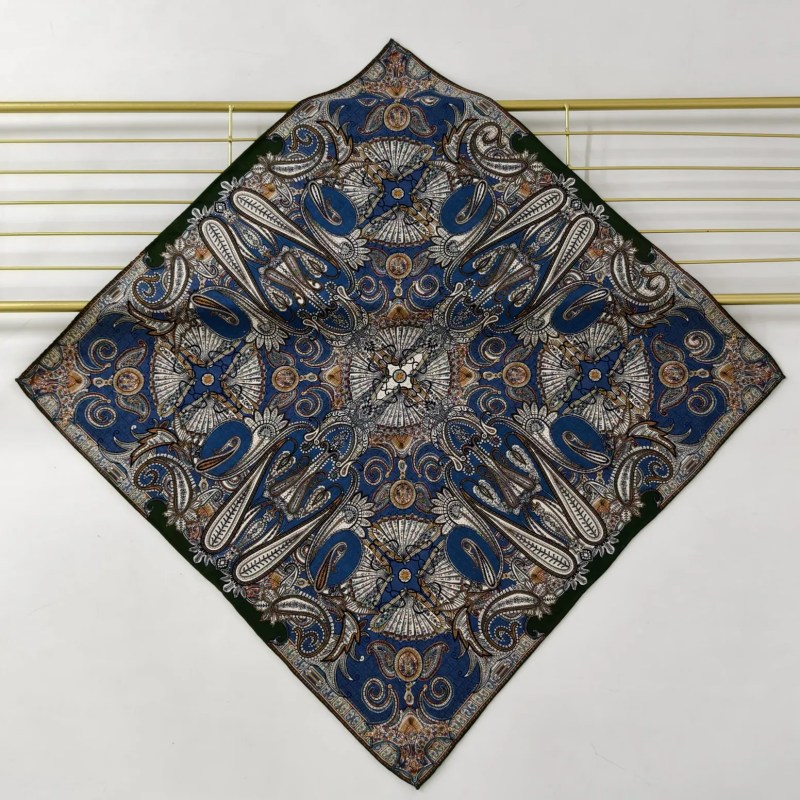
- Artwork: Consider woven patterns, digital printing, double-sided artwork, borders, logos, and repeat placement.
- Edges: Options may include fringes, eyelash edges, rolled hems, or other construction-appropriate finishes.
- Branding: Add woven labels, care labels, hangtags, inserts, pouches, sleeves, or gift boxes.
Review selected custom scarf cases to compare design directions and presentation options.
Care and Storage
Always follow the finished product's care label. Professional dry cleaning is often the safest choice for printed, fringed, structured, color-sensitive, or large silk-wool scarves. Do not assume a blend is machine washable merely because it contains wool or silk.
If the approved care instructions permit hand washing, use cool water and a detergent suitable for delicate protein fibers. Avoid soaking for long periods, rubbing, wringing, twisting, tumble drying, and direct heat. Support the wet scarf, press out moisture gently with a clean towel, reshape it, and dry flat.
Store the scarf clean and fully dry. Fold it loosely in a breathable container away from sunlight, moisture, perfume, cosmetics, and moth risk. Avoid hanging a heavy scarf for long periods because the fabric may stretch.
How to Choose the Right Specification
Questions to Answer Before Sampling
- Will the scarf be used mainly for warmth, styling, travel, gifting, or uniforms?
- What climate and season is the product designed for?
- Should it feel airy and soft or structured and warm?
- Does the design require printing, weaving, double-sided artwork, or solid dyeing?
- What finished size, edge treatment, labels, packaging, and care method are required?
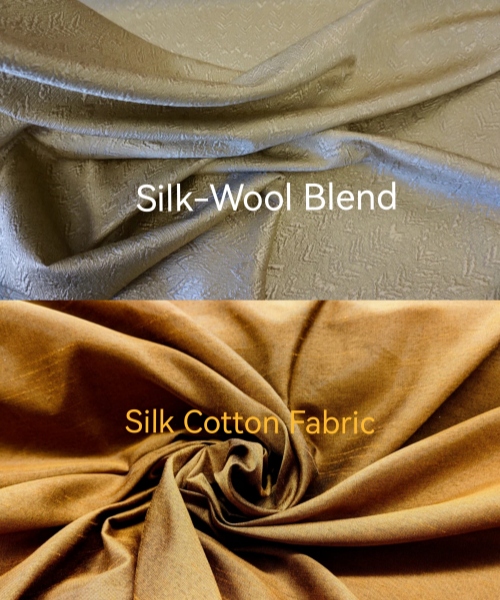
Approve a physical sample on the actual construction before production. Screen images cannot reliably communicate warmth, softness, transparency, surface texture, reverse-side appearance, or the way a large scarf moves when worn.
Frequently Asked Questions
What is a silk-wool blend scarf?
It combines silk and wool fibers in one fabric. Silk contributes softness, drape, color clarity, and a refined surface, while wool adds insulation, resilience, and warmth. The result depends on the fiber ratio, yarn, weave, weight, and finishing.
When can you wear a silk-wool blend scarf?
Silk-wool scarves are useful in autumn, winter, spring, cool evenings, air-conditioned offices, and travel. Lightweight constructions provide warmth without the bulk of a heavy winter scarf.
Is silk-wool warmer than silk-cotton?
Silk-wool is generally warmer because wool fibers trap insulating air. Silk-cotton is usually lighter and more breathable, making it better suited to warm climates and mild transitional weather.
How should a silk-wool scarf be cleaned?
Follow the care label. Professional dry cleaning is often safest for printed, fringed, structured, or color-sensitive scarves. If approved for hand washing, use cool water, suitable detergent, no twisting, and dry flat away from direct heat.
Can silk-wool blend scarves be customized?
Yes. Options can include composition and construction, scarf size, woven or printed artwork, single-sided or double-sided designs, fringes or rolled edges, labels, packaging, and color development.
Final Thoughts
A silk-wool blend scarf is most valuable when its material, size, artwork, finishing, and care instructions match a real use case. It can move easily from a cold commute to an office, flight, weekend outfit, evening event, or premium gift while maintaining a refined appearance.
Develop a Custom Silk-Wool Scarf
Send us your preferred size, composition, artwork, quantity, edge finish, labels, packaging, and target use. Our team will help you plan the material selection and physical sample.
Request a QuoteFast response within 24 hours