
Why This Should Remain a Manufacturing Guide
This page is best kept as a news and manufacturing guide. It should support the main custom silk scarf page and the custom printing page, but it should not become the primary product landing page. Its role is to explain what happens behind a printed silk scarf order so buyers can make better production decisions.
The article is strongest when it focuses on process control rather than broad marketing language. A scarf buyer may already have artwork, but the product is not production-ready until the fabric, print method, color proof, edge finish, label, packaging, MOQ, sample, and inspection standard are all connected.
Follow the Full Production Workflow
A practical silk scarf manufacturing workflow can start with artwork checking, then move into fabric selection, digital proofing, print approval, printing, steaming or fixation, washing, drying, hemming, inspection, folding, labeling, packaging, and carton packing. Each stage can affect the final product, so skipping one checkpoint can create color, fabric, edge, or presentation problems later.
Artwork checking looks at resolution, scale, borders, logo placement, repeat logic, corner details, and file format. Fabric selection confirms silk type, weight, hand feel, opacity, and drape. Print proofing checks whether the artwork and color work on real fabric. Finishing and packaging decide how the scarf feels in hand and how it appears when opened by the customer.
| Stage | Buyer checkpoint | Production risk controlled |
|---|---|---|
| Artwork check | Resolution, scale, border, logo, repeat, color reference | Distorted motifs, crowded borders, incorrect brand colors |
| Fabric selection | Twill, satin, crepe de chine, chiffon, weight, hand feel | Wrong drape, poor opacity, unexpected shine or texture |
| Print proofing | Physical color sample on the chosen fabric | Screen-to-fabric color mismatch and batch color risk |
| Finishing | Hand rolled, machine hem, baby hem, size tolerance | Uneven edge, lost border detail, poor retail appearance |
| Packaging | Label, fold, pouch, gift box, insert card, carton marks | Damaged presentation or unclear retail handling |
Use Digital Printing as the Main Route, With Screen Printing as an Option
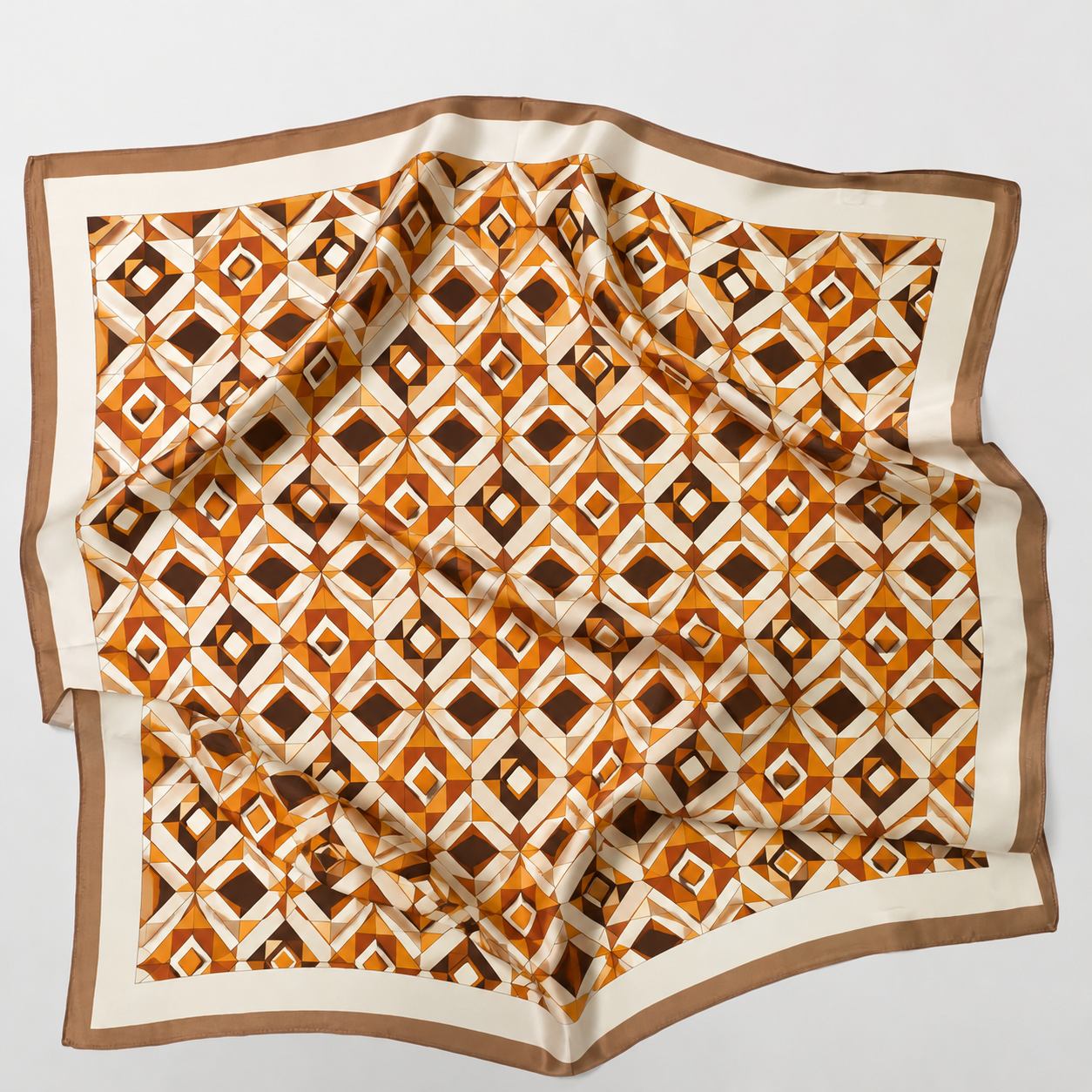
Digital printing is often the main route for modern custom silk scarf orders because it can handle detailed artwork, gradients, photographic elements, animal artwork, painterly effects, and small-batch development. It is useful when a brand needs flexible sampling or a design contains many colors.
Screen printing can still be relevant for certain projects, especially when the artwork uses fewer colors, the quantity is higher, or the buyer wants a more traditional print route. The decision should depend on artwork complexity, color count, fabric, order quantity, target price, and required color effect. A good supplier should explain the tradeoff before sampling, not after production has started.
Select Silk Fabric Before Color Approval
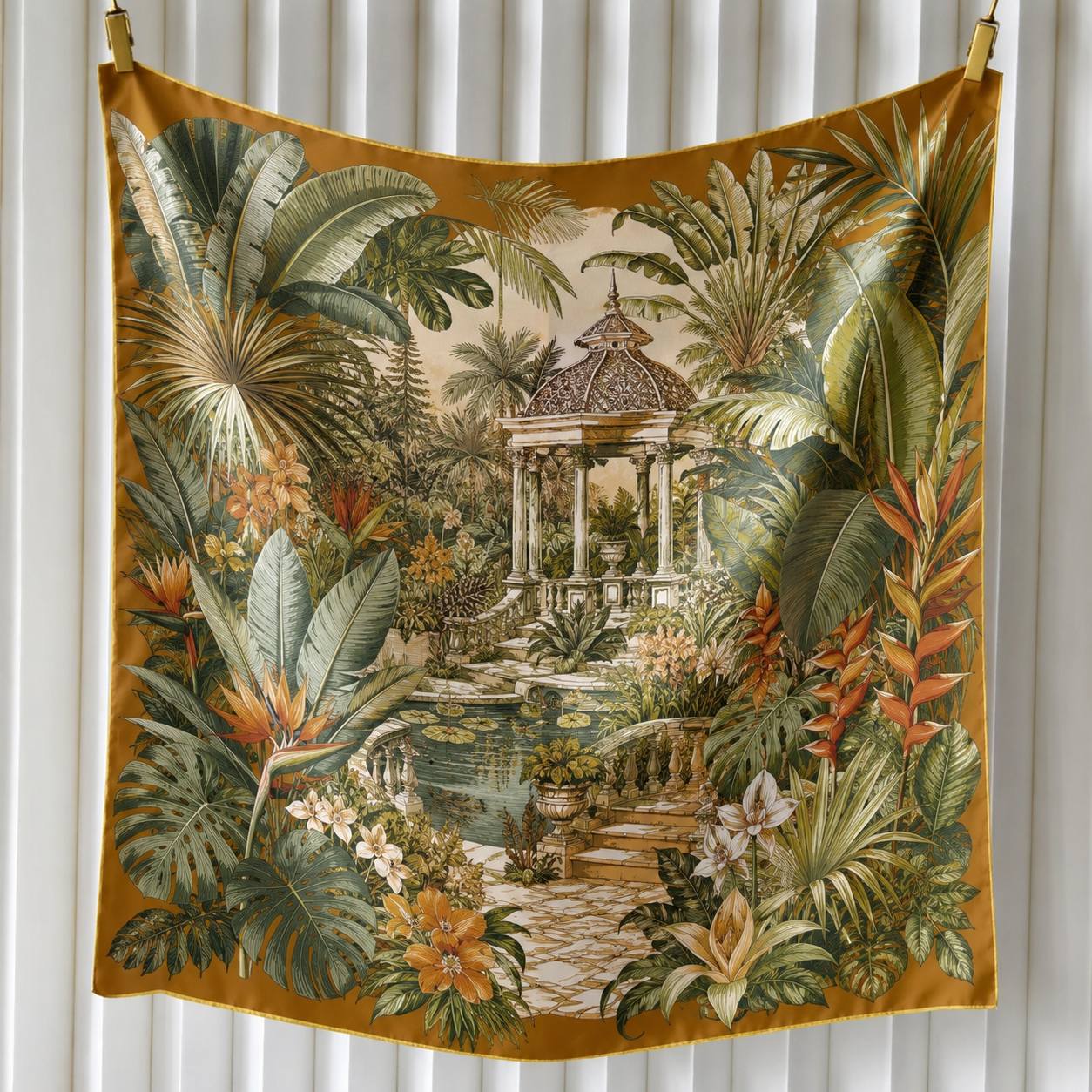
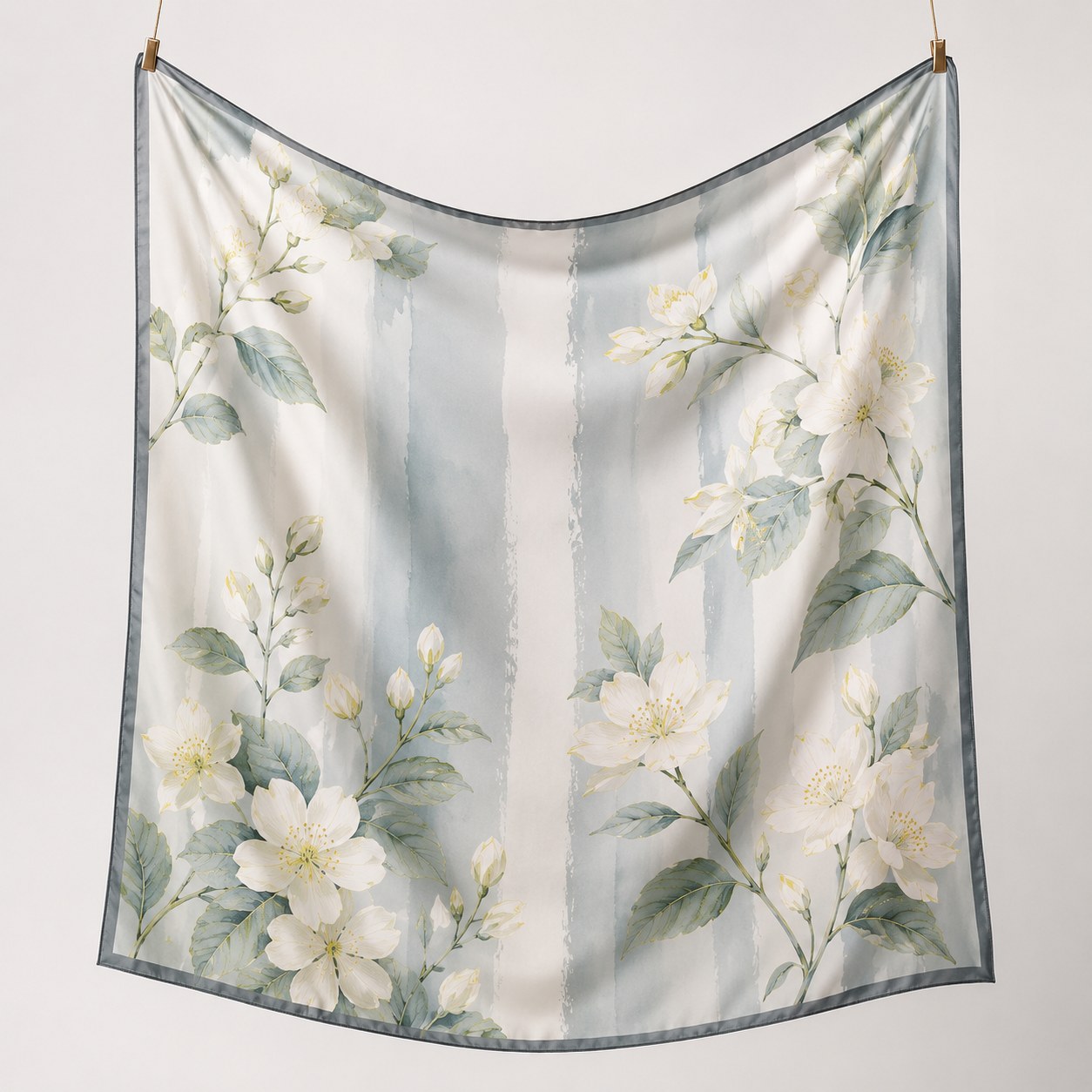
Fabric choice should come before final color approval because the same artwork can look different on different silk qualities. Silk twill gives structure, print clarity, and a refined diagonal texture. Silk satin creates a smoother and shinier surface, which can make colors appear more luminous. Crepe de chine gives a softer matte hand feel. Silk chiffon is lighter and more translucent, so color may appear softer when layered or worn.
Buyers should compare fabric options through fabric, colors, and craftsmanship review before confirming the printed sample. This step is especially important when the scarf includes brand colors, detailed artwork, borders, or premium packaging.
Control Color With Physical Samples
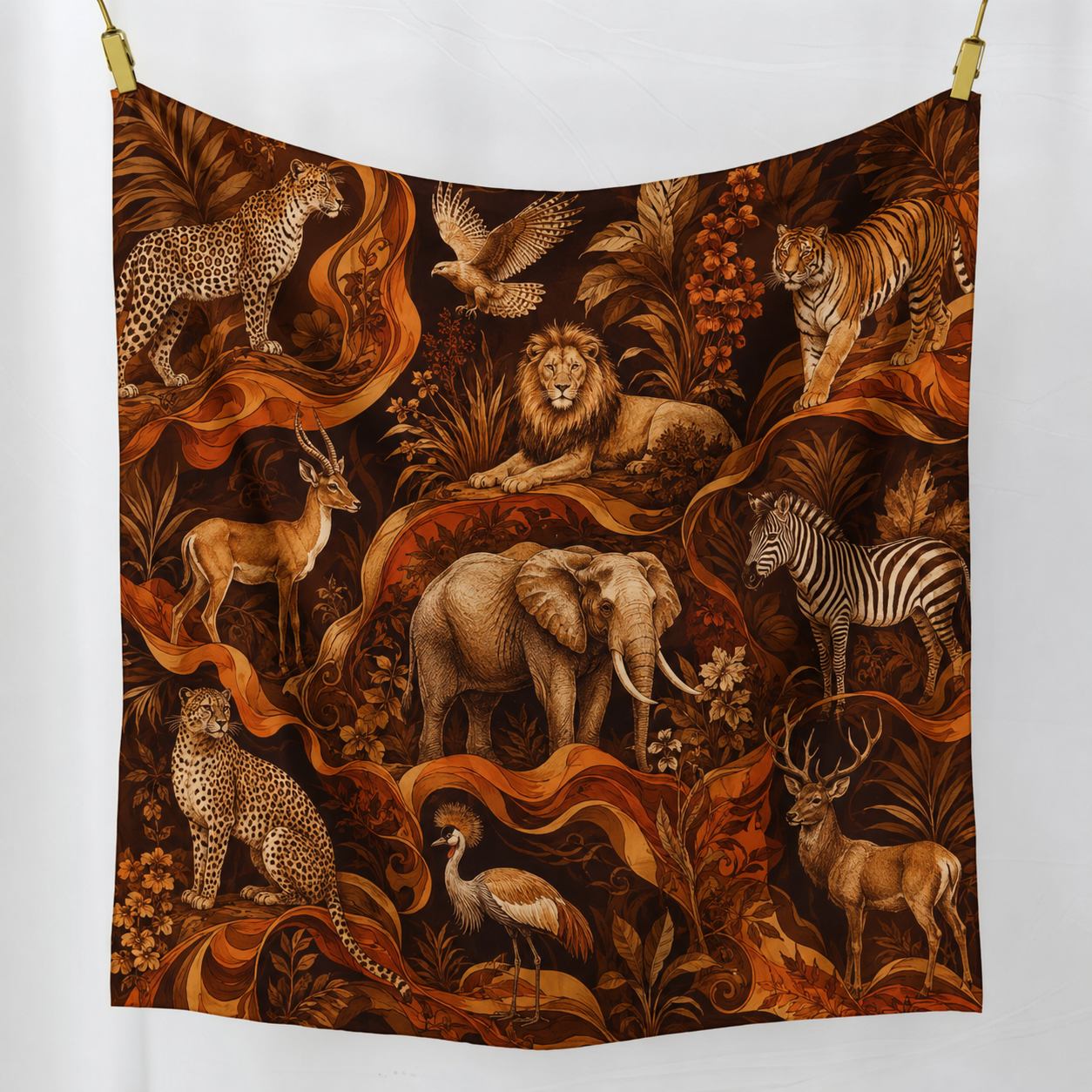
Color control should not rely only on screen previews. Silk sheen, fabric texture, print chemistry, lighting, and post-print processing can all change how a color appears. Buyers should provide Pantone references, physical color references, or approved sample targets when color accuracy matters.
Batch color difference is another practical risk. A sample and a bulk order may not be identical if the fabric lot, print settings, fixation, washing, or drying conditions change. The best approach is to approve a physical sample, define tolerance, and check bulk production against that approved reference. This protects both brand consistency and customer trust.
Finish, Label, Package, and Inspect the Scarf
After printing, scarves may go through steaming or fixation, washing, drying, softening, cutting, hemming, inspection, folding, labeling, and packing. Edge finishing should match the product positioning. Hand rolled hems are often used for premium square scarves. Machine hems are clean and stable for many wholesale programs. Baby hems can suit lighter scarf formats.
Private-label details should be planned before sampling. Buyers can confirm woven labels, printed care labels, hang tags, barcode stickers, SKU labels, pouches, gift boxes, tissue wrap, insert cards, and carton marks. DOCSUN's custom packaging support can connect scarf fold, label placement, box structure, retail presentation, and shipping requirements.
Many custom silk scarf projects can start from 30 to 50 pieces, depending on fabric, print method, size, edge finish, label, and packaging. Sampling usually takes about 5 to 7 working days after artwork, fabric, color reference, size, edge, label, and packaging details are confirmed. Before bulk delivery, inspection should check print sharpness, color consistency, stains, size tolerance, edge finish, label placement, folding, packaging, and carton marks.
FAQ
Why is digital printing used in modern silk scarf manufacturing?
Digital printing is useful for detailed artwork, gradients, rich color ranges, small-batch development, and faster sampling. It still needs fabric selection, color proofing, steaming or fixation, finishing, and inspection to create a reliable scarf product.
Does digital printing replace traditional scarf craftsmanship?
No. Digital printing improves artwork flexibility, but scarf quality still depends on silk fabric choice, color control, edge finishing, label placement, packaging, and final inspection.
Which silk fabrics work for printed scarf manufacturing?
Common options include silk twill, silk satin, crepe de chine, and silk chiffon. Each fabric changes print clarity, shine, drape, opacity, hand feel, and price.
What should buyers approve before bulk silk scarf production?
Buyers should approve artwork scale, fabric, print method, physical color sample, edge finish, label placement, packaging, MOQ, sample appearance, and bulk inspection standards before production.
Start a Digital Printed Silk Scarf Sample With DOCSUN
Send your artwork, target fabric, scarf size, print method preference, edge finish, label plan, packaging requirements, and quantity. DOCSUN can review the details and prepare a sample-ready manufacturing plan.
Start a Silk Scarf Project