
Quick answer: Silk satin has a smooth, glossy face and a soft, fluid drape. Silk twill has a visible diagonal weave, a quieter sheen, and more structure. Choose satin when luminosity and movement are central to the design; choose twill when you want crisp folds, secure knots, precise motifs, and the classic character associated with structured square scarves.
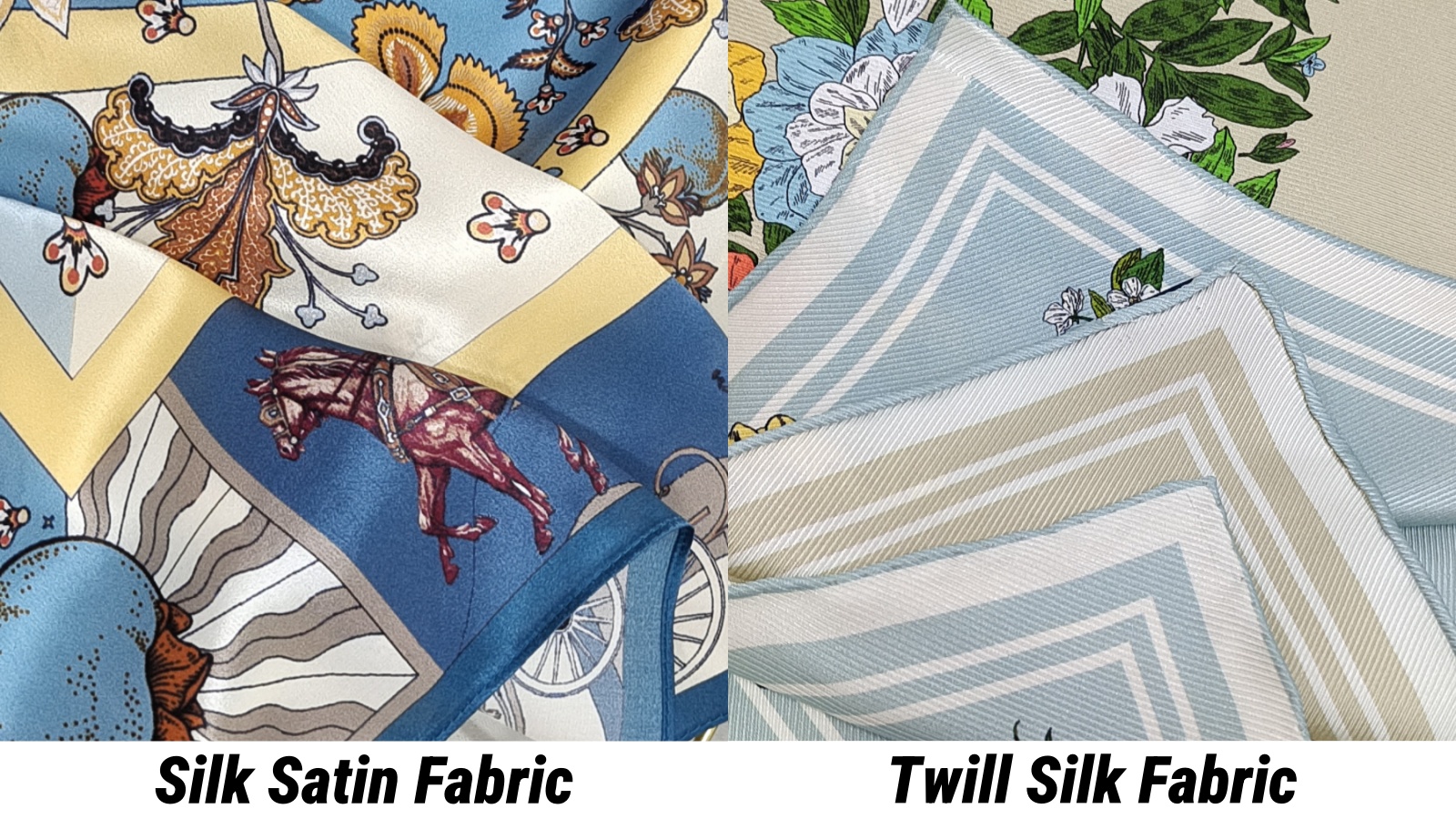
Satin and Twill Describe the Weave
Silk is the fiber; satin and twill describe how yarns are interlaced. This distinction matters because two scarves can both be made from 100% mulberry silk while behaving very differently. Fiber grade, yarn quality, weave density, momme weight, degumming, dyeing, printing, washing, and finishing all contribute to the final result.
"Silk satin" is a broad commercial term for silk woven with a satin structure. Charmeuse and crepe-backed satin are related constructions, but their yarn twist, weight, reverse surface, and hand feel can vary. A professional specification should therefore name the exact fabric construction and weight rather than relying only on the word "satin."
Silk twill uses a diagonal interlacing pattern. Its fine ribs are visible when viewed closely and provide more body and surface grip than a smooth satin face. Review the full range of silk fabrics, colors, and craftsmanship options before approving a collection fabric.
What Is Silk Satin?
Silk satin is recognized by its smooth face, high light reflection, and fluid drape. Longer yarn floats on the face reduce visible intersections, producing the glossy appearance. The reverse is normally less reflective, although the exact contrast depends on the construction.
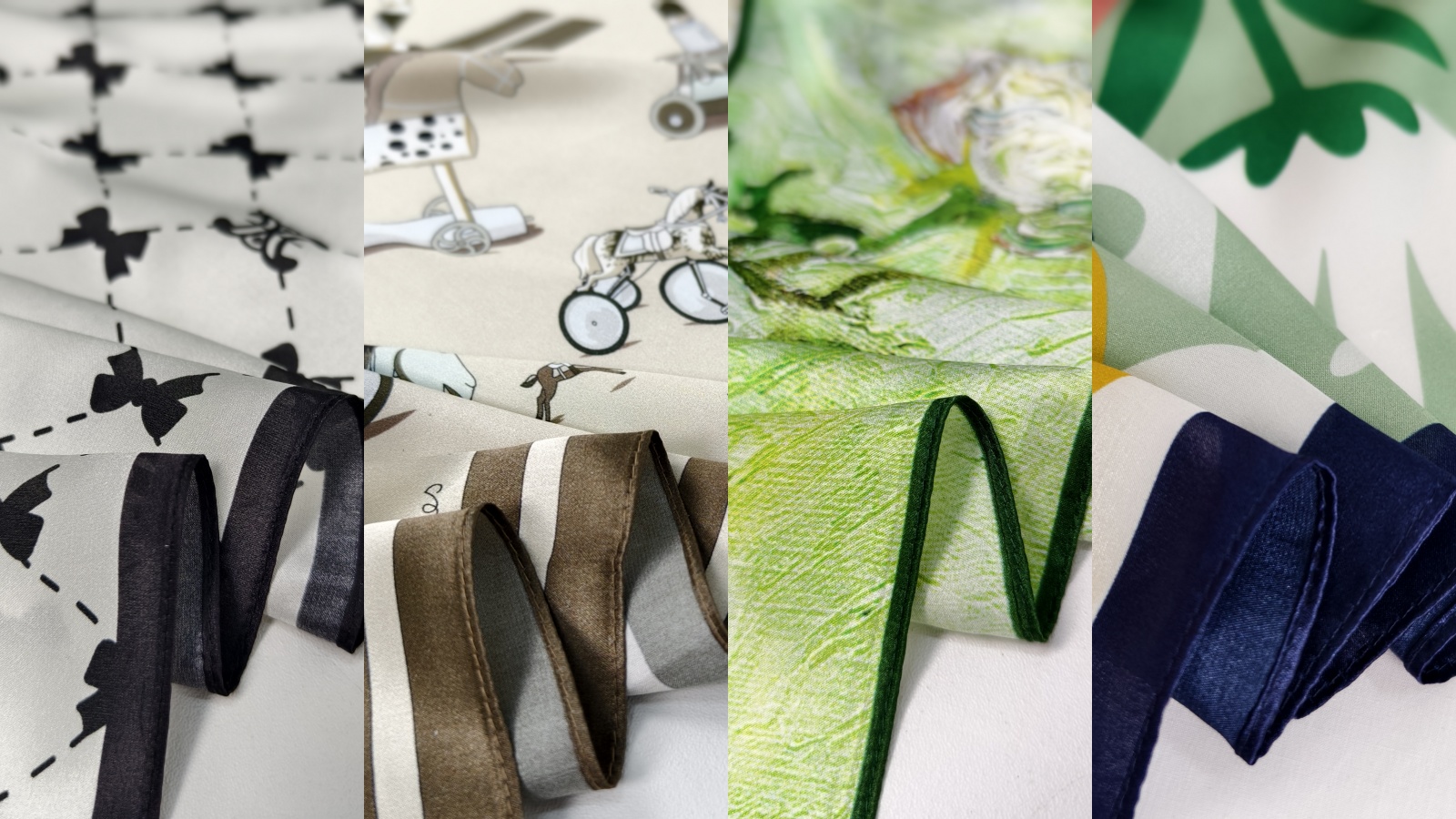
Key Characteristics of Silk Satin Scarves
- Surface: Smooth and highly reflective on the face, usually more matte on the reverse.
- Hand feel: Soft, cool, and slippery against the skin.
- Drape: Fluid and flowing, with soft folds rather than sharply defined structure.
- Visual effect: Makes rich colors, gradients, and highlights appear especially luminous.
- Typical uses: Evening scarves, bridal accessories, hair wraps, shawls, bag accents, and premium gifting.
Satin is compelling when a collection needs movement, shine, and a romantic or glamorous mood. Its smoothness can also make it more likely to slip when tied, and the glossy surface can reveal pulls, abrasion, or handling marks more readily than a textured weave.
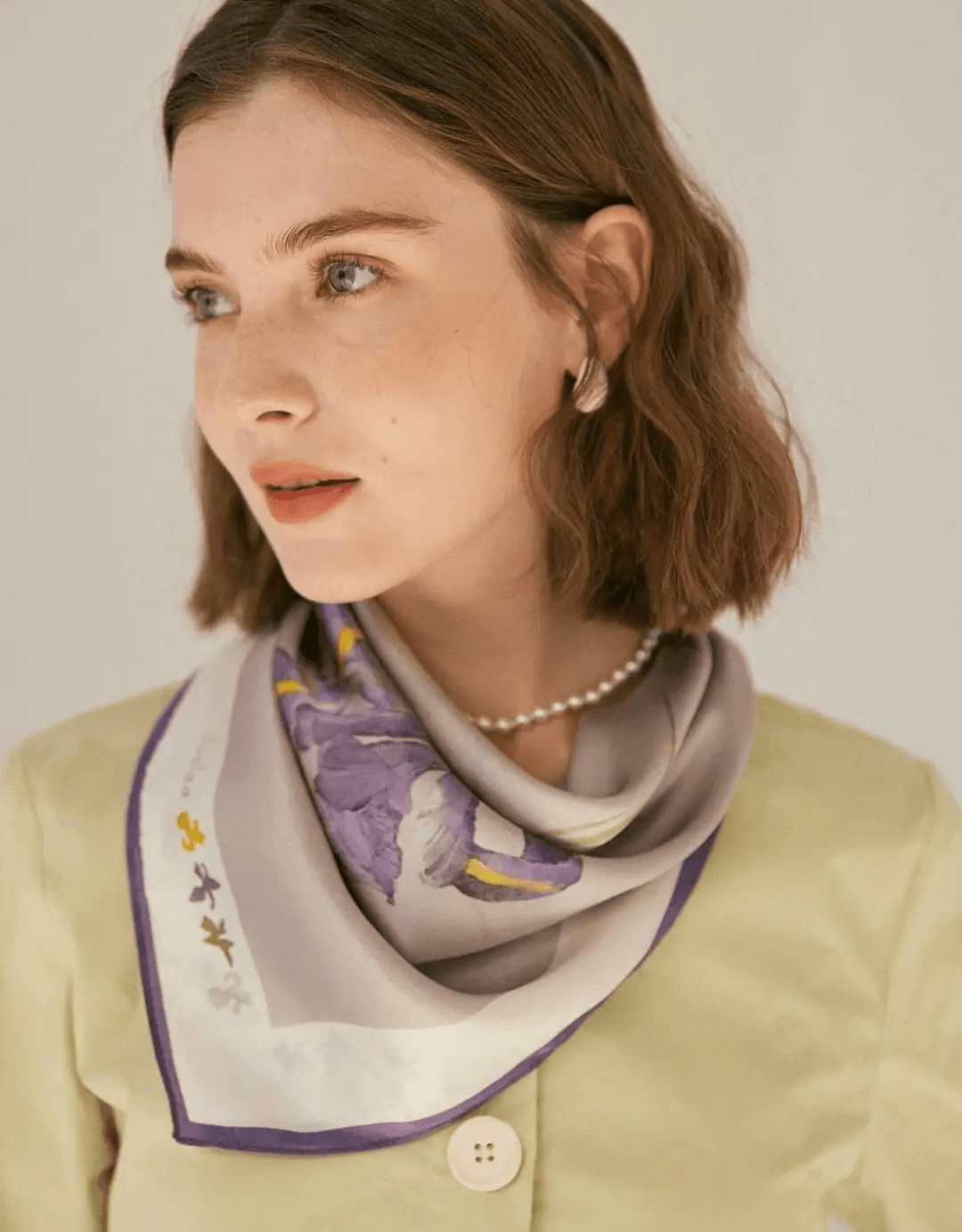
What Is Silk Twill?
Silk twill is identified by its fine diagonal ribs. The weave gives the fabric more body, dimensional stability, and grip while retaining the softness and lightness expected from silk. Its sheen is refined rather than mirror-like.
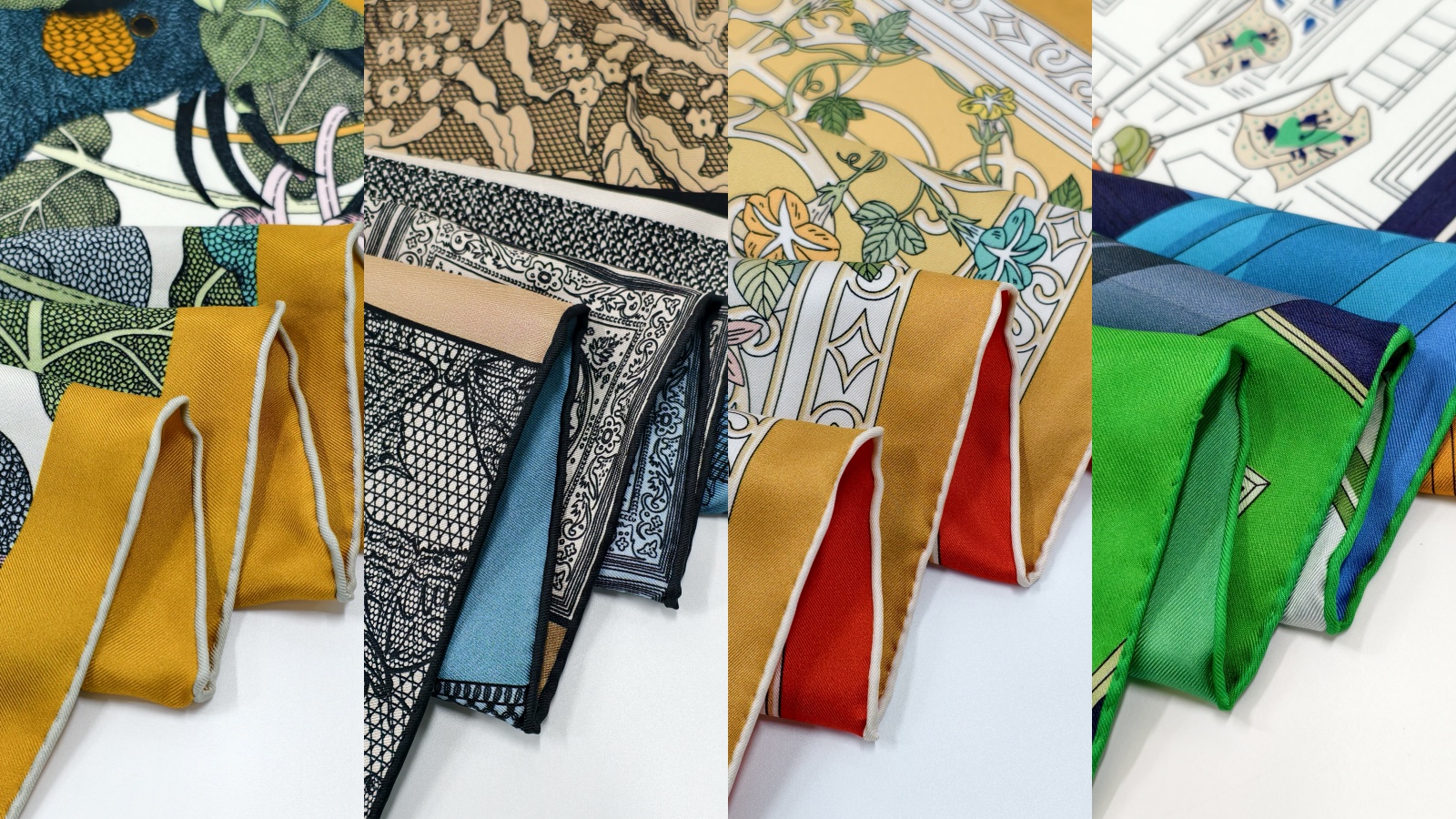
Key Characteristics of Silk Twill Scarves
- Surface: Fine diagonal texture with a soft, controlled sheen.
- Hand feel: Smooth but slightly grippier than satin.
- Drape: Supple with more structure and shape retention.
- Visual effect: Supports clean borders, line work, motifs, and balanced color reproduction.
- Typical uses: Classic square scarves, neckties, headbands, wrist wraps, corporate accessories, and collectible art scarves.
Twill is often selected for scarves that must look polished when folded, knotted, displayed, or worn repeatedly. It is not automatically more luxurious than satin; it simply communicates luxury through structure, texture, and precision rather than high gloss.

Silk Satin vs Twill: Side-by-Side Comparison
| Feature | Silk Satin | Silk Twill |
|---|---|---|
| Surface | Very smooth face, usually matte reverse | Fine diagonal ribbing with subtle texture |
| Shine | High, luminous reflection | Soft, refined sheen |
| Drape | Fluid, flowing, soft folds | Supple but more structured |
| Grip | Smooth and more likely to slip | Slightly more grip for knots and folds |
| Print character | Luminous colors, gradients, glossy visual effect | Precise motifs, borders, line work, balanced detail |
| Best styling | Hair wraps, shawls, evening and bridal looks | Classic neck scarves, headbands, wrist wraps, business styling |
| Brand impression | Romantic, fluid, glamorous | Classic, polished, graphic |
| Handling | Can show pulls or abrasion more readily | Generally easier to fold and style repeatedly |
These are practical tendencies, not absolute quality rankings. A dense satin can have more body than a lightweight twill, and finishing can change softness, shine, and drape. Always compare physical swatches at the intended weight.
Printing and Color Performance
Both fabrics are suitable for high-quality custom silk printing. The difference is how the weave and light reflection influence the perceived artwork.
On satin, the glossy surface can make saturated colors and gradients look vivid and dimensional. The same reflection can also change the appearance under different lighting and make very fine dark details feel less stable when the fabric moves. Color approval should include both controlled lighting and real-use lighting.
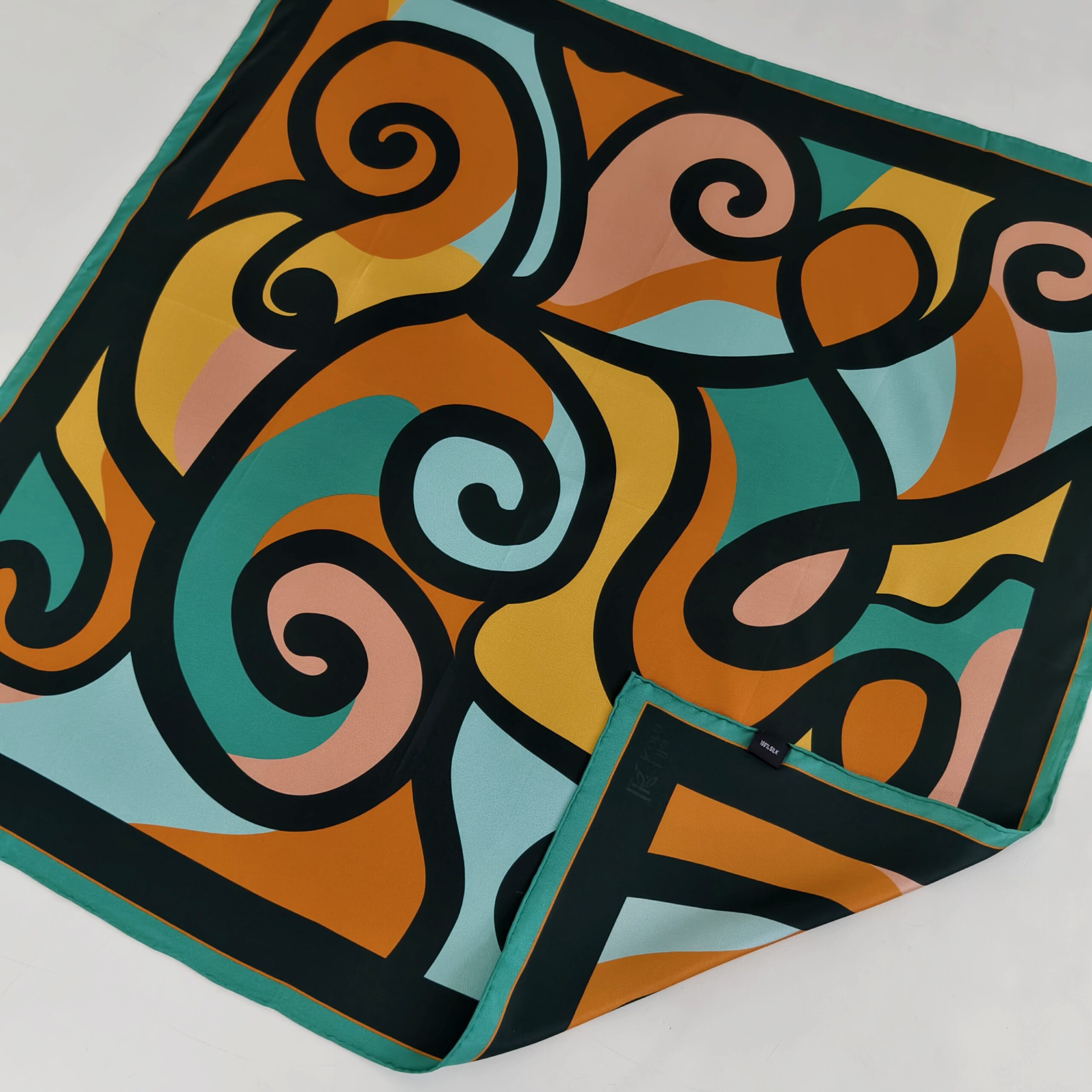
Twill's textured surface diffuses reflection and tends to present borders, illustrations, and small motifs with a controlled, graphic character. The diagonal structure remains part of the visual surface, so a strike-off should be reviewed at normal viewing distance as well as close up.
What to Check on a Physical Sample
- Color under daylight, retail lighting, and photography lighting
- Fine line clarity, border alignment, and small typography
- Print penetration and the appearance of the reverse side
- Fabric hand after steaming, washing, and finishing
- Interaction between the hem, scarf weight, and final drape
Drape, Knots, and Styling
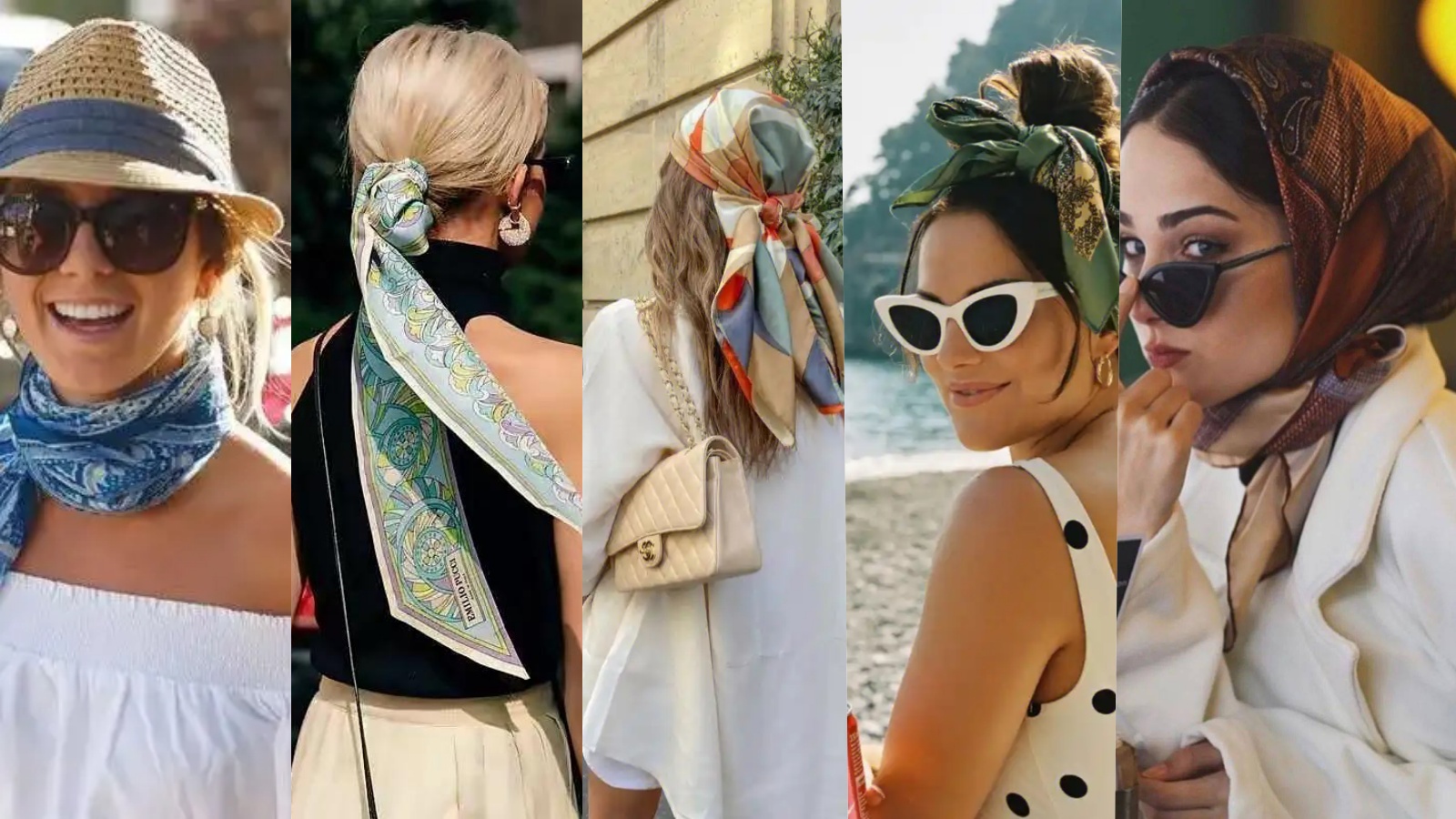
Satin falls close to the body and creates soft, elongated folds. It works well for loose neck drapes, hair wrapping, turbans, shawls, and occasions where movement catches the light. Small satin scarves may need thoughtful dimensions or tying methods because the smooth surface has less grip.
Twill creates cleaner points, fuller knots, and more recognizable folds. It is well suited to square scarves worn at the neck, on the head, around the wrist, or on a handbag. For structured styling, the combination of twill construction, scarf dimensions, and momme weight is more important than any single measurement.
Which Fabric Should Your Brand Choose?
Choose Silk Satin When
- The brand language is romantic, glamorous, bridal, or evening-focused.
- The artwork depends on luminosity, gradients, or saturated color.
- The scarf should flow softly as a shawl, hair wrap, or decorative accessory.
- A glossy face is part of the intended premium presentation.
Choose Silk Twill When
- The brand language is classic, graphic, tailored, or heritage-inspired.
- The artwork uses borders, detailed motifs, typography, or line work.
- The scarf must hold knots and folds for repeated styling.
- The collection centers on structured square scarves or business accessories.
If both directions fit the brand, sample the same artwork on satin and twill. Side-by-side sampling reveals differences that cannot be judged reliably from screen images alone. You can also review custom scarf cases for different design and finishing directions.
Custom Production Considerations
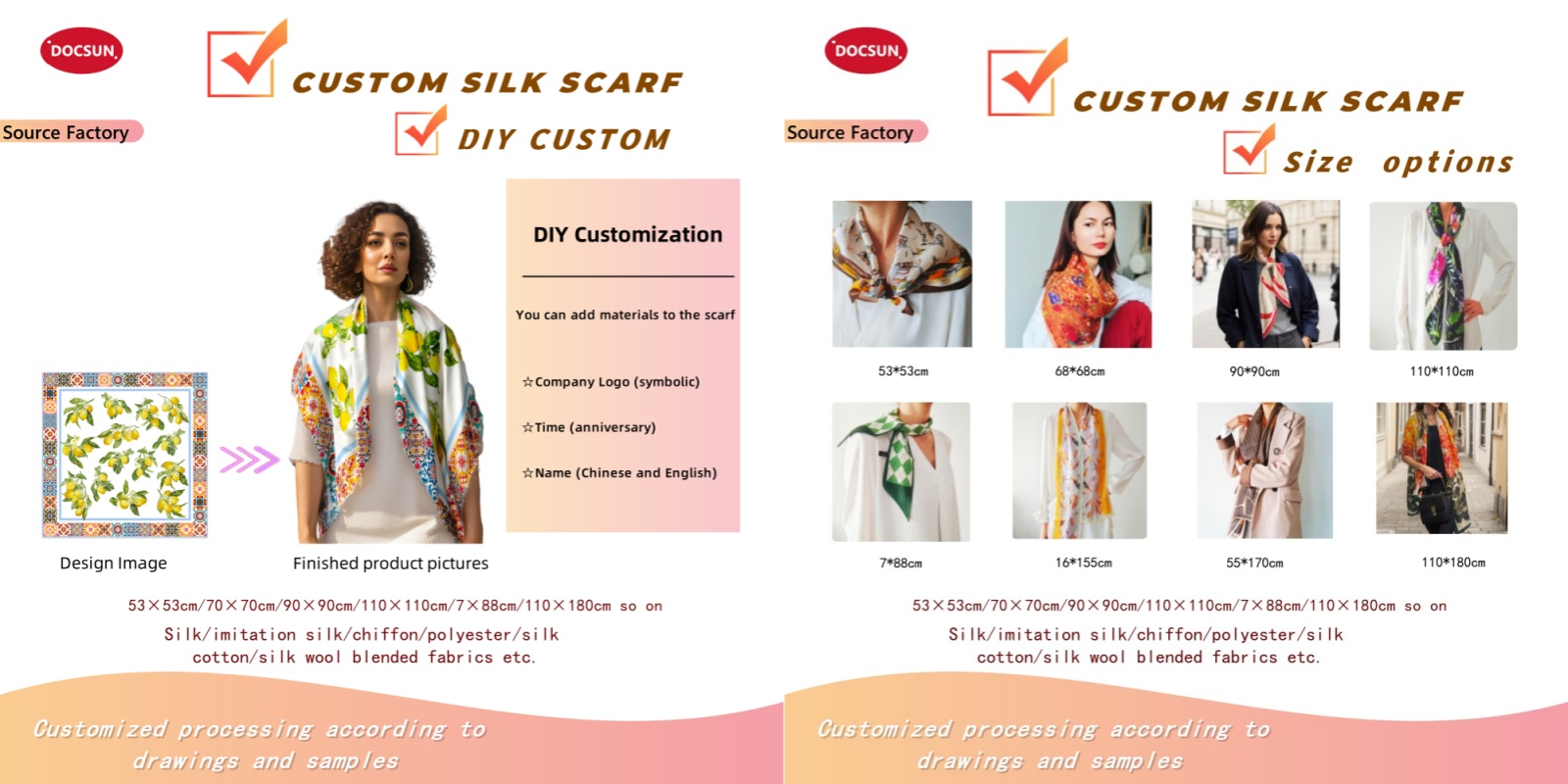
Fabric selection should be confirmed alongside size, print method, edge finishing, labels, packaging, target price, and delivery schedule. DOCSUN supports custom silk scarf development in silk satin, silk twill, and other constructions such as chiffon, georgette, and crepe.
Available specifications depend on the project, but common development options include multiple silk weights, custom dimensions, single-sided or double-sided printing, Pantone-referenced color development, hand-rolled or machine-finished hems, woven labels, care labels, hangtags, and custom packaging.
For edge selection, compare finish quality during sampling rather than judging by fabric name alone. A satin scarf and a twill scarf can both feel premium when the material, print method, hem, label, and packaging are specified as one complete product brief.
DOCSUN supports custom silk scarf orders starting from 1 piece for sampling and small-batch development. Bulk production quantities and pricing depend on fabric, size, printing, finishing, labels, packaging, and delivery requirements.
Color cards, fabric cards, and craftsmanship cards are available through DOCSUN offices in Australia, the United States, and the United Kingdom. Contact us to request the references most relevant to your project.
Frequently Asked Questions
What is the main difference between silk satin and silk twill scarves?
Silk satin has a smooth, glossy face and fluid drape. Silk twill has a subtle diagonal texture, softer sheen, and more structure. Satin emphasizes luminosity and movement, while twill holds folds and knots more clearly.
Is silk satin or silk twill better for printed scarves?
Both can produce premium printed scarves. Satin suits luminous color, gradients, and fluid styling. Twill is often preferred for precise motifs, borders, line work, and structured square scarves. Evaluate the artwork, size, weight, and intended use together.
Which silk fabric holds a scarf knot better?
Silk twill generally holds folds and knots more securely because its diagonal weave provides slightly more body and grip. Silk satin creates softer, more fluid knots and drapes.
Are silk satin and silk twill both made from mulberry silk?
They can both be woven from 100% mulberry silk. Satin and twill describe weave structures rather than fiber grade, so the fiber, weave, weight, finishing, and printing should all be specified.
What is the MOQ for custom silk satin or twill scarves?
DOCSUN supports custom silk scarf orders starting from 1 piece for sampling and small-batch development. Bulk production quantities and pricing depend on the fabric, size, printing method, edge finish, labels, packaging, and delivery requirements.
Final Recommendation
Choose silk satin for shine, softness, and fluid visual movement. Choose silk twill for controlled sheen, precise pattern presentation, and structured styling. Neither weave is universally better: the right choice is the one that supports the artwork, customer, use case, price position, and brand identity.
Compare Satin and Twill for Your Scarf Project
Send us your artwork, preferred scarf size, quantity, finishing, and target use. Our team can help you compare suitable silk constructions and plan a physical sample.
Request a QuoteFast response within 24 hours