Why This Should Remain a Trend Guide
This URL is best kept as a news guide because it answers a broad trend and styling question. It should not become the main product landing page. Instead, it can support the custom silk scarf service page and the broader custom scarves category by helping buyers understand which trend directions can become real products.
The mistake many buyers make is treating trends as mood-board language only. For production, every trend has to become a specification: size, fabric, artwork file, print method, color reference, edge finish, label placement, packaging, MOQ, and sample approval. A fashionable idea becomes useful only when it can be made consistently and delivered in a form that fits the brand's retail plan.
Styling Directions That Affect Product Design
Neck styling, hair scarf styling, handbag wraps, wrist styling, belt accents, and shoulder styling all remain useful directions for silk scarves. But each styling use points to a different product structure. A hair scarf needs softness, smaller scale, and comfortable edges. A handbag wrap needs strong border artwork because the scarf is often folded into a narrow strip. A neck scarf needs a fabric and size that drape well. A statement shoulder scarf needs more artwork space and a stronger central composition.
Brand buyers should define the primary use before choosing the scarf size. One scarf can be styled in multiple ways, but a collection is stronger when each format has a clear role. For example, a 53cm or twilly can support hair and handbag styling, a 70cm square can work for everyday neckwear and gifts, and a 90cm or 110cm square can support luxury storytelling and more dramatic fashion presentation.
Artwork and Print Directions for Brand Collections
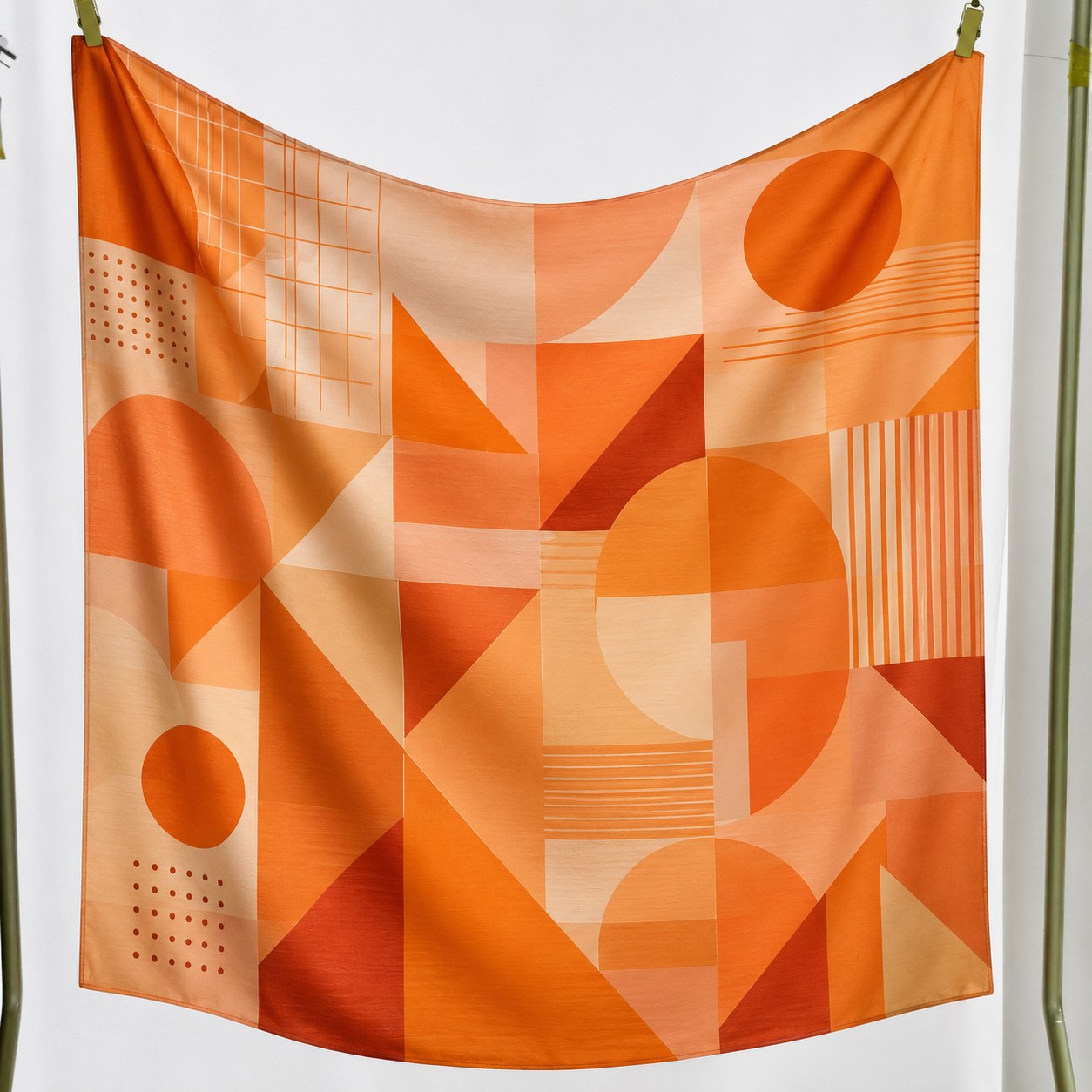
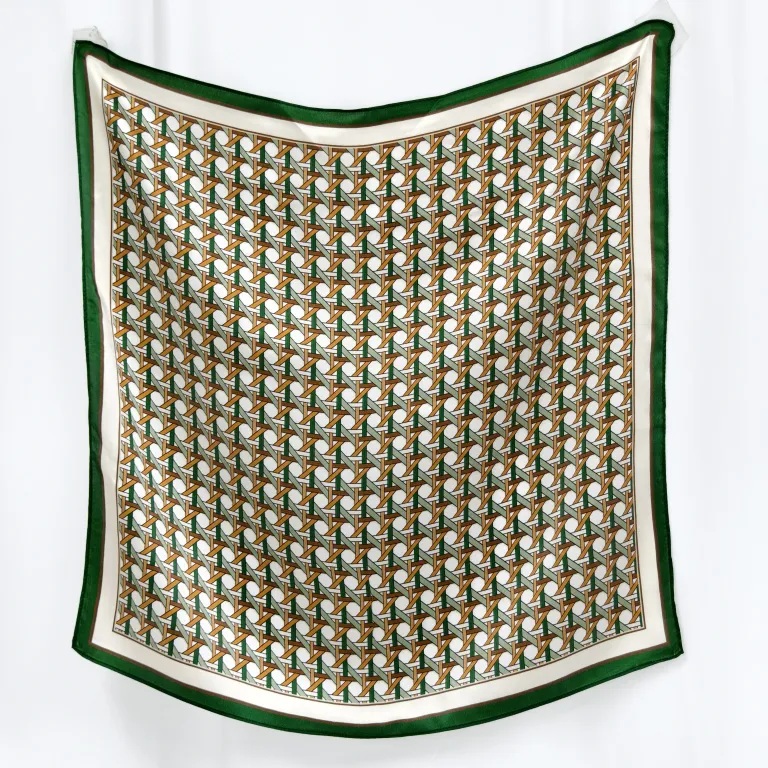
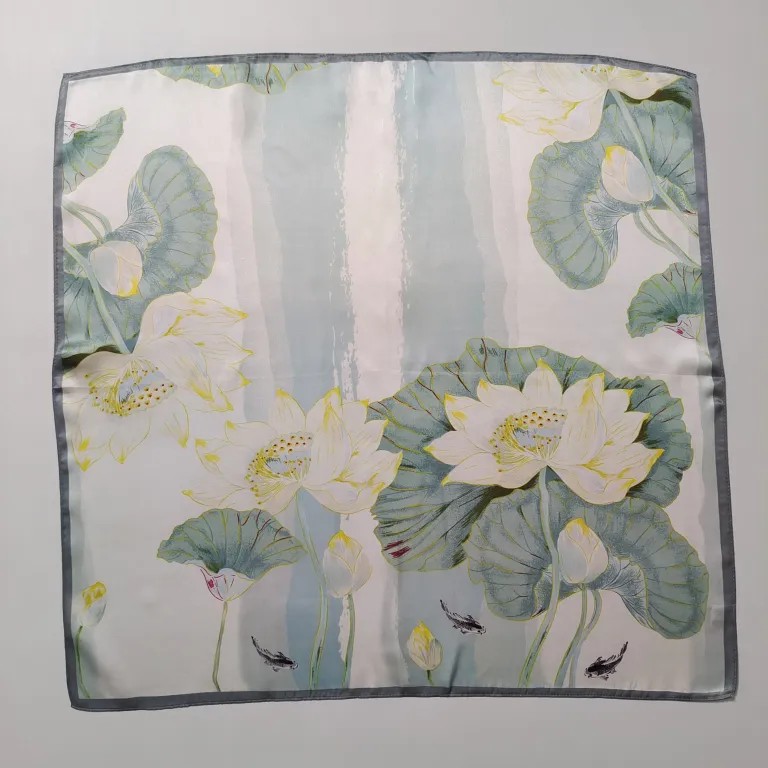
Fashion scarf artwork can move in several directions: floral prints, illustrated borders, animal artwork, paisley, city or map motifs, logo patterns, abstract compositions, color-block layouts, and heritage-inspired graphics. Floral artwork works well for soft fashion and gift stories. Illustrated borders are useful for premium squares because they remain visible when folded. Animal artwork can create a strong collector or museum-shop feeling. Logo patterns can support corporate gifts, uniforms, and brand merchandise when handled with enough restraint.
Artwork should be reviewed as a product, not only as a flat image. Buyers should check how the motif appears when folded, tied, wrapped around a bag, or displayed in packaging. Digital printing is useful for detailed artwork, gradients, and small-batch development, while other methods can be discussed depending on artwork, color count, and quantity. The custom printing workflow should include artwork scale, border placement, proofing, and physical sample review.
Silk Fabric Choices Behind the Trend
Fabric turns a trend into a product buyers can feel. Silk twill is often chosen for premium square scarves because it has structure, print clarity, and a refined diagonal texture. Silk satin gives a smoother surface and stronger shine, suitable for polished gift or fashion lines. Crepe de chine feels softer and more matte, which can work for wearable daily styling. Silk chiffon is lighter and more translucent, useful for airy looks and long scarf formats. Silk habotai can be considered for lightweight or more price-sensitive scarf programs.
Fabric choice also affects color. A bright design on satin may feel more luminous, while the same artwork on crepe de chine may look softer. A border print on twill may feel more substantial. Buyers should review silk weight, hand feel, opacity, print clarity, color reference, and target price through fabric, colors, and craftsmanship planning before confirming the sample.
| Silk fabric | Best trend use | Buyer checkpoint |
|---|---|---|
| Silk twill | Premium squares, borders, animal artwork, collector scarves | Check structure, print clarity, and folded border view |
| Silk satin | Glossy fashion gifts and polished color stories | Check shine, color depth, and handling marks |
| Crepe de chine | Soft matte styling and wearable daily scarves | Check drape, texture, and print softness |
| Silk chiffon | Airy long scarves and lightweight styling | Check transparency, edge comfort, and movement |
| Silk habotai | Lightweight programs and more flexible price targets | Check hand feel, opacity, and final packaging |
Size Planning for Different Styling Uses
Size is where trend language becomes practical. A 53cm square works for neckerchiefs, hair styling, and bag accessories. A 70cm square gives more artwork space while staying compact for gifting. A 90cm square is a classic luxury format for borders, central motifs, and premium packaging. A 110cm square gives a more dramatic fashion statement. Twilly and long scarf formats work for hair, handbag handles, belts, uniforms, and narrow artwork layouts.
Buyers should also consider packaging when selecting size. A 90cm square may need a larger fold, stronger box, and more premium presentation. A twilly or 53cm square can fit into a smaller pouch or carded package. If the collection includes multiple sizes, each size should have its own artwork crop, edge plan, and folded presentation.
Edges, Labels, Packaging, MOQ, and Sampling
Edge finishing changes both the look and the cost of a silk scarf. Hand rolled hems are often used for premium square scarves. Machine hems are clean and practical for many wholesale orders. Baby hems can suit lighter fabrics and delicate scarf formats. The edge should be planned with the artwork margin so borders, logos, and corner motifs do not become crowded after hemming.
Labels and packaging complete the brand experience. Buyers can plan woven labels, printed care labels, hang tags, barcode stickers, paper sleeves, pouches, gift boxes, tissue wrap, custom cards, and carton marks. Packaging should match the scarf size, fold, target price, and selling channel. DOCSUN's custom packaging support can connect scarf, label, fold, pouch, box, insert card, and carton requirements.
Many custom silk scarf projects can start from 30 to 50 pieces, depending on fabric, print method, size, edge finish, label, and packaging. Sampling usually takes about 5 to 7 working days after artwork, fabric, size, color reference, edge, label, and packaging details are confirmed. Before bulk production, buyers should approve the physical sample as a full product, not only a printed panel.
| Trend decision | Production decision | Why it matters |
|---|---|---|
| Hair scarf | Small square, soft silk, comfortable edge | Improves wear comfort and styling flexibility |
| Handbag wrap | Border artwork, 53cm/70cm/twilly format | Keeps the motif visible when folded |
| Luxury neck scarf | Silk twill or satin, refined hem, gift packaging | Supports premium retail positioning |
| Statement square | 90cm or 110cm, central artwork, stronger box | Gives more space for storytelling and display |
FAQ
Are silk scarves still useful for fashion brand collections?
Yes. Silk scarves remain useful because they can carry artwork, support multiple styling uses, fit gift programs, and connect fashion, accessories, travel retail, museum merchandise, and private-label collections.
What scarf sizes should brand buyers compare?
Brand buyers can compare 53cm, 70cm, 90cm, 110cm, twilly, and long scarf formats. The best size depends on styling use, artwork scale, target price, packaging, and retail presentation.
Which silk fabrics work for custom scarf trends?
Common options include silk twill, silk satin, crepe de chine, silk chiffon, and silk habotai. Each fabric changes print clarity, shine, drape, hand feel, opacity, and price.
What should buyers approve before producing a fashion scarf collection?
Buyers should approve artwork scale, fabric, size, print color, edge finish, label placement, packaging, sample appearance, MOQ, and the way each scarf is styled, folded, and packed.
Plan a Custom Silk Scarf Collection
Share your trend direction, target size, silk fabric, artwork, edge finish, label plan, packaging style, MOQ, and launch schedule. DOCSUN can help turn the concept into a sample-ready custom silk scarf program.
Contact DOCSUNStart from the main custom silk scarf service page or send your artwork for production review.