
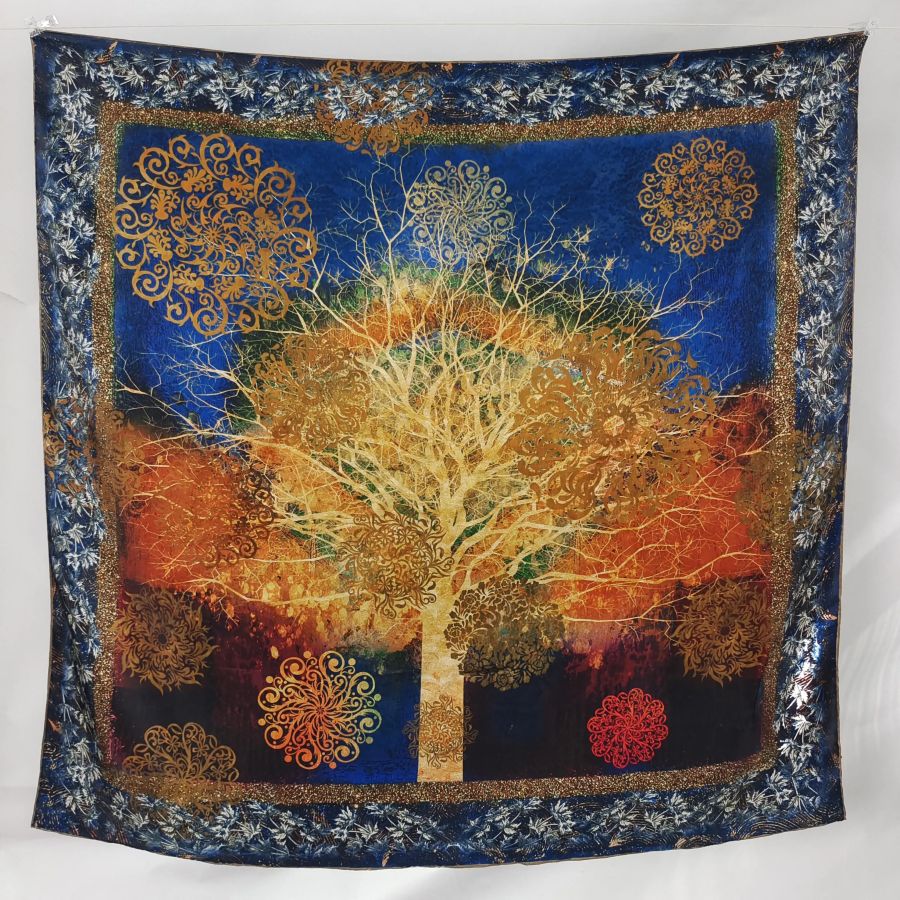
Silk vs. Cashmere at a Glance
Silk and cashmere are both premium natural fibers, but they communicate different types of luxury. Silk is smooth, luminous, and naturally elegant. It supports detailed prints, crisp borders, saturated colors, and polished styling. Cashmere is soft, warm, and tactile. It gives a scarf more body and a colder-season feeling.
For a fashion brand, this choice affects the whole product brief: scarf size, artwork scale, retail season, packaging, care label, target price, and even photography direction. A silk scarf can work as a neck scarf, hair scarf, bag accessory, or gift piece. A cashmere scarf usually sits closer to outerwear, winter gifting, and cozy premium styling.
When Silk Is the Better Scarf Material
Mulberry silk is often the stronger option when the scarf is design-led. If your collection depends on print clarity, color precision, hand-painted artwork, logo placement, borders, or luxury gift appeal, silk gives the artwork a cleaner surface.
Silk also suits brands that want a scarf to be worn across seasons. A 90cm silk square can work around the neck, in the hair, on a handbag, or as a styling accent. For custom programs, this flexibility helps one design support multiple selling stories.
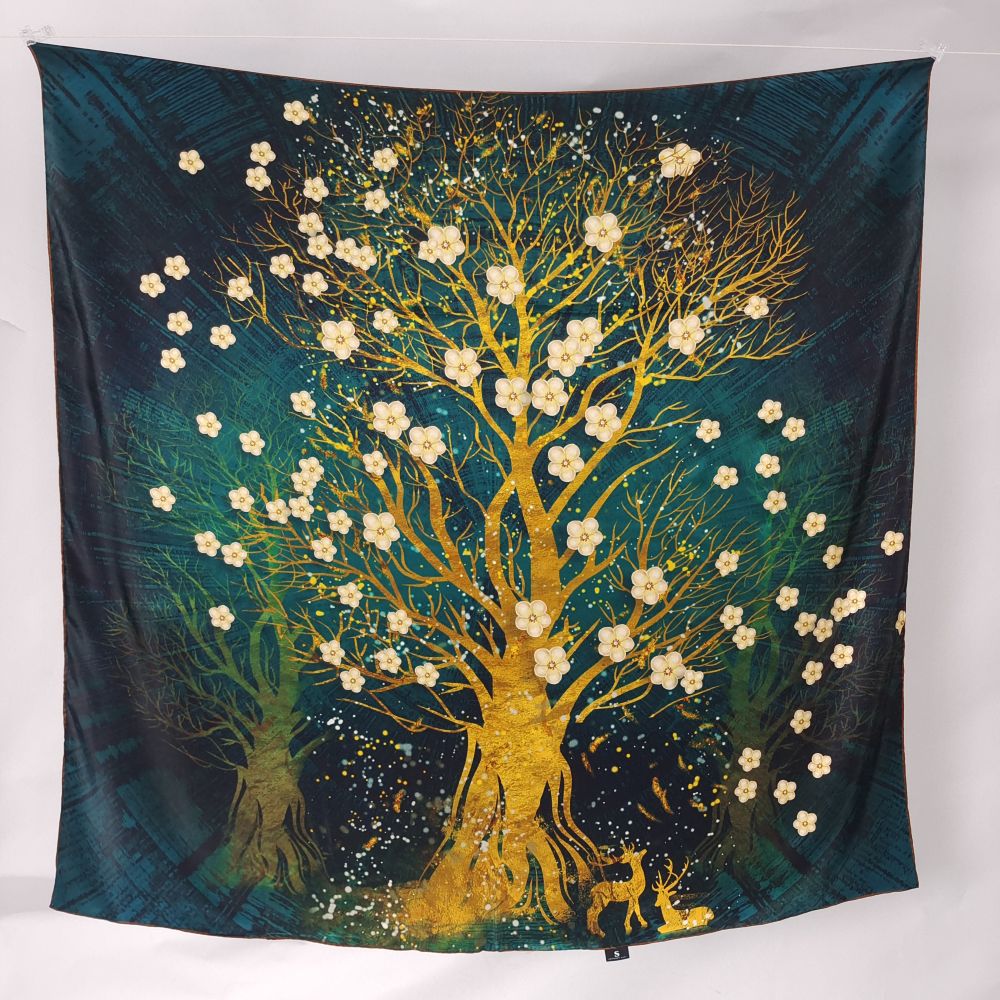
Best Use Cases for Silk Scarves
- Printed square scarves for fashion, museum, lifestyle, and resort collections.
- Corporate or brand scarves where logo clarity and color matching matter.
- Hair scarves, bag scarves, neck scarves, and lightweight gift accessories.
- Premium private label scarves with custom labels, edge finishing, and packaging.
For artwork-led projects, start from the custom silk scarf brief, then confirm print method through custom printing.
When Cashmere Is the Better Scarf Material
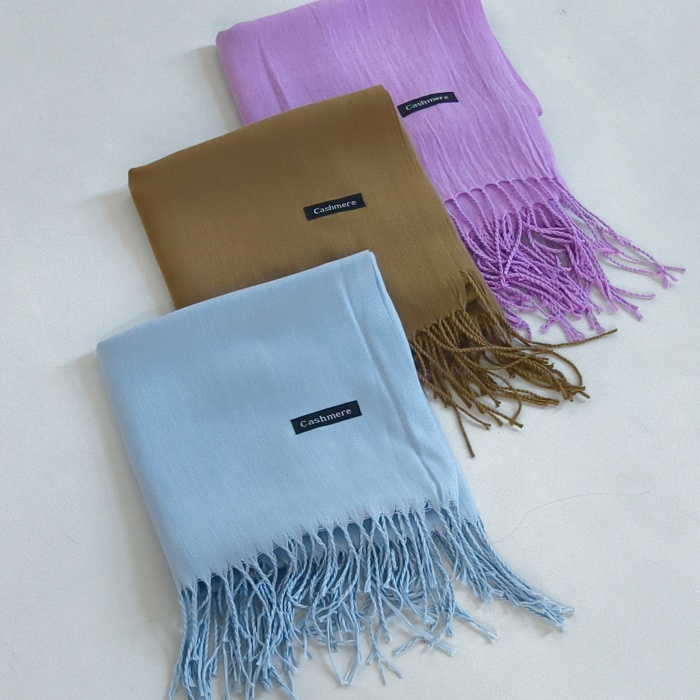
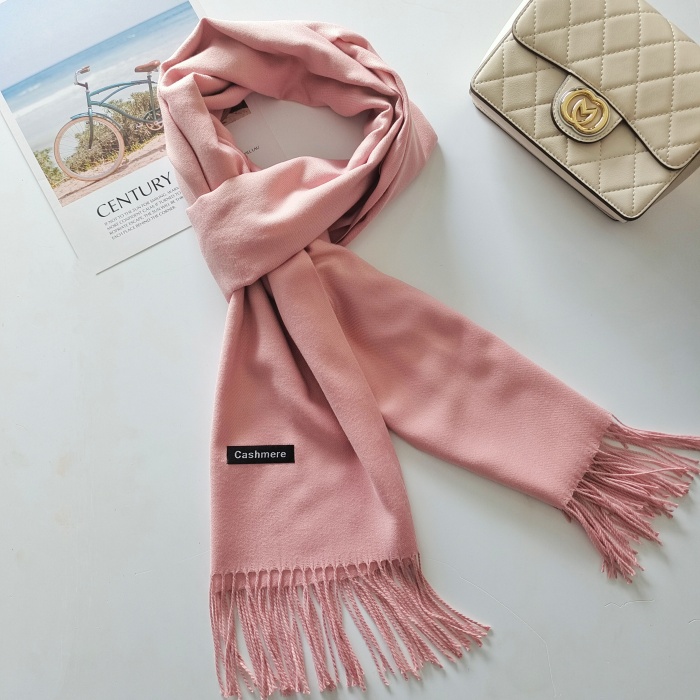
Cashmere is the stronger choice when warmth, softness, and winter value are the main selling points. Compared with silk, cashmere creates a fuller look and a softer brushed surface. It works well for cold-weather styling, outerwear assortments, holiday gifting, and premium capsule collections.
Because cashmere carries a strong material story, buyers usually expect clear fiber content, careful finishing, and care instructions. The product should feel substantial without becoming heavy, and the color palette often leans into neutrals, soft pastels, checks, or refined seasonal shades.
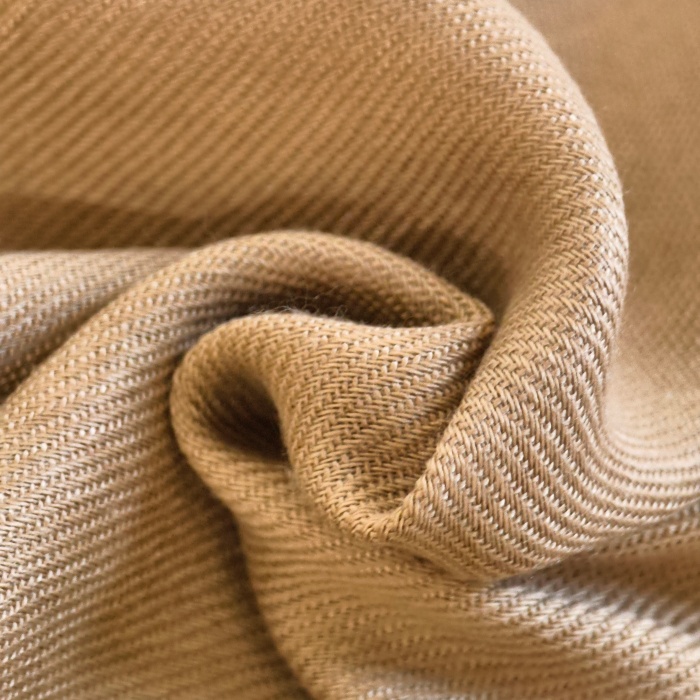
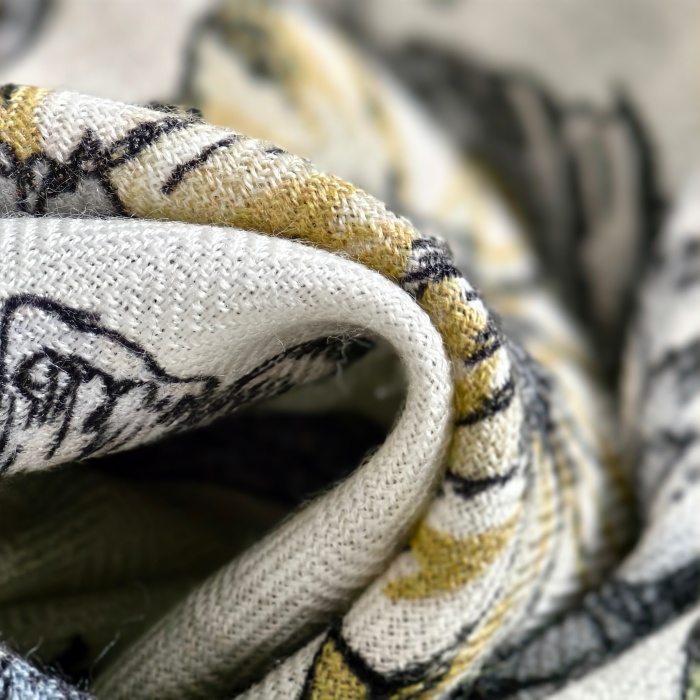
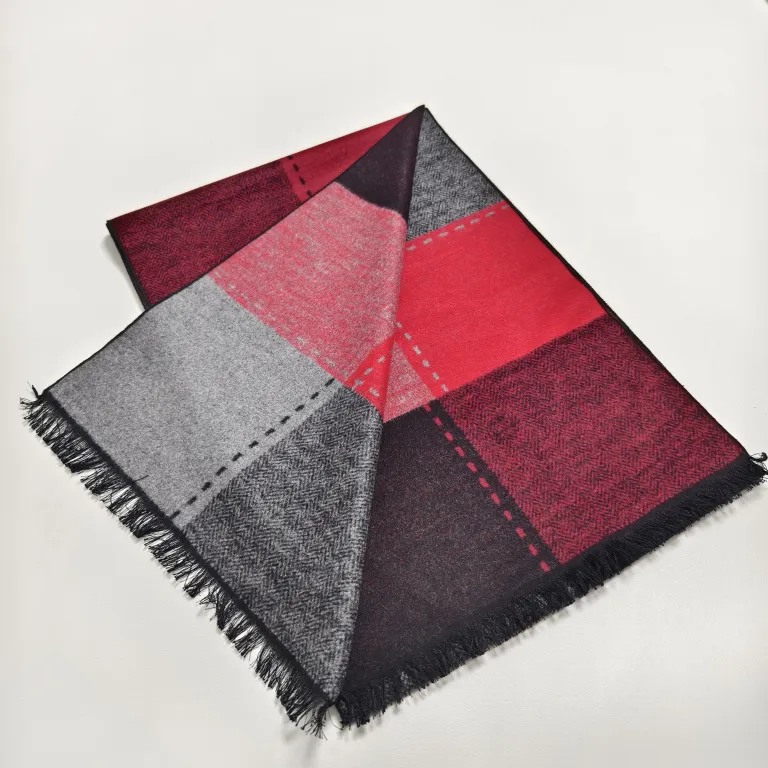
Brushed Mulberry Silk and Cashmere-Like Touch
Some scarf developments sit between these two material stories. A brushed mulberry silk scarf is still silk, not cashmere, but the brushing process can create a warmer and softer surface that feels closer to cashmere in hand. This can be useful when a brand wants a cashmere-like touch while keeping silk fiber content and a lighter product structure.
This distinction matters for accurate product copy and compliance. Do not describe brushed silk as cashmere. Instead, position it as brushed mulberry silk with a soft, warm, cashmere-like hand feel.
Comparison Table for Buyers
| Factor | Mulberry Silk Scarf | Cashmere Scarf |
|---|---|---|
| Best season | Spring, summer, transitional weather, year-round styling | Autumn, winter, cold climates, holiday gifting |
| Hand feel | Smooth, cool, light, fluid | Warm, soft, brushed, cozy |
| Design strength | Print clarity, borders, fine artwork, color brightness | Texture, warmth, volume, premium winter story |
| Common formats | Square scarf, neck scarf, hair scarf, bag scarf | Long scarf, wrap, shawl, winter accessory |
| Care expectations | Gentle wash or dry clean, protect from friction and harsh sun | Dry clean or careful hand wash, dry flat, protect from moths |
| Brand fit | Artwork-led fashion, resort, gift, corporate, lifestyle | Winter luxury, outerwear, gift sets, premium basics |
Customization and Production Planning
Material choice should come before artwork finalization. A silk scarf can carry fine lines, detailed illustrations, and high-saturation colors. A cashmere scarf may need a softer palette, larger motifs, yarn-dyed structures, or simpler graphic placement depending on the fabric and production route.
For custom scarf development, confirm the target customer, season, scarf size, fabric weight, artwork style, color standard, label, edge finish, packaging, MOQ, and delivery schedule. For broader range planning, review scarf custom cases, choose materials through fabric, colors, and craftsmanship, and prepare retail presentation with custom packaging.
Frequently Asked Questions
Is silk or cashmere better for a designer scarf?
Silk is better for lightweight drape, shine, print clarity, and year-round styling. Cashmere is better for warmth, soft volume, and cold-weather luxury.
Which scarf material is better for printed designs?
Mulberry silk usually gives sharper print detail and brighter color because the surface is smoother. Cashmere creates a softer and more textured visual effect.
Is brushed mulberry silk the same as cashmere?
No. Brushed mulberry silk is still silk. It can have a warmer, cashmere-like touch, but it should not be labeled as cashmere.
Can DOCSUN help with silk and cashmere scarf development?
Yes. DOCSUN can support material selection, custom printing, sizing, edge finishing, labels, packaging, and collection planning for custom scarf programs.
Which material is easier to care for?
Both require gentle care. Silk should avoid harsh detergent, friction, and direct sun. Cashmere should be washed carefully, dried flat, and stored away from moths.
Final Thoughts
Silk and cashmere are not competitors in a simple sense. They answer different customer needs. Silk is the better material for fluid elegance, printed artwork, and multi-season styling. Cashmere is the better material for warmth, softness, and cold-weather luxury. The best scarf collection often uses both, with each material serving a clear role.
Develop Custom Designer Scarves with DOCSUN
Send us your target market, scarf material, season, artwork, size, color standard, label needs, packaging plan, order quantity, and delivery date. We can help compare silk, brushed silk, cashmere, and blended scarf options for your collection.
Request a QuoteFast response within 24 hours