Why Silk Scarf Printing Trends Need Production Discipline
A printed silk scarf is both a design object and a technical product. A trend may look attractive on screen, but the final result depends on artwork resolution, fabric weave, color penetration, edge finishing, label placement, and how the scarf looks after folding. Brands that treat printing as only a visual decision often run into color shifts, weak borders, or designs that disappear when worn.
For 2026, the strongest printed scarves are not simply louder. They are better planned. A good project connects motif, border, color, fabric, size, print method, packaging, and target price before sampling. This makes the scarf easier to approve and easier to repeat in future collections.
Digital Print Detail and Artwork Precision
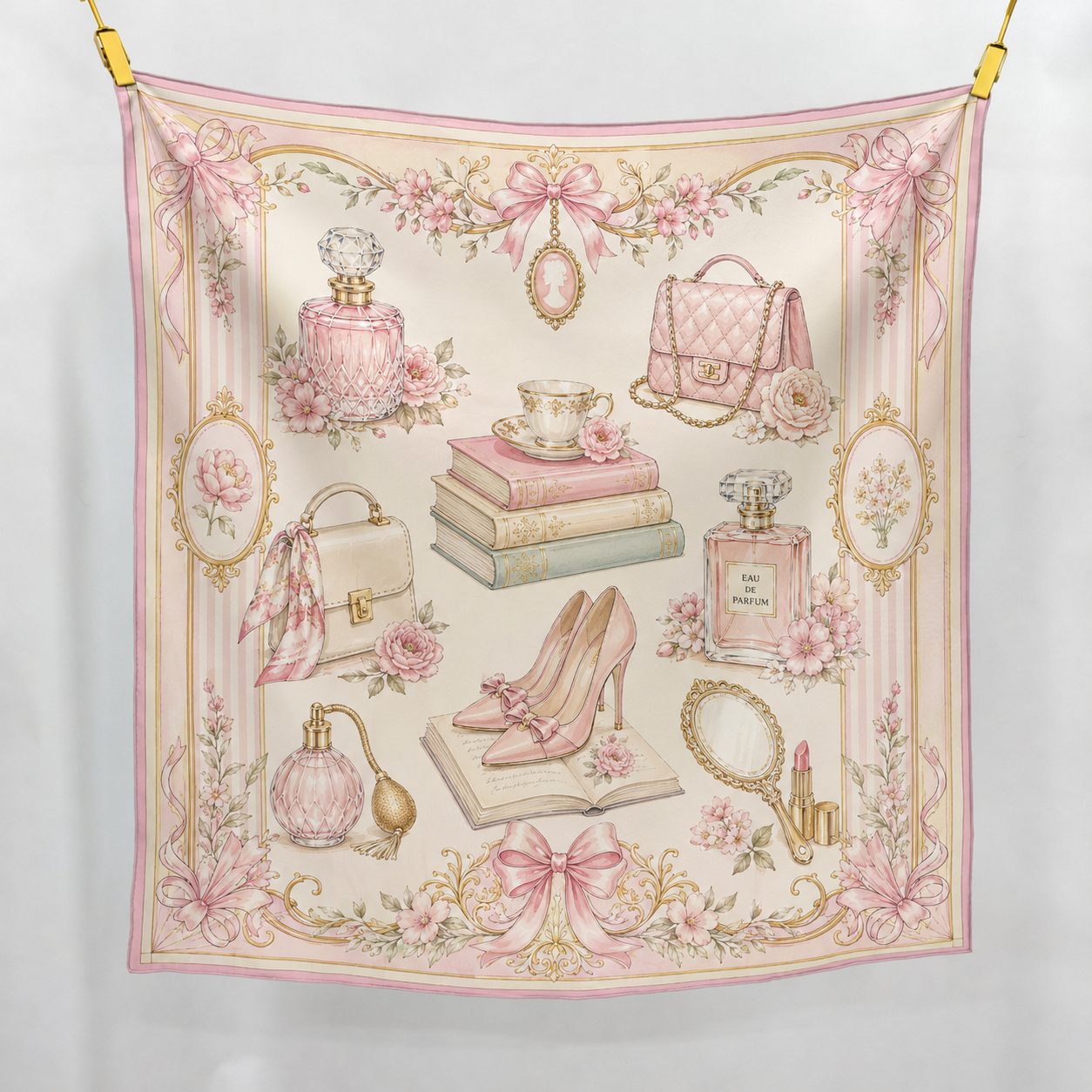
Digital printing remains important because it supports gradients, fine lines, illustration, complex motifs, small batches, and multi-color collections. It is especially useful for brands testing seasonal prints, artist collaborations, museum motifs, resort stories, and boutique scarf capsules.
The technical side matters. Artwork should be high resolution, scaled to the final scarf size, and prepared with border allowance. Thin lines, small text, and logo details should be checked on the real fabric instead of judged only from the design file. For production planning, use DOCSUN's custom printing workflow to confirm file setup, print scale, color references, and sample approval.
Butterfly, Animal, and Nature Motifs
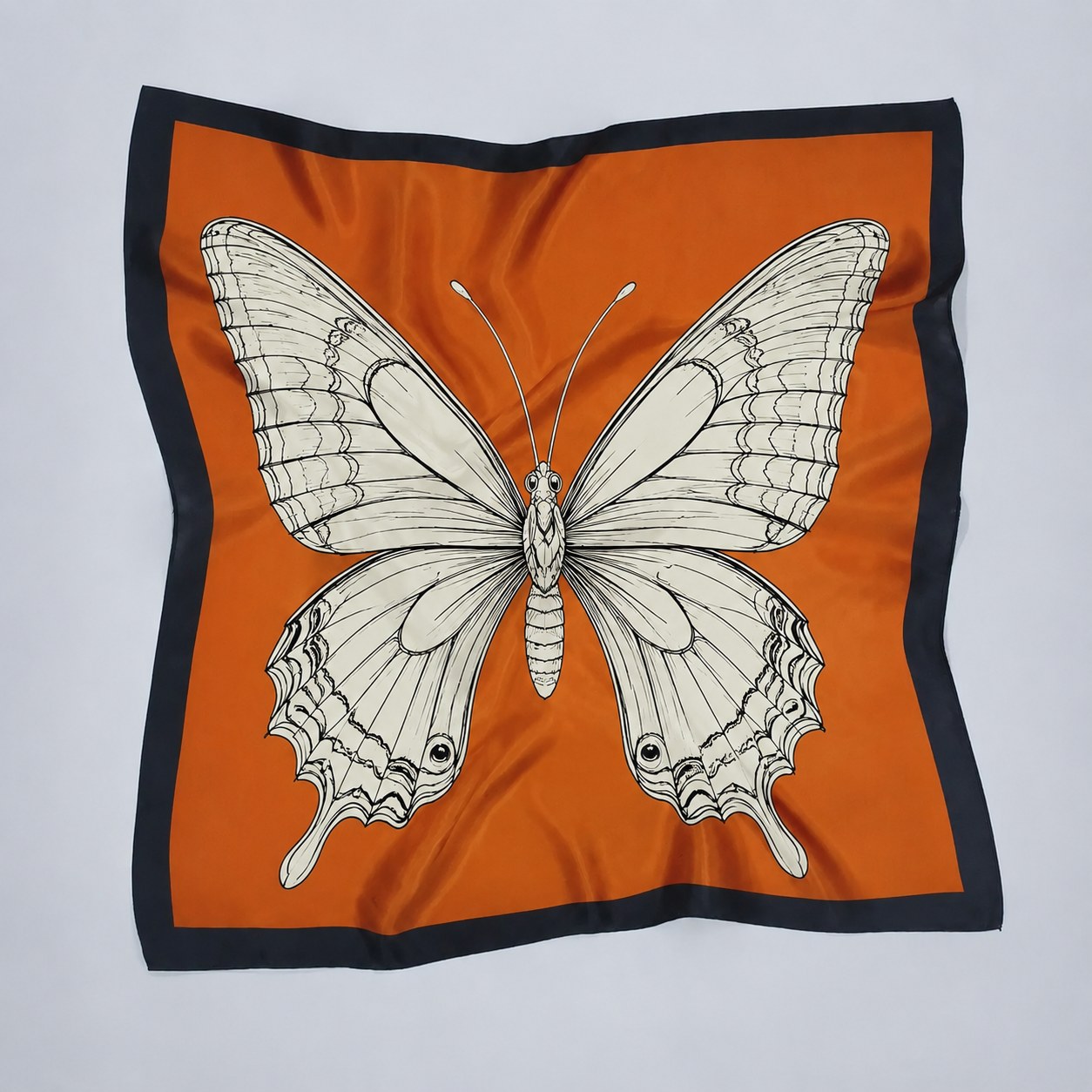
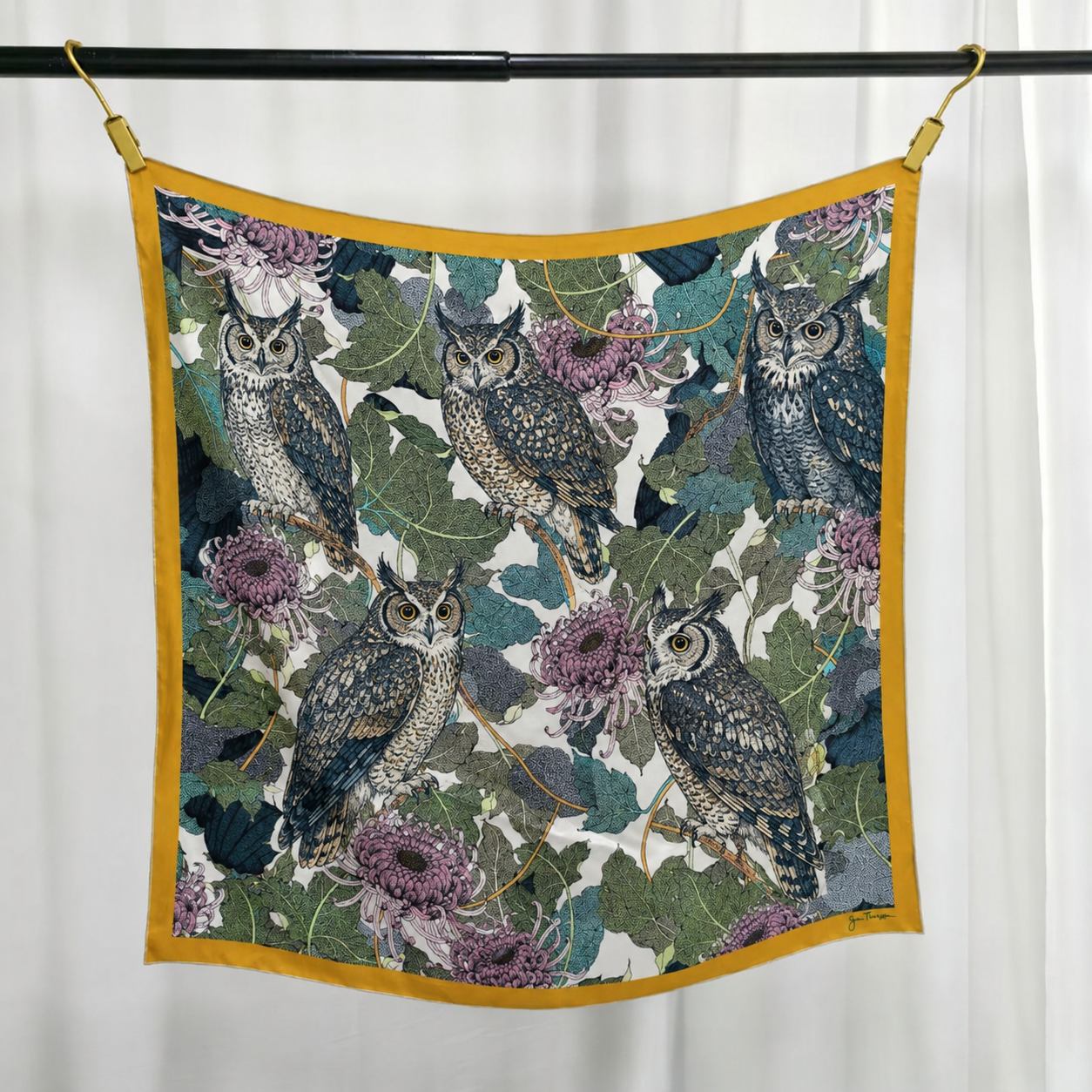
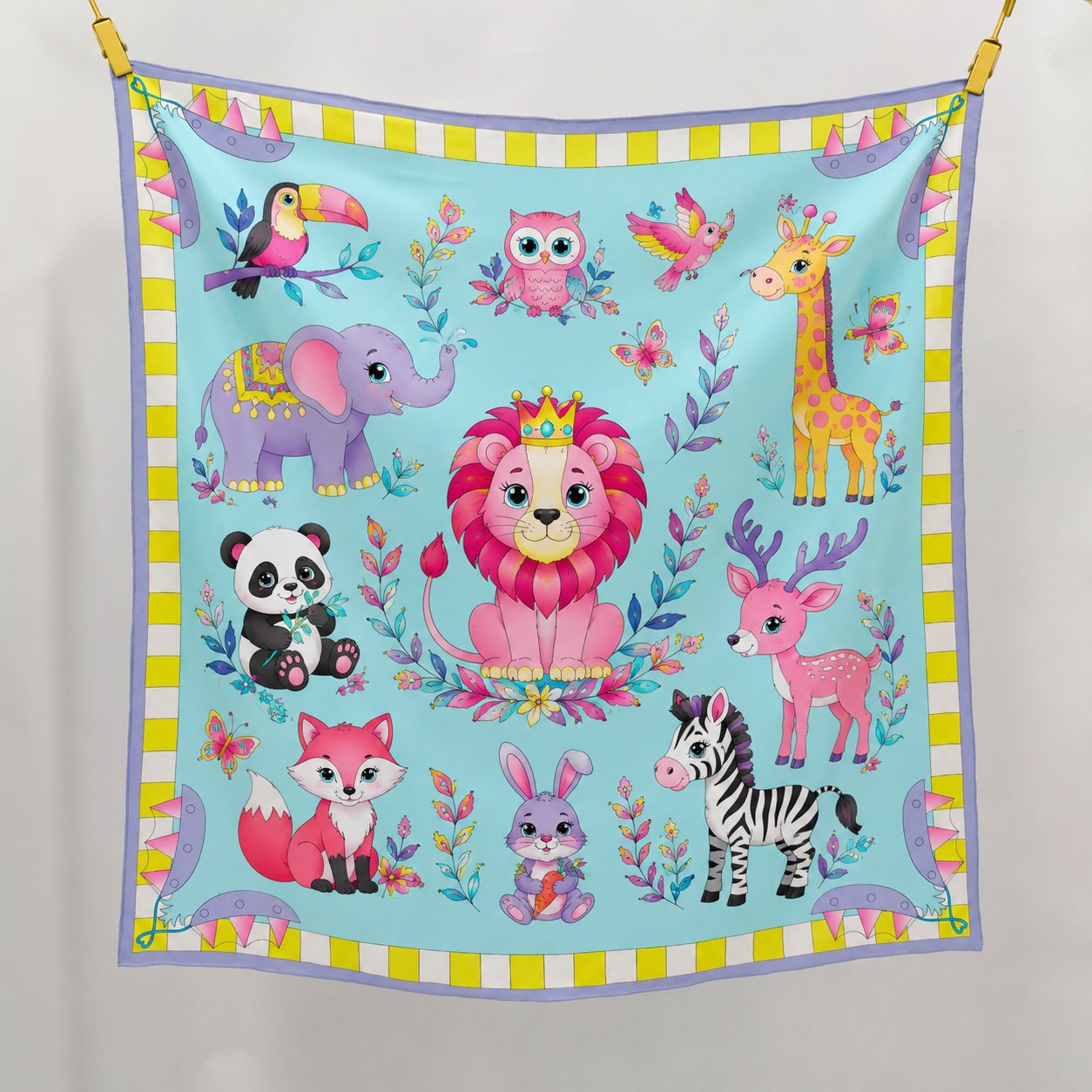
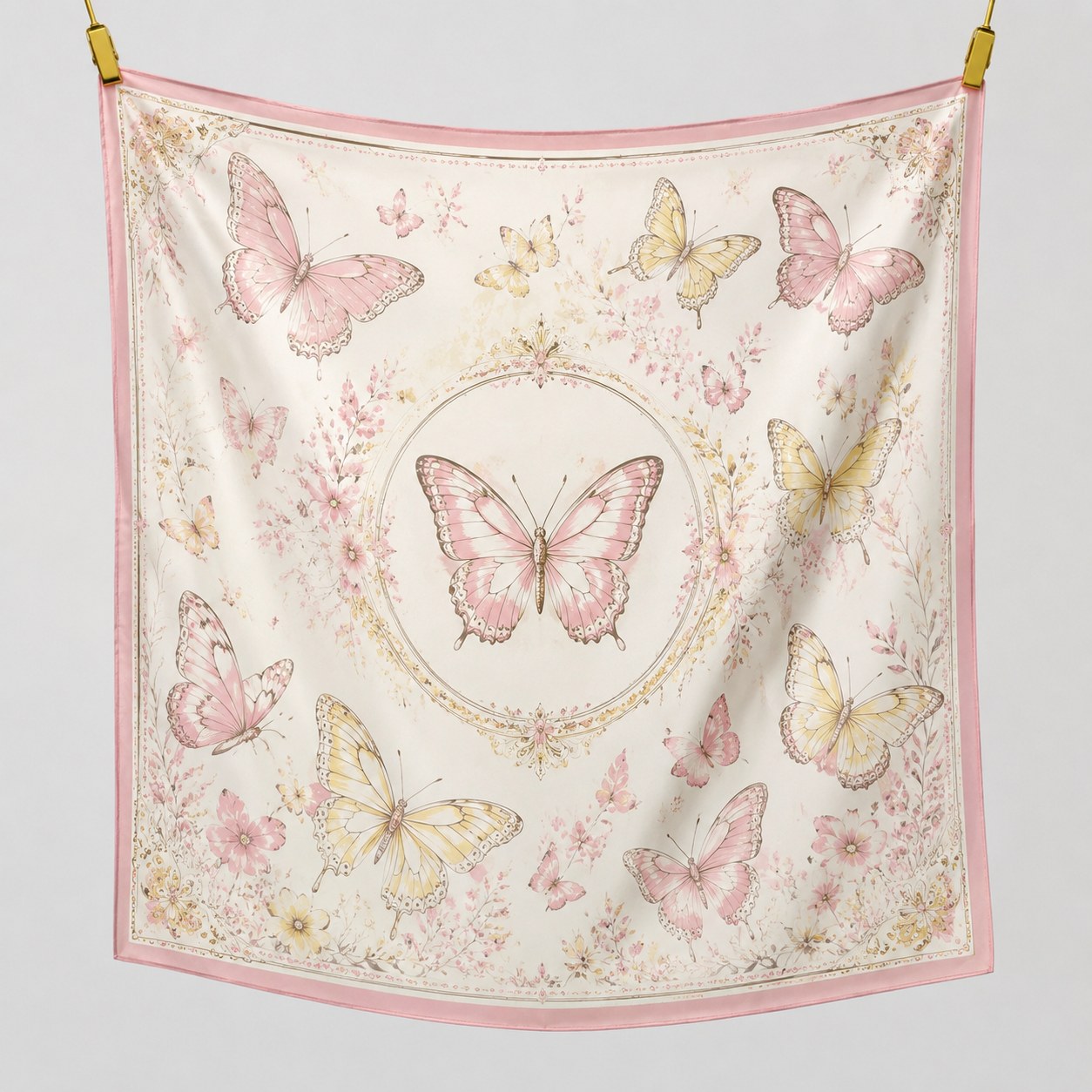
Butterflies, birds, owls, flowers, leaves, and decorative animals continue to work well on silk because they create movement and emotional appeal. These motifs can become artistic, symbolic, playful, or luxury-oriented depending on the composition and color palette.
The key is not to crowd the scarf. Nature motifs work best when the design has rhythm: a main motif, secondary decorative elements, a border system, and enough negative space for the scarf to remain wearable. The print should still look attractive when folded, because borders and corners are often more visible in real styling than the center image.
Border-Led Layouts for Square Scarves
Border design is one of the most important trends for custom printed silk scarves. A strong border helps the scarf look finished, supports premium positioning, and keeps the design visible when the scarf is folded around the neck, tied to a bag, or displayed in packaging.
Borders can be geometric, floral, chain-inspired, rope-like, color-blocked, or illustrated. For luxury gifts and retail scarves, the border should connect with the central artwork rather than feel like a separate frame. For a custom silk scarf project, border scale and corner placement should be checked before sample printing.
Color Control Is Becoming a Selling Point
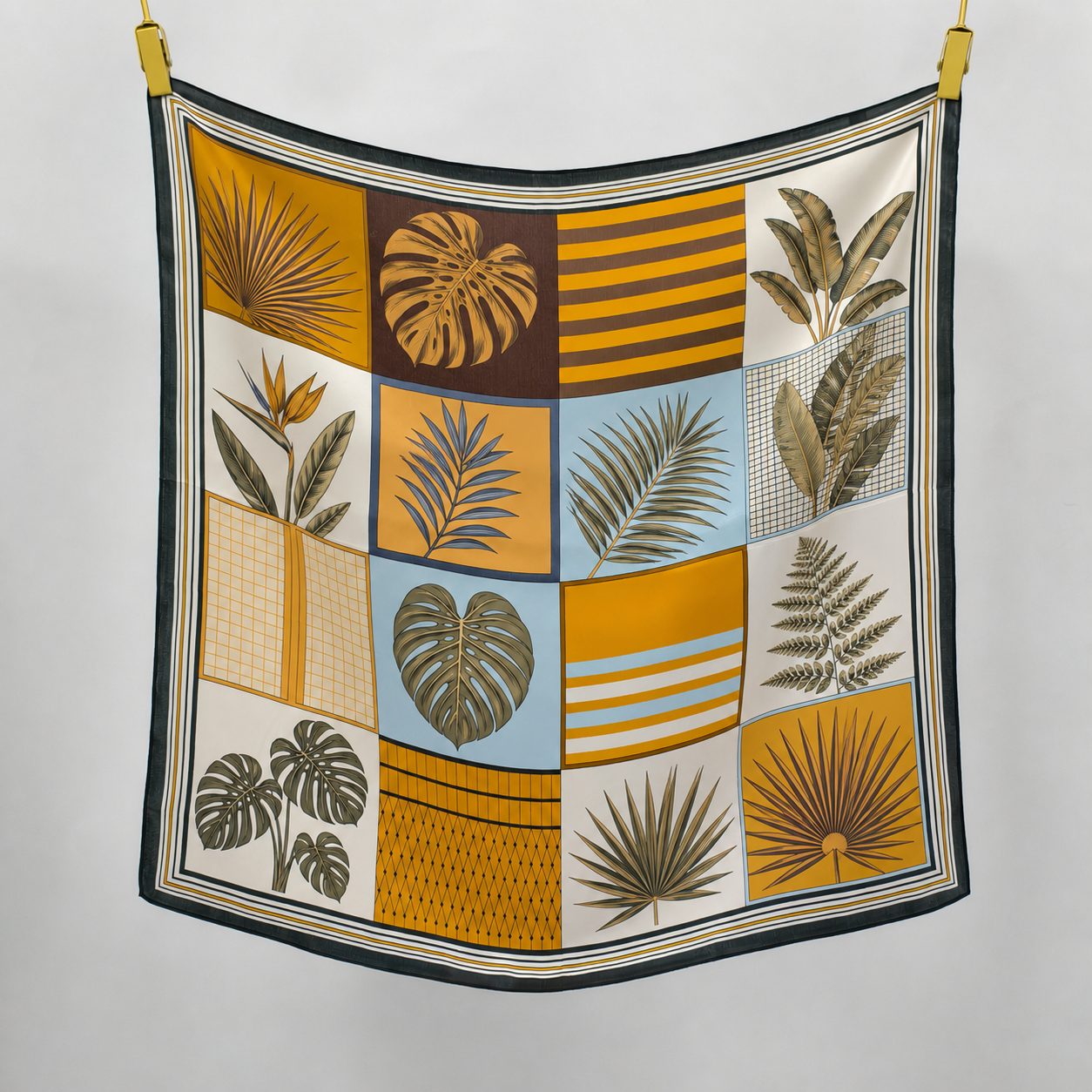
Color is one of the hardest parts of silk scarf printing. Screen color, digital artwork, fabric surface, indoor lighting, and natural light can all change the final impression. A red may look strong on silk twill but more luminous on satin. Pale shades may look elegant on the screen but too weak on transparent fabric.
For wholesale buyers, color control should be treated as part of product development. Prepare Pantone references or physical color samples where possible, then review the printed silk sample in real light. DOCSUN's fabric, color, and craftsmanship resources can help match artwork expectations with real silk behavior.
Fabric Matching: Twill, Satin, Chiffon, and Beyond
The same print can feel very different on silk twill, satin, chiffon, or silk-wool blends. Twill is reliable for classic square scarves, clear lines, and structured borders. Satin gives shine and richer visual depth. Chiffon feels lighter and more translucent. Silk-wool blends can support seasonal products where warmth and softness matter.
Brands should not choose fabric only by price. Fabric decides drape, print clarity, opacity, color strength, and perceived quality. For a broader scarf range, connect the article with the custom scarves hub and define which fabric belongs to each product role.
Logo Printing and Brand Placement
Logo placement is becoming more thoughtful. Instead of placing a large logo in the center of every scarf, many brands use small corner logos, border integration, tonal marks, label placement, or packaging to communicate identity. This is especially useful when the scarf must remain elegant and wearable.
If a logo appears in the artwork, test how it looks when the scarf is folded and reversed. On some scarf styles, the back side may show a mirrored impression, so logo direction and placement should be discussed before printing. When the product is a corporate gift, a subtle logo plus strong packaging may feel more premium than an oversized logo print.
Single-Sided and Double-Sided Print Decisions
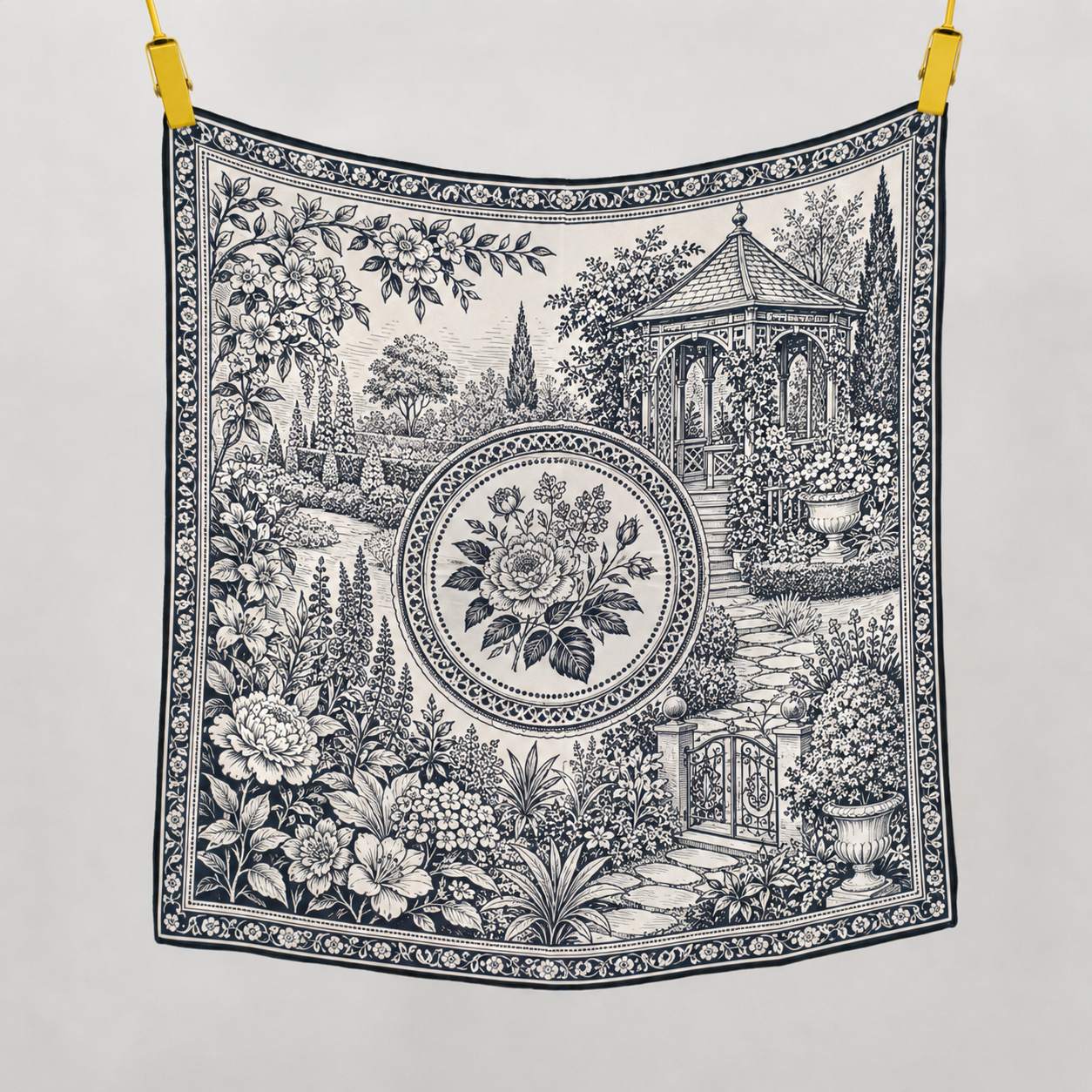
Single-sided printing remains practical for many custom scarves because it supports efficient production and good visual results. Double-sided printing can create a more premium effect, but it requires careful artwork planning, fabric choice, and color control to reduce front-to-back interference.
If the design uses strong color on both sides, the buyer should confirm fabric weight, color saturation, motif alignment, and final hand feel. Double-sided scarf projects often benefit from refined edge finishing and better packaging, because customers will judge the product from every angle.
Sampling Before Wholesale Production
Printed samples are essential because screen color is not the same as printed silk color. Check color, line clarity, border alignment, edge finishing, label position, fabric hand feel, and fold appearance before bulk production. A sample should be reviewed flat, tied, folded, photographed, and placed inside packaging if packaging is part of the order.
If the scarf is gift or retail focused, plan custom packaging early so product and presentation feel consistent. Packaging can support the print story through box color, care card design, tissue paper, sticker, sleeve, or hang tag.
Buyer Checklist for Printing Projects
Confirm artwork resolution, scarf size, fabric, print method, border allowance, color references, logo position, front/back requirements, edge finishing, label placement, packaging, sample deadline, bulk quantity, and delivery schedule.
Keep one approved sample as the benchmark for all future repeat orders. If the project is still early, prepare design files, target customer, retail price, quantity, packaging needs, and timeline, then send the brief through contact us so print method and sampling can be planned before mistakes become expensive.
FAQ
What is trending in silk scarf printing for 2026?
Digital detail, nature motifs, butterfly and animal artwork, refined borders, logo integration, stronger color control, and better sample approval workflows are important directions.
Is digital printing good for silk scarves?
Yes. Digital printing is useful for detailed artwork, gradients, small batches, artist collaborations, and multi-color scarf designs.
Why is sampling important for silk scarf printing?
Silk fabric can change color appearance, sharpness, saturation, drape, and border alignment, so printed samples are needed before bulk production.
Which fabric is best for detailed scarf prints?
Silk twill is often strong for detail and body, while satin gives more shine. Chiffon is lighter and more transparent. The best choice depends on the artwork, target market, and price position.
Can DOCSUN help with printing and packaging?
Yes. DOCSUN can support printing, fabric choice, color references, finishing, labels, samples, packaging, and bulk production planning.
Plan Your Custom Project with DOCSUN
Send your target market, product idea, artwork direction, fabric preference, quantity, packaging requirement, and delivery schedule. DOCSUN can help you turn the concept into a practical sample and production plan.
Contact UsFabric cards, color cards, and craftsmanship references are available in our Australia, United States, and United Kingdom offices on request.