
Quick answer: Silk twill is silk woven in a twill structure, producing fine diagonal ribs across the surface. Compared with many plain-weave silks, it generally offers more body, good crease recovery, and a stable surface for detailed printing. Compared with silk satin, it is usually less glossy and more structured. These qualities make silk twill especially popular for printed square scarves, neckties, apparel, and premium accessories.
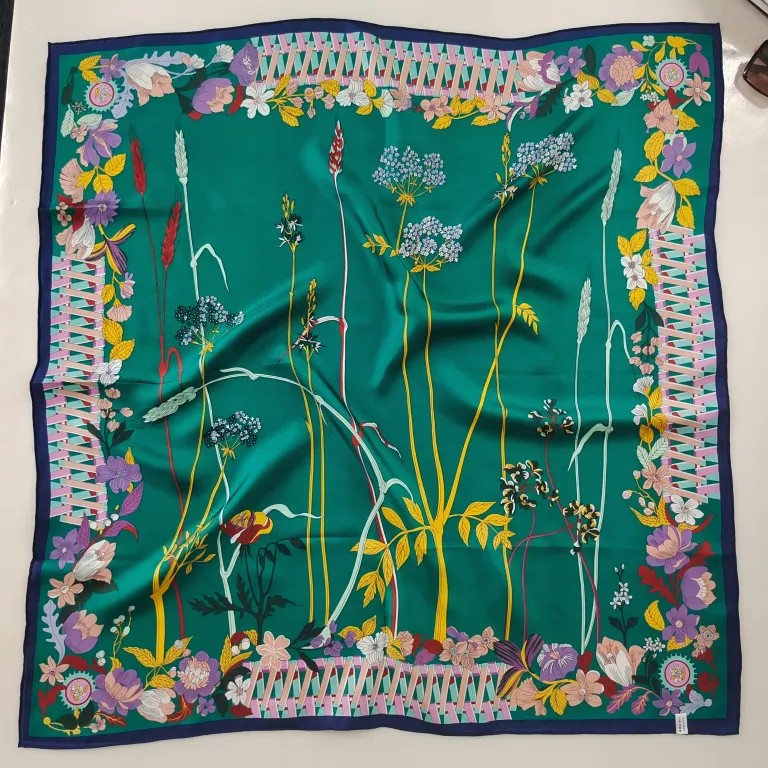
What Is Silk Twill?
The word silk identifies the fiber, while twill identifies the weave. Silk twill is therefore not one fixed weight or finish. It is a family of silk fabrics whose yarns interlace in a repeating offset pattern that forms diagonal lines.
Those diagonals may be very fine and subtle, especially on lightweight scarf fabrics, or more visible on heavier constructions. The final hand depends on several variables: silk quality, yarn size and twist, warp and weft density, weave repeat, weight, degumming, dyeing, printing, and finishing.
This distinction matters when sourcing. Two fabrics described as "100% silk twill" can behave differently if their weight, density, finishing, or yarn specifications are different. A reliable decision should be based on a physical swatch and printed sample, not the fabric name alone.
How Silk Twill Is Woven
In a basic plain weave, each weft yarn alternates over and under individual warp yarns. In a twill weave, the interlacing point shifts in a regular sequence from one row to the next. This offset creates the characteristic diagonal wale.
From Silk Yarn to Finished Twill
- Yarn preparation: Silk yarns are selected for fineness, evenness, strength, twist, and intended fabric weight.
- Warping and sizing: Warp yarns are arranged under controlled tension and may receive temporary protection for weaving.
- Twill weaving: The loom raises selected warp yarns in a repeating offset sequence while the weft passes across them.
- Degumming and preparation: Remaining sericin and processing materials are removed to develop softness and absorbency.
- Dyeing or printing: The fabric may be piece-dyed, digitally printed, screen printed, or processed with another suitable method.
- Finishing and inspection: Washing, setting, softening, dimensional control, and quality inspection establish the final hand and performance.
The exact sequence varies by mill and product. Printing preparation is particularly important: residual oils, uneven absorbency, or unstable dimensions can affect color consistency and pattern registration.
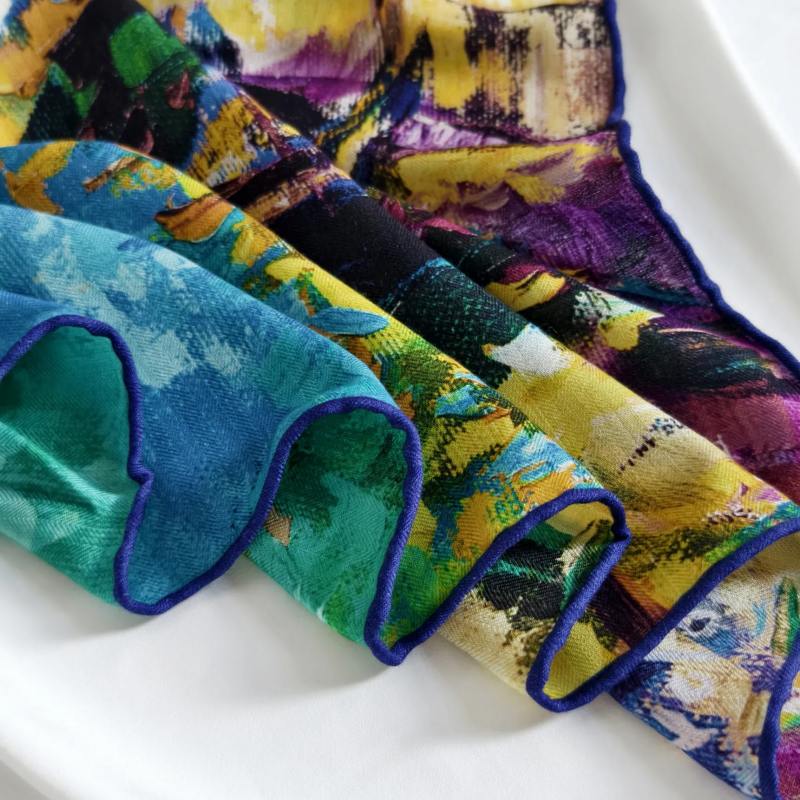
Key Features of Silk Twill
Subtle Diagonal Texture
The diagonal surface is the easiest structural clue. On a fine twill it may only become obvious under angled light or close inspection. The texture scatters light differently from satin, producing a refined luster rather than a mirror-like shine.
Balanced Body and Drape
Silk twill can drape fluidly while retaining more shape than very light chiffon or habotai. This balance is useful for scarves because the fabric can fall softly yet still hold a knot, bow, fold, or structured edge.
Practical Strength
The staggered interlacing distributes stress across the weave and can provide good serviceability for its weight. However, "durable" is relative: silk remains a fine natural protein fiber and can still be damaged by abrasion, sharp jewelry, perspiration, harsh chemicals, and prolonged sunlight.
Good Print Definition
A well-prepared silk twill offers a stable surface for detailed motifs, borders, typography, and layered color. Print quality still depends on the artwork, pretreatment, ink or dye system, penetration target, fixation, washing, and finishing.
Reduced Appearance of Wrinkles
The diagonal texture may make minor creases less visually prominent than on very smooth, lightweight constructions. It does not make the fabric wrinkle-proof, and performance varies with weight and finishing.
Silk Twill vs Other Silk Fabrics
| Fabric | Surface | Drape | Typical Strength | Common Uses |
|---|---|---|---|---|
| Silk twill | Fine diagonal ribs, restrained luster | Fluid with moderate body | Good balance for its weight | Printed scarves, ties, apparel, accessories |
| Silk satin | Very smooth and glossy face | Fluid and luminous | Surface floats require care | Eveningwear, blouses, scarves, linings |
| Crepe de Chine | Soft, lightly pebbled, matte | Supple and relaxed | Good everyday wearability | Blouses, dresses, scarves |
| Silk chiffon | Sheer, fine, lightly textured | Airy and floating | Delicate | Layered scarves, overlays, occasionwear |
| Silk habotai | Smooth plain weave | Light and soft | Varies strongly by weight | Linings, lightweight scarves, craft applications |
There is no universally "best" silk. The right construction depends on the product's visual language, use, dimensions, opacity, drape, budget, finishing, and expected care.
Printing and Color Performance
Silk twill is strongly associated with premium printed scarves because its surface can reproduce complex artwork while its structure supports borders and controlled folds. Both digital and screen processes can be appropriate. The decision depends on order quantity, artwork, color count, repeat, required penetration, lead time, and target hand feel.
For a custom printing project, prepare artwork at the final dimensions and define whether the reverse should appear lighter, closely matched, or printed separately. Fine outlines, dark grounds, large saturated areas, and exact brand colors should be tested on the selected fabric rather than approved only from a monitor.
What a Print Strike-Off Should Confirm
- Color accuracy under agreed lighting conditions
- Fine-line clarity and small-text readability
- Front-to-back penetration or double-sided alignment
- White points, staining, and edge definition
- Hand feel after fixation, washing, and finishing
- Dimensional change before cutting and hemming
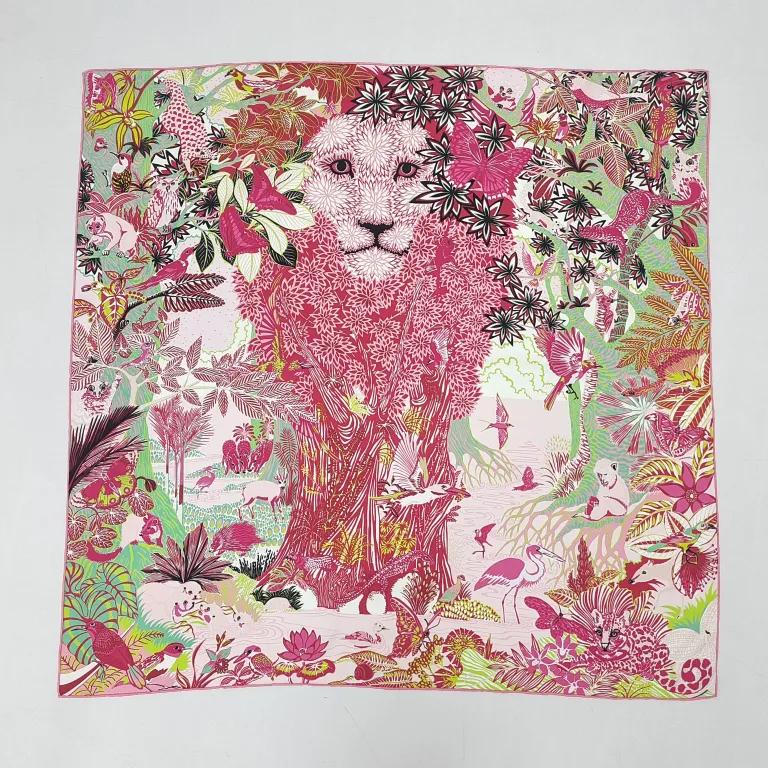
Common Applications of Silk Twill
Printed Silk Scarves
Square scarves are the best-known application. Silk twill gives borders and detailed motifs a stable canvas, while the finished scarf remains soft enough to wear around the neck, hair, waist, or bag. Explore our custom silk scarf options and scarf customization cases for size, print, and edge-finishing directions.
Neckties and Menswear Accessories
Silk twill can provide color depth, resilience, and a controlled hand for neckties, pocket squares, and selected formal accessories. The exact weave density and weight should suit the internal construction and desired knot.
Apparel
Depending on weight and finish, silk twill can be used for blouses, dresses, shirts, skirts, linings, panels, and lightweight jackets. Garment development should account for seam slippage, pressing, shrinkage, colorfastness, and pattern placement.
Accessories and Interior Accents
Silk twill may also be used for hair accessories, bag details, fabric jewelry, decorative panels, or selected cushion fronts. For high-abrasion upholstery or frequently washed bedding, a different construction or fiber blend may be more practical.
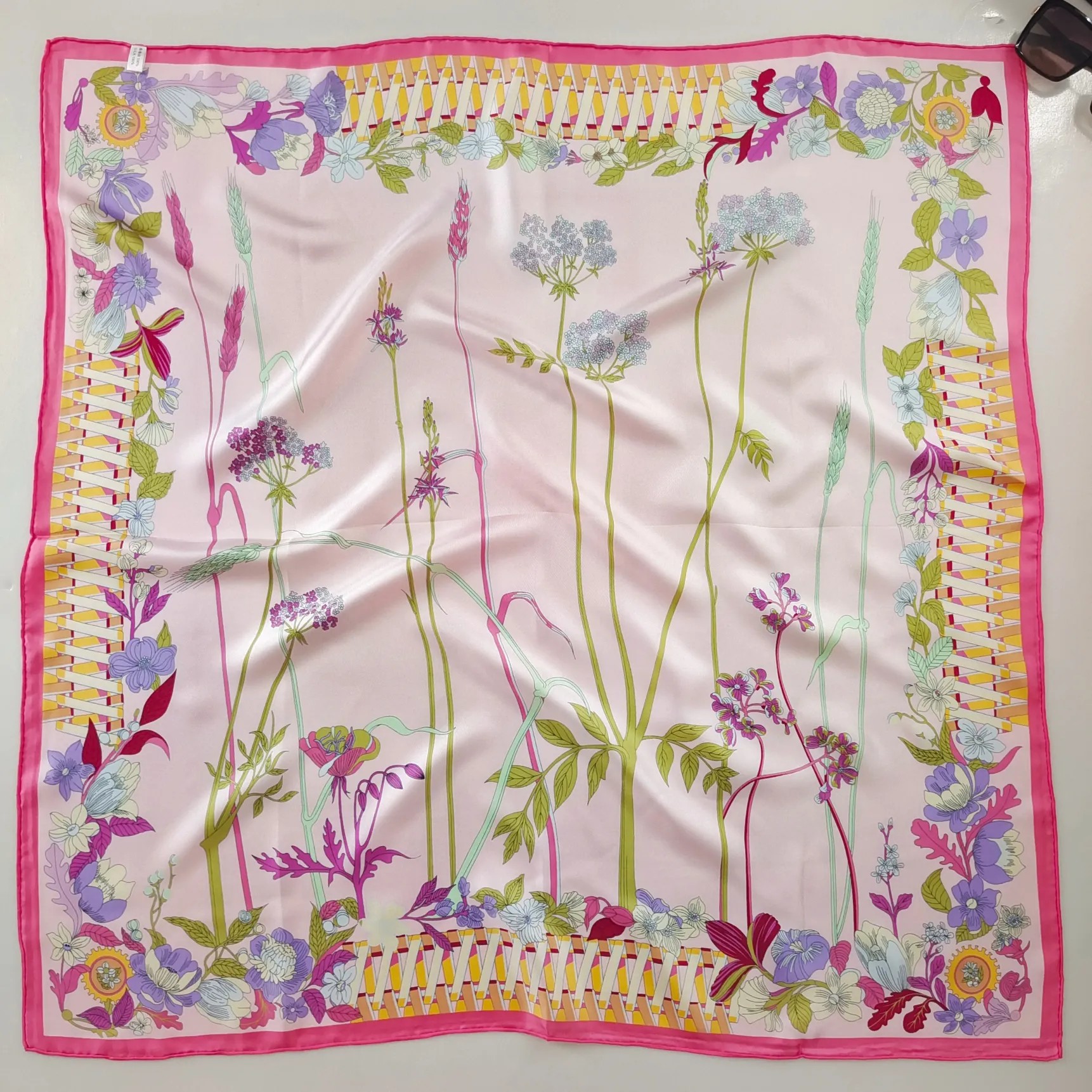
How to Specify Silk Twill for a Custom Product
A useful inquiry should say more than "silk twill." Provide the product type, dimensions, intended use, target hand, opacity, approximate weight or reference swatch, artwork, colors, print-face requirement, edge finish, quantity, testing standard, labels, packaging, and delivery date.
Our fabric, color, and craftsmanship selection service can help compare suitable constructions. Physical silk and process cards are available through our teams in Australia, the United States, and the United Kingdom; contact us to discuss the correct sample set for your project.
Practical sourcing rule: Approve the fabric, printed strike-off, hand feel, dimensional behavior, and edge finish together. A fabric that looks correct as an unprinted swatch can feel or drape differently after printing and finishing.
Care and Storage
Always follow the care label designed for the finished product. Care depends on the dyes, print process, trims, interfacing, construction, and colorfastness, not only the fiber content.
- Washing: When hand washing is approved, use cool water and a silk-safe detergent. Avoid bleach, long soaking, rubbing, and wringing.
- Drying: Blot excess moisture with a clean towel and dry flat or supported away from direct sunlight and heat.
- Pressing: Use low heat from the reverse with a pressing cloth. Test first, especially on dark or printed surfaces.
- Storage: Store clean and dry in a breathable environment, away from sharp jewelry, perfume residue, moisture, and prolonged light.
- Professional care: Dry cleaning may be preferable for tailored garments, structured products, unstable colors, or items combining silk with other materials.
Do not assume one fixed shrinkage percentage for every silk twill. Measure dimensional change on the actual fabric after the intended production and care process.
Frequently Asked Questions
What is silk twill fabric?
Silk twill is silk woven with a twill structure, usually recognized by subtle diagonal ribs. It balances a smooth printing surface, moderate body, elegant drape, and practical wearability.
Is silk twill the same as silk satin?
No. Twill and satin are different weave structures. Silk twill usually has diagonal texture, restrained luster, and more structure; silk satin is smoother, shinier, and often more fluid.
Why is silk twill popular for printed scarves?
It provides a stable surface for detailed motifs, borders, and saturated colors while retaining softness. Its body also helps square scarves hold folds, knots, and structured shapes.
What silk twill weight should I choose?
Choose according to product size, opacity, desired drape, print method, finishing, and price. Approve a physical sample because weight alone does not describe density, hand, or performance.
How should silk twill be washed and stored?
Follow the care label. When hand washing is permitted, use cool water and silk-safe detergent, avoid soaking and wringing, and dry away from heat and sunlight. Store clean, dry, and protected from sharp accessories.
Final Thoughts
Silk twill is valued because it does several jobs well at once: it carries detailed print, offers a polished but restrained luster, drapes elegantly, and retains enough body for structured styling. The strongest custom products begin with a precise fabric specification and are validated through physical sampling rather than assumptions based on the fabric name.
Develop a Custom Silk Twill Product
Send us your product type, size, artwork, quantity, color references, preferred hand, edge finish, labels, packaging, testing needs, and delivery date. We can help select the fabric and prepare a production-ready sample.
Request a QuoteFast response within 24 hours