
Why Polyester Satin Prices Vary
Many suppliers describe a fabric simply as polyester satin, silk-like satin, or imitation silk. For buyers, those names are not enough. Two fabrics can share the same general label but differ by yarn structure, twist, density, finishing, stretch, touch, color fastness, snag resistance, and drape.
In real sourcing, this is why one quote can be three to five times higher than another. The price gap is not always a supplier markup. It can reflect different raw yarns, different weaving stability, different post-processing, and very different risk levels after sewing, printing, washing, and customer use.
This article compares four typical satin-like fabrics used in apparel, sleepwear, linings, packaging, home textiles, and fashion accessories. The goal is not to say every project needs the highest grade, but to help buyers match fabric quality with the right product use.
Four-Grade Polyester Satin Comparison
| Fabric grade | Structure | Hand feel and visual effect | Main sourcing risk | Suitable use |
|---|---|---|---|---|
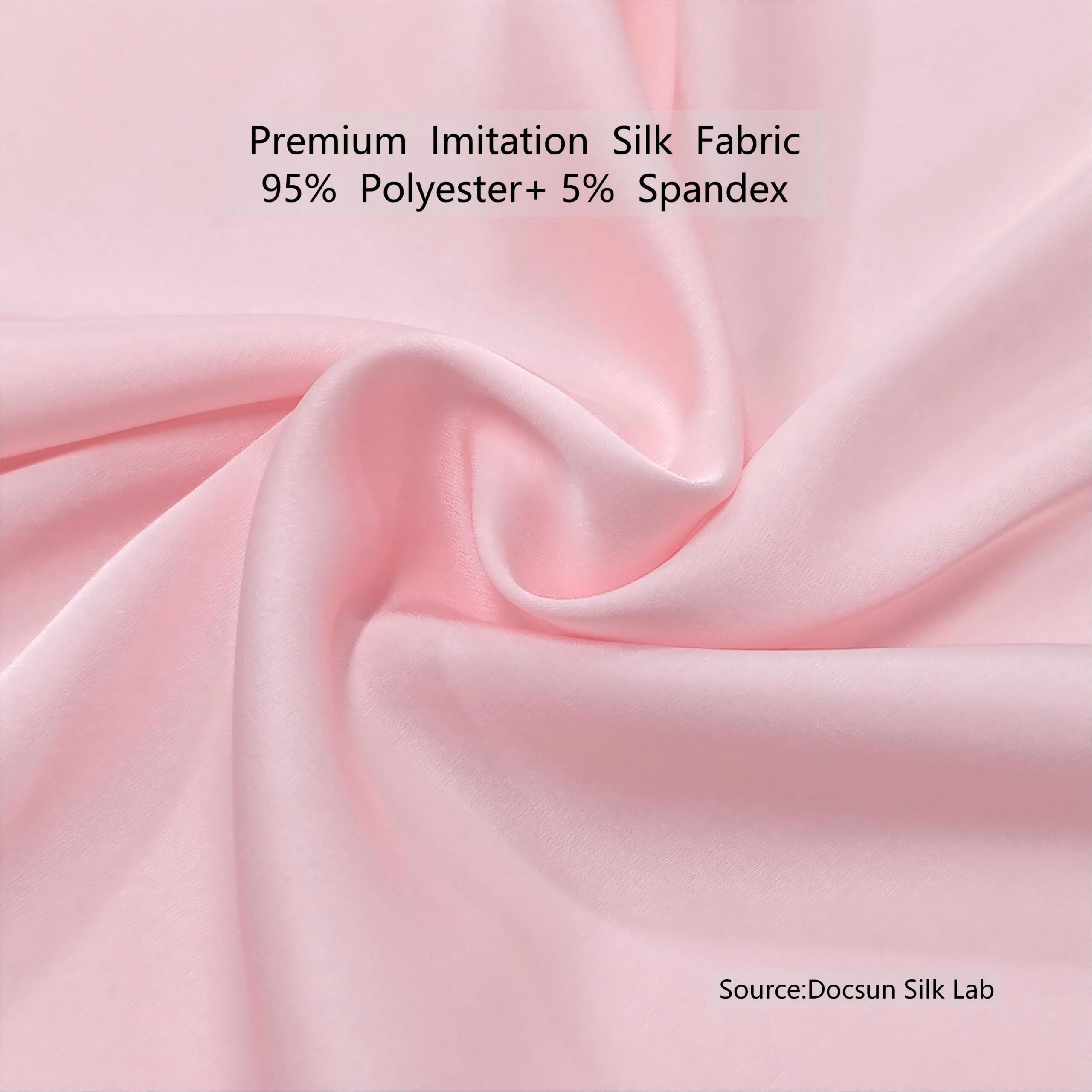
| Premium imitation silk | 95% polyester + 5% spandex, medium-twist filament | Soft, smooth, elastic, gentle luster | Higher cost, but lower complaint risk | Premium sleepwear, pillowcases, dresses, high-end linings |
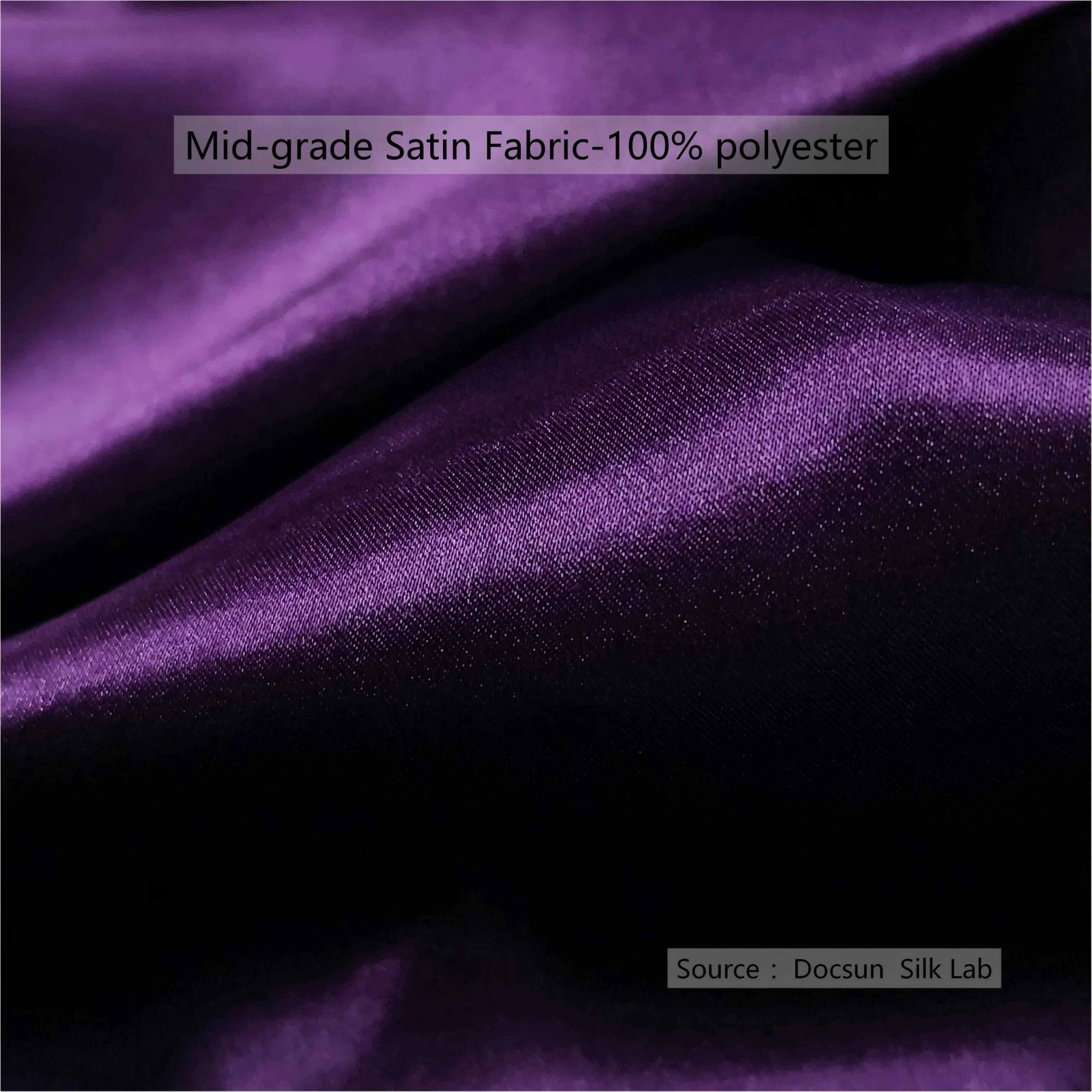
| Mid-grade satin | 100% polyester filament, zero twist | Smooth surface, moderate drape | More vulnerable to snagging | Fast-fashion garments, linings, decorative uses |
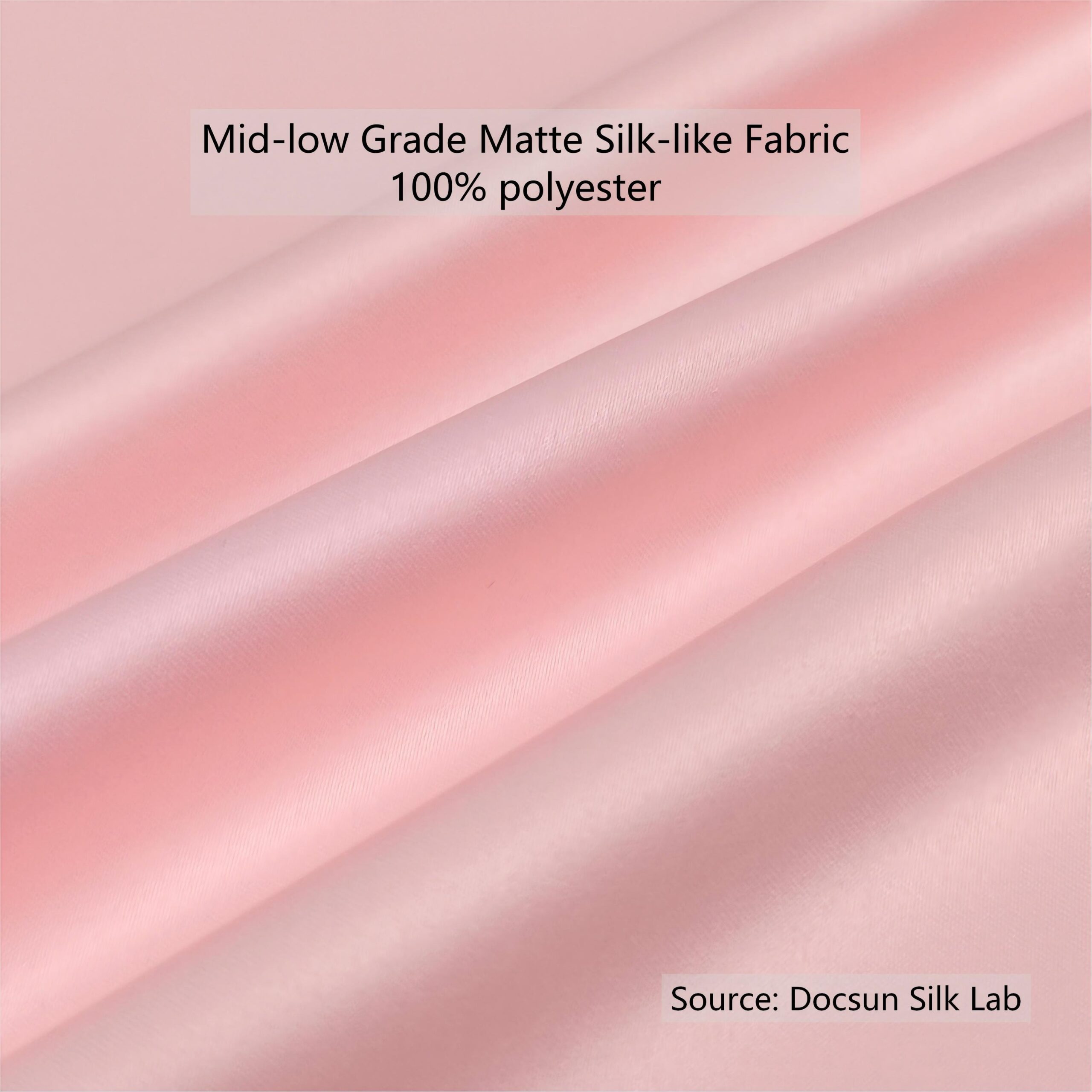
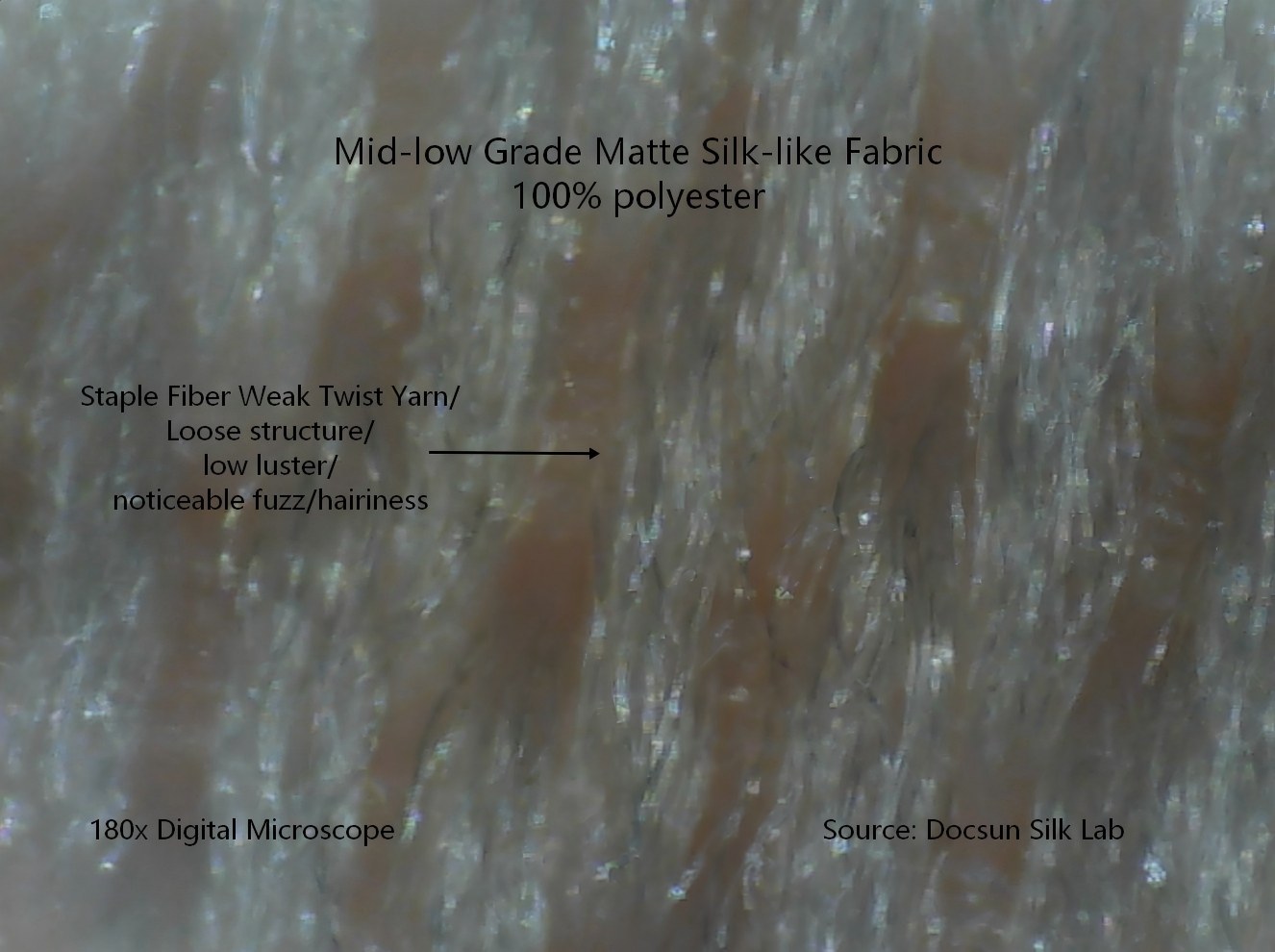
| Matte polyester fabric | 100% polyester staple fiber, weak twist | Matte, slightly rougher, visible hairiness | Pilling, loose structure, weaker drape | Low-cost decoration, packaging lining, short-use products |
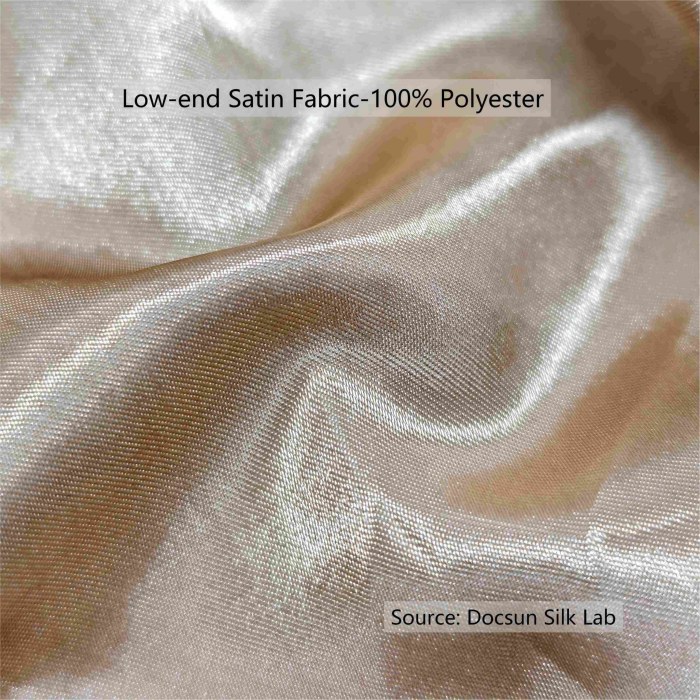
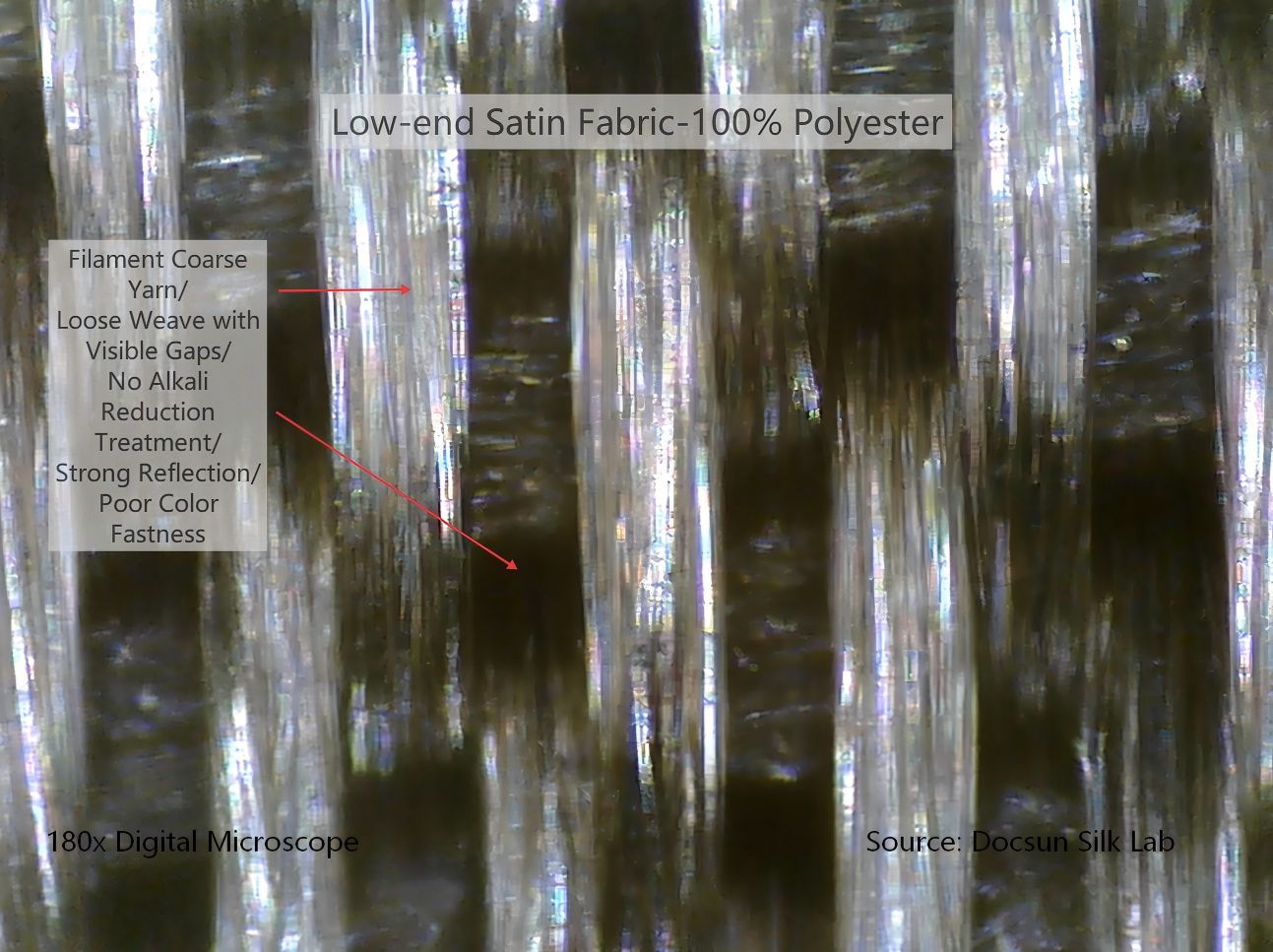
| Low-end polyester satin | 100% polyester, reduced density, skipped finishing | Harsh shine, stiff touch, plastic-like feel | Poor color fastness, fading, complaints | Throwaway festive or display use only |
1. Premium Imitation Silk Fabric
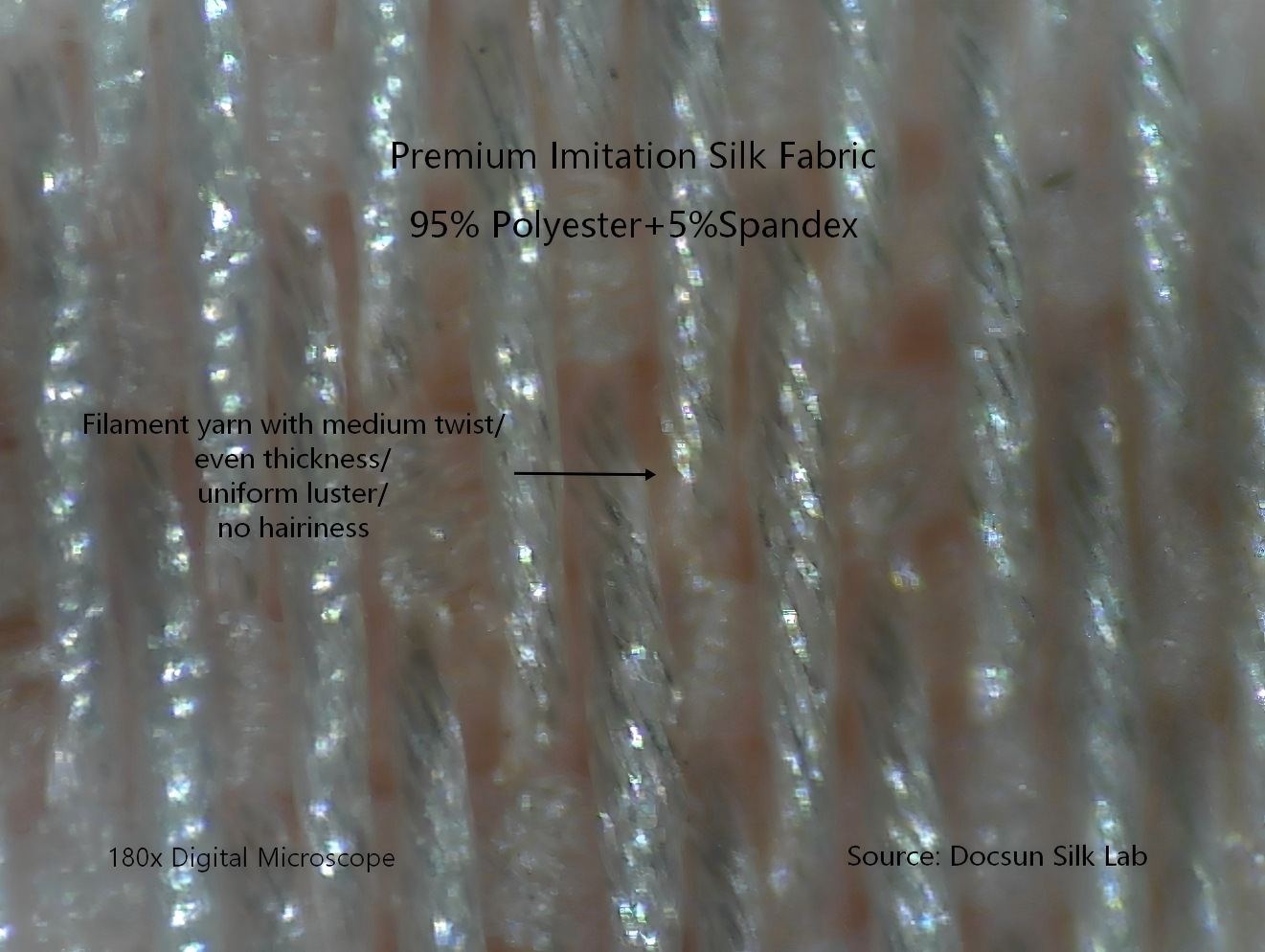
This premium grade is made with polyester filament yarns, medium twist, and about 5% spandex. Under a microscope, the yarn arrangement appears compact and orderly. Light reflection is even, and the surface shows very little hairiness.
The small amount of spandex is important. It improves stretch, wrinkle recovery, seam stability, and skin comfort. Instead of feeling rigid like ordinary polyester, this fabric feels smoother and softer against the skin. It is a strong option when the brand wants a silk-like look but needs a more accessible synthetic fabric.
Best Applications
- Premium silk-like sleepwear and slip dresses.
- Soft satin pillowcases and bedding alternatives.
- High-end linings where comfort and drape matter.
- Fashion garments that need slight stretch and better wrinkle recovery.
2. Mid-Grade Satin Fabric
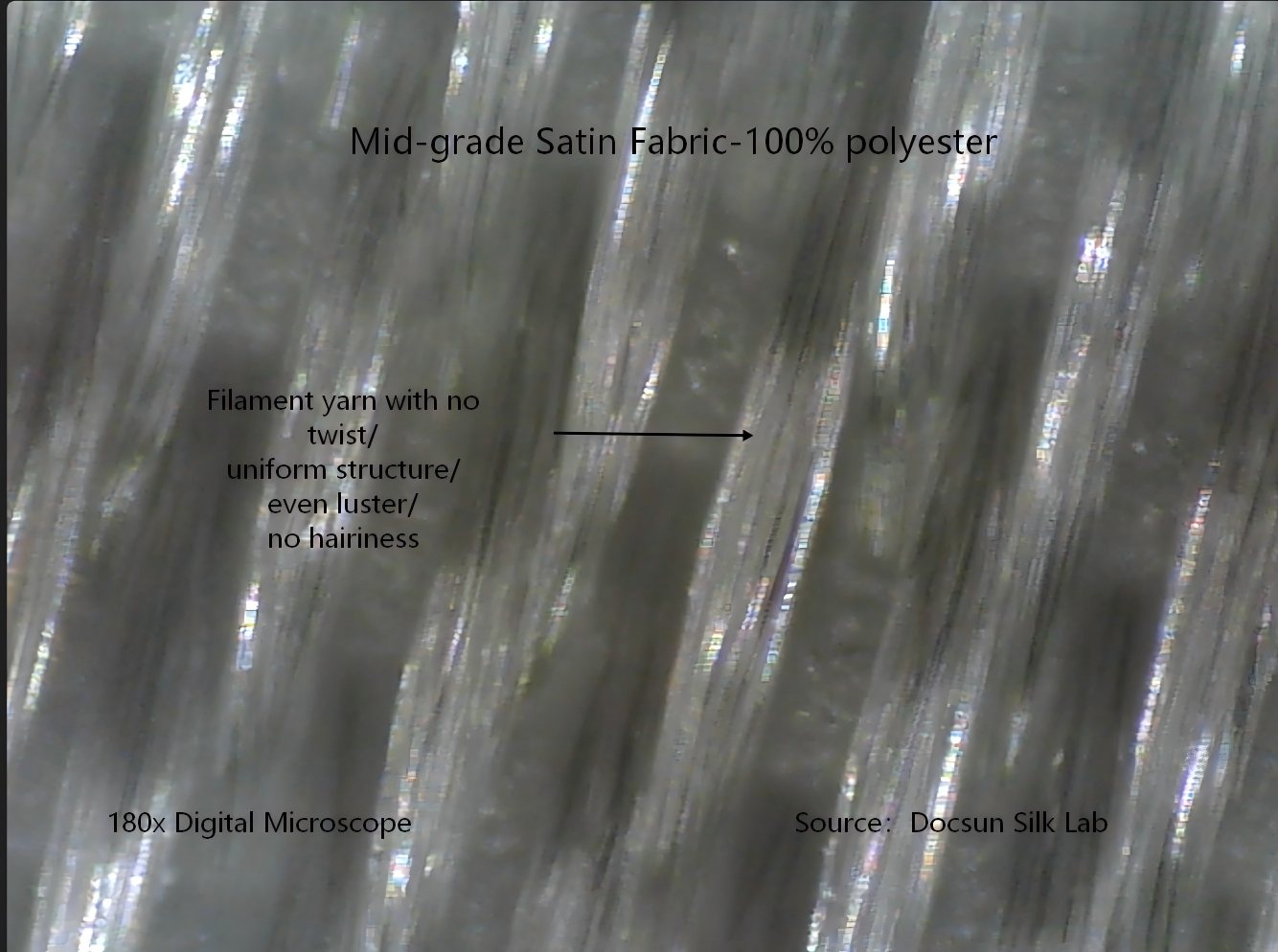
Mid-grade satin is usually made from 100% polyester filament yarn. The surface can still look neat and bright, especially in product photos. Under the microscope, the structure may appear relatively orderly, but the zero-twist yarn process reduces surface tension and production stability.
The main difference appears during sewing, handling, and daily wear. Because the yarn has less twist, the fabric can be more likely to snag. It may still work for many mid-market garments and linings, but buyers should evaluate cutting, sewing, and end-use friction before choosing it for a high-complaint-risk product.
Best Applications
- Mid-market fashion garments and linings.
- Decorative home textile items with moderate handling.
- Projects where smooth appearance matters more than premium stretch.
3. Mid-to-Low Grade Matte Polyester Fabric
This grade often uses polyester staple fibers with weak twist. Staple fibers can reduce raw material cost, but they also create a looser yarn structure. Under a microscope, the fabric shows visible gaps, surface hairiness, and weaker compactness.
The surface is more matte and the hand feel can be slightly rough or dry. For brands, the main risk is pilling after friction. If the fabric weight is also reduced, the drape becomes weaker and the product may feel less refined even before washing.
Best Applications
- Short-use event decorations.
- Low-cost packaging linings.
- Projects where premium hand feel is not the main selling point.
4. Low-End Polyester Satin Fabric
Low-end polyester satin is built for minimum cost. It may use continuous filament zero-twist yarn, but the fabric density is reduced. Under a microscope, the gaps become larger and individual yarns can appear thicker because fewer yarns are used across the same area.
The biggest issue is finishing. Low-end satin may skip the alkali weight reduction process that helps create a finer, softer, more silk-like surface. Without this finishing step, the fabric often has a harsh shine, stiff touch, plastic-like feel, and weaker dye adhesion. That can lead to poor color fastness, fading, and more customer complaints.
Best Applications
- Throwaway decorations and very low-cost festive supplies.
- Display uses where touch and washing performance are not important.
- Not recommended for garments, sleepwear, or products with high customer experience expectations.
Buyer Checklist Before Bulk Production
Before approving a polyester satin fabric for bulk production, do not rely only on fabric name or supplier photos. Ask for physical swatches and compare them under the same lighting. Touch, drape, recovery, shine, and sewing behavior should be checked together.
- Confirm fiber content, stretch content, fabric weight, and finish.
- Compare surface reflection: soft luster usually looks more premium than harsh shine.
- Check snagging risk by gently testing friction and nail contact on the surface.
- Check pilling risk if the fabric uses staple fibers or has visible surface hairiness.
- Confirm whether the fabric will be printed, dyed, washed, sewn, quilted, or used next to skin.
- Request color fastness and shrinkage expectations before committing to bulk production.
For related material selection work, see fabric, color, and craftsmanship options. If the project involves printed accessories, review custom printing methods and custom silk scarf development for comparison with natural silk products. For packaging and presentation, see custom packaging.
Frequently Asked Questions
Why can polyester satin fabric prices vary so much?
Polyester satin prices vary because the same surface name can hide different yarn types, twist levels, fabric density, finishing processes, and hand-feel performance. Premium imitation silk may use medium-twist filament yarn and spandex, while low-end satin may reduce density or skip alkali weight reduction.
What is the main difference between premium imitation silk fabric and low-end polyester satin?
Premium imitation silk fabric usually has a neater microscopic structure, smoother reflection, better drape, and better wrinkle recovery. Low-end polyester satin often has larger gaps between yarns, harsher shine, weaker dye adhesion, and a stiffer plastic-like hand feel.
Does 5% spandex improve polyester satin fabric?
Yes. A small amount of spandex can improve stretch, wrinkle resistance, seam stability, and skin comfort. It helps the fabric feel softer and more fluid, which is useful for sleepwear, pillowcases, fashion linings, and premium silk-like products.
Why does some polyester satin pill or snag easily?
Pilling and snagging are often related to loose yarn structure, weak twist, staple fiber use, and low fabric density. Fabrics with visible surface hairiness or loose microscopic gaps are usually more vulnerable during sewing, wearing, and washing.
Can DOCSUN help buyers compare fabric quality before production?
Yes. DOCSUN can help buyers compare fabric hand feel, surface luster, yarn structure, print suitability, drape, color fastness expectations, and end-use risks before custom production starts.
Need Help Comparing Satin Fabric Samples?
Send us your product use, target price, fabric hand-feel requirements, and expected quantity. DOCSUN can help compare satin, silk-like fabric, natural silk, printing options, and packaging before bulk production.
Contact DOCSUNFast response within 24 hours.