Why Fabric Choice Matters in a Silk Scarf Project
Many scarf projects begin with artwork, color direction, and size. Those details matter, but fabric choice should be decided early because it changes how the design prints and how the scarf behaves after finishing.
A detailed floral border, a large emblem, a dark luxury ground, and a light seasonal print do not always need the same base cloth. Some designs need a dense surface for clean edges. Others need transparency, softness, or movement. This is why scarf manufacturers usually discuss fabric, momme weight, size, printing method, and edge finishing together.
For brands developing a custom silk scarf, the practical question is not only "which fabric is best?" It is "which fabric best fits this product's design, price point, customer, and use scenario?"
What 100% Mulberry Silk Means
Mulberry silk refers to silk fiber produced from silkworms that feed mainly on mulberry leaves. In scarf manufacturing, 100% mulberry silk is valued for its smooth touch, natural luster, breathability, and premium perception.
However, "mulberry silk" describes the fiber, not the weave. A scarf can be made from mulberry silk twill, mulberry silk satin, mulberry silk chiffon, silk habotai, silk crepe, or other constructions. Each version will feel and perform differently.
Silk Twill for Printed Scarves
Silk twill is one of the most popular choices for premium square scarves. Its diagonal weave gives the fabric body, durability, and a refined hand feel. It holds shape better than very light silk while still feeling soft and fluid.
For artwork with borders, logos, illustrated motifs, or fine pattern details, twill can provide strong print definition. It is especially useful for brand collections, museum scarves, luxury gifts, and fashion accessories where the scarf needs to feel substantial.
If your team is comparing satin and twill, our separate guide on silk satin vs twill silk scarves explains the visual and tactile differences in more detail.
Silk Satin for Shine and Color Impact
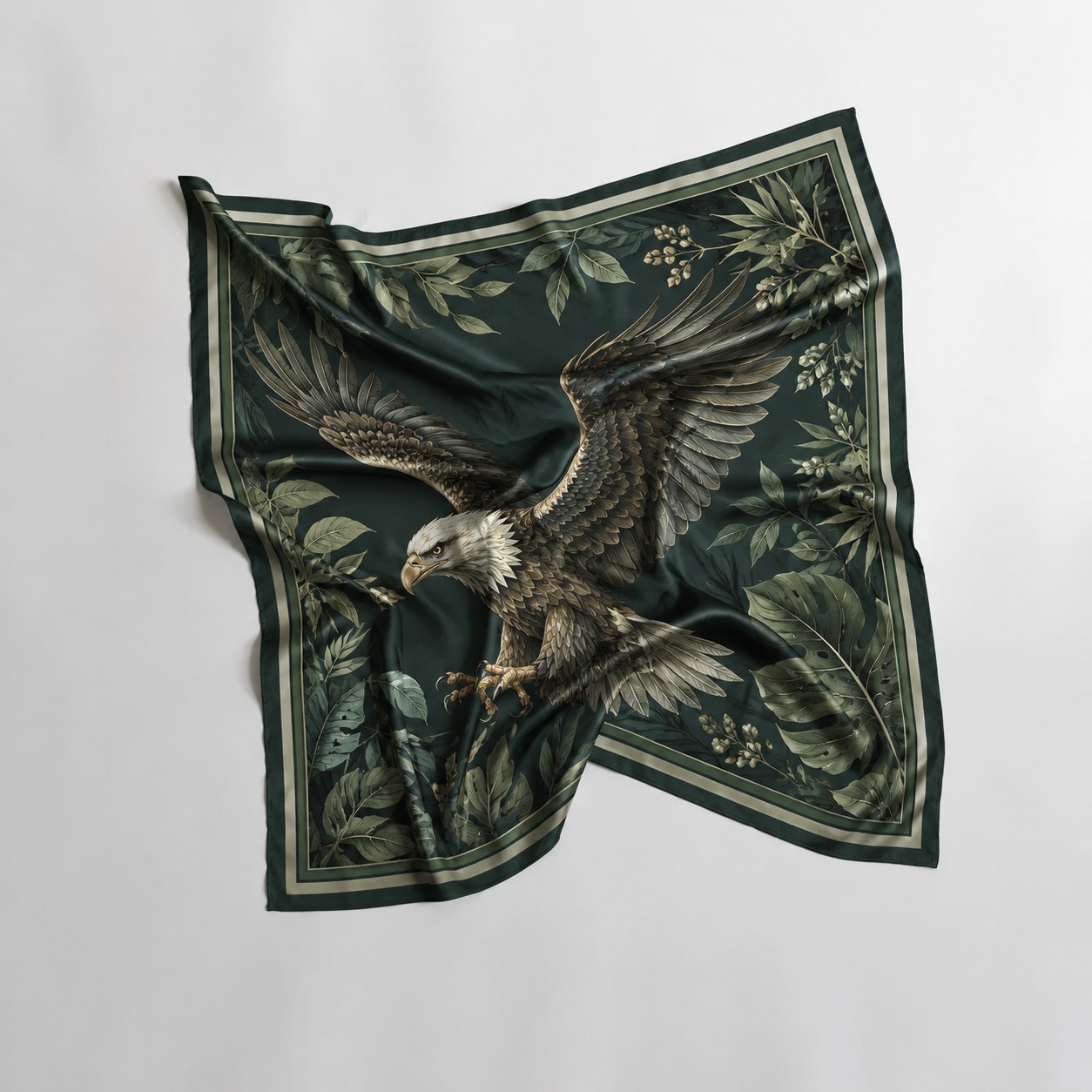
Silk satin has a smooth, glossy face and a more luminous surface. It is often selected when a brand wants high visual impact, rich color, and a dressier finish. Satin can make dark grounds and saturated tones appear more dramatic.
The tradeoff is that satin can show handling marks more easily, and the shiny surface may make certain designs look more formal. For evening styling, gift scarves, beauty packaging, or elegant brand accessories, satin can be a strong option.
When using satin for printing, artwork testing is important. Dark colors, high contrast borders, and large flat color areas should be checked through strike-off samples before bulk production.
Silk Chiffon for Light, Airy Styling
Silk chiffon is lightweight, translucent, and soft. It is suitable for scarves that need movement, layering, and a feminine styling effect. Chiffon can work well for spring and summer accessories, resort collections, and decorative neck scarves.
Because chiffon is sheer, it may not be the best choice for artwork that requires strong opacity or razor-sharp detail. If the design includes logos, dense borders, or dark background colors, a denser silk such as twill or satin may be easier to control.
For custom projects, chiffon is usually discussed together with size, hem type, and the desired level of transparency. A small neck scarf and a long fashion scarf may need different specifications even when both use chiffon.
Fabric Comparison Table
| Fabric | Best for | Visual effect | Key caution |
|---|---|---|---|
| Silk twill | Premium square scarves, detailed prints, borders, brand gifts | Refined, structured, clear print definition | Choose suitable momme weight for size and drape |
| Silk satin | Luxury-looking scarves, rich colors, dressy styling | Glossy, smooth, strong color impact | Shine may not fit every brand mood |
| Silk chiffon | Light neck scarves, resort styling, airy fashion accessories | Soft, sheer, flowing | Lower opacity and less structure |
| Silk habotai | Lightweight scarves and cost-sensitive silk projects | Smooth, soft, simple | May feel less substantial for luxury positioning |
Design and Production Considerations
Once the fabric direction is clear, the next decisions are scarf size, print method, color matching, hem type, label placement, and packaging. These details should be discussed before sampling, because a beautiful artwork file can still fail if the base cloth and finishing do not support the final use.
Frequently Asked Questions
Which silk fabric is best for custom printed scarves?
Silk twill is often the best all-around choice for premium printed scarves because it balances print clarity, structure, and a refined hand feel. Satin is better for shine, while chiffon is better for lightweight and airy styling.
Is mulberry silk the same as silk twill?
No. Mulberry silk is the fiber source, while twill is a weave. A scarf can be made from 100% mulberry silk twill, satin, chiffon, habotai, or other silk fabrics.
Should a luxury scarf use satin or twill?
It depends on the brand mood. Satin gives stronger shine and color impact. Twill feels more structured and is widely used for premium square scarves with detailed prints and borders.
Can chiffon be used for logo scarves?
Yes, but chiffon is sheer and soft, so logos and borders may look less solid than on twill or satin. For precise branding, sample testing is important.
Can DOCSUN help compare scarf fabrics before production?
Yes. DOCSUN can help brands compare fabric options, color direction, print method, finishing, and packaging before sampling. Our teams keep fabric and color cards for project discussion in key markets.
Choose the Right Silk Fabric for Your Scarf Project
Share your scarf size, artwork, target customer, budget level, and preferred hand feel. DOCSUN can help compare silk twill, satin, chiffon, and other options before sampling.
Contact DOCSUNFast response within 24 hours.